Top

Ripple Receives In-Principle Approval From Singaporean Regulator

Policy & Regulation·June 22, 2023, 11:43 PM

Ripple, the blockchain-based payments firm, has obtained in-principle regulatory approval from the Monetary Authority of Singapore (MAS) to offer digital asset payments and token products in Singapore.

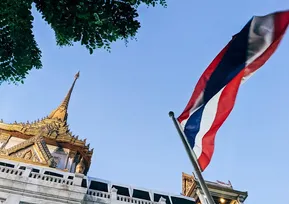
Photo by Dids on Pexels


ODL service expansion

The approval, announced on Wednesday, will enable Ripple’s subsidiary, Ripple Markets Asia Pacific, to expand its On-Demand Liquidity (ODL) service. ODL facilitates the seamless transfer of the XRP cryptocurrency across borders without the involvement of traditional banking intermediaries.

Ripple had applied for an institutional payment license under Singapore’s Payment Service Act to secure the regulatory green light. In response to the approval, Ripple CEO Brad Garlinghouse praised the MAS for its pragmatic and innovation-driven approach to cryptocurrency-related services.

He expressed confidence that Singapore would serve as a prominent gateway for Ripple’s business operations in the Asia Pacific (APAC) region. On Twitter, Garlinghouse wrote: “As a major global financial center, Singapore led the way in taking a pragmatic, innovation-first approach to crypto — we’re incredibly proud @Ripple is one of a handful of firms (<20) to receive in-principle approval for a MAS MPI license for digital payment token services!”

Stuart Alderoty, Ripple’s Chief Legal Officer, explained that the regulatory approval from MAS would enhance Ripple’s ability to support forward-thinking customers who are exploring the potential of blockchain and crypto technologies to create a more inclusive and borderless financial system.


Growing APAC presence

Ripple’s presence in Singapore has already been growing significantly. In 2022, the company doubled its number of employees at its Asia Pacific headquarters, with Singapore becoming a major hub for ODL transactions. The MAS, recognizing the potential of fintech firms in the digital money services sector, published its Purpose Bound Money (PBM) white paper on Wednesday, proposing standards for such firms operating in Singapore.

While Ripple has made progress with regulatory compliance in Singapore, it has faced legal challenges in other jurisdictions. Since December 2020, Ripple’s legal team has been dealing with a lawsuit filed by the US Securities and Exchange Commission (SEC), accusing Ripple of conducting an unregistered securities offering with its XRP token.

The case is expected to reach a verdict in the coming months. While the speculation is that the case has gone well for Ripple, it remains to be seen to what extent it can get the upper hand in taking on a cornerstone institution of the US establishment like the SEC.

Either way, Ripple is moving to develop on a global basis. It has recently pursued further development in the Middle East via a Dubai expansion. In Hong Kong, it is collaborating with local regulators in trialing the use of its technology relative to real-world asset tokenization.

The company has also established partnerships with central banks in Montenegro and Thailand, as well as numerous regional banks and financial institutions worldwide.

The regulatory approval from MAS marks a significant milestone for Ripple, expanding its customer reach and positioning the company for further growth in the digital asset payment sector. Digital asset innovation is truly global and as many organizations are demonstrating, just as Ripple is in this instance, innovative curtailment in one region will simply manifest itself as greater development in another.

More to Read
View All
Web3 & Enterprise·

Aug 04, 2023

Nomura’s Laser Ventures Invests in Singapore’s Solv Protocol

Nomura’s Laser Ventures Invests in Singapore’s Solv ProtocolSolv Protocol, a Singapore-based DeFi startup, has revealed a significant stride forward with a $6 million funding round, drawing support from Laser Digital, the digital asset subsidiary of Japanese global financial services conglomerate Nomura.The project team provided details on the funding round via a blog post published to its website earlier this week. Accompanying Laser Digital in the funding round, Singapore’s UOB Venture Management also participated, alongside investors such as Matrix Partners, Bing Ventures, Mirana Ventures, Apollo Capital, Bytetrade Labs, and others.Photo by Towfiqu barbhuiya on Unsplash$14 million cumulative fundingThis injection raises its cumulative funding to an impressive $14 million. The innovative Solv Protocol has been developed to facilitate on-chain fund management within the realm of public blockchains.Delving into the intricacies of the Solv asset management protocol, Olivier Dang, COO of Nomura Securities’ wholesale digital office, expanded on its transformative potential, stating: “Solv has built a trustless institutional DeFi platform integrating brokers, underwriters, market makers, and custodians to create the first fund infrastructure on the blockchain to bridge DeFi, CeFi, and TradFi liquidity.”$100 million in trading volumeSolv Protocol is a DeFi infrastructure project that enables users to create and trade financial NFTs. The protocol concerns itself largely with ERC-3525, an Ethereum standard for semi-fungible tokens, the characteristics of which lend themselves well for financial use cases.At the heart of Solv’s business model lies a unique mechanism. Any fund utilizing its solution inherently allocates a portion of its assets under management. Inaugurated in the second quarter of this year, Solv has already facilitated over $100 million in trading volume.Semi-fungible token innovationThe origins of Solv are rooted in the pursuit of an optimal Ethereum token standard for effective fund management. Dissatisfied with existing standards, the founders, primarily Chinese technologists, forged an innovative path. Traditional ERC-20 fungible tokens weren’t deemed suitable due to the need for a new smart contract token for every customization. Similarly, non-fungible tokens (NFTs) posed limitations, being intrinsically designed as individual units not readily divisible, which is essential for issuing shares in a fund. The security token standard, ERC-1400, didn’t quite align either.Thus, Solv birthed the semi-fungible token through the development of ERC-3525, a groundbreaking solution to its unique challenge.While larger asset managers like Franklin Templeton and Ondo Finance have adhered to fungible tokens, a growing trend is emerging in the traditional asset management sector — a movement toward blockchain integration. UK-based Abrdn recently introduced a fund on the Hedera DLT network, while industry giant Schroders is exploring blockchain tokenization under Singapore’s Project Guardian initiative.It’s been an eventful week for Nomura’s Laser Digital. Alongside news of this investment, the company also announced its recent acquisition of a license from Dubai’s Virtual Asset Regulatory Authority (VARA). This regulatory green light bolsters its presence in the global digital asset sector.Nomura’s Laser Digital is amplifying its presence within the blockchain and digital asset domain, marking its sixth such investment within this year alone. Meanwhile, projects like Solv Protocol are pushing the boundaries of innovation through the development of semi-fungible tokens, extending the use cases of blockchain technology as it does so.

news
Markets·

Jan 24, 2024

Mt. Gox edging closer to BTC payouts sparks market fears

The trustee of the failed Japanese cryptocurrency exchange Mt. Gox is preparing to initiate repayments of bitcoin (BTC) and bitcoin cash (BCH), prompting fears of a market sell-off among traders and investors.Photo by Dmytro Demidko on UnsplashConfirming repayment detailsThe crypto community on the /mtgoxsolvency subreddit disclosed that the Tokyo-based bitcoin exchange has initiated the process of verifying creditors' addresses for forthcoming repayments. Emails have been sent to creditors, confirming that their repayment details have been validated with relevant cryptocurrency exchanges. The communication from Mt. Gox appears to be staggered, with users on different platforms receiving emails at varying times. Some Bitstamp users reported receipt of the email, while several Kraken customers mentioned that they were still awaiting the confirmation. Mt. Gox, cautioning creditors, clarified that users with disabled or frozen accounts would not be able to receive repayments using the provided addresses. Additionally, the emails specifically pertain to payments in bitcoin and bitcoin cash. This recent communication follows Mt. Gox's announcement in November, where it committed to returning approximately 142,000 bitcoin, 143,000 bitcoin cash and 69 billion Japanese yen, valued at over $5.67 billion at the announcement date and approximately $6.46 billion at the present moment. During the November announcement, Mt. Gox assured creditors that repayments would commence in the following months and weeks. Creditors with payment methods deemed "effective at this time" were earmarked to receive their assets first. Towards the end of December, some creditors reported the addition of yen-denominated balances to their PayPal accounts by Mt. Gox, signaling progress in the repayment process. Market fearsThe fear among market participants of a distribution of bitcoin from the Mt. Gox estate has cast a shadow over the sector over the course of a number of years. With this latest development, it appears that the estate is finally on the cusp of executing on that distribution. If distribution is achieved in the short term, it will come at a time when bitcoin has experienced a major unit price pullback already. Since the approval of spot bitcoin exchange-traded funds (ETFs) in the United States earlier this month, it appears that another bankrupt crypto exchange, FTX, has sold $1 billion worth of Grayscale Bitcoin ETF shares into the market. That move is believed to have been responsible for a dramatic drop in bitcoin’s unit price. In tandem with that event, some commentators believe that a pullback at this point is healthy for the market. That’s the view of Charles Edwards, founder of Capriole Investments. Taking to social media, Edwards wrote:”We're still not here yet. This pullback is very overdue and lower is healthier.” At the time of writing, bitcoin has a unit price of $39,884, down from a high earlier this month of $48,494. Confirmation emails have been reported by several Reddit users, with Bitstamp confirming for most, and a few Kraken users also acknowledging receipt. Nevertheless, a significant number of Kraken users mentioned they are yet to receive the confirmation email. Mt. Gox officially closed its doors in February 2014, almost a decade ago, after succumbing to an exploit in 2011.  

news
Web3 & Enterprise·

Oct 05, 2023

CMCC Global Launches $100 Million Fund for Asian Blockchain Startups

CMCC Global Launches $100 Million Fund for Asian Blockchain StartupsCMCC Global, a crypto-focused venture capital firm based in Hong Kong, has successfully raised $100 million for its newly established Titan Fund.That’s according to a report on Wednesday (local time) published by the South China Morning Post (SCMP). The fund is dedicated to providing crucial support to startups operating in Asia’s developing blockchain sector.Photo by Shubham Dhage on UnsplashProminent backersOver 30 prominent investors, including Winklevoss Capital and Animoca Brands Founder Yat Siu, have eagerly backed the initiative. Last month, CMCC led a funding round into Animoca. Among the notable investors joining this venture are EOS blockchain developer Block.one, Richard Li’s Pacific Century Group, and Hong Kong-based growth equity investment firm Jebsen Capital.The Titan Fund is structured to channel its capital into three primary investment categories: blockchain infrastructure, consumer applications, and crypto financial services. Martin Baumann, Co-Founder of CMCC Global, emphasized the fund’s commitment to fostering innovation in the blockchain space. He stated:“If Hong Kong continues on its route of embracing Web3, there will naturally be more and more entrepreneurs starting companies in that space. And we can be their first capital.”Exploiting Asia’s Web3 opportunityBased on commentary by Baumann earlier this year, the CMCC Global Co-Founder certainly believes that an opportunity has opened up in Asia where Web3 is concerned. In May Baumann told Bloomberg TV that regulatory issues unfolding in the United States represented an opportunity for Asia.In criticizing the US, Baumann stated:“The US has been quite negative from the regulatory perspective and it really seems to us that the US is shooting itself in the foot with a machine gun.”Developing upon the inherent opportunity implicated in that difficulty in the US, he said: “We see places like Hong Kong having a real opportunity at this point in time to bring those firms and entrepreneurs to the city.”There’s plenty of capital sitting on the sidelines waiting for the right entry valuations to pull the trigger,” he added.Hong Kong’s crypto ascendencyThe venture capitalist may have been right on both counts. This funding announcement coincides with Hong Kong’s resurgence in the crypto arena. Historically, the city had been home to industry giants like BitMEX and Alameda Research.Recent developments indicate that Hong Kong is actively collaborating with China to establish itself as a thriving hub for crypto innovation. The Chinese autonomous territory has been encouraging crypto start-ups on the Mainland to relocate to Hong Kong. In August, it granted licenses to HashKey Exchange and OSL to offer crypto trading services to retail traders.The Titan Fund’s successful capitalization demonstrates the growing interest and confidence in Asia’s blockchain ecosystem. CMCC Global, with its pool of investors, is aiming to play a pivotal role in supporting and nurturing the next wave of blockchain startups in the region.

news
Loading