Top

Crypto Exchange Bithumb’s Operator Closing Businesses

Web3 & Enterprise·June 22, 2023, 3:28 AM

Bithumb Korea, the operator of a major South Korean cryptocurrency exchange, has been streamlining its businesses in response to its ongoing struggle to generate profits.

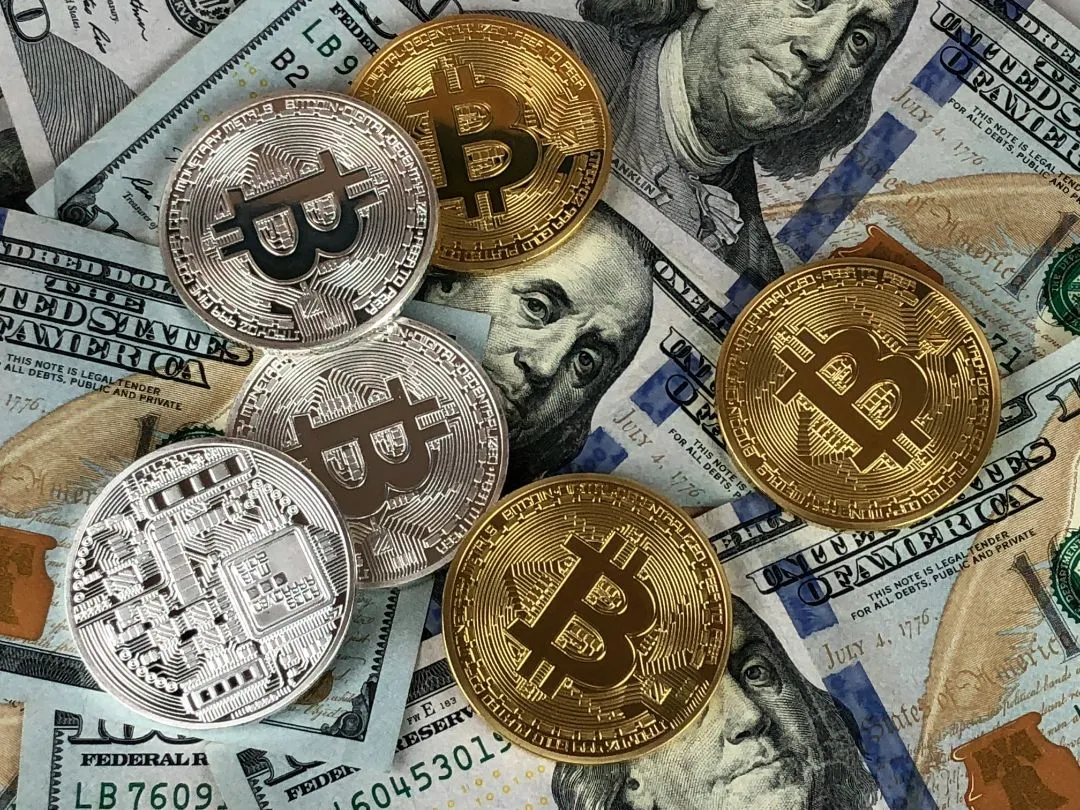
Photo by Tim Mossholder on Pexels

According to a report by local news outlet Business Watch, Bithumb Systems, a tech solution subsidiary of Bithumb Korea, has recently ceased operations. Bithumb System was launched in March of last year with the aim of advancing blockchain and exchange technology. However, due to the decline in the crypto industry and challenges in profitability, the company had to undergo liquidation.

An official from Bithumb Korea explained that the decision to close its tech solution arm was made in order to prioritize improving the competence of the exchange amidst the changing landscape of domestic and foreign markets.

Other affiliates of Bithumb Korea are also facing difficulties. For instance, Bithumb Live, an e-commerce platform jointly established by Bithumb Korea and content production firm Bucket Studio, has been on hiatus since October last year. The platform incurred a net loss of 10 billion KRW ($7.75 million). Bithumb Korea, holding 37.5% of Bithumb Live’s shares, invested 6 billion KRW ($4.65 million) into the platform in 2021. Bithumb Korea recognizes these investment losses using the equity method.

Additionally, Bithumb META, despite raising the highest amount of funds among its sister affiliates, has encountered challenges in making much progress since its establishment last year. Its NFT marketplace, Naemo Market, is still without a mobile application, and the introduction of its metaverse platform is still pending. Although Bithumb META managed to attract 9 billion KRW in investments last March from esteemed companies such as LG CNS, CJ OliveNetworks, and SK Square, it incurred a loss of 7 billion KRW ($5.4 million) in 2022.

Furthermore, earlier this month, it was reported that the exchange closed its research center due to a decline in trading volume, despite its importance in assisting investors to make better-informed decisions.

A representative from Bithumb stated that the company is actively seeking new sources of revenue through its mobile Wallet platform operator, Rotonda, and Bithumb META. However, given the market slowdown, Bithumb is now compelled to prioritize enhancing the competence of the exchange.

More to Read
View All
Policy & Regulation·

Sep 25, 2023

The Need for Crypto Regulation Improvements in South Korea

The Need for Crypto Regulation Improvements in South KoreaAlthough the cryptocurrency market entered a bearish phase last year, there are prospects for growth as regulatory inclusion and market transparency begin to improve. However, the domestic market is currently hindered by deepening monopolies and inadequate support policies, limiting the development of the industry, said Kim Jin-won, Executive Director of Korean crypto exchange COREDAX, during a conference last Friday in Seoul.The conference, hosted by the Federation of Korean Industries, invited experts to discuss the oncoming era of convergence and the current status and challenges of virtual asset legislation in South Korea, as well as the necessary steps for improving regulations on virtual assets.Photo by Kanchanara on UnsplashGlobal decentralization trendsOverseas, various decentralized projects, such as the integration of blockchain technology into traditional financial markets, have led to the growth of related markets such as Bitcoin futures, decentralized finance (DeFi), over-the-counter (OTC) trading, custodial services, the metaverse, and Web3. However, in Korea, the lack of clear guidance or policy management for crypto businesses and services prevents the market from thriving.Countries like the US and Japan as well as the European Union (EU) are overhauling regulations in order to dominate the global industry and market through blockchain technology and virtual assets. Kim emphasized that Korea also needs to incorporate such flexible regulatory improvements considering the likely possibility that various industries are going to thrive on crypto-related businesses.Challenging existing regulations and calls for clarityHe started off by stating that the implicit regulation known as the “One Exchange, One Bank” principle was created for administrative convenience and is acting as a barrier to entry into the crypto industry. He argued that it is a discriminatory regulation, especially considering the fact that securities firms choose to operate stock trading accounts through multiple banks.Regarding the standards for issuing bank accounts under real names, which will be determined by the Financial Intelligence Unit (FIU), he argued that they are difficult to comply with, even for banks that already have contracts with crypto exchanges. He called for the FIU to express a clear stance on the retroactive application of these standards to avoid potential consequences such as barriers to market entry for late-movers.“The crypto market — including DeFi, non-fungible tokens (NFTs), artificial intelligence (AI), the metaverse, and Web3 — is growing at an annual average rate of 12.8%, and is expected to reach a scale of $4.9 billion by 2030,” he said. “When combined with Web3 innovation, the metaverse will evolve into a 3D platform business that incorporates the use of payment methods, NFTs, and virtual assets.”Promoting innovation in the crypto industryTo foster such industry growth, it is necessary to actively explore new types of services as well as potential challenges. Innovative financial services should also be designated or promoted through regulatory sandboxes. The regulatory sandbox is a system run by the Korean government that exempts or suspends existing regulations for a designated amount of time for companies releasing new products and services and regulates them post-mortem if there is a problem.Kim went on to propose specific measures such as negative regulations — regulations that outline what is prohibited by law while allowing everything else — to promote new industries. He also suggested that banks should be allowed to engage in custodial services for virtual assets.Furthermore, he highlighted the need for cooperation between payment companies and crypto firms. “Payment service providers like Visa and Mastercard are already collaborating with global crypto exchanges to incorporate virtual assets into their businesses,” he said. “With companies like Tesla, eBay, and more adopting or considering adopting cryptocurrency as a payment method, we must consider allowing collaborations between domestic credit card companies, payment gateway companies, and crypto firms.”He also urged for the early approval of initial exchange offerings (IEOs) to stimulate the crypto market and advocated for support policies for virtual asset service providers (VASPs). He cited examples such as brokering transactions for security tokens, allowing OTC trading, requesting security token issuance assessments through system integration with account management agencies, and permitting outsourcing for issuance operations.

news
Web3 & Enterprise·

Sep 04, 2023

MARBLEX Introduces New Update to Multichain Service

MARBLEX Introduces New Update to Multichain ServiceSouth Korean gaming developer Netmarble announced last Friday that its blockchain subsidiary, MARBLEX, has updated its multichain service Warp.Photo by Shubham Dhage on UnsplashCross-chain accessibilityWarp is a bridge service that enables the exchange between its native token, MARBLEX (MBX), and bridge token, MBXL, while allowing MBX tokens to move across blockchain networks. With this update, BNB Chain users can now access services within the MBX ecosystem, including games and NFTs. The recent update is expected to attract an influx of BNB Chain users after MARBLEX previously entered into a strategic partnership with the network in February to expand its multichain ecosystem.Furthermore, MARBLEX intends to continue applying its convenient user-friendly service approach by maintaining its existing system for gas fee payments.Celebratory eventsMARBLEX is hosting special events worth a total of $240,000 to mark the new update, including an offering of liquidity pools in two forms — BNB-MBX pairs and USDT-MBX pairs — on the decentralized exchange PancakeSwap. The company also plans to reward MBX for staking in Syrup Pools within PancakeSwap, which are special staking processes where users can earn free tokens.The developer also plans to hold an online community event for service users.

news
Policy & Regulation·

Jan 08, 2024

Samjong KPMG and Xangle seminar says crypto market will improve this year

According to crypto data research platform Xangle, the crypto market is on the road to recovery this year thanks to positive outlooks on developments like a spot Bitcoin ETF, regulatory changes and diversified services.Photo by CHUTTERSNAP on UnsplashBitcoin’s resilienceSpeaking at a special seminar on virtual assets co-hosted by CrossAngle and accounting firm Samjong KPMG in Seoul last Friday, Kim Jun-woo, Co-Founder and CEO of Xangle, cited Bitcoin’s positive reputation as one of the reasons for the optimism. "There are reports that Bitcoin has a low correlation with risky virtual assets," he said. Public sentiment toward Bitcoin is also expected to improve this year as the global economy is expected to emerge from recession and manage a soft landing. Another major item on the agenda is a possible approval by the U.S. Securities and Exchange Commission (SEC) of a spot Bitcoin ETF this quarter. Web3 revolutionIn terms of innovative services, Kim stated that Web3 is expected to be actively implemented in local corporations after going through conceptual and technical testing stages. "In South Korea’s crypto market, (resources like) app stores and mobile phones exist, but there are no actual apps," Kim said. "I expect that figures from traditional finance and existing Web2 companies will enter the Web3 industry this year."  "Web2 companies will discover new business opportunities in Web3 and play a role in bringing existing content and users to Web3," said Lee Hyun-woo, Co-CEO of Xangle, in his presentation on the importance of Web3 system integration and virtual asset disclosure. "Their participation is important for the stable maturation of the Web3 ecosystem," he added. Regulation and governanceIn regards to policies and regulations, expectations point to a resolution of various uncertainties as cryptocurrencies are slowly becoming more integrated into the sphere of traditional finance. In South Korea, the imposition of basic legal regulations on virtual assets is accelerating, such as the Virtual Asset User Protection Act. The Financial Services Commission (FSC) also released guidelines for accounting and disclosure of virtual assets last month, which was examined in detail at the seminar. "The financial authorities' guidelines are more detailed than before. We expect additional guidelines from them in the future to further resolve shortcomings," Choi Yeon-taek, Managing Director of Samjong KPMG, commented.

news
Loading