Top

Indonesia Embraces XRP, ADA as Tradable Crypto Assets

Policy & Regulation·June 19, 2023, 11:44 PM

In a significant move towards cryptocurrency acceptance, the Indonesian government has taken a momentous step by including a range of digital assets, including XRP and ADA, in a recently published regulatory document.
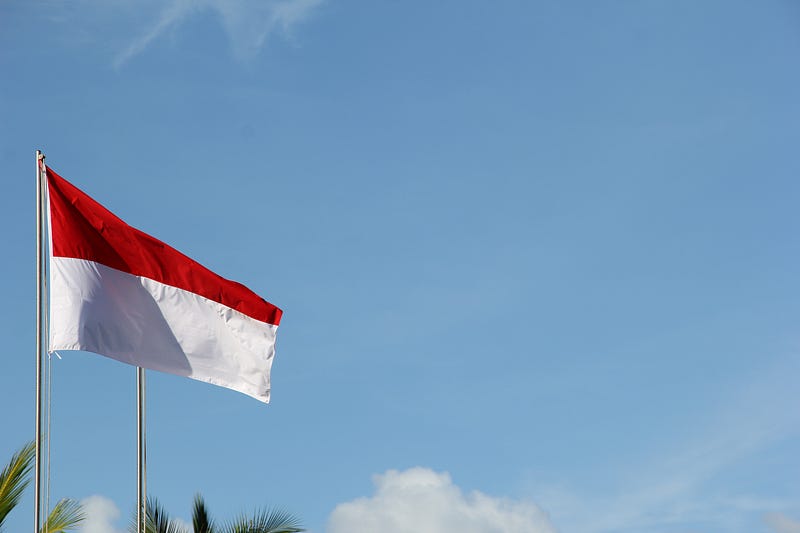
Photo by Nick Agus Arya on Unsplash


501 digital assets

The document, published earlier this month, comprises an extensive list of 501 cryptocurrencies that are eligible for trading within the country. Unsurprisingly, BTC and ETH feature on the list. Other notable cryptocurrencies that have been listed include SOL, LTC, DOT, SAND, and UNI. This development is seen as a positive stride towards wider crypto adoption and holds the potential for broader use of all of these assets. In the case of XRP, it provides it with greater potential to become a viable means of payment within the region in the future, even though current regulation within Indonesia prohibits payments for goods and services in anything other than the rupiah.


Defining tradable assets

The regulatory document, officially titled “Supervisory Body Regulation Commodity Futures Trading Number 4 of 2023,” signifies an amendment to the Trade Controlling Agency Regulations Commodity Futures Number 11 of 2022. Its main objective is to identify the assets that can be traded in the physical market of crypto assets within Indonesia.

Colin Wu, a prominent Chinese reporter, shared this significant development on Twitter, sparking interest and discussions within the crypto community. The news has been met with a mix of optimism and caution from Indonesian individuals. One Indonesian YouTuber expressed enthusiasm for the country’s XRP-friendly stance and voiced hope for XRP to eventually attain legal tender status. However, others, like Twitter user Pondok Indah, urged the government to focus on regulatory oversight and taxation rather than direct involvement in the crypto business.

This development takes place in the broader context of Indonesia’s evolving crypto landscape. According to a 2022 research report titled “The 2022 Global Crypto Adoption Index: Emerging Markets Lead in Grassroots Adoption ‘’ by Chainalysis, Indonesia ranked at the top among the 20 countries analyzed in terms of peer-to-peer (P2P) exchange trade volume. The country has demonstrated its active participation in the crypto market, with Indodax, the largest Indonesian exchange, adding support for FLOKI, an up-and-coming cryptocurrency, back in April.

That said, as we’ve seen in many other jurisdictions, the development of regulation and policy relative to digital assets has not been without its hiccups. Last month, the governor of Bali warned the foreign tourists that flock to the Indonesian island that there would be consequences for those that flouted Indonesian law and used crypto as a form of payment for goods and services.

Indonesia’s recognition of the potential benefits of digital assets demonstrates a path forward for other nations to follow. Providing regulatory clarity with regard to digital assets bolsters investor confidence but also opens doors for innovation and financial inclusion. In taking this approach, the Southeast Asian country is setting the stage through which digital assets can contribute to economic growth and technological advancement.


More to Read
View All
Policy & Regulation·

Jun 13, 2023

Sygnum Bank Achieves In-Principle MPI Licence Approval in Singapore

Sygnum Bank Achieves In-Principle MPI Licence Approval in SingaporeIn a significant milestone for its expansion efforts in Singapore and Southeast Asia, Sygnum Singapore has announced that it has received in-principle approval for its Major Payment Institution Licence (MPIL) application from the Monetary Authority of Singapore (MAS).Photo by Dids on PexelsOngoing global expansionThe Swiss-Singapore firm, headquartered in Zurich with an operational base in Singapore, disclosed this news via a press release published on Monday, marking a major stride forward for the company in its regulated crypto brokerage services.The world’s first digital asset bank also has offices in Abu Dhabi, the United Arab Emirates (UAE) capital, and Luxembourg. The digital assets innovation is progressing on a truly global basis. It’s also developing according to differing timelines on a regional basis relative to the regulatory approach being taken within individual jurisdictions. On that basis, we are seeing a move from many leading digital assets firms to expand internationally to benefit from jurisdictional regulatory arbitrage and in an effort to grow such businesses quickly, with a global reach.MPIL licensing significanceThe MPIL license will empower Sygnum Singapore to introduce a regulated crypto brokerage service that offers a fiat-digital asset gateway and facilitates trade execution for various cryptocurrencies. The platform aims to differentiate itself by providing competitive spreads, high liquidity, and swift trade settlements, in an effort to offer investors a seamless and efficient trading experience.This approval follows the extension of the Capital Markets Licence (CMSL) granted to Sygnum Singapore in 2022. With the CMSL extension, the company was able to launch an array of services encompassing corporate finance advisory, capital market products, and asset and security token custodial services.Wave of regulatory approvalThe approval of Sygnum Singapore’s MPIL application comes at a time when Singapore is witnessing a wave of regulatory acceptance for digital asset companies. Crypto.com and Circle are among the firms that have recently been granted full licenses, signifying a positive trend in the recognition and regulation of the digital asset industry in Singapore.Gerald Goh, Co-Founder and CEO of Sygnum Singapore, expressed his enthusiasm about the in-principle approval, highlighting its importance in the company’s growth plans: “This in-principle approval of our Major Payment Institution Licence by the MAS is a milestone in our strategic growth plans for Sygnum Singapore and South-East Asia.”He emphasized that Singapore’s regulatory framework provides the necessary clarity and confidence for investors to participate in the digital asset market: “Like Switzerland, Singapore has a progressive, robust regulatory framework that provides investors the clarity and confidence to invest in digital assets — and Future Finance — with complete trust.”The approval of the MPIL application is expected to bolster Sygnum Singapore’s position as a leading regulated digital asset service provider in the region. By obtaining this license, Sygnum strengthens its global position within the digital assets space while complementing Singapore’s efforts to develop as a regional crypto hub.

news
Web3 & Enterprise·

Aug 04, 2023

Dunamu Helps Adolescents Tell the Difference between Blockchain and Bitcoin

Dunamu Helps Adolescents Tell the Difference between Blockchain and BitcoinDunamu, the fintech company operating South Korea’s leading crypto exchange Upbit, announced on Thursday that its digital finance education program designed to help foster talent in digital finance amidst the current era of digitization and fintech has come to an end.Photo by Element5 Digital on UnsplashEmpowering digital finance literacy for the future generationDubbed “Duniverse” — a portmanteau of Dunamu and universe — the program was held from May to July for 4,100 middle school students throughout Seoul, Gyeonggi Province, and Incheon. The curriculum proved to enhance their understanding and literacy in digital finance.“Digital finance education for adolescents is essential in addressing various social issues, such as preventing financial accidents and income polarization,” said Lee Sirgoo, CEO of Dunamu.The first Duniverse program was held last year, hosting some 4,800 middle school students in vulnerable areas of Gyeonggi Province. Owing to the positive response, this year’s pool has been expanded to over 7,000 first-year middle school students in Seoul, Gyeonggi Province, and Incheon. In the first half of this year alone, a total of 4,120 students from 17 middle schools participated.The program featured lessons on the technologies of the Fourth Industrial Revolution, such as blockchain, NFTs, and metaverse, as well as basic financial knowledge. A total of eight sessions were led by a team of qualified instructors with years of experience in economic education. Dunamu employees also directly contributed to the review process of educational materials, the company said.Success recognized by students and teachers alikeIn a survey conducted by Dunamu targeting 435 participants, 93.1 percent of them expressed high satisfaction, stating that their understanding of digital finance improved. This portrays a meaningful upgrade from the answers of a previous survey conducted before the start of the program, where six out of ten respondents said that they had little knowledge about digital finance.They also reported that they now understand the difference between digital asset ownership and copyrights as well as blockchain and Bitcoin, and show interest when coming across digital finance-related content in the media.School teachers also praised the program for addressing blind spots in financial education and taking a proactive learning approach. “The students were able to learn about big data, ChatGPT, and more, which is especially valuable since such education for teenagers is still lacking. I believe it will help boost their competitiveness in the future job market,” said a teacher from Goam Middle School in Yangju, Gyeonggi Province.The teachers also approved of other topics that were covered, such as financial fraud prevention, to help teenagers avoid falling victim to financial scams. Suggestions were also made to expand teacher training courses.Upcoming programThis year’s second Duniverse program will be held from August to December for 2,712 middle school students in Seoul, Gyeonggi Province, and Incheon.Dunamu has continually devoted efforts to boosting social welfare and nurturing young talent. This includes “Dunamu Next Steppers,” a hope fund for young people with multiple debts, along with supporting emerging talents and artists with developmental disabilities in their participation in NFT projects.

news
Markets·

May 06, 2025

3 UAE-based firms sign $3B tokenized real estate deal

MultiBank Group, a global financial derivatives company headquartered in Dubai, has partnered with two other United Arab Emirates (UAE)-based firms, real estate giant MAG and tokenized real-world asset (RWA)-focused blockchain infrastructure provider Mavryk, in a $3 billion tokenized real estate deal.Photo by Tierra Mallorca on UnsplashWhile a large proportion of MAG's business activities center around the Dubai real estate market, MAG Group is a multinational conglomerate with a portfolio that includes commercial and residential developments and high-end luxury real estate projects.  According to a press release published on May 1, this $3 billion deal implicates MAG’s luxury developments, such as The Ritz-Carlton Residences in Dubai and other properties located within the Keturah Resort and Keturah Reserve in the UAE’s most populous city. These properties will be tokenized and hosted on the blockchain through MultiBank.io’s regulated tokenized RWA marketplace. Mavryk will provide the necessary infrastructure, with the tokenized assets running on its blockchain network. The deal provides another indication of the growing role of tokenization, with it being the largest tokenized RWA deal to have been put together to date. The Mavryk Network testnet was launched in February, with Mavryk Network developer Mavryk Dynamics securing $5 million in funding to establish a tokenized RWA network economy. In this instance, Mavryk will provide support in terms of on-chain asset issuance and DeFi integrations. Not just a real estate dealTalal Moafaq Al Gaddah, senior executive vice chairman of MAG, said that the project “marks a milestone in broadening access to high-value developments and unlocking liquidity via blockchain.” Al Gaddah also commented on the MBG token, stating:“$MBG token provides ecosystem utility, including trading discounts, early access to properties, and a deflationary buyback-and-burn model.” MBG is a MultiBank utility token which features deflationary tokenomics. It will be used to enable staking and lower trading fees. The token is scheduled to be launched on June 2. MultiBank.io Founder and CEO Zak Taher highlighted the importance of the token launch alongside this tokenized real estate deal. He stated:“This isn’t just a real estate deal — it is a flagship use case for the $MBG token. By enabling seamless access to $3B in tokenized property, MultiBank becomes the bridge between regulated finance and next-generation investment infrastructure.” Dual utilityAl Gaddah referred to the duality of the tokenized real estate offering:“Tokenized assets issued by MultiBank will have dual utility. Within the MultiBank Group, they can be used as collateral for derivatives, creating a seamless bridge between traditional finance and tokenized assets.” RWA tokenization has been gaining momentum within the UAE recently. It emerged last month that the Dubai Land Department (DLD), a government agency responsible for the registration of real estate in Dubai, had signed an agreement with local regulator the Virtual Assets Regulatory Authority (VARA) to integrate tokenized real estate within existing systems.  Around the same timeframe, blockchain technology firm Serenity signed a partnership with Dubai’s MTA Real Estate to develop a tokenized real estate platform. Last year RWA-focused layer-1 blockchain project MANTRA Chain announced that it would tokenize $500 million in real estate assets in Dubai.

news
Loading