Top

Gulf Binance Secures Thai Digital Asset License

Policy & Regulation·May 27, 2023, 1:18 AM

Binance, one of the world’s leading cryptocurrency exchanges, has secured a digital asset operator license in Thailand, paving the way for the launch of a new crypto exchange and broker. The license, granted by the Ministry of Finance of Thailand and overseen by the Southeast Asian country’s Securities and Exchange Commission (SEC), ensures that the upcoming platform will operate in compliance with regulatory requirements.
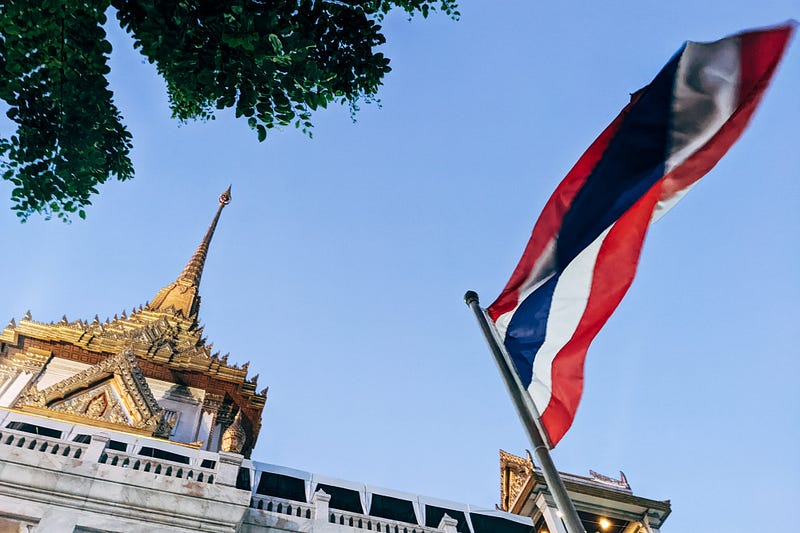
Photo by Markus Winkler on Unsplash


License award

The license was awarded to Gulf Binance, a joint venture between Binance and Gulf Innova Co., Ltd., a subsidiary of Gulf Energy Development PCL. It marks a significant milestone in Binance’s expansion efforts. The partnership was initiated through a memorandum of understanding signed in January 2022, as both parties recognized the potential of establishing a digital asset exchange in Thailand.

Richard Teng, the head of Asia, Europe, and MENA at Binance commented on the development: “By harnessing Binance’s expertise together with Gulf’s established local presence and network, Gulf Binance aims to showcase the full potential of blockchain technology to meet the needs of Thai users. Local users can expect access to a trusted and regulated service that prioritizes user security alongside compliance with local regulations.”


Combined expertise

Gulf Innova, as a prominent player in the Thai business landscape, brings extensive expertise and experience in the digital asset trading sector to the joint venture. The conglomerate, headed by billionaire Sarath Ratanavadi, operates in various industries, including energy production, telecommunications, and digital businesses.

By combining Binance’s unparalleled growth and expertise in the digital asset space with Gulf’s established presence and knowledge in Thailand, the partnership aims to create a powerful synergy that drives innovation, fosters growth, and provides exceptional value to users in the digital asset ecosystem.


Q4 launch

The new crypto exchange is expected to commence operations in the fourth quarter of 2023, although further details about the platform will be disclosed closer to the launch.

Often criticized for its opaque structure, Binance is showing renewed commitment to transparency and regulatory compliance. As regulatory frameworks are put in place in varying jurisdictions, global crypto businesses are having to change corporate structures in order to meet these changing requirements. That’s evidenced by Binance’s Thai joint venture, its launch of a separate corporate entity in the form of Binance Japan and a similar move by crypto exchange BitMEX in Hong Kong.

Thailand has emerged as a significant cryptocurrency hub in Southeast Asia, with its capital city, Bangkok, ranked 10th globally in The Crypto Readiness Index published by Recap, a cryptocurrency tax software company. Despite the ban on cryptocurrencies as a payment method, Thailand continues to flourish as a hub for trading and investment activities in the crypto space.

That ban on cryptocurrency payments, implemented by the SEC in April 2022, aimed to safeguard the stability of the financial system and mitigate potential risks to the economy. The SEC identified price volatility, cyber theft, and personal data leakage as concerns associated with cryptocurrencies. However, the regulatory measures did not impede trading or investment activities, allowing the crypto industry to thrive.

Chainalysis, a leading blockchain analysis company, ranked Thailand 8th in its Global Crypto Adoption Index for 2022, surpassing countries like Russia, China, Nigeria, Turkey, Argentina, and the UK. This recognition highlights Thailand’s progressive stance toward digital assets and its growing adoption within the country.

More to Read
View All
Web3 & Enterprise·

Jun 20, 2023

Conflict Identified as Crypto.com Trading on its Own Platform

Conflict Identified as Crypto.com Trading on its Own PlatformTrading practices at Crypto.com, the Singapore-based cryptocurrency exchange, have raised questions about potential conflicts of interest within the digital assets industry.Citing a number of unnamed sources, the Financial Times (FT) made the claim in a report published on Monday.Photo by Pixabay on PexelsConflict of interestIn traditional financial markets, exchanges typically match buyers with sellers at competitive transparent prices, while market making and proprietary trading are conducted by separate private companies. However, US regulators have recently cracked down on similar activities at digital asset exchanges. Binance, the world’s largest crypto exchange, faced 13 charges from the US Securities and Exchange Commission (SEC), including allegations of manipulative trading to inflate trading volume.The presence of internal traders at Crypto.com has not been widely known since the company’s launch in 2016. The FT’s sources claim that Crypto.com executives provided sworn statements to external trading houses denying the company’s involvement in trading activities.Employees were allegedly instructed to deny the existence of an internal market-making operation. In response to inquiries, Crypto.com denied that employees were asked to lie, stating that their internal market maker functioned similarly to third-party market makers, ensuring tight spreads and efficient markets on their platform.The majority of Crypto.com’s revenue reportedly comes from its app for retail traders, where the company acts as the counterparty for transactions and operates as a broker model. The company’s trading team hedges these positions on various venues, including their own exchange, to maintain risk neutrality. Crypto.com emphasized that their exchange provides a level playing field for institutional traders.According to insiders, Crypto.com’s proprietary trading desk engages in trading activities on the company’s exchange and other platforms, solely focused on generating profits rather than facilitating an exchange. The market making desk, on the other hand, aims to enhance liquidity on the platform.Not a revenue sourceCrypto.com defended its practices by stating that comparing trading volumes to competitors is common in the industry. It said that the company’s priority is to continuously improve order book liquidity and reduce spreads, benefiting all participants. The firm told Decrypt that trading is not a source of revenue: “While we do have some market making activity, for example, we have internal market makers for our CFTC-regulated product Up/Downs in the United States.”As a private company, Crypto.com publishes accounts in different countries, but revenue breakdown by business line is not disclosed.Closure of institutional tradingFollowing the SEC’s enforcement actions, earlier this month Crypto.com announced the closure of its exchange for institutional US traders due to limited demand in the current market landscape, effective from June 21.In any marketplace transparency and fairness are crucial. It’s fair to say that there has been some level of sharp practice among some actors in the marketplace while regulators have been lacking in getting up to speed with the emergent sector, and moving to protect consumers. With the major crypto platform failures of 2022 has come renewed interest in resolving these issues. That may make for some short-term difficulty, but in the longer term, it should mean greater protections for market participants so long as a common sense approach is pursued.

news
Web3 & Enterprise·

Jun 13, 2025

Ant Group preparing to apply for stablecoin licenses in Hong Kong & Singapore

Ant Group, a Chinese financial services conglomerate and affiliate of the Alibaba Group, has plans to acquire stablecoin licenses across Asian markets and further afield. Its Singapore-headquartered global digital payments and financial technology subsidiary, Ant International, plans to file an application for a stablecoin license in Singapore and in Hong Kong once the Chinese autonomous territory implements its stablecoin regulation later this summer.  That’s according to a report published by Bloomberg on June 12, citing unnamed sources familiar with the matter. Beyond the Asia-Pacific (APAC) region, Ant International also plans to seek a stablecoin license in Luxembourg.Photo by Ban Daisy on Unsplash2 Hong Kong stablecoin license applicationsIn a statement, Ant International stated: “We plan to apply for the fiat-referenced stablecoins (FRS) issuer's license once the process is open after the [Hong Kong] Stablecoins Ordinance takes effect on August 1.”Additionally, Bian Zhuoqun, president of Ant Digital Technologies, another Ant Group subsidiary focused on applying digital technologies, confirmed that it too will be applying for stablecoin licensing in Hong Kong.  Zhuoqun told reporters that the company has already opened dialogue with the regulator in Hong Kong, while also participating in a regulatory sandbox. While the company wasn’t a named participant within Hong Kong’s stablecoin sandbox, it had previously participated in Project Ensemble, an initiative run by the Hong Kong Monetary Authority (HKMA) aimed at establishing a tokenization ecosystem in the city. Exploring stablecoin applicationsOn June 10, Ant International and German multinational investment bank Deutsche Bank announced a strategic partnership geared towards establishing integrated cross-border payment solutions to global merchants.  The two firms stated that they would explore tokenized bank deposits while also looking into stablecoin applications for global payments. It highlighted the potential use of stablecoins within Ant companies, facilitating real-time cross-border treasury management, reserve management and on-ramp and off-ramp services. Back in November, Singapore-headquartered StraitsX, a stablecoin-based payments startup, launched a cross-border payments product in association with AliPay+, Ali International’s offshore digital payments platform. A key component of the product offering is the use of the XSGD stablecoin. Hong Kong passed its stablecoin bill last month. Last week, the city’s government outlined that the effective date for the resultant Stablecoin Ordinance has been set for Aug. 1. Under the Ordinance, only licensed institutions are authorized to offer fiat-referenced stablecoins in Hong Kong, while the issuer of such a stablecoin must be licensed in order for it to be offered to a retail investor. Last month, multinational banking and financial services group HSBC launched Hong Kong’s first blockchain-based settlement service, utilizing tokenized deposits for swift transactions. The company collaborated with Ant International, which became the first client of the service. Entering the financial mainstreamA Financial Times report published on June 12 asserted that stablecoins are entering the financial mainstream, a development that “could have profound implications for the global financial system.” Earlier this week, the South China Morning Post (SCMP) reported that Hong Kong’s stablecoin law could lead to a boom in digital assets.Daniel Tse, managing director of Hong Kong brokerage firm Futu Securities, told the SCMP: “We’re seeing a significant trend in investments related to stablecoins on our platform, which highlights the growing importance of this sector.” 

news
Policy & Regulation·

Nov 23, 2023

Singaporean takes helm at Binance as CZ steps aside

Singaporean takes helm at Binance as CZ steps asideIn a significant leadership shift, Richard Teng, a seasoned professional with an extensive background in regulatory affairs, has assumed the role of Chief Executive Officer at Binance.News of the appointment came on Tuesday, in a tumultuous day in the crypto sector that saw Binance Founder and CEO Changpeng Zhao (CZ) step down following criminal charges in the U.S.Photo by Syed Hussaini on UnsplashStarting out at Binance SingaporeTeng, a Singaporean industry veteran, initially joined Binance in 2021 as the CEO of Binance Singapore, demonstrating his efforts at bolstering global compliance for the crypto giant. His trajectory within the organization has been noteworthy, progressing from leading regional markets to ultimately becoming the CEO. Binance’s official statement highlights Teng’s diverse experience, overseeing regions such as the Middle East and North Africa (MENA) and Europe, culminating in his responsibility for all markets outside the U.S.Before joining Binance, Teng held the position of CEO at the Financial Services Regulatory Authority at Abu Dhabi Global Market (ADGM). He had taken up that role following a spell as Chief Regulatory Officer at SGX, a Singapore-based multi-asset exchange, where he showcased his leadership in regulatory divisions, specifically shaping policies related to listing trading and clearing activities.Teng’s career is further distinguished by a 13-year tenure at the Monetary Authority of Singapore (MAS), where he served in various capacities, including Director of Corporate Finance. His involvement in regulatory matters spanning banking, insurance and capital markets, particularly during the late 1990s transformation of Singapore’s financial services sector, underscores his deep understanding of industry dynamics.In a statement, Teng expressed his commitment to leveraging his three decades of financial services and regulatory experience to guide Binance’s innovative team. Taking to the X social media platform, he stated:”We operate the world’s largest cryptocurrency exchange by volume. The trust placed on us by our 150m users and thousands of employees is a responsibility that I take seriously and hold dear. With CZ, and our leadership team’s support, I have accepted this role so that we can continue to meet and exceed the expectations of stakeholders while achieving our core mission, the freedom of money.”Setting prioritiesWhile the broader crypto community was still digesting the settlement that had been struck by Binance and CZ with the Financial Crimes Enforcement Network (FinCEN), the U.S. Commodities Futures Trading Commission (CFTC) and the Office of Foreign Assets Control (OFAC) in charges related to money laundering, unlicensed money transmission and sanctions violations, Teng was already setting out his objectives going forward.Teng outlined that his focus will turn towards “reassuring users that they can remain confident in the financial strength, security and safety of the company.” Secondly, the industry veteran intends to concentrate efforts on “collaborating with regulators to uphold high standards globally that foster innovation while providing important consumer protections.” Lastly, Teng highlighted “working with partners to drive growth and adoption of Web3” as another area where he will focus his attention.Analysts from American multinational financial services giant JPMorgan said on Wednesday that they see the Binance settlement as a positive for the crypto space as it removes uncertainty and risk from the company and the sector overall.

news
Loading
