Top

Korean Crypto Exchange Operator Airdrops NFTs to Raise Biodiversity Awareness

Web3 & Enterprise·May 18, 2023, 2:04 AM

Dunamu, the operator of Upbit, one of South Korea’s leading cryptocurrency exchanges, made an announcement on Thursday regarding its initiative to raise awareness about biodiversity threatened by climate change. In collaboration with four organizations affiliated with the Ministry of Environment, Dunamu plans to transform Climate-Sensitive Biological Indicator Species (CBIS) into non-fungible tokens (NFTs), as reported by news media Daily Hankook.

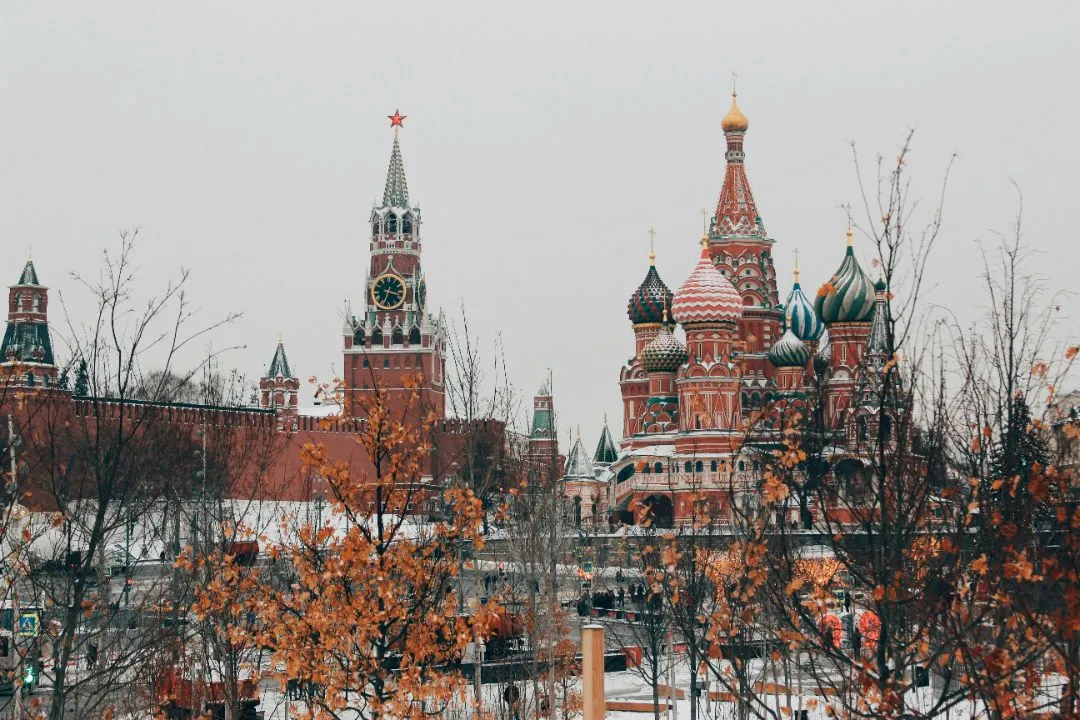
Photo by Alin Andersen on Unsplash


Affected biological species

CBIS encompasses biological species that have experienced significant changes in their seasonal activities, distribution areas, and population sizes due to climate change. These species require ongoing research and management by the government. The National Institute of Biological Resources (NIBR) of the Ministry of Environment compiled a list of 100 such species in July 2010. This list was created to facilitate the efficient monitoring of climate change’s impact on the distribution and vulnerability of biological species on the Korean Peninsula.

The initiative is part of the Resource Circulation Climate Action Campaign organized by Dunamu with four environment agencies, namely the NIBR, the Nakdonggang National Institute of Biological Resources (NNIBR), the Honam National Institute of Biological Resources (HNIBR), and the National Institute of Ecology (NIE). Its key objective is to protect the habitats of plants and animals while raising awareness about biodiversity conservation.


Species vanishing every 15 minutes

With climate change causing the extinction of one species every 15 minutes, the project aims to raise awareness about this distressing trend. In pursuit of this goal, 15 NFT editions will be distributed through four separate events over the course of a year, commencing on May 19. The participating artists include Jjawook, an artist with developmental disabilities; Jin Kwan-woo, an artist renowned for depicting endangered species using the Korean alphabet Hangul; and members of the Botanical Artists Society of Korea.


NFT release plan

The initial set of NFTs to be airdropped includes three species: the warbling white-eye, the common camellia, and the house holly-fern. These species have historically inhabited coastal regions of islands. However, as a result of climate change, their distribution and habitat have been shifting towards inland or northern areas.

To obtain CBIS NFTs, individuals can visit Dunamu’s metaverse platform 2ndblock. Once there, they will have the opportunity to engage in a resource collection mission. Upon successfully completing the mission, users will receive an NFT gift code. To claim their NFTs, they need to register the provided NFT gift code on the Upbit NFT marketplace.

Dunamu CEO Lee Sirgoo expressed his hope that the project would have a positive impact on raising awareness about biodiversity conservation on the Korean Peninsula, which is under threat from climate change. He stated that Dunamu intends to continue utilizing its technology and expertise in diverse ways to contribute to a sustainable future and environment.

HNIBR Director Ryu Tae-chul believes that the campaign will encourage recycling in communities to reduce carbon emissions and serve as an inspiration for individuals to actively engage in initiatives that promote a sustainable and biologically diverse planet.

More to Read
View All
Web3 & Enterprise·

Apr 20, 2023

Koscom Partners with LG CNS to Develop Joint Security Token Platform

Koscom, the technology subsidiary of the nation’s sole securities exchange operator Korea Exchange, has partnered with LG CNS, an information technology service provider, to launch a joint security token platform, according to a Koscom announcement. Task and tech allianceThe collaboration between Koscom and Korean conglomerate LG Group’s affiliate aims to gain a competitive advantage in the increasingly crowded security token market. On Monday, Koscom signed a memorandum of understanding with LG CNS in Seoul to form a task and technology alliance for security token projects.The partnership will combine Koscom’s expertise in building tech-based capital market infrastructure with LG CNS’s blockchain technology to produce fruitful outcomes. The joint project intends to provide distributed ledgers and a joint platform for the issuance and distribution of security tokens. Securities firms operating their own platforms can also choose to use its distributed ledgers. Koscom’s preparationSince last year, Koscom has been conducting research in security token offering and has formed a working group with eight securities firms that have their own security token teams. The working group has been hosting seminars regularly since the second half of last year, and on April 4, Koscom revealed its project plan to 25 other Korean securities firms. LG CNS’s readinessLG CNS has been conducting research and development of security token technologies since last year and has complied with the Korean regulatory framework. The company manages a consortium blockchain network and has completed the development of key technologies for security token services, such as highly secure wallets.Using its corporate blockchain platform Monachain, LG CNS has achieved success in developing multiple projects, such as a pilot for central bank digital currencies involving NH Bank and Woori Bank and a non-fungible token (NFT) trading system for Bithumb Meta, a subsidiary of the major Korean crypto exchange Bithumb.Meanwhile, Koscom will support security token projects of not only securities companies but also fractional investment firms and banks. Currently, Koscom is in talks with relevant entities about building infrastructure.

news
Web3 & Enterprise·

Jun 09, 2023

Parachain Fork Sees Transition to Enjin Blockchain

Parachain Fork Sees Transition to Enjin BlockchainEnjin, a Singapore-headquartered non-fungible token (NFT) platform, has announced its transition to a new mainnet named Enjin Blockchain, with the goal of further advancing Web3 adoption. As part of this transition, Enjin has forked its Polkadot parachain, Efinity, to the new blockchain.The project made the announcement via a blog post published to its website on Thursday.Photo by Shubham Dhage on UnsplashIntegrated functionalityAccording to the team at Enjin, the Enjin Blockchain distinguishes itself from other blockchain solutions by integrating functions such as NFT creation and transfer directly into the foundational code of the blockchain, eliminating the reliance on smart contracts. This integration aims to streamline and simplify the process of creating and transferring NFTs.In addition to this fundamental change, the Enjin Blockchain introduces several new features. One notable feature is “Fuel Tanks,” which enables developers to subsidize user transaction fees, making it more cost-effective for users to interact with the blockchain. Another feature is “Discrete Accounts,” which allows users to engage with blockchain-based projects without the need to download specific wallet software.Fork to Efinity MatrixchainAlongside the transition to the Enjin Blockchain, the team has also forked Efinity, the Polkadot parachain, to the new mainnet. This rebranded version will be known as the Efinity Matrixchain and will facilitate a smooth transition for existing users.Witek Radomski, the Co-Founder and Chief Technology Officer of Enjin, emphasized that the launch of the Enjin Blockchain aims to support creativity by making the creation and distribution of NFTs more accessible and affordable. Radomski stated: “Enjin Blockchain makes the creation and mass distribution of NFTs affordable and accessible to everyone. Our aim is nothing short of revolutionizing gaming, ownership, and online identity.”Enjin’s chief financial officer, Oscar Franklin Tan, expressed his belief that NFTs and digital ownership will be pivotal in the future of gaming, particularly with advancements in artificial intelligence, augmented reality, and virtual reality. Tan emphasized Enjin’s commitment to supporting this next wave of gaming and the resulting “explosion of content.”Enjin believes that it sets itself apart from the competition due to the fact that it’s built on top of the open-source Substrate framework, a mechanism that facilitates the development of customized blockchains that may be run on an entirely autonomous basis.Using this unique approach, Enjin Blockchain doesn’t depend upon the use of smart contracts. Instead, critical functions such as creating, using, and transferring NFTs are integrated directly into the core, foundational blockchain code.NFT lending stabilityIn related news, the stability of NFT lending has been aided by the use of blue-chip collateral. Paraspace, an NFT protocol, recently reported that despite facilitating NFT loans totaling over $280 million, it experienced no bad debt and only 16 NFT liquidations. This success can be attributed to the protocol’s requirement that only blue-chip NFTs can be used as collateral, ensuring the value and stability of the assets involved.As Enjin embraces its new mainnet and the Efinity Matrixchain, the platform positions itself as a key player in the evolving NFT and blockchain landscape. With a focus on accessibility, affordability, and the support of creative endeavors, Enjin aims to drive innovation in gaming, ownership, and online identity.

news
Web3 & Enterprise·

Sep 11, 2023

UAE’s Royal Office Visits Korea to Further Security Token Collaboration with AIITONE

UAE’s Royal Office Visits Korea to Further Security Token Collaboration with AIITONEAIITONE, a Korea-based augmented reality firm specializing in security tokens, invited journalists to showcase its strategy to foster business collaborations between South Korea and the United Arab Emirates (UAE) on the occasion of the Korean visit of the Private Office of His Highness Sheikh Ahmed Bin Faisal Al Qassimi.Photo by Ethan Brooke on UnsplashPrivate Office’s return visitThe Private Office is a Dubai-based corporate conglomerate that operates businesses in various areas including real estate, energy, and finance. This visit by the Private Office marks a return visit following AIITONE’s visit to the UAE in July.The conference took place at a hotel in Gangnam, Seoul, and was attended by Lee Jin-yeop, CEO of AIITONE; Bruce Jeong, Chairman of Middle East Investment; and H.H. Sheikh Ahmed Bin Faisal Al Qassimi.Security tokens, CBDCs, smart defenseChairman Jeong, leading AIITONE’s global initiatives, said that their primary endeavor is to set up a Korean branch of the Royal Office. This branch will function as an international business hub, facilitating collaborations across three key sectors: security tokens, central bank digital currencies (CBDCs), and smart defense ventures.The event also featured presentations by AIITONE officials who introduced the company’s focus areas.Kang Man-soo, who leads AIITONE’s defense unit, highlighted the company’s technical expertise in maintenance training equipment, interactive electronic technical manuals, and integrated system support. He pointed out that AIITONE has been actively involved in the development of technical manuals and training simulators for various defense assets, including warships, guided weapons, and fighter aircraft. Kang emphasized that AIITONE’s strategic partnerships with Korean defense firms have propelled their engagement in initiatives aimed at exporting these products to countries such as Indonesia, Malaysia, and Poland.Lee Joo-hyung, the head of AIITONE’s extended reality (XR) content division, revealed the company’s plan to create portable products that can replicate the physical sensations of the real world, including sensations like physical contact and heat. Additionally, Lee introduced MOUM, a metaverse platform that features blockchain-powered security functions and generative artificial intelligence (AI) capabilities.Park Sang-il, who is at the helm of the firm’s security token project, showcased AIITONE’s comprehensive security token platform, which enables users to both issue and distribute security tokens. Notably, the platform is compatible with hyperledgers Besu and Fabric.Since arriving in Korea last Wednesday, the Royal Office has met with representatives from Standard Chartered Bank Korea and lawyers from law firm Kim and Chang, as well as lawmaker Yang Hyang-ja. Additionally, the Royal Office made a visit to smart farms located in South Jeolla Province.H.H. Sheikh Al Qassimi expressed a high regard for South Korea, acknowledging its beautiful natural landscapes and significant economic development. He underlined that this visit serves as an opportunity for the Royal Office to strengthen cooperation between UAE companies and their Korean counterparts, further fostering economic exchanges between the two countries.

news
Loading