Top

OKX Wallet to Support BRC-20 Tokens and Bitcoin Ordinals

Web3 & Enterprise·May 17, 2023, 12:23 AM

In a press release published on Tuesday, Seychelles-based cryptocurrency spot and derivatives exchange OKX announced that it is in the process of enabling an Ordinals marketplace on the OKX Wallet, which will enable customers to mint and trade BRC-20 tokens.
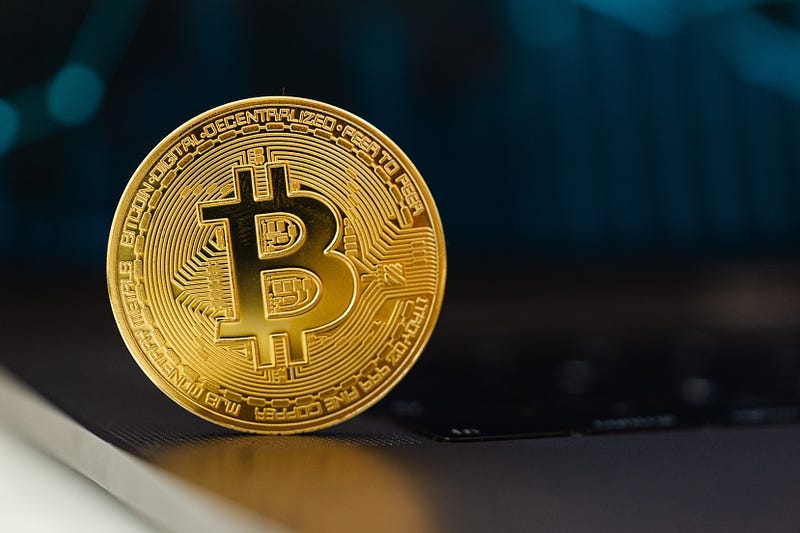
Photo by Karolina Grabowska on Pexels


Rising BRC-20 market cap

The move will also enable users to inscribe non-fungible token (NFT)-based digital content on the Bitcoin blockchain by way of ordinal inscriptions. The market capitalization of BRC-20 tokens has been rising exponentially over the course of the past few weeks despite only being in existence since March.

BRC-20 is an experimental token standard which was created by an anonymous developer with the handle “Domo” and username ‘@domodata’ on Twitter. A token standard governs how and where a cryptocurrency can be used. The approach has been pioneered by developers on the Ethereum blockchain who created the ERC-20 standard a number of years ago, relative to the Ethereum network.

OKX has clearly identified a rising trend and wants to be an early adopter in benefiting from it. In their short existence, BRC-20 tokens have mainly implicated meme tokens but as more experimentation follows, use cases that rely on the token standard are likely to expand.

Binance has signaled a similar intent, having stated last week that before the month is out, Bitcoin Ordinals will be added to its NFT marketplace. Ordinals preceded the development of the BRC-20 standard by a couple of months, with over five million of the inscriptions having been generated since they emerged. It’s believed that the minting of those Ordinals has generated fees to the value of around 1,000 BTC (or $27 million as per the BTC/USD price at the time of publication).


Growing pains

While the emergence of the BRC-20 standard and Bitcoin Ordinals brings quite a lot of excitement to a bitcoin blockchain that many found to be boring and lacking diversity in terms of potential use cases, it’s not been without its problems. On the one hand, these tokens and inscriptions make use of unused block space on the network.

They also offer a solution to the longer term issue of a reduction in fees. The bitcoin blockchain in-built subsidy to miners is halved every four years, meaning that there will be a need for fees to sustain the incentive to miners to continue to secure the network.

The downside to these recent developments is that the new tokens are going beyond using up unused block space. Instead, they’ve been responsible for driving Bitcoin transaction fees up to uncomfortable levels over the course of the past two weeks. It’s still early days in terms of this development, so there is every hope that developers can find solutions to the issue.

Last week, Singapore-based project OmniBOLT announced that it will support BRC-20 tokens on Lightning Network. Taking some of this activity away from the bitcoin mainnet will serve to dampen excessive transaction costs and transaction delays due to an excessively long queue of transactions within the bitcoin mempool.

The recent transaction cost difficulty relative to Bitcoin has prompted Binance to respond by stating its intention to add support for Lightning Network transactions in the not too distant future. OKX already supports Lightning transactions but not from within its wallet. As part of this announcement, the company stated that Lightning support will be coming to its wallet in the near future.


More to Read
View All
Policy & Regulation·

Oct 30, 2023

Flybit Achieves Top Score in FIU’s Anti-Money Laundering Assessment

Flybit Achieves Top Score in FIU’s Anti-Money Laundering AssessmentSouth Korean virtual asset exchange Flybit said Monday that it has received the highest rating in the comprehensive anti-money laundering (AML) evaluation conducted annually by the Financial Intelligence Unit (FIU) under the Financial Services Commission for all financial companies in Korea.Photo by REDioACTIVE on PixabayRanking among top-performing financial institutionsThe comprehensive AML evaluation is aimed at facilitating the optimal establishment and implementation of strong AML systems. It is operated under a control system where financial authorities assess and oversee a given company’s AML risk management, and the company receives verification on the adequacy of its risk management levels.In this year’s evaluation, Flybit achieved a score of 89.70, scoring in the highest ranks among all financial institutions, including virtual asset service providers (VASPs). This places Flybit among the upper echelons of financial companies that received an “Excellent” rating, which make up only 15% of all evaluated firms.Robust and varied effortsThe exchange explained that it has taken a risk-based approach (RBA) to control and manage its AML risk factors that were found in the results from the FLYBIT Enterprise-Wide AML Risk Assessment (FARA) — an AML risk assessment model developed in-house — and the FIU’s semi-annual AML system compliance evaluation, where FLYBIT was deemed as a “self-monitoring” company.Notably, Flybit operates customized AML education programs for different ranks and job roles within its corporation, which leverages both external and internal resources, including the Korea Banking Institute. It also conducts over 40 hours of advanced-level training — three times longer than the FIU recommendation — for employees directly involved in AML-related tasks.“The basis for this [evaluation] result was the active interest and support of the management, as well as the operation of a specialized AML control system for VASPs,” said Seol Ki-hwan, a compliance officer in charge of AML reporting at Flybit. “In the future, we will continue our efforts, not only in AML compliance but also in fulfilling our responsibilities and roles as a model VASP.”

news
Policy & Regulation·

Dec 11, 2023

South Korean FSC updates definition of virtual assets and VASP regulations for Virtual Asset User…

South Korean FSC updates definition of virtual assets and VASP regulations for Virtual Asset User Protection ActThe South Korean Financial Services Commission (FSC) on Monday (local time) published a new enforcement decree and supervisory regulations for the Virtual Asset User Protection Act, under which non-fungible tokens (NFTs) and deposit tokens are excluded from the definition of virtual assets. The act serves to protect customer assets, prevent unfair trading practices, and enforce penalties.“The enforcement decree and supervisory regulations provide detailed standards and methods to safeguard users’ assets and establish stability in the market,” the FSC said.Photo by Tingey Injury Law Firm on UnsplashDefining virtual assetsThe agency explained that it decided to exclude NFTs because they are mainly bought and sold for collection purposes, posing low risks to holders and the financial system. However, NFTs that can be used as a means of payment for purchasing certain goods and services are considered virtual assets. On the other hand, deposit tokens — which will be managed by the Bank of Korea’s central bank digital currency network — are regarded as a legitimate form of monetary deposit and are subject to relevant regulations instead of the User Protection Act. Other “electronic certificates of economic value,” such as mobile vouchers and electronic bonds, are also excluded from the definition of virtual assets.Enhancing security and transparencyFollowing the clarified definition of virtual assets, the updated regulations underline conduct measures that virtual asset service providers (VASPs) must comply with. For example, VASPs must calculate the total value of their customers’ crypto assets every month and store at least 80% in a cold wallet to prevent infringements like hacks — a boost from the current 70 percent. Cold wallets are deemed more secure than hot wallets because they keep crypto keys offline instead of staying connected to the internet.VASPs are also not allowed to arbitrarily block deposits and withdrawals of user assets without prior notice and a justifiable reason like internal system failure or hacks as well as requests from courts, investigative bodies, the National Tax Service and financial authorities. User deposits must be stored in banks, which can invest them only in safe assets such as government bonds.The act is set to take effect on July 19 next year after a legislative review scheduled for next month.

news
Web3 & Enterprise·

May 13, 2025

Binance partners with Bhutan on tourism payment system

The government of Bhutan, the Buddhist kingdom nestled in the Himalayas, has partnered with cryptocurrency payment service Binance Pay to launch the world’s first national-level crypto tourism payment system. In a recent blog post, Binance outlined details of the collaboration. Alongside the government and Binance, Bhutanese digital bank DK Bank will also play a role. The payment system enables international visitors to Bhutan who also happen to be Binance account holders to pay for a range of services within the kingdom.Photo by Mariia Shalabaieva on UnsplashFacilitating spending of over 100 cryptosUsing the Binance app, tourists visiting Bhutan can use dynamic or static QR codes in order to complete secure transactions via participating merchants in real time. The system supports users in spending over 100 cryptocurrencies to pay for goods or services, including hotel stays, tour guides and entrance fees to touristic sites. Payment using these digital assets will be settled instantly in Bhutan’s sovereign currency, the Ngultrum (BTN), with that settlement facilitated by DK Bank. Binance also asserted that the initiative facilitates inclusion and innovation by enabling small businesses in remote areas to accept crypto and in that way, to go digital. Bridging ‘cultures and economies’Binance CEO Richard Teng said that the initiative not only advances the use of crypto in the tourism sector, it also sets a precedent for “how technology can bridge cultures and economies.” Teng added:“This initiative exemplifies our commitment to innovation and our belief in a future where digital finance empowers global connectivity and enriches travel experiences.” Damcho Rinzin is also of the opinion that the initiative adds value beyond just being a tourism-related payment system. He stated:“This is more than a payment solution – it’s a commitment to innovation, inclusion, and convenience.” Binance described the new payment system as the first of its kind to offer end-to-end crypto-based payments at a national level, in a fully integrated manner. It added that previous systems established elsewhere had limitations and that by offering real-time confirmations, near-zero fees and a regulatory-compliant bank handling settlements, this system overcomes past limitations. Early adopterWhile Bhutan appears to have established a world-first with this system, it is no stranger to being innovative related to crypto. The kingdom has amassed a Bitcoin holding with a value in excess of $1 billion. It has collaborated with Bitcoin miner and Bitcoin mining equipment manufacturer Bitdeer on crypto-related ventures. In January it was announced that the Gelephu Mindfulness City (GMC), a special administrative region within Bhutan, is moving forward with plans to hold Bitcoin, Ethereum and BNB, a digital asset that was created by Binance back in 2017, within its strategic reserve. Bhutan’s early interest in crypto hadn’t gone unnoticed by Binance founder Changpeng Zhao (CZ). Last November, CZ commented on the X social media platform, in response to the news that Bhutan had accumulated in excess of $1 billion in Bitcoin, that many countries will use Bitcoin as a strategic asset going forward. The following month he visited the kingdom, meeting with the King of Bhutan.  During a panel discussion at Token2049 in Dubai in April, CZ commented that Bhutan is already advanced in its efforts to implement a national Bitcoin strategic reserve.

news
Loading