Top

Coin Oasis Founder Thinks UAE Set Up For Crypto Success

Web3 & Enterprise·May 15, 2023, 12:44 AM

As the dust settles on 2023's Dubai Fintech Summit, which took place last week, one takeaway offered by the Co-Founder of blockchain ecosystem firm Crypto Oasis is that the United Arab Emirates (UAE) has set itself up for success where crypto business is concerned.

In speaking with crypto publication CoinTelegraph on the fringes of the Dubai Fintech Summit, Coin Oasis Co-Founder and Managing Partner Saqr Ereiqat suggested that the regulatory infrastructure that the UAE has put in place provides an ideal foundation upon which crypto companies can develop and prosper.
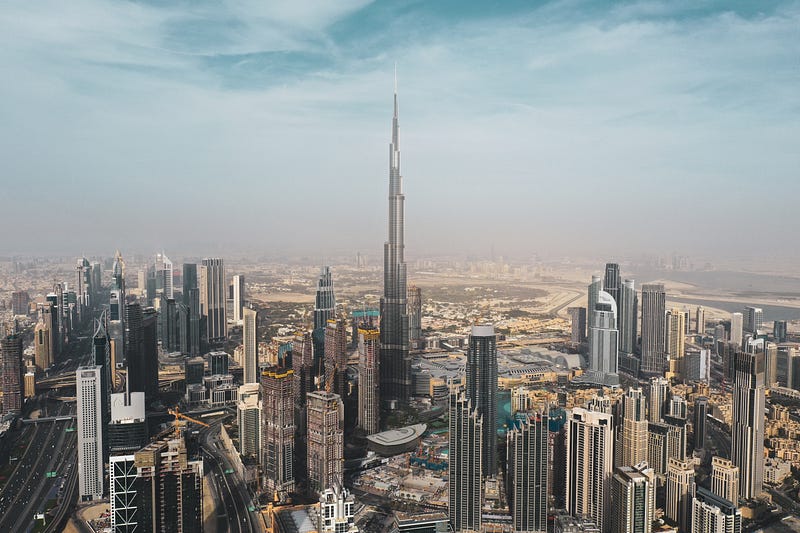
Photo by Mo Ismail on Pexels


Regulatory infrastructure

Ereiqat pointed to some key fundamentals that crypto entrepreneurs and start-up founders should look at when deciding on the location that will best meet their needs and help to optimize their route to market and ultimate success. This includes the regulatory infrastructure.

The UAE authorities and regulators at a national level, together with their colleagues within the regulatory agencies in the Emirates of Dubai and Abu Dhabi, have been doing some heavy lifting in this regard over recent months.

They’ve all been working on establishing a workable regulatory framework, and as part of that, a licensing process. In the case of Dubai, its Virtual Assets Regulatory Authority (VARA) has started to issue preliminary or Minimum Viable Product (MVP) license approvals that enable crypto startups to get started, while providing them with a pathway towards obtaining Full Market Product (FMP) licensing at a later stage.


Talent pool

The other key requirements that Ereiqat set out were digital infrastructure alongside an ability to attract and provide a pool of talent relative to the crypto assets space. In respect of these key considerations, Ereiqat believes that the UAE hits the target in each case.

“The UAE’s regulatory framework is more streamlined and business-friendly compared to the complex and fragmented regulatory environment in the US,” he told the crypto media firm.

To enhance these fundamentals, Ereiqat also alluded to a depth of capital that could potentially find its way into UAE-based crypto businesses, easing these start-ups’ efforts in executing on funding rounds as they look to achieve growth.

Ereiqat maintains that the interest in the region is already evident, citing a data-point that suggests there are 1,800 Web3-centric businesses already operating in the region, with more than 8,000 people working for those start-up businesses. Speaking to that reality further, he said:

“The Dubai FinTech Summit was a significant event that brought together stakeholders from the fintech industry […] The presence of crypto and Web3 leaders and projects at the event is an important indicator of the growing interest and adoption of these technologies in the region.”

This enthusiasm and belief in the existence of the right Web3 business environment in the UAE was echoed at that event by both Coinbase Founder and CEO Brian Armstrong and Ripple Founder and CEO Brad Garlinghouse. Both industry figures featured as keynote speakers at the event. Armstrong alluded to the potential of Coinbase establishing a base in Abu Dhabi while Garlinghouse announced the opening of a Ripple office in Dubai.


More to Read
View All
Web3 & Enterprise·

Jul 01, 2023

OKX Strengthens Partnership with Manchester City Football Club

OKX Strengthens Partnership with Manchester City Football ClubSeychelles-based crypto exchange OKX has announced the expansion of its sponsorship deal with Manchester City Football Club, the treble-winning English Premier League soccer champions.The announcement was made through a virtual reveal video featuring player avatars, presented at Manchester City’s Etihad Stadium. News of the deal was also posted on the English club’s website on Friday.While the valuation of the deal remains undisclosed, the collaboration signifies a significant milestone for both parties. The new agreement, which spans multiple years, establishes OKX as the official sleeve partner on both the men’s and women’s first-team playing kits.Photo by Giero Saaski on UnsplashExtended partnershipUnder this extended partnership, the OKX logo will be prominently displayed on the sleeves of Manchester City’s playing kits, solidifying its position as a key sponsor. Additionally, OKX will retain its presence on the club’s training kit sleeve.City Football Group, the holding company that owns Manchester City and other soccer teams like New York City FC and Melbourne City FC, oversees the management and operations of the club.OKX initially became Manchester City’s official cryptocurrency exchange partner in March 2022. Subsequently, in July of the same year, the exchange secured a sponsorship deal to feature its logo on the front of the club’s training kit throughout the 2022/2023 season. At the time, the agreement was reported to be valued at over $12 million.OKX CollectiveIn February, OKX launched the “OKX Collective” alongside Manchester City players Jack Grealish, Rúben Dias, Ilkay Gündoğan, and Alex Greenwood. This immersive metaverse fan experience offered exclusive content and rewards, allowing fans to engage with the club in a unique way.OKX’s CMO Haider Rafique expressed satisfaction with the evolving partnership, stating: “Manchester City was our first official global brand partnership, and in just a year and a half, we have come a long way. We always intended to integrate with the sport and help the club lead on leaning into Web3. Fast forward fifteen months, we now have a metaverse, an NFT initiative, and a number of other new projects that we are excited about.”Additional sports sponsorshipsBesides Manchester City, OKX has also established partnerships with other prominent sports brands and athletes, including McLaren Formula 1, the Tribeca Festival, Olympian Scotty James, and F1 driver Daniel Ricciardo.While OKX’s partnership with Manchester City strengthens its global fan base, it’s worth noting that the sale of crypto derivatives, a product offered by OKX, was effectively banned by the UK’s financial regulator in January 2021. Consequently, OKX and other crypto exchanges have refrained from advertising such services in the country.As the Premier League clubs have collectively agreed to restrict gambling sponsorships on team shirts, there are concerns that similar restrictions may be imposed on crypto company sponsorships. However, any such developments are expected to be some years away, as the changes regarding gambling sponsorships are scheduled to take effect in the 2026/2027 soccer season.Marketing spend by crypto firms has sobered up quite a bit since the heady heights of the last bull run. However, OKX remains one entity which has been fairly consistent in continuing its marketing efforts regardless of market conditions.

news
Policy & Regulation·

Jul 27, 2023

Korean Banks Impose Crypto Exchanges to Maintain a Reserve of at Least 3B KRW

Korean Banks Impose Crypto Exchanges to Maintain a Reserve of at Least 3B KRWIn a significant step towards regulating the cryptocurrency market and ensuring the safety of virtual asset users, South Korea’s Federation of Banks (KFB) has collaborated with financial authorities and virtual asset exchanges to establish the “Guidelines for the Operation of Real Name Accounts for Virtual Assets.” The KFB, as a group of banks and financial institutions, facilitates cooperation between its members and promotes the development of the financial industry.Photo by rc.xyz NFT gallery on UnsplashThe guidelines come as a response to the increasing need for stronger money laundering prevention measures and standardization in the crypto industry. The first step towards this was taken in 2018 when crypto exchanges became obliged to establish a real name account at a bank in order to provide Korean Won (KRW) deposit and withdrawal services to their customers. Currently, the exchanges that won such bank accounts are Upbit, Bithumb, Coinone, Korbit, and Gopax.However, this policy brought with it a set of challenges, including differing practices among various cryptocurrency exchanges, leading to inconveniences for users. Additionally, varying user protection measures, such as reserve requirements, caused confusion in the market.3 billion KRW in reservesTo address these issues, the new guidelines aim to clarify how banks operate cryptocurrency real-name accounts and bolster overall security. One of the key changes is the requirement for crypto exchanges to maintain a reserve of at least 3 billion KRW ($2.36 million). This reserve fund serves as a precautionary measure to address potential financial losses resulting from hacking incidents or system failures at crypto exchanges.Furthermore, the guidelines mandate banks to manage deposit and withdrawal limits by categorizing user accounts into limited and normal accounts. A limited account will not be converted to a normal account, which grants higher deposit and withdrawal limits, until the user’s transaction purpose and the source of funds are verified.Enhanced due diligenceIn addition, banks will perform annual enhanced due diligence (EDD) for individual account holders. This thorough review will encompass users’ identification, transaction purposes, and the origin of funds.User asset segregationTo safeguard users’ funds, crypto exchanges will be required to ensure that customer deposits are held separately or placed in trust. Regular due diligence at crypto exchanges will also be conducted by banks, with mandatory visits occurring at least once a month. Moreover, third-party services will be engaged to perform independent due diligence every quarter on crypto exchanges, providing an additional assessment of their operations.The official launch of these new guidelines is scheduled for January of next year. However, the requirement of depositing at least 3 billion KRW will come into effect earlier, starting in September of this year. Additionally, the implementation of guidelines for expanding deposit and withdrawal limits is anticipated in March of next year.

news
Web3 & Enterprise·

Jan 10, 2025

Backpack acquires FTX EU

Backpack Exchange, a crypto exchange that joined the Japan Virtual Currency Exchange Association (JVCEA) last December, has recently acquired FTX EU, the European arm of the failed crypto exchange business FTX. According to a press release, the business comes with a European MiFID II license, with the acquisition having been approved by the Cypriot regulator, the Cyprus Securities and Exchange Commission (CySEC). Furthermore, a Delaware bankruptcy court in the United States, which is dealing with the FTX bankruptcy, has also rubber-stamped the acquisition. Backpack Exchange was co-founded by CEO Armani Ferrante, alongside other former FTX executives. According to the firm’s LinkedIn page, it has established its headquarters in Japan. The company also has links to Dubai, having acquired a Virtual Asset Service Provider (VASP) license for its Backpack Wallet product from  Dubai’s Virtual Assets Regulatory Authority (VARA) in 2023.Photo by Christian Lue on UnsplashRebuilding trust As a consequence of having acquired FTX’s European arm, Backpack Exchange will now assume responsibility for the distribution of court-approved FTX bankruptcy claims to FTX EU users. In the company’s press release, Ferrante spoke of the importance of the distribution process in rebuilding trust. He stated: "Customer restitution is a crucial step to rebuild trust and confidence in the industry, and Backpack is committed to returning FTX EU customers’ funds as fast and as safely as possible." In response to a query from FTX creditor activist Sunil Kavuri on X, Ferrante outlined that FTX EU users “will only be able to claim their euro claims funds directly from Backpack EU.” Ferrante clarified that FTX EU customers who had pending crypto withdrawals at the time of the bankruptcy will have their crypto claims dealt with via the FTX bankruptcy estate. In a Series A financing round early last year, Backpack was valued at $120 million. Through FTX EU, it now acquires a MiFID II license, further facilitating the global expansion of the company. With FTX EU now forming Backpack’s EU arm, the company will offer crypto-derivative products, including perpetual futures. This product offering is scheduled to go live in Q1 2025. Bankruptcy process controversy The bankruptcy of FTX EU has been controversial, starting off with the European entity being illegally filed into a U.S. bankruptcy process. In early 2024, the FTX Debtors suggested that the entity was worthless. It later wanted to buy out the entity itself, outbidding a third-party bidder. A short time afterwards, the FTX Debtors reached a settlement with the former FTX EU team. It’s understood that Backpack has acquired FTX EU for $32 million.  The FTX Debtors’ attempt to buy the business itself has cast a cloud over the bankruptcy process. When it first emerged that the business had been sold, there was some speculation as to if this would mean a rebooted FTX within the European market, but Backpack’s acquisition confirms that this was not to be the outcome.  Japan could have offered another opportunity to reboot the business, but instead, FTX Japan was acquired by bitFlyer and absorbed into its existing business. With regard to the main FTX business entity, the FTX Debtors told the bankruptcy court that there was no interest in the business from buyers. 

news
Loading