Top

Shots Fired in New OKX Ad Campaign

Web3 & Enterprise·May 11, 2023, 12:49 AM

Global crypto spot and derivatives exchange OKX has launched a daring ad campaign that sets US-based rival exchange Coinbase firmly in its cross hairs.

The formerly Chinese and now Seychelles-based exchange has pushed out a global ad campaign along the following theme: “The system doesn’t need an upgrade; it needs a rewrite.” The ads were launched on Tuesday, pointing out the ills of the traditional, centralized financial system.

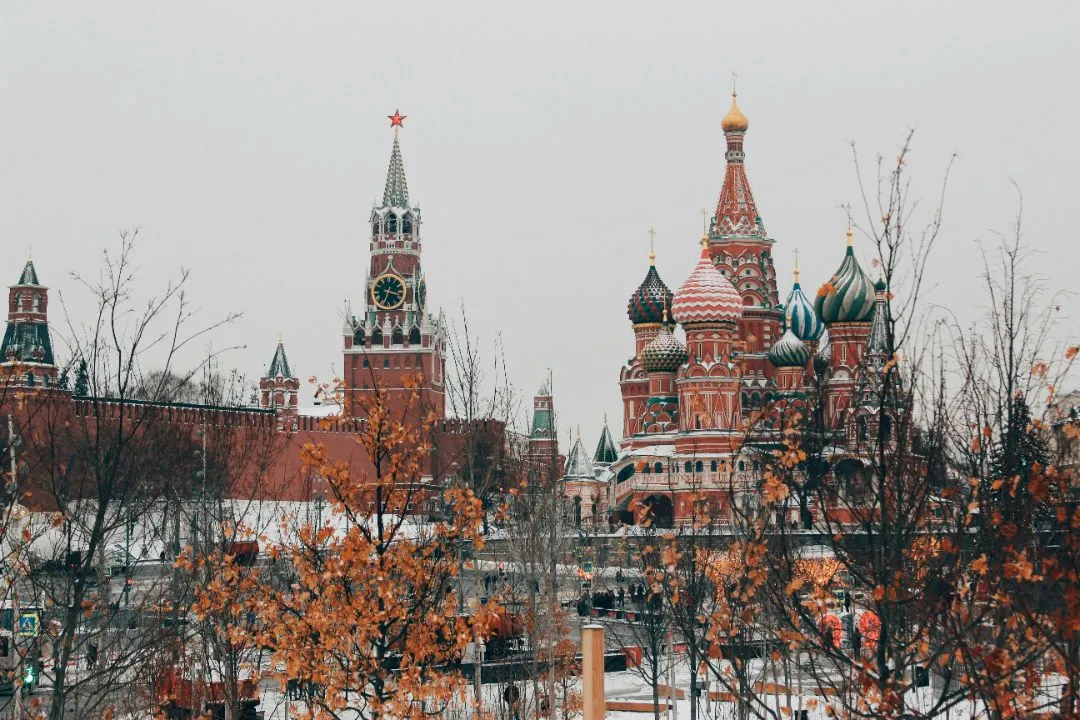
Photo by Merakist on Unsplash


Crypto exchange rivalry

The advert doesn’t explicitly call out its rival, Coinbase. However, it is nuanced in taking a subtle dig at the US-based exchange. Exactly two months prior, on March 9, Coinbase released its own ad campaign. Coinbase claimed in its ad that “it’s time to update the system,” with OKX’s subsequent commercial having been carefully worded to poke fun at the Coinbase commercial.

With a number of high profile epic failures of crypto businesses over the past twelve months, including the fall of FTX, the remaining exchanges in the business have been tripping over themselves in an effort to convince the alternative asset-investing public that theirs is the safest platform upon which they can securely trade.

In its sixty second commercial, OKX poses the question “why don’t we change everything?”, set up by its claim that the conventional finance system is broken.


The last of the big spenders

There’s been a notable change of strategy in the marketing activities of crypto businesses since the height of the last crypto bull run. Gone are the marketing excesses exemplified most by the now bankrupt FTX exchange.

FTX demonstrated itself to be a profligate spender on all manner and means of marketing, particularly during 2021 and 2022. It paid Wall Street investor and Shark Tank star Kevin O’Leary $15 million to be a spokesperson for the company. Similar deals were struck with a range of celebrities including former NBA star Shaquille O’Neal, NFL stars such as former New England Patriots quarterback, Tom Brady, and a host of others.

At the height of its marketing opulence, the fraudulently run firm signed a $135 million sponsorship deal that provided it with the naming rights to the home stadium of the NBA’s Miami Heat. 2022's Super Bowl, one of the world’s largest single marketing opportunities, saw FTX and others pay out big on advertising spend.

By contrast, this year’s Super Bowl was almost a complete washout as far as crypto business participation was concerned. Meanwhile, all of the celebrities that featured in FTX’s marketing activities have found themselves the subject of multi-million dollar class action lawsuits filed by FTX creditors.


A more sobering marketing strategy

Despite the reputational damage that crypto has suffered due to these high profile failures, firms like OKX and Coinbase have continued to maintain a responsible level of advertising and marketing activity.

That’s best exemplified by OKX’s ongoing marketing relationships with McLaren’s Formula One racing team and Manchester City Football Club. In March, US-based crypto exchange Kraken announced a marketing partnership with the Williams Formula One racing team.

Crypto.com is probably the only crypto firm that spent excessively during the last bull run yet has continued to maintain a relatively high level of marketing activity. Much of that may have been due to commitments it had made during a more buoyant market. Notwithstanding that, the firm did fall foul of the UK advertising regulator, who banned its NFT promotion in December 2022.

More to Read
View All
Policy & Regulation·

Aug 31, 2024

Global crypto fraud suspect arrested in Istanbul

Accused of one of the world's largest cryptocurrency scams, Andreas Szakacs, a Swedish national who became a Turkish citizen under the name Emre Avcı, was detained in Istanbul. The alleged international fraud scheme, led by Szakacs, began in 2019 under the guise of OmegaPro, a company dealing in forex and cryptocurrency trading. OmegaPro claimed to generate significant profits for its investors through complex financial algorithms and high-risk leveraged trading. The company, registered in opaque jurisdictions like Saint Vincent and the Grenadines and headquartered in Dubai, promised returns as high as 300% within 16 months, attracting investors from across the globe. High-profile endorsements and lavish eventsTo bolster credibility, Szakacs and his partners, including well-known figures in the finance and crypto sectors like Dilawar Singh and Mike Sims, organized extravagant events. These included the OmegaPro Legends Cup, a football tournament featuring former stars like Ronaldinho, Kaka and Iker Casillas, who were branded as OmegaPro ambassadors. The company also sponsored car races and held opulent conferences in luxury hotels, where gifts and prizes were distributed to participants, further enticing new investors. OmegaPro's operations spanned multiple continents, with representatives in countries such as Colombia, Mexico, the UK and Nigeria. Over time, the company claimed to have attracted 1.5 million investors. However, in late 2022, as withdrawals were suddenly halted, suspicions grew. By July 2023, the company had shut down, leaving an estimated three million investors defrauded and $4 billion unaccounted for.Photo by Xiaoyi Huang on UnsplashAs OmegaPro collapsed, investors from around the world began filing complaints. In France alone, over 1,500 victims have initiated a class-action lawsuit. Similar legal actions have been reported in countries including Mexico, Congo and Myanmar. Despite multiple investigations, the whereabouts of Szakacs and his partners remained unknown—until recently. A tip-off leads to arrest in IstanbulThe breakthrough came on June 28, when an anonymous informant tipped off Turkish authorities about Szakacs' presence in a luxury villa in Istanbul's Acarkent neighborhood. Following an investigation, the Istanbul Gendarmerie identified 18 complainants connected to OmegaPro. On July 9, Szakacs was arrested in a raid on the villa, where authorities found 32 cold wallets containing cryptocurrencies, along with extensive documentation related to OmegaPro’s operations. During questioning, Szakacs denied all allegations, claiming that OmegaPro was a legitimate business that went bankrupt in late 2022, resulting in significant losses for him and his partners. He also refused to provide access to the cold wallets and the encrypted data on his devices. Despite his defense, Szakacs was charged with fraud using information systems and detained by the Beykoz Criminal Court of Peace on July 10. Ongoing legal battles and future implicationsAs the investigation continues, authorities are scrutinizing Szakacs' digital transactions, which reportedly involve $160 million in movements over a single month. His legal team argues that investors knowingly took on risks in the forex market, but the sheer scale of the losses—especially the $103 million claimed by a Dutch complainant representing 3,000 victims—has intensified the case. The outcome of this case could set a precedent for how international crypto-related fraud is handled, particularly in an era where digital currencies and high-risk investments are increasingly intertwined. 

news
Web3 & Enterprise·

Sep 12, 2023

Entrepreneurs to Discuss Blockchain Investment Opportunities at Korea Investment Week 2023

Entrepreneurs to Discuss Blockchain Investment Opportunities at Korea Investment Week 2023Entrepreneurs and business leaders will convene at the Korea Exchange (KRX) PR Hall to delve into investment opportunities associated with blockchain projects and security tokens from September 14 to 15. The agenda for the first day centers around blockchain, while the second day is dedicated to security tokens. These events are part of Korea Investment Week 2023, hosted by the Korea Economic Daily and organized by the Korea Exchange, the nation’s only securities exchange operator, and KB Securities.Photo by SC Jang on UnsplashExploring blockchain investmentThe first day’s blockchain investment forum will host a lineup of distinguished speakers, including Kim Yong-beom, the CEO of Hashed Open Research; Lee Tae-yong, Chief Global Strategy Officer of Wavebridge; and Ju Ki-young, CEO of Cryptoquant.CEO Kim will explore virtual asset opportunities in South Korea, particularly in light of the market trend shifting from North America to Asia. Lee will provide an overview of the global landscape of exchange-traded funds (ETFs) and exchange-traded products (ETPs) related to virtual assets and assess the likelihood of the US approving Bitcoin spot ETFs. Meanwhile, Ju’s analysis of blockchain data will offer insights into the fundamentals and risks associated with virtual assets.Security token insightsOn the second day, the security token investment conference will feature esteemed professionals, such as Ahn Il-chan, Head of Digital Business Division at the Korea Exchange; Lee Han-jin, an attorney specializing in capital markets at law firm Kim and Chang; and Ryu Ji-hae, Managing Director of Digital Asset Task Force at Mirae Asset Securities.Ahn will discuss strategies for establishing a security token market within the Korea Exchange. Lee will offer suggestions for developing the Korean security token market and safeguarding investors. Ryu will address the role of securities firms in driving the development of the security token market.These events are expected to capture the interest of both institutional and retail investors, providing valuable insights into the burgeoning industry.

news
Policy & Regulation·

Apr 12, 2023

Official Says Hong Kong Should Invest in Web3 Economy

Official Says Hong Kong Should Invest in Web3 EconomyAccording to Hong Kong’s financial secretary, Paul Chan, this is the perfect time for Hong Kong to promote the development of Web3, the next-generation version of the World Wide Web that is decentralized and distributed through the use of blockchain and similar technologies.©Pexels/Tara WinsteadLearning from the dot com boomDespite the recent instability of the virtual assets market and the collapse of some digital asset exchanges, Chan has pointed out that the quality of the real economy has improved since the dotcom bubble burst in 2000, and surviving market players have focused on technological innovation, applications and value creation.In remarks made via a blog post published on Sunday, Chan argues that the development of Web3 is going through the same process. He suggested that the next stage of development would be to focus on developing blockchain technology more deeply to find wider application for it, which would improve existing business models, ultimately benefiting users and improving the quality of the real economy.To accelerate the development of Web3, Chan allocated HK$50 million (US$6.4 million) to the Cyberport business park to organize major international conferences and youth workshops in his latest budget released in February.VASP licensingChan also announced that authorities would introduce a licensing regime for virtual asset service providers (VASPs) in June to ensure appropriate supervision and minimize risks in the innovation and development of Web3. Furthermore, the government is looking into regulating stablecoins or cryptocurrencies with their value pegged to another currency or commodity.According to some local experts, Hong Kong should not delay in pushing Web3 development, and the government should work out clear policies to attract overseas investors and Web3 developers to set up offices in Hong Kong.Working towards a Web3 hubFrancis Fong Po-kiu, honorary president of the Hong Kong Information Technology Federation, told the South China Morning Post that the government could help by building up infrastructure such as data and supercomputing centers to help small and medium-sized enterprises to adopt more advanced technology.Although IT sector veteran Joseph Leung Wai-fung agreed that Hong Kong was lagging Singapore in terms of Web3 development, he suggested that the government should step up efforts to attract overseas investors and Web3 developers by working out clear policies to support them in setting up offices in Hong Kong. He also pointed out that Web3 covers key areas such as artificial intelligence, the Internet of Things, blockchain technology, and metaverse augmented reality, and that every international smart city should explore this area.The recent fluctuations in virtual asset markets and the collapse of some online trading platforms have cast doubts on the future of Web3, but Chan believes that competent market players who survive a “burst bubble” can focus on innovation and make significant strides.The government’s efforts to accelerate the development of Web3 through the allocation of HK$50 million to the Cyberport business park, the introduction of a licensing regime for virtual asset service providers, and the regulation of stablecoins, are steps in the right direction. However, more needs to be done to attract overseas investors and Web3 developers to set up offices in Hong Kong and to build up infrastructure such as data and supercomputing centers to help small and medium-sized enterprises to adopt more advanced technology.

news
Loading