Top

Hong Kong Enticing Crypto Firms from Mainland China

Policy & Regulation·April 14, 2023, 2:14 AM

In the wake of various scandals and high-profile bankruptcies, some governments have shunned the cryptocurrency industry, but Hong Kong is instead embracing mainland China crypto companies, urging them to relocate to the city in a bid to bolster its status as a financial hub.
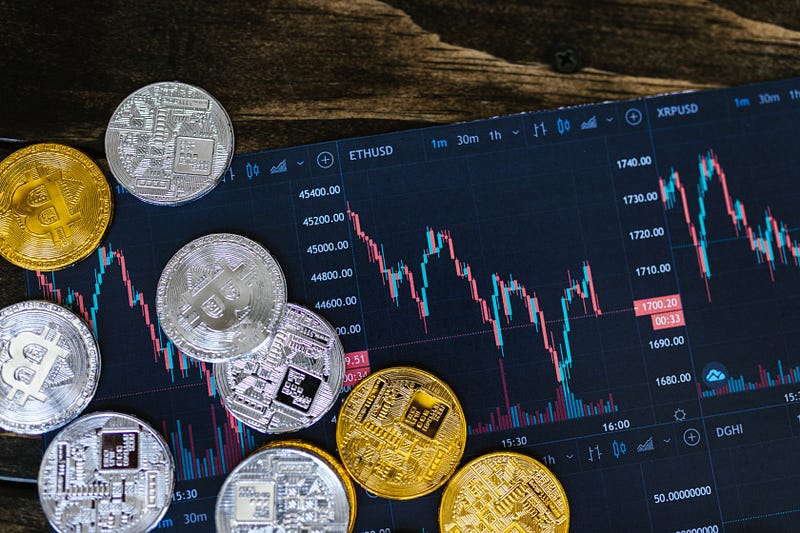
crypto coins and a candle chart on treading platform
©Pexels/RODNAE Productions


Embracing crypto

After enduring an exodus of bankers amid a China security crackdown and stringent COVID curbs, Hong Kong is now making a concerted effort to revitalize its finance sector by embracing crypto. Top Hong Kong government officials, including Chief Executive John Lee, have voiced their support, and the city is planning to hold 100 crypto-related conferences and lavish parties throughout April. Hong Kong is “very serious about building an international virtual asset center,” said Xiao Feng, chairman of Hong Kong crypto exchange HashKey, which drew 13,000 people on the first day of its Hong Kong Web3 Festival, the most significant conference of the month.

HashKey obtained a license to operate in Hong Kong last November, making it one of two licensed crypto exchanges in the city, alongside rival exchange OSL. Xiao told Reuters that many people in the crypto industry had initially assumed that Hong Kong would inevitably adopt the same regulations as mainland China. However, the government is now emphasizing that Hong Kong operates under the “One Country, Two Systems” framework and enforces distinct laws.


Skeptics

Despite this, many remain skeptical of Hong Kong’s promise of a stable regulatory regime on cryptocurrencies. One crypto venture capitalist, who spoke to Reuters on the condition of anonymity due to the sensitive nature of the matter, expressed concern over China’s crypto ban, which still looms large in the background. “If Hong Kong can suddenly claim to be crypto-friendly, that switch can be flipped off just as quickly should things become challenging,” he said.


Crypto licensing interest

Nevertheless, at least 10 companies with Chinese founders, including OKX, Bybit, and Huobi, have announced or are planning to announce their bid for licenses in Hong Kong. These firms, which have exited countries like Canada and the UK, are among the sponsors of the most glamorous Hong Kong parties this week. Bybit held a private dinner for industry heavyweights, and OKX reserved a rooftop venue overlooking Victoria Harbour, where guests could enjoy a stunning view.

At one event on Tuesday, Tron founder Justin Sun, addressed a mainly Chinese-speaking audience, stating, “I can’t believe that we are having such conferences on Chinese soil.” Sun has been charged with fraud by the US Securities and Exchange Commission (SEC), but he argued that the charges lacked merit and accused the regulator of targeting crypto players. “Hopefully, one day, we will have such events in Shanghai and Beijing,” he remarked.

Despite the lingering concerns, Hong Kong is committed to establishing itself as a leading finance hub in the cryptocurrency industry and is sparing no effort to achieve its goals.


More to Read
View All
Policy & Regulation·

Sep 11, 2025

Vietnam launches five-year pilot to regulate crypto asset trading

Vietnam has launched a five-year pilot program imposing stringent new rules on the cryptocurrency industry, signaling a move toward tighter control over the rapidly growing sector. According to a Sept. 9 report from the Government Electronic Newspaper, cited by Cointelegraph, the resolution put the regulatory framework into immediate effect. The move aims to establish clear rules for the trading and issuance of crypto assets in the country.Photo by Silver Ringvee on UnsplashLocal currency and licensing requirementsUnder the new pilot program, all crypto transactions must be conducted in the local currency, the Vietnamese dong. The rules stipulate that only Vietnamese-registered enterprises may issue digital assets, while foreign investors can access them only through crypto asset service providers (CASPs) licensed by the Ministry of Finance. Firms seeking a license face high barriers to entry. Applicants must demonstrate profitable business operations for the two consecutive years preceding their application. Furthermore, CASPs are required to maintain a minimum capital of 10 trillion dong (approximately $379 million). The pilot also places firm restrictions on the nature of crypto assets themselves. They must be backed exclusively by real, tangible assets. The issuance of assets backed by fiat currencies or securities is prohibited. Broader legal contextThis pilot program follows the country's decision in June to officially legalize digital assets, with the new law set to take effect on Jan. 1, 2026. The legislation categorizes digital assets into two types: virtual assets, used for exchange or investment, and crypto assets, which rely on encryption for validation. The law clarifies that neither category includes securities, digital representations of fiat currency, or other financial instruments already defined under existing civil and financial laws. The framework also mandates that regulatory agencies implement robust measures to ensure cybersecurity and combat money laundering and terrorism financing. High adoption and tech initiativesThe government's focus on regulation comes as no surprise, given Vietnam's position as a global leader in cryptocurrency adoption. A recent study by Chainalysis ranked Vietnam fourth in its 2025 Global Crypto Adoption Index, highlighting widespread grassroots activity across both centralized and decentralized platforms, similar to trends seen in India and Pakistan. Beyond regulation, Vietnam is actively leveraging blockchain technology for national infrastructure. The government has deployed NDAChain, a national blockchain platform designed to authenticate and trace data origins. Developed by the National Data Association, it aims to provide a decentralized layer of trust for critical systems in e-government, finance, healthcare, and education, addressing the vulnerabilities of centralized data models. Hanoi's crypto ambitions also extend beyond its borders. Last month, Vietnam's Military Bank signed a memorandum of understanding (MOU) with Dunamu, the operator of South Korea’s largest crypto exchange, Upbit. The partnership is aimed at developing Vietnam’s financial landscape, with Dunamu providing expertise on establishing a crypto exchange, building a regulatory framework, and implementing investor protection measures. 

news
Web3 & Enterprise·

Jun 15, 2023

More Players Join NH Bank-Led Security Token Consortium in South Korea

More Players Join NH Bank-Led Security Token Consortium in South KoreaMultiple South Korean banks and fractional investment firms are now joining the security token consortium led by NongHyup Bank (NH Bank), according to a report from local news outlet Etoday today.Expanding consortiumNH Bank announced today that the Industrial Bank of Korea, Shinhan Bank, and Woori Bank, along with fractional investment companies, will be participating in the banking sector’s security token consortium. This consortium was established in April and initially comprised NH Bank, Suhyup Bank, Jeonbuk Bank, and six fractional investment companies.The objective of the banking sector’s involvement in the consortium is to contribute to the security token industry by developing distributed ledger technology infrastructure, conducting research to promote security tokens, and strengthening investor protection.The consortium participants will engage in further discussions on how banks can participate in the security token market while adhering to evolving legislation related to security tokens. Additionally, they will explore methods to establish the necessary platforms required by fractional investment companies to issue security tokens.Photo by Mathieu Stern on UnsplashSecurity tokens as corporate bondsIn the long term, the group plans to issue security tokens as corporate bonds, taking inspiration from German tech company Siemens’ strategy, or create a secondary market for security tokens to promote the overall security token ecosystem. Earlier this year, Siemens issued a blockchain-based one-year bond worth 60 million euros ($64.9 million).The consortium’s new fractional investment firms include fractional real estate investment platform Funble, artificial intelligence entertainment firm Blade Ent, blockchain tech firm Trackchain, online bookstore Yes24’s fractional artwork ownership platform ARTiPIO, and electric vehicle (EV) charging sharing platform Charzin.

news
Markets·

May 23, 2023

STX Token Debuts on Korean Exchange Bithumb

STX Token Debuts on Korean Exchange BithumbSTX, the native token of the Stacks network, made its debut on the KRW market of Bithumb, a renowned Korean cryptocurrency exchange, at noon (Korea Standard Time) on Tuesday. The listing price is 828.5 KRW per unit.Photo by Jonathan Borba on UnsplashBitcoin scalability solutionStacks is a Bitcoin scalability solution that addresses the challenge of transaction latency through the use of microblocks. It utilizes the programming language Clarity and benefits from the security of Bitcoin by employing its unique consensus algorithm called Proof of Transfer (PoX). This mechanism enables Stacks to settle transactions on the Bitcoin network.Stacks is one of the most anticipated projects associated with Bitcoin, and its token was approved by the U.S. Securities and Exchange Commission in 2019.STX token usageThe STX token serves multiple purposes within the Stacks blockchain ecosystem. Users can utilize it for stacking, participating in governance activities, and paying transaction fees.

news
Loading
