Top

HashKey on-boards market makers to boost liquidity

Web3 & Enterprise·December 07, 2023, 1:17 AM

HashKey, a licensed crypto exchange in Hong Kong, has unveiled plans to onboard individual and enterprise market makers to enhance liquidity on its platform.

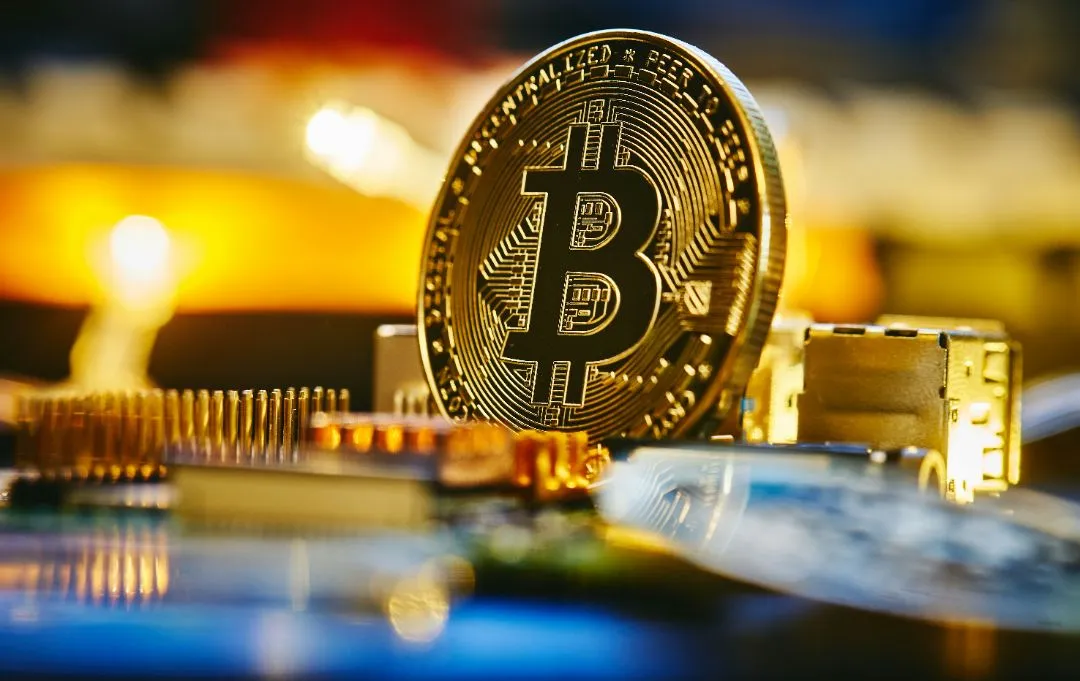
Photo by engin akyurt on Unsplash


Market maker program

In an announcement on Tuesday, the exchange disclosed that interested parties, whether individuals or entities, can apply to become market makers on HashKey. To qualify, applicants need to engage in cryptocurrency trading worth a minimum of $5 million per month on the exchange.

The exchange outlined that the program aimed to “recognize and incentivize users actively contributing to the liquidity” of the platform.

Upon submitting their business plans for review, successful applicants will be invited to enter into a contractual agreement with the exchange’s due diligence team, commencing trading activities from Dec. 28 onwards when the program goes live.


Commission free trading

The exchange aims to encourage liquidity providers by offering a commission ranging between 0.005% and 0.015% of the transaction value, determined by monthly rankings or trading volumes, falling within a tiered structure set out within the program. Market makers demonstrating a trading volume of at least $100 million per month stand to enjoy the highest tier of commission revenue. Notably, all market makers will be exempt from commission fees on their trades.

Market makers who participate via the program will be on trial for an initial two-month period. Those who are participating in market maker programs on other platforms currently will be able to avail of equivalent trial fee rates through the HashKey exchange.


Service expansion trend

The move by HashKey follows a broader trend in Hong Kong, where regulated exchanges have been expanding their services and forming strategic partnerships since the issuance of the first licenses in August. In a recent development, OSL, another Hong Kong licensed exchange, collaborated with Interactive Brokers on November 28, enabling Hong Kong clients to buy Bitcoin through Interactive Brokers’ investment accounts.

Additionally, on November 30, OSL welcomed Victory Securities for crypto trading services on its platform. That move came about following Victory’s acquisition of a retail crypto trading license some days beforehand. Notably, OSL received a $90 million investment from blockchain entity BGX in November.

While HashKey has been extending its altcoin offerings, exclusively available to accredited investors meeting a $1 million portfolio requirement, the exchange has been proactive in enhancing user security. On Nov. 16, the platform introduced comprehensive insurance coverage for users’ and enterprise assets stored within its digital wallets in collaboration with fintech firm OneDegree.

Earlier this week, it emerged that the platform had experienced an unprecedented surge in daily trading volumes. The surge had been attributed to a token rewards program that the exchange is currently running, that offers the distribution of HSK tokens or EcoPoints.

As HashKey opens its doors to market makers, the move is poised to contribute to increased liquidity on the exchange, aligning with the broader trend of Hong Kong’s regulated crypto exchanges expanding their offerings and forming strategic partnerships.

More to Read
View All
Policy & Regulation·

Nov 25, 2025

Regulators clamp down on crypto energy as nations shift priorities

The blockchain network underpinning Bitcoin, the world’s largest cryptocurrency, requires an energy volume comparable to the annual consumption of Thailand. According to Digiconomist’s Bitcoin Energy Consumption Index, the protocol utilized roughly 204.44 terawatt-hours (TWh) of electricity between Nov. 18, 2024, and Nov. 18, 2025.Photo by Fré Sonneveld on UnsplashFiscal losses drive Malaysian oversightAmid these intense energy demands, Malaysia’s primary electricity utility has recorded substantial financial impairments attributed to illicit activities. Tenaga Nasional Bhd (TNB) reported losses totaling 4.57 billion ringgit ($1.1 billion) from illegal crypto-mining operations over a five-year span. In a Nov. 19 report by The Edge Malaysia, the Ministry of Energy Transition and Water Transformation (Petra) disclosed these figures to parliament, specifying that the unauthorized mining occurred at 13,827 locations between 2020 and August of this year. To counter these infractions through regulatory channels, Petra has formed a special committee scheduled to convene before year-end. This body aims to recommend enhancements to the Electricity Supply Act, which currently delineates penalties based on the offender's classification. Domestic violators face fines ranging from 1,000 to 50,000 ringgit ($240 to $12,000), imprisonment of up to one year, or both. Penalties escalate for non-domestic entities, involving fines between 20,000 and one million ringgit ($480 to $240,000) and potential prison terms of up to five years. Despite these provisions regarding electricity theft, a specific legal code regulating the act of crypto mining remains absent, creating a jurisdictional void. International bans and grid reallocationStrategies to curtail electricity usage by crypto miners are becoming evident elsewhere in Southeast Asia as well. Laotian Deputy Energy Minister Chanthaboun Soukaloun told Reuters last month that the nation intends to suspend electricity supplies to crypto miners by early 2026. He cited the sector's minimal economic contribution and low job creation as primary factors. Consequently, the state plans to redirect power to high-priority sectors, including AI data centers, metals processing, and electric-vehicle manufacturing. Parallel restrictions are emerging globally. In October, the government of British Columbia enacted a permanent prohibition on new BC Hydro connections for crypto miners to safeguard the Canadian province’s energy reserves. Officials pointed to the industry’s "disproportionate energy consumption and limited economic benefit" as the rationale for the policy. The debate over thermal innovationConversely, some enterprises are exploring methods to capture thermal output from Bitcoin mining to heat residential and commercial properties. If viable, such repurposing could utilize the considerable thermal byproducts of mining. A K33 Research study cited by CNBC indicates the industry generates roughly 100 TWh of heat annually, a figure sufficient to warm the entirety of Finland. However, industry consensus on the feasibility of these applications remains elusive. Proponents suggest that mining infrastructure could be situated in proximity to heat consumers. Skeptics, however, contend that the reliance on application-specific integrated circuit (ASIC) chips makes this impractical, arguing that the technical difficulty of mining a block renders household participation unfeasible. Despite these differing views, the concept continues to attract attention as a potential avenue for innovation in energy distribution. As jurisdictions like Malaysia and British Columbia tighten regulatory oversight, the cryptocurrency sector faces mounting pressure to address its energy footprint. The divergence between government restrictions and industry-led efficiency proposals underscores the complex relationship between digital asset infrastructure and global energy resources. Given the shifting landscape of policy and technology, the outlook for sustainable large-scale crypto mining remains uncertain, as governments weigh energy demands against economic benefits and the industry searches for more efficient ways to operate.

news
Web3 & Enterprise·

Jan 23, 2024

Terraform Labs files for bankruptcy in wake of $40 billion crash

Singapore-based Terraform Labs, the company behind the failed algorithmic stablecoin TerraUSD, has officially filed for Chapter 11 bankruptcy protection in the United States. It appears that the crypto space is not finished with dealing with the excesses and mismanagement that emerged at the end of the last market cycle. This move from Terraform comes in the wake of a $40 billion cryptocurrency crash and ongoing legal scrutiny, with the firm stating its intention to continue operations and support for the Terra community.Photo by Melinda Gimpel on UnsplashBusiness plan executionTerraform Labs was co-founded by Do Kwon, who is currently under investigation for its alleged wrongdoing relative to the failure of TerraUSD. The bankruptcy filing, submitted on Sunday to the Bankruptcy Court for the District of Delaware, aims to facilitate the company's business plan execution while navigating ongoing legal proceedings, including representative litigation in Singapore and the United States involving the Securities and Exchange Commission (SEC). In a statement, Chris Amani, CEO of Terraform Labs, commented on the decision, stating:"The Terra community and ecosystem have shown unprecedented resilience in the face of adversity, and this action is necessary to allow us to continue working toward our collective goals while resolving the legal challenges that remain outstanding." Amani reassured stakeholders that the decision ensures the company can maintain its commitment to working with the community on infrastructure, innovative tools, products and other ecosystem support. Amani became CEO of the company in July of last year, having been acting as Terraform’s COO prior to that. He acknowledged the challenges faced and expressed optimism about overcoming them, highlighting the resilience of the ecosystem after previous hurdles. Liabilities and assets in $100M to $500M rangeThe company emphasized that the Chapter 11 filing is designed to allow it to meet all financial obligations to employees and vendors without requiring additional financing. The estimated liabilities and assets fall within the range of $100 million to $500 million, as indicated in the filing. The SEC has initiated a civil trial against Terraform Labs and Do Kwon, accusing them of orchestrating a $40 billion cryptocurrency fraud through the TerraUSD algorithmic stablecoin and its sister token Luna. The SEC alleges that Terraform Labs and Kwon raised billions of dollars from investors through unregistered transactions, leading to the collapse of TerraUSD and Luna in May 2022. Both the SEC and Terraform have unsuccessfully filed for summary judgment in the case. Far-reaching consequencesThe crash had far-reaching consequences, impacting several crypto firms, including Singaporean crypto hedge fund Three Arrows Capital, Singaporean crypto lender Hodlnaut, Voyager Digital and Celsius Network. Do Kwon, a South Korean national, faces additional criminal charges in the United States related to fraud and market manipulation. His arrest in Montenegro in March 2023 and pending extradition requests from South Korea and the United States underscore the global legal challenges confronting him. The U.S. District Court for the Southern District of New York has scheduled the SEC trial against Terraform Labs and Kwon for late March, accommodating Kwon's extradition process. Meanwhile, in South Korea, Terraform Labs co-founder Daniel Shin has denied wrongdoing in the collapse as part of separate proceedings taken against him.  

news
Policy & Regulation·

Dec 08, 2023

Regulatory crackdown as Hong Kong authorities act against crypto entities

Regulatory crackdown as Hong Kong authorities act against crypto entitiesIn a recent move, the Securities and Futures Commission (SFC) of Hong Kong has issued a public warning against suspected virtual asset-related frauds involving HongKongDAO and BitCuped, marking a significant crackdown on deceptive practices in the crypto space.The action taken by the SFC in conjunction with the Hong Kong Police Force was outlined in a notice published on Wednesday. The notice stated:“The SFC suspects HongKongDAO may be disseminating false and misleading information about itself and its business through online channels.”In relation to BitCuped, it stated: “The SFC notes that BitCuped claims on its website that ‘Laura Cha’ and ‘Nicolas Aguzin’ serve as its Chairman and Chief Executive Officer respectively, when in fact none of them has any affiliations with BitCuped.”Photo by Teodor Kuduschiev on UnsplashHongKongDAO’s alleged misinformationOperating under the name “Hong Kong Digital Research Institute,” HongKongDAO has faced accusations of disseminating false and misleading information. The SFC expressed concerns about the claims made by HongKongDAO, including assertions of licensing by the SFC, engagement in regulated activities since July 2020, and bids for a “Hong Kong Digital Currency Exchange Licence” related to the government’s stablecoins framework.The SFC contends that these claims are unfounded and could potentially mislead the public into believing that HongKongDAO’s services are officially sanctioned and legitimate.HongKongDAO seems to manage at least two Telegram groups, one in Chinese with over 10,000 members and the other in English with over 1,700 members. Within these groups, there appears to be a promotion of the purported “market” price and future market value of the HKD token, enticing investors to make purchases.Allegations of BitCuped false affiliationsSimultaneously, BitCuped has been accused of making fraudulent claims to enhance the credibility of its operations. The company falsely asserted affiliations with prominent figures Laura Cha and Nicolas Aguzin, claiming them as its chairman and CEO, respectively. However, the SFC has refuted these affiliations. Laura Cha is the Chairman of Hong Kong Exchanges and Clearing Limited (HKEX), while Nicolas Aguzin is the Executive Director and CEO of HKEX.Taking proactive measures, the SFC has requested the Hong Kong Police Force to block access to the websites of both HongKongDAO and BitCuped. Cease and desist letters have also been issued to the operators of these websites, demanding the cessation of the sale of HKD Tokens offered by HongKongDAO.Series of crypto scamsFollowing the JPEX fraud allegations in September, Hong Kong faced another cryptocurrency exchange scandal involving Hounax in November. With at least 145 police reports filed and a sum of over HK$148 million ($19 million) involved, affected investors expressed frustration at what they deemed a slow response from regulatory bodies.These incidents have reignited discussions about the need for more robust cryptocurrency regulations in Hong Kong. The city’s aspiration to become a global hub for crypto innovation and adoption faces challenges due to a lack of clear and consistent regulation, leaving investors vulnerable to fraud and manipulation.In light of these developments, the SFC emphasized the importance of public caution regarding investment opportunities that seem too good to be true. The regulator urged vigilance against social media and instant messaging platforms where individuals, not investment professionals, might lure unsuspecting investors.

news
Loading