Top

Chinese VC plans $10 billion Web3 fund launch

Web3 & Enterprise·December 29, 2023, 1:40 AM

While the Web3 sector seemed to be hamstrung by litigation and regulatory scrutiny in 2023 following multiple platform failures, it's going out with a bang in China with news of a $10 billion fund in Shenzhen to support Web3 startups.

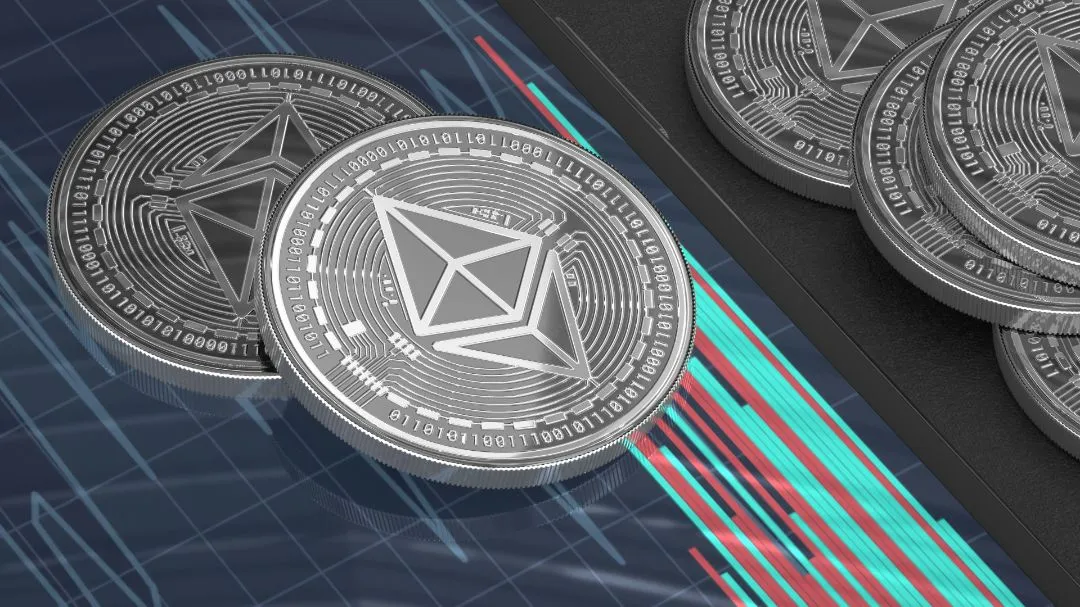
https://asset.coinness.com/en/news/ab22a14a6af1bb4a69a0b26a5c7045ab.jpg
Photo by 李大毛 没有猫 on Unsplash

Fueling Web3 startup growth

GBA Capital, a Chinese venture capital (VC) firm, made a significant announcement during the Guangdong-Hong Kong-Macao Greater Bay Area Digital Economy Development Conference on Tuesday. The firm, backed by China's state-owned National Engineering Laboratory, unveiled plans to launch a substantial $10 billion Web3 fund.


The conference also served as an educational platform, enlightening investors and attendees unfamiliar with the intricacies of the Web3 industry. Luo Jinhai, founder of Huoxun Finance and creator of the "Yuan Asset" concept, elucidated on the unique attributes of specific forms of digital assets, including independence, privacy, security, scarcity and liquidity.


Metaverse focus

This initiative aims to fuel the growth of startups specializing in virtual reality, the metaverse and non-fungible tokens (NFTs), ultimately transforming the Guangdong-Hong Kong-Macao economic region into the global "meta-asset capital."  Meta-assets are virtual objects that serve as key components within the make-up of the metaverse.


Haolong Li, the chairman of GBA Capital, outlined the ambitious vision, stating that the conference would facilitate "meta-asset global tours" in key international hubs such as Japan, Singapore, Dubai, Silicon Valley and Europe. The objective is to enhance the visibility of meta-assets and position the economic area as a leading force in the emerging Web3 landscape.


Previous developments that have played out over the course of 2023 suggest that China is placing a particular focus on embracing metaverse technology, with a view towards integrating the metaverse with existing systems in the country.  


The Ministry of Industry and Information Technology of China, in response to a proposal about promoting the development of the Web3 industry, emphasized ongoing research in areas such as the Metaverse, NFTs and decentralized identity management. In September the Ministry set out an action plan for the cultivation of a domestic metaverse. As part of that plan, it aspires to nurture three to five metaverse companies of global significance.


GBA Capital, established by China Europe International Financial Group in Hong Kong, boasts strategic partnerships with key financial institutions, including the Asia Pacific Investment Bank and China's state-owned National Engineering Laboratory. The firm's focus on investment and incubation in the digital economy aligns with its goal of integrating industrial clusters, capital resources, corporate resources and policy advantages to offer comprehensive support and services to enterprises.


In a related development, GBA Capital's subsidiary Zhongrong Global successfully raised an angel funding round at a valuation of 100 million Chinese yuan ($14 million) back in May. The funds will be allocated to Web3 project incubation and industrial services in the artificial intelligence sector.


The Guangdong-Hong Kong-Macao Bay Area has experienced a surge in Web3 startups and overseas corporate relocations since the beginning of the year, setting the stage for GBA Capital's substantial Web3 accelerator fund.
More to Read
View All
Policy & Regulation·

May 29, 2024

Korean regulators pressured to approve crypto ETFs following ETH ETF approval in the U.S.

The recent 19b-4 approval of spot Ethereum exchange-traded funds (ETFs) by the U.S. Securities and Exchange Commission (SEC) is putting pressure on South Korean financial regulators to revisit their policies on digital assets. The SEC's decision to allow ETFs for Ethereum, the world's second-largest cryptocurrency, on May 24, 2024, follows its earlier endorsement of Bitcoin ETFs in January 2024. This move is seen as a significant step in merging traditional finance with the digital asset sector.Photo by DrawKit Illustrations on UnsplashKorean regulatory cautionIn contrast to the progressive stance in the U.S., the Korean Financial Services Commission (FSC) and the Financial Supervisory Service (FSS) have maintained a cautious approach regarding the integration of crypto assets into traditional securities markets. According to current regulations under the Capital Markets Act, ETFs in Korea are limited to traditional underlying assets such as financial instruments, securities, international currencies and commodities. These foundations are crucial for the creation of financial derivatives, leaving little room for digital assets under current laws. Calls for regulatory reforms and market implicationsThe decision by the SEC is expected to influence the Korean regulators to update their views on digital assets, according to local media and industry experts. Jung Eui-jung, the head of the Korean Stockholders’ Alliance, has advocated for Korea to emulate the U.S. by approving Bitcoin and Ethereum ETFs. He expressed concerns that continued regulatory hesitance could lead to investor funds migrating to more progressive markets like the U.S., potentially positioning the U.S. to broaden its crypto market further. Xangle, a digital currency data provider in Seoul, has also criticized the current regulations as outdated, emphasizing the need for revisions to accommodate the increasing relevance of digital assets in global finance. 

news
Policy & Regulation·

Jun 24, 2023

Chinese Nationals Detained in Crypto Mining Clampdown in Libya

Chinese Nationals Detained in Crypto Mining Clampdown in LibyaAuthorities in Libya have detained 50 Chinese nationals suspected of involvement in an illicit crypto mining operation in Zliten, a city located 160 kilometers east of the Libyan capital of Tripoli.The attorney general’s office in Libya made the announcement on Friday, revealing that the individuals were caught operating a cryptocurrency mining farm within an abandoned iron factory.Photo by Dmitry Demidko on UnsplashMining operation dismantledPhotos and videos released by the office of Attorney General Siddiq Al-Sour showcased the dismantling process of the extensive mining systems discovered in Zliten.This is not the first instance of Chinese miners being detained for crypto mining activities in the North African country. The development follows the recent arrest of ten other Chinese nationals in the city of Misrata on the Mediterranean coast, as well as at two sites within the capital, Tripoli. The individuals were apprehended on Wednesday while being caught “red-handed” with numerous powerful equipment used for intricate proof of work (PoW) mining calculations. The mining rigs were subsequently confiscated by the attorney general’s office.Mining banDespite the official ban on cryptocurrency mining in the country, Libya has witnessed a high prevalence of such activities, with the nation recording the highest percentage of cryptocurrency mining across the African continent in 2021. It is estimated that Libya accounted for approximately 0.6 percent of global Bitcoin production during that year.Libya’s appeal as a destination for cryptocurrency mining stems from its low electricity costs, which stand at a remarkably low rate of $0.004 per kilowatt hour. This cost is approximately 40 times cheaper than in the United States, making Libya an attractive location for miners.While energy may be cheap, the increased demand for electricity that crypto mining brings puts a strain on what was an already vulnerable power grid in the country. That has resulted in frequent and lengthy power blackouts, particularly during the summer months.A lack of oversight has also encouraged an influx of Chinese miners, albeit with these recent arrests, it appears that the Libyan authorities are stepping up the level of oversight and enforcement. The vast majority of Bitcoin miners were based in China up until a mining ban was enforced in 2021.Global issueThat event led to an exodus of miners internationally. Some established themselves legally in the United States and elsewhere. The first casualty of illegal mining was Kazakhstan. The sudden arrival of miners led to its power grid coming under pressure. As a consequence, the Central Asian country clamped down on the activity, and later regulated it.In response to these illegal activities, Libyan authorities have intensified their efforts to combat cryptocurrency mining operations. They are conducting investigations into alleged mining sites in Tripoli and Misrata, aiming to curtail these activities and mitigate the strain on the country’s electricity infrastructure.The recent arrests highlight the ongoing challenges associated with illegal mining activities in jurisdictions globally where cheap energy can be exploited, giving rise to the need for enhanced regulatory measures to address these issues.

news
Policy & Regulation·

Jan 18, 2024

Tax burden contributes to Indonesian crypto exchange trading slump

While Indonesia has been recognized as one of the world's swiftest embracers of cryptocurrencies, it has faced a notable setback more recently, with a 60% decline in transaction volumes on local exchanges compared to the preceding year. High taxesIn a recent report by CoinDesk Indonesia, the publication speculates that the imposition of high taxes may be a pivotal factor dissuading traders and impacting the overall market dynamics. Indonesia’s tax system treats crypto assets as commodities, with the burdensome taxes arising as a direct consequence of that classification. The tax framework in Indonesia subjects crypto assets to both income tax and value-added tax (VAT), treating them akin to commodities. Leading crypto exchanges in the country reveal that the cumulative tax load on each transaction could surpass the trading fees imposed by exchanges, potentially discouraging users from engaging in crypto transactions. Oscar Darmawan, the CEO of the leading Indonesian crypto exchange INDODAX, told CoinDesk that users bear an income tax of 0.1% and a VAT of 0.11% on every crypto transaction. Additionally, exchanges are required to remit a 0.04% fee to the recently established national crypto bourse. Darmawan clarified that “this places a significant financial burden on the domestic crypto industry." expresses Darmawan in an interview with CoinDesk Indonesia, underscoring the challenges faced by the industry due to the current tax structure.Photo by Nataliya Vaitkevich on PexelsAn international issueThe tax treatment of digital assets has been a bugbear for the crypto space on an international basis. In Japan, it arose last month that the country’s lawmakers were considering applying an exemption for companies from paying taxes on unrealized cryptocurrency gains. It has since transpired that such an amendment will be applied to its fiscal 2024 tax reform plan. India has applied a heavy tax burden where crypto is concerned, with a 30% tax applied to capital gains relative to the sale of crypto assets. Additionally, 1% taxation applies by way of a tax deducted at source (TDS) on crypto transactions. The use of cryptocurrency for the purchase of goods and services in the United States remains a stumbling block, given that the current tax code treats such a scenario as a taxable event. Last year, two U.S. senators attempted to address that issue, by including a $200 exemption for purchases made with cryptocurrency. Calls for crypto asset reclassificationIn response to this dilemma in Indonesia, some stakeholders within the local crypto industry advocate for a paradigm shift in the classification of crypto assets. They propose treating crypto as securities instead of commodities, anticipating that this alteration could alleviate the tax burden on users. Yudhono Rawis, the CEO of the exchange platform Tokocrypto, asserts: "Both stocks and crypto are tradable assets with profit potential … Thus, implementing the same tax regime for both these investment instruments would be more equitable and consistent." The industry anticipates regulatory changes in the near future, as crypto oversight in Indonesia is set to transition from the commodities regulator to the Financial Services Authority (OJK) in January 2025.  

news
Loading