Top

OKX expands McLaren F1 sponsorship deal

Web3 & Enterprise·January 20, 2024, 10:47 AM

As the 2024 F1 season gears up for its launch on March 2, leading NFT marketplace and crypto exchange OKX is set to take center stage by showcasing its logo on McLaren F1 cars.

https://asset.coinness.com/en/news/97eff86794372b373d9112198359f78d.webp
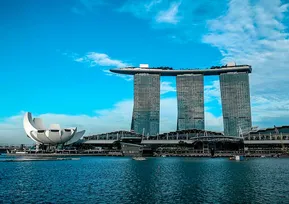
Photo by Jesper Giortz-Behrens on Unsplash

The move, outlined in a recent press release, will see the OKX brand on the side of McLaren’s cars in 20 high profile races. Going beyond a mere branding endeavor, the sponsorship initiative has been put together in an effort to energize the blockchain-centric world of F1, enhancing track-side aesthetics and elevating the visibility of the Web3 company.


‘Stealth Mode’

The collaboration will see OKX's branding appear on various elements of McLaren cars, from side pods and rear wings to mirrors, drivers' helmets and team apparel.


OKX's logo will be prominently featured during 20 out of the 24 races in the upcoming F1 season. The primary 2024 livery of the vehicle draws inspiration from the OKX-McLaren "Stealth Mode" design showcased during the Singapore and Japan Grand Prix races in 2023.


According to Haider Rafique, the Chief Marketing Officer at OKX, the decision to expand the sponsorship deal with McLaren aligns with the increased brand awareness achieved through their partnership.


Building upon existing sponsorship deal

The collaboration between McLaren and OKX isn't new. OKX's initial partnership with McLaren commenced in May 2022 as a primary partner to its F1 team and laid the foundation for this continued collaboration. The crypto platform’s livery featured on McLaren MCL60 F1 cars at the Singapore and Japan Grand Prix races in 2023. 


Surveys conducted post-event revealed that 80% of attendees expressed interest in learning more about the exchange, indicating a curiosity within McLaren's fan base about Web3 and digital finance. This resonance with the audience aligns with OKX's mission to make the crypto economy accessible to everyone and educate the public about the benefits and opportunities within this space.


Looking ahead, Rafique expresses OKX's intent to pursue a long-term partnership with McLaren, emphasizing the value derived from longevity and growth over time. He envisions the McLaren-OKX partnership as potentially spanning decades, fostering generational associations akin to his own fondness for Ayrton Senna and McLaren from his youth.


Broader crypto sector marketing

The broader trend of the cryptocurrency sector's increased involvement in F1 is evident, with partnerships like Crypto.com creating NFTs for every lap and Kraken's marketing collaboration with the Williams Formula One racing team. Earlier this month, crypto gambling platform Stake signed a sponsorship deal with the Sauber F1 team.


Crypto.com has been a prominent sponsor of Formula 1 since 2021, showcasing its logo at Grand Prix circuits globally and sponsoring the Aston Martin Aramco Cognizant F1 team.


The other high profile sports sponsorship forum for crypto businesses appears to be the English Premier League (EPL). In this arena too, OKX has been active, having an ongoing deal in place with Manchester City which it strengthened last year. Singapore-based crypto trading platform BingX recently followed suit, securing a sponsorship deal with Chelsea Football Club.



More to Read
View All
Web3 & Enterprise·

Apr 25, 2024

Worldcoin executives meet Malaysian leaders 

OpenAI CEO Sam Altman's Worldcoin project aims to bolster ties with Malaysian officials amid concerns over data privacy. Sam Altman and Alex Blania, key figures behind the Worldcoin project, recently engaged in discussions with Malaysian leaders, including the nation's Prime Minister, to enhance government relations. The move comes as Worldcoin faces scrutiny and seeks to address concerns surrounding data protection.Photo by Esmonde Yong on UnsplashAddressing privacy concernsThe "proof-of-personhood" crypto project has been under scrutiny for its data collection practices. Last month, temporary bans were imposed by Spain and Portugal, halting Worldcoin's data collection activities. The project offers WLD tokens to users in exchange for iris scans to create their personal World ID, prompting privacy advocates' concerns. Government attention and oversightWorldcoin's high-profile nature, coupled with Sam Altman's involvement, has drawn significant government attention. Countries like Germany, France, Argentina, Kenya and South Korea have initiated investigations into the project's data collection practices. Despite challenges, senior government officials continue to engage with Worldcoin amidst growing concerns about artificial intelligence threats like deepfakes. Strengthening government relationsTo address regulatory concerns, Worldcoin's parent company, Tools for Humanity, appointed Trevor Traina, former U.S. ambassador to Austria, as Head of Global Affairs. Traina emphasized the importance of meeting policymakers' expectations regarding data privacy and security. New privacy measuresIn response to regulatory pressures, Worldcoin introduced "Personal Custody," discontinuing the storage of biometric data for new signups. Additionally, users can now request the deletion of their iris codes, and stricter age verification measures have been implemented to prevent minors from signing up. These measures were developed in consultation with privacy experts and data protection authorities. Despite challenges, Worldcoin has assigned over five million World IDs, according to project data. 

news
Policy & Regulation·

Sep 26, 2023

Legal Process Continues Following Crypto.com Transfer Mishap

Legal Process Continues Following Crypto.com Transfer MishapJatinder Singh, a customer of Singapore-headquartered Crypto.com is expected to face a plea trial next month in the wake of an errant transfer that occurred on the platform over two years ago.In 2021, Crypto.com inadvertently transferred over $10 million into Thevamanogari Manivel’s Commonwealth Bank account in Australia. Remarkably, this substantial error went unnoticed by Crypto.com for seven months until it was uncovered during an audit.Photo by Tingey Injury Law Firm on Unsplash18-month sentenceManivel, a 41-year-old disability support worker, was arrested at Melbourne airport while attempting to board a plane to Malaysia in March 2022. She was holding a one-way ticket and nearly $11,000 in cash. Her recent sentencing, following her guilty plea for recklessly dealing with the proceeds of the crime, has garnered significant attention.The court imposed an 18-month community corrections order, including six months of intensive compliance and unpaid community work. This punishment was in addition to the 209 days Manivel had already spent in custody.Embarrassing errorCrypto.com’s multimillion-dollar mistake made headlines globally when it came to light during legal proceedings aimed at freezing Manivel’s assets. This incident occurred during a period of heightened uncertainty in the cryptocurrency market, mere months before the highly publicized collapse of rival FTX.In 2018, Manivel met Jatinder Singh, who became her partner and shared her interest in cryptocurrency investments. Singh attempted to make a payment using Manivel’s bank account on Crypto.com but encountered a rejection due to a name mismatch. A processing error, however, led to a massive transfer of $10.47 million into Manivel’s account.Realizing the overpayment, Singh advised Manivel to move the funds to a joint Westpac account. Between the transfer and Manivel’s arrest, the money was used to purchase four houses, vehicles, art, and furniture, and $4 million was sent to an overseas account.Crypto.com discovered the error during an audit in December 2021 and initiated efforts to reclaim the funds from Commonwealth Bank. In January 2022, the bank contacted Manivel multiple times, seeking the return of the money. Manivel, initially regarding these communications as scam attempts, remained unaware of the gravity of the situation. She later informed the police that Singh had claimed to win the money in a Crypto.com competition.Theft chargesWith Manivel having been dealt with by the courts, attention now turns to Singh, who faces charges of theft and is scheduled for a plea hearing on October 23.In response to this incident, Crypto.com highlighted its commitment to enhancing internal processes to ensure security and compliance in financial services. This includes updates to their refund and withdrawal systems to prevent such occurrences in the future.The wayward transfer may have left Crypto.com with egg on its face, but the firm has been redeeming itself via other endeavors, including the roll-out of the use of AI on its platform. On the regulatory front, the company has been working diligently towards compliance in the Spanish market, having already acquired trading licenses in Dubai and its home market of Singapore.This case serves as a cautionary tale of the unexpected consequences that can arise in crypto. Such elementary mistakes will not provide confidence to service users. The saga lays down a marker for a need for greater professionalism in the sector.

news
Markets·

Jan 09, 2024

Philippines leading charge in Asia amid global bitcoin payment surge

Bitcoin's global merchant acceptance witnessed a substantial surge, growing by 174% throughout 2023, with the Philippines proving itself in leading the way within the Asian region.Photo by rc.xyz NFT gallery on UnsplashRegion facing regulatory restrictionsThat’s according to BTC Map, a provider of bitcoin merchant mapping services. The data, derived from BTC Map's open-source mapping data via OpenStreetMap, revealed that the number of venues accepting bitcoin payments surged from 2,207 at the beginning of the year to 6,126 by the year's end. This diverse array of businesses included restaurants, bars, shops and various services. The expansion of bitcoin vendors is a global phenomenon, with concentrations notably observed in Europe, the United States and Latin America. The Philippines stands out in Asia with hundreds of vendors, while regulatory restrictions in East Asia, especially China, have limited adoption. While it's great to see a high level of direct adoption among Filipino merchants, it's easy to understand why this level of adoption hasn’t been matched within Asia’s largest market. China has had a long-standing ban on cryptocurrency trading, mining or its use as a means of payment. Despite the ban, it appears that crypto trading is still alive and well in China, although beneath the surface. With mining too, while the sector shrank considerably once a ban was imposed, there is believed to be a significant ongoing level of bitcoin mining occurring still within China’s borders. However, when it comes to vendors, this is likely to be an activity that is far too visible to the authorities and with that, China’s 1.4 billion citizens are not getting the opportunity to buy goods and services with the world’s leading cryptocurrency. Compounding matters, the Chinese authorities have been working diligently on a myriad of projects to bring about day-to-day retail use of the country’s central bank digital currency, the digital yuan. Those efforts are not likely to be aligned with an accommodation of or tolerance of bitcoin payments. The increase in merchant listings showcased a slight decline from the peak in September, which reached 6,590 merchants. BTC Map's platform allows businesses and users to tag locations accepting bitcoin payments, with the rise in numbers potentially attributed to increased user contributions to the database. This surge in bitcoin adoption globally occurred against the backdrop of the cryptocurrency's price volatility throughout the year. Despite potential limitations in data collection due to its reliance on volunteer contributions, the overall trend indicates a growing acceptance of bitcoin. Ongoing challenges to adoptionA panel of bitcoin leaders at the Plan B conference in October discussed the challenges and opportunities of global bitcoin adoption. Notably, they highlighted the difficulty of onboarding new users and merchants, particularly in diverse cultural contexts. In El Salvador, where bitcoin is legal tender, obstacles persist in convincing merchants to accept bitcoin payments. Geographically, concentrations of bitcoin-accepting vendors were more prevalent in Central and South America, while Africa and Asia demonstrated fewer such establishments. The United States and Europe led in the global count of crypto-friendly merchants. The panel stressed the importance of education in overcoming these challenges, emphasizing the need for user-friendly applications to facilitate mainstream adoption, moving away from complex technologies. As bitcoin continues its global expansion, the industry recognizes the vital role education and user-friendly solutions play in fostering broader acceptance. 

news
Loading