Top

Hong Kong’s PCPD investigates Worldcoin over privacy concerns

Policy & Regulation·February 02, 2024, 1:43 AM

On Wednesday, the Office of the Privacy Commissioner for Personal Data (PCPD) in Hong Kong launched investigations at six premises controlled by Worldcoin, the biometric cryptocurrency project established by Sam Altman, the CEO of OpenAI.


Potential personal data privacy risks

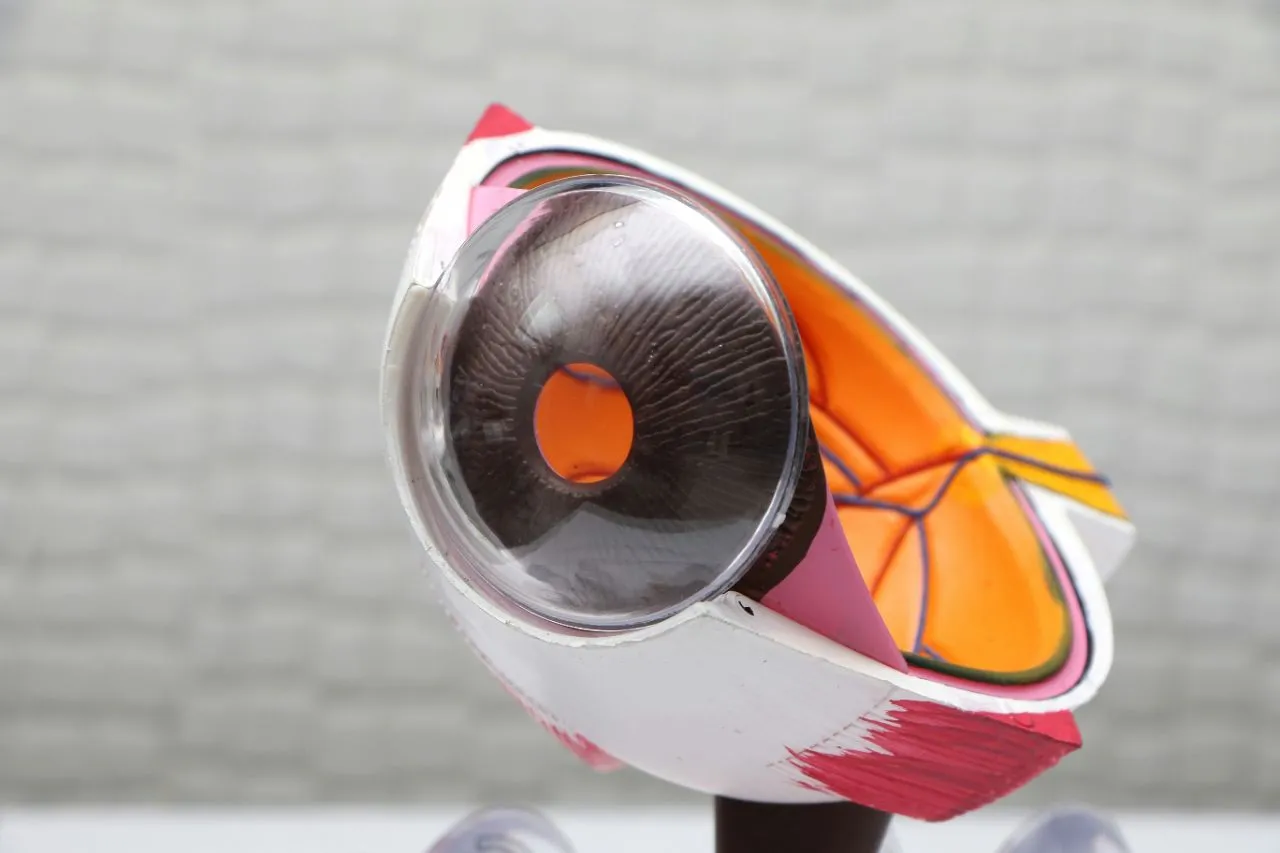
In a statement, the Privacy Commissioner expressed serious concerns about potential risks to personal data privacy. The PCPD executed warrants as part of the inquiry into Worldcoin's identity verification project, particularly focusing on the use of iris-scanning orbs for identity verification.


The PCPD urged Hong Kong residents to consider the implications of Worldcoin's biometric data collection and emphasized the importance of evaluating the legitimacy of such data collection.


The Commission also advised individuals to inquire about the purpose of data collection, the intended use of the data, the classes of entities with access to the data, the retention period of biometric data and the safety measures implemented to protect sensitive information.


"The PCPD is concerned that the operation of Worldcoin in Hong Kong involves serious risks to personal data privacy, and believes that the collection and processing of sensitive personal data by the relevant organization may be in contravention of the requirements of the Personal Data (Privacy) Ordinance," stated the privacy watchdog.


The Commission highlighted that any personal data controlled by Worldcoin must be collected for a lawful purpose related to the project's function or activity, with the information collected from users' irises deemed sensitive according to regulatory guidelines.
https://asset.coinness.com/en/news/53d725996c651f25b6c9dfbe2e3f2800.webp
Photo by Harpreet Singh on Unsplash

Global scrutiny

Worldcoin, which commenced operations in 2021 and officially launched in July 2023, has faced regulatory scrutiny in various countries due to privacy concerns. As of December 2023, Worldcoin reported that over 5 million people had created accounts using their identities.


However, the project's approach to identity verification through iris scanning has triggered investigations and actions by regulators. Notably, the project suspended services in Kenya and halted iris scans in India in response to regulatory challenges. 


The company’s activities in the French and Brazilian markets have been suspended. Last year the UK’s Information Commissioner’s Office said that it would make further enquiries into the company’s activities. Meanwhile, the German data watchdog has been investigating Worldcoin since 2022.


In an effort to clarify the efforts the company is making to achieve compliance across international jurisdictions where data privacy is concerned, Worldcoin recently published a blog post on the subject. Within it, the company states that it “is designed to be fully compliant with all laws and regulations governing data collection and data transfer."


Despite its ongoing regulatory challenges, Worldcoin CEO Alex Blania remains steadfast in advancing the project's mission, stating recently:

"We race toward billions of users as fast as we possibly can." 


The project closed out 2023 by expanding into Singapore.


The privacy concerns surrounding Worldcoin underscore the growing importance of balancing technological innovation with robust data privacy regulations to ensure the protection of individuals' sensitive information.


More to Read
View All
Web3 & Enterprise·

Feb 16, 2024

Mocaverse strikes up strategic alliance with Halo, KuCoin and OKX

Mocaverse, a membership-based NFT collection initiative enabled by Hong Kong’s Animoca Brands, revealed on Friday the establishment of strategic alliances with prominent Web3 wallets OKX Wallet, Crypto.com DeFi Wallet and Halo Wallet. In a separate announcement, it also revealed a similar partnership with crypto exchange platform KuCoin. Extending Moca IDs to OKX, Crypto.com and Halo usersIn a statement released by Animoca Brands, it was highlighted that through the deployment of its recently introduced decentralized identity (DID) Moca ID, Mocaverse is set to catalyze user expansion by integrating with the aforementioned leading self-custodial wallets. The statement clarified that Moca ID will act as the conduit for users to seamlessly navigate various Web3 cultural experiences, spanning PointFi, GameFi and SocialFi, thereby simplifying the onboarding process into the Mocaverse ecosystem. The collaboration will mean that users of OKX Wallet, Crypto.com DeFi Wallet and Halo Wallet will soon have the opportunity to claim their unique Moca IDs within the app, thereby gaining entry into the Mocaverse ecosystem and unlocking access to a myriad of rewarding cultural and entertainment experiences.Photo by Shubham's Web3 on UnsplashRealm Points incentiveHolders of Moca ID stand to accrue Realm Points through active participation and engagement within partner ecosystems and experiences, with the ability to redeem these points for exclusive real-life benefits and rewards provided by Mocaverse and Animoca Brands. Commenting on the development, Kenneth Shek, project lead at Mocaverse, stated:“This partnership encompasses the values and mission we set out when we envisioned Moca ID, which is to make interoperability a new standard to onboard new users and redefine the Web3 network effect through the Mocaverse Partner Network.”Mocaverse seeks to unify Animoca's portfolio projects, subsidiaries, joint ventures and partners through a distinctive NFT collection. With 8,888 Mocas as NFT profile pictures (PFPs), Mocaverse serves as a membership pass for Animoca Brands team members, investors, partners and select token holders, aspiring to foster community cohesion and collaboration within the Web3 sphere. Jason Lau, chief innovation officer of OKX, expressed enthusiasm for the collaboration, noting OKX Wallet's role as a premier gateway to explore the burgeoning realm of Web3 gaming, culture and entertainment experiences. Likewise, Eric Anziani, president and chief operating officer of Crypto.com, underscored the commitment of Crypto.com DeFi Wallet to democratizing access to the realms of DeFi and Web3 for all users, stating the partnership with Mocaverse would extend these experiences to a broader audience. Additional announcementIn a separate announcement, Mocaverse unveiled a similar partnership with cryptocurrency exchange KuCoin alongside Halo Wallet. The initiative endeavors to address the challenge of accessing benefits across distinct Web3 sub-ecosystems by establishing cross-platform identity links, ultimately enhancing the user experience and fostering greater collaboration and integration across partner offerings.Halo Wallet CEO Jeff Hou shared his thoughts on the collaboration, stating:“The partnership among Halo, KuCoin, and Mocaverse is more than just a fusion of services; it represents a strategic alliance to create a cohesive digital asset environment for our users. The initiation of this exceptional cross-platform alliance is a move that promises to bring together the best of what each party has to offer.” 

news
Web3 & Enterprise·

Nov 24, 2023

Japan’s Mt.Gox to commence creditor repayments shortly

Japan’s Mt.Gox to commence creditor repayments shortlyCreditors of Mt. Gox, the Japanese Bitcoin exchange that suffered a devastating hack in 2014, have received a glimmer of hope with an announcement from the administrators of the Mt.Gox estate that repayments are imminent.The recent announcement from Nobuaki Kobayashi, the trustee overseeing Mt. Gox’s estate was made on Tuesday when Kobayashi initiated the distribution of emails to rehabilitation creditors, hinting at the commencement of repayments. Social media reports have fueled optimism, suggesting that creditors may start receiving repayments in cash in 2023.Photo by Manuel Cosentino on UnsplashFirst round repayments in 2023The email, sent in both Japanese and English, outlined Kobayashi’s plan to initiate the first round of repayments in 2023, with the process extending into 2024. The email highlighted the complexity of the task, citing the large number of rehabilitation creditors, diverse types of repayments and varied processing times required. Despite the lack of specific timelines for individual creditors, the email conveyed a cautiously optimistic tone about progress.Cash vs. bitcoinReaction within the Mt. Gox community has been mixed. Some commentators view Kobayashi’s email as “cautiously promising,” interpreting it as a positive sign that repayments are finally on the horizon. Long-suffering creditors had been informed of a one-year extension to the repayment deadline in September. Additionally, some observers have raised concerns, noting that the email specifically references cash payments, whereas many victims of the Mt. Gox hack anticipate the return of large amounts of bitcoin.The Mt. Gox trustee currently holds 135,890 BTC across known addresses, valued at nearly $5 billion. An additional 3,795 BTC (worth $130 million) are held on unknown addresses.While the email signals progress, questions remain about the nature and extent of the repayments, with the community keenly observing developments. The email stated:“The specific timing of repayment to individual rehabilitation creditors is undetermined, and therefore, it will not be possible to provide advance notice to each rehabilitation creditor regarding the specific timing of their repayment.”Deadlines were also pushed back on other occasions, including March of this year when creditors were sent a “change of deadline“ notification.Redemption of trust assetsThis news coincided with the Mt. Gox trustee’s announcement on Wednesday regarding the redemption of trust assets. A substantial sum of 7 billion Japanese yen (equivalent to $47 million) was redeemed, intended for funding the repayment of claims. Following the redemption, the remaining trust assets stood at 8.8 billion yen, or approximately $59 million. The trustee, as per the official statement, is actively preparing for the base repayment, early lump-sum repayment and intermediate repayment.The recent events surrounding Mt. Gox have sparked discussions within the broader crypto community about the potential for a bitcoin sell-off. It’s long been speculated that the sudden release of bitcoin to creditors could lead to the market being flooded with sellers. However, as it appears that cash is being distributed as well as bitcoin, this should soften any potential bitcoin sell-off.Despite the optimism in some quarters, skepticism lingers due to the history of delays in Mt. Gox repayments. Creditors remain cautiously hopeful for the most part, awaiting further updates and tangible progress in the rehabilitation process.

news
Web3 & Enterprise·

Aug 31, 2025

Upbit’s banking partner Kbank, BPMG team up on overseas stablecoin pilots

South Korea’s neobank Kbank has partnered with BPMG, a domestic Web3 developer, to pursue stablecoin initiatives abroad, the Electronic Times reported. The companies are preparing proof-of-concept (POC) trials with firms in Thailand and Dubai as part of a broader push to participate in global financial infrastructure. Following a recent agreement with Kbank, BPMG has begun collaborating with a Thai company on a stablecoin project and is working with an investor in the United Arab Emirates (UAE) on the issuance and operation of stablecoins. Kbank plans to leverage BPMG’s blockchain technology to develop stablecoin business models for remittances, currency exchange and payments, and to support the build-out of related systems. The bank is focusing first on Asia and the Middle East.Photo by Shubham Dhage on UnsplashReducing intermediaries and automating regulatory complianceAnother priority is cutting intermediaries in cross-border transfers to speed up remittances and reduce costs via distributed ledger technology. Drawing on BPMG’s patents in AI and blockchain, Kbank is also developing a tool to automate regulatory analysis across jurisdictions so it can tailor services to local rules. As digital transformation accelerates, stablecoins are gaining traction as a payment method for their low volatility and ability to enable real-time cross-border transactions. In April, Kbank joined the Pax Project, a stablecoin initiative backed by Japan’s three major banks—Mitsubishi UFJ Financial Group (MUFG), Sumitomo Mitsui Banking Corporation (SMBC), and Mizuho. Through the project, Kbank is participating in trials for real-time transfers and settlement between South Korea and Japan. The bank has also formed a digital asset task force to advance the commercialization of stablecoin solutions. A Kbank official said combining blockchain with finance can deliver faster, more efficient global services and that the BPMG partnership is expected to demonstrate the practical utility of stablecoins, paving the way for integration into both domestic and international offerings. IPO timing hinges on Upbit renewalThe stablecoin push comes as Kbank is widely expected to submit a preliminary initial public offering (IPO) filing as early as this month, with a listing anticipated in October. A key variable, according to market watchers, is whether Kbank renews its contract with Upbit, South Korea’s largest cryptocurrency exchange, to provide real-name bank accounts—a regulatory requirement for fiat-to-crypto platforms. Kbank has been Upbit’s banking partner for five years, and deposits from the exchange account for roughly 20% of the bank’s total. Kbank is also seeing rising corporate activity around digital assets. As of Aug. 18, the bank had more than 100 corporate accounts dedicated to crypto trading—over double the 49 recorded at the end of last year—momentum widely attributed to its partnership with Upbit. Since launching corporate-focused services in late 2023, Kbank has provided real-name accounts to entities including government bodies, non-profits, and local municipalities. The uptick follows the financial regulator’s earlier decision to allow non-profits and trading platforms to sell crypto holdings, with implementation beginning in June.

news
Loading