Top

Bithumb launches point-based ‘Benefit Zone’ to attract more crypto investors

Web3 & Enterprise·March 13, 2024, 8:17 AM

South Korea’s one of the leading crypto exchanges, Bithumb, has launched a new service dubbed Benefit Zone. Here, users can participate in the platform’s promotional events and earn in-app points, local media outlet Digital Today reported. These rewarded points can be traded for crypto assets through an in-app point shop. The event missions are available either on its mobile app or on PC. 

https://asset.coinness.com/en/news/fdf56f8739a0fe7e30b3f38473bf1ff4.webp
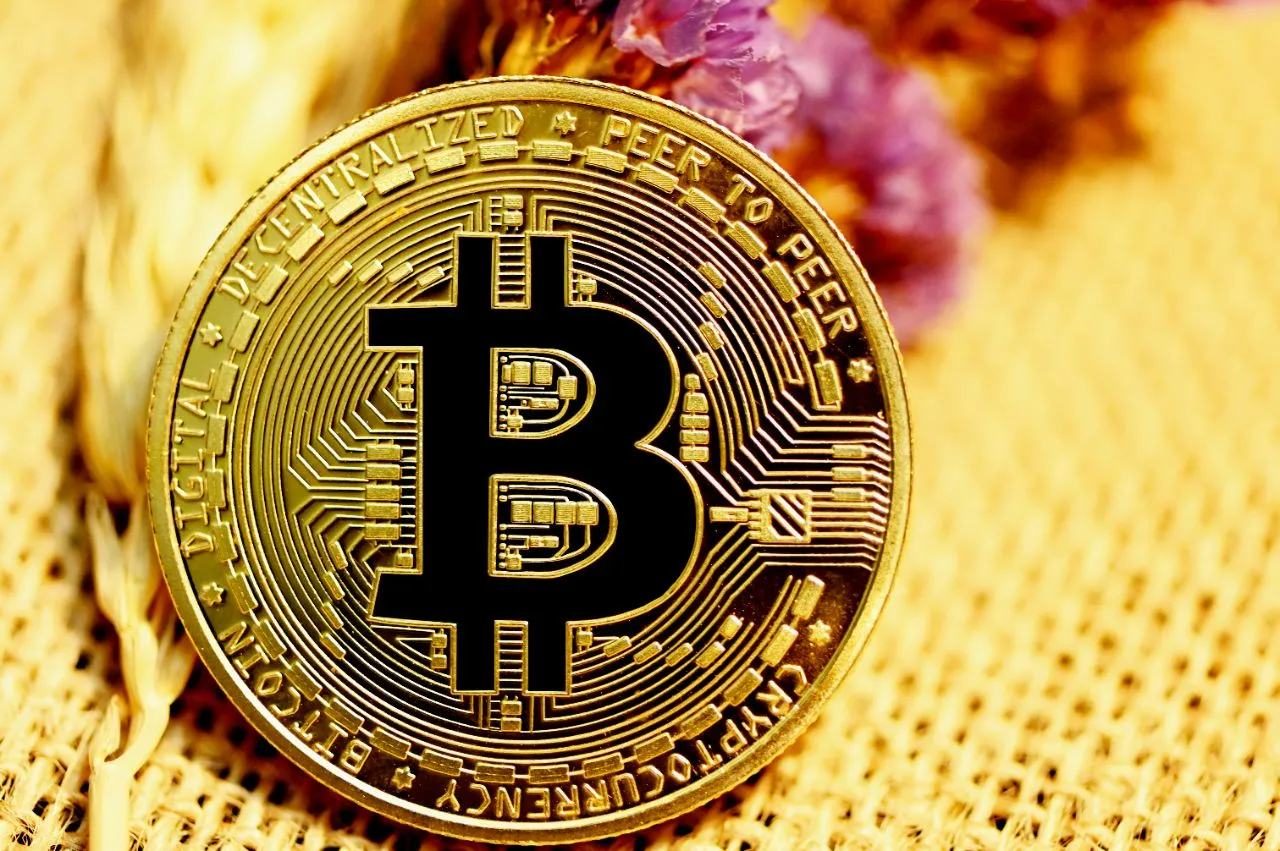
Photo by Kanchanara on Unsplash

One of these event missions involves participants predicting Bitcoin prices – BTC Up? Down? – where users can make a bet on whether Bitcoin’s price will rise or fall compared to its closing price of the previous day. The mission is available daily from 10:00 to 22:00 (KST). Winners of the bet are provided with a reward of 100 points and double that amount if they are newly signed-up users of the given month. If the Bitcoin price remains unchanged, all participants are rewarded points. 


More promotional events to come

Aside from the Benefit Zone, Bithumb is hosting another event targeting new members who joined the platform in March. Those who deposit funds in Korean won into Bithumb deposit accounts are eligible for Bithumb Cash worth around KRW 20,000, or approximately $15.

Bithumb’s Service General Manager Moon Seon-il stated that the exchange platform is conducting various promotional events to offer more perks and benefits to users, showing the company’s commitment to introducing more user-friendly services and events in the future. 


More to Read
View All
Policy & Regulation·

Jan 16, 2024

United Nations report cites popularity of USDT for fraud in Southeast Asia

USDT, the leading U.S. dollar stablecoin issued by Tether, has been highlighted as a major conduit for money laundering and scams in Southeast Asia, according to a United Nations report released on Monday.Photo by Mathias Reding on UnsplashIllicit stablecoin useThe report has been titled “Casinos, Money Laundering, Underground Banking, and Transnational Organized Crime in East and Southeast Asia: A Hidden and Accelerating Threat.” It points out that online gambling platforms, particularly those operating illicitly, are among the favored channels for cryptocurrency-based money launderers, with a notable emphasis on the use of Tether or USDT. In a foreword to the report, Jeremy Douglas, the UN’s Regional Representative for Southeast Asia and the Pacific, noted that technology had aided crime networks in Asia, and in particular, the Mekong Delta region. Developing upon that idea, he added:”This has necessitated a revolution in the regional underground banking architecture, resulting in the development of systems and infrastructure capable of moving and laundering massive volumes of state-backed fiat and cryptocurrencies.”The report itself asserts that illegal and under-regulated crypto exchanges have become “foundational pieces of the banking architecture used by organized crime.” The document highlights law enforcement efforts in disrupting multiple money laundering networks linked to the illicit transfer of Tether funds. Last August, Singaporean authorities dismantled a network through an operation, recovering approximately $735 million in both cash and cryptocurrency. ‘Pig butchering’The UN report further suggests that USDT has been extensively employed in various underground fraud activities, including so-called "pig butchering" romantic scams. Last November, Tether froze $225 million in stolen USDT following investigations by Tether in collaboration with crypto exchange OKX and the U.S. Department of Justice. The money had been held in self-custodied wallets associated with an international human trafficking group in Southeast Asia orchestrating a pig-butchering scam. In December, Tether CEO Paolo Ardoino informed U.S. legislators in a shared letter that the company has enlisted the U.S. Secret Service and Federal Bureau of Investigation onto its platform. Later that month, the Chinese authorities uncovered a massive underground banking operation that was designed to evade the country’s foreign exchange controls. There was more related activity in December when it emerged that USDT has been integrated into the shadow economy in Cambodia, against a backdrop of the currency being prohibited for the purpose of trade within the Southeast Asian country. TRM Labs reportIn July of last year, a report by blockchain analytics firm TRM Labs, found that pro-ISIS terrorist groups in Central and Southeast Asia and the Middle East are increasingly using cryptocurrency, with a particular preference for USDT transacted over the Tron blockchain network. The UN report cites the popularity of USDT among those engaged in cyber-fraud and online casino operations, located in Myanmar, along the border with Thailand. Throughout 2023, Tether witnessed a notable expansion in its share of the global stablecoin supply, growing from 50% to 71%. At the time of writing, USDT has a market cap of $95 billion with stablecoins having an overall market capitalization of $134 billion. The UN's findings raise concerns about the stablecoin's role in facilitating illicit activities and underscore the need for enhanced regulatory scrutiny within the rapidly evolving crypto landscape.

news
Web3 & Enterprise·

Sep 06, 2023

Blockchain Experts Gather at KBW 2023 Side Event to Discuss Future Prospects of South Korea

Blockchain Experts Gather at KBW 2023 Side Event to Discuss Future Prospects of South KoreaBlockchain experts from various corners of the industry converged to exchange insights on industrial and technological trends during “Unveiling Prospects in South Korea,” a side event affiliated with Korea Blockchain Week (KBW) 2023. This noteworthy gathering, co-hosted by Sui, Google Cloud, CoinNess, and Bitmain, took place on September 5 at Banyan Tree Club and Spa Seoul.Blockchain compatibility and Web3 adoptionAmong the distinguished speakers at the event, Derik Han, Head of APAC Partnerships at Mysten Labs, the team behind the layer-1 blockchain project SUI, discussed how the SUI project plans to enhance blockchain compatibility through a zero-knowledge (ZK) login feature, similar to single sign-on (SSO). SSO enables users to use a single set of login credentials to gain access to various applications.Han underscored the significance of reducing technical barriers for the widespread adoption of Web3 in our daily lives, and he pointed out that SUI’s ZK login feature would contribute to this goal. Additionally, Han shed light on SUI’s intention to add on-chain features highly favored among Korean gamers.Security tokens and RWAsJo Dong-hyeon, the CEO of Undefined Labs, a developer specializing in on-chain risk rating solutions, emphasized that the Korean decentralized finance (DeFi) market is poised for growth, driven by security tokens and real-world assets (RWAs). He highlighted the significant attention received by the Financial Services Commission’s announcement regarding guidelines for security token offerings (STOs) in February.Jo observed that tokens backed by real-world assets (RWAs) would serve as a bridge between the DeFi space and traditional financial markets, facilitating the development of the former. He also noted that this development would follow the pattern seen in the Korean cryptocurrency market whose liquidity has been supported by young investors.NFT ecosystemsMeanwhile, Kim Min-gu, Head of Web3 Business Development Lab at LG Uplus, a telecom company, expressed their commitment to expanding the Moono NFT ecosystem. This venture, anchored around their octopus character, intends to advance through collaborations with similar NFT projects like Lotte Homeshopping’s pink bear character, Bellygom. Kim highlighted that the company’s primary goal for this year is to make NFTs accessible even to customers who are unfamiliar with cryptocurrencies.Kim further explained that LG Uplus aims to delve into the differences between Web3 NFT communities and their Web2 counterparts. The company’s focus lies in improving the overall usability of its services, without narrowing down its target audience. They are particularly intrigued by the potential of wallets and decentralized applications (dApps) in this pursuit.Banks’ entry into the virtual asset landscapeFollowing this, Leem Min-ho, an analyst at Shinyoung Securities, predicted a strategic expansion by Korean banks, with an emphasis on offering digital asset custody services. This endeavor has been catalyzed by recent developments, including the introduction of security token guidelines in February and the passage of the Virtual Asset User Protection Act in June. These regulatory milestones are gradually shaping a more defined legal framework for virtual assets within South Korea. Leem went on to say that banks, known to favor engaging in business activities within established regulatory boundaries, are poised to concentrate their forthcoming initiatives on approved security tokens, ensuring compliance and adherence to regulatory standards.

news
Policy & Regulation·

Apr 10, 2023

The Philippines Forging Crypto Reg. Path US Could Learn From

The Philippines Forging Crypto Reg. Path US Could Learn FromThe Philippines has demonstrated best practice in operating a sensible regulatory framework relative to cryptocurrency while the United States has erred by engaging in regulation via enforcement while responding after the horse has bolted in relation to a string of crypto company collapses. That’s according to Robert De Guzman, Head of Legal Compliance at Philippines-based cryptocurrency exchange Coins.ph.©Unsplash/C BuezaIn an opinion piece published in Forkcast News on Tuesday, De Guzman lays out his view as to what’s required in terms of regulation, while drawing comparisons between the application of regulation relative to crypto in both jurisdictions.The need for “sensible” regulationDe Guzman believes that the crypto industry’s recent failures are a wake-up call for the whole sector. Losses of billions of dollars affected Celsius Network, BlockFi, Voyager Digital, Genesis, and FTX, and led to Silvergate, Silicon Valley Bank (SVB), and Signature banks’ collapse in a week. To maintain consumers’ trust, he believes that sensible regulation is necessary for the crypto exchanges dealing with digital assets.The legal compliance expert cites the FTX collapse. FTX’s Sam Bankman-Fried’s empire was among the largest collapses. FTX pretended to support regulation, but its true nature was an offshore exchange for global clients. Nonetheless, some businesses act on their regulation support by acquiring licenses and complying with central bank audits in the countries of operation.State-level and industry-level regulationThe crypto industry being open to self regulation is one element of the solution, he says. Regulators must proactively protect their consumers from scams and business failures, not just clean up the mess after millions of people have been harmed.Regulatory failuresDe Guzman points the finger at reactionary regulatory action. Regulators filed charges against crypto industry founders after their collapse. Previously, they missed the problems of the largest companies. FTX, based in the Bahamas, was mismanaged, and American regulators only responded after customer issues. Regulations by enforcement, preferred in several countries, wait for failure to happen before taking action. Over-regulation through enforcement pushes platforms offshore, where Wild West-type environments thrive, with clear consequences.Regulators in some countries focus on surface-level questions, like which tokens should be considered securities, while others, like in the Philippines, prioritize execution-level details to protect consumers. Anti-money laundering measures and custody are core issues, with the G-7’s Financial Action Task Force’s Travel Rule likely to be more strictly applied. Active regulation and audits are needed to ensure financial platforms act responsibly with customer deposits. Basic rules need to be put in place through a licensing regime, followed by regulation of market practices like commingling of assets, self-dealing, and trading against customers.The Philippines sensible approach to regulationThe Coins.ph legal guru holds out his home country as exemplary in terms of its approach to regulation. The Philippines’ regulatory regime requires a virtual asset service provider (VASP) license to operate a crypto exchange, as well as additional licenses for other services. The country’s central bank, BSP, directly regulates all crypto exchanges and expands its crypto regulations to adapt to market needs. KYC processes in the Philippines require recognition of valid ID documents from across 82 provinces.Additionally, the BSP expects the industry to cooperate in quarterly audits where they share balance sheet information and disclose digital assets in hot and cold wallets. Regulators in the Philippines are proactive and knowledgeable about the crypto space, which sets a sensible framework based on customer protection.

news
Loading