Top

Animoca Brands ventures into Bitcoin ecosystem

Web3 & Enterprise·May 03, 2024, 7:41 AM

Hong Kong-based game software company Animoca Brands has announced its foray into the Bitcoin industry by endorsing the Opal Foundation, a novel Bitcoin ecosystem protocol. The move involves the Opal Protocol and BLIF token, initiated by Animoca Brands and Darewise, a metaverse technology platform.


On April 30, Animoca Brands disclosed its plans to become the "largest Web3 ecosystem" for gaming, education and culture built on Bitcoin. The company aims to establish the Opal Protocol and BLIF token as key components of this ecosystem.
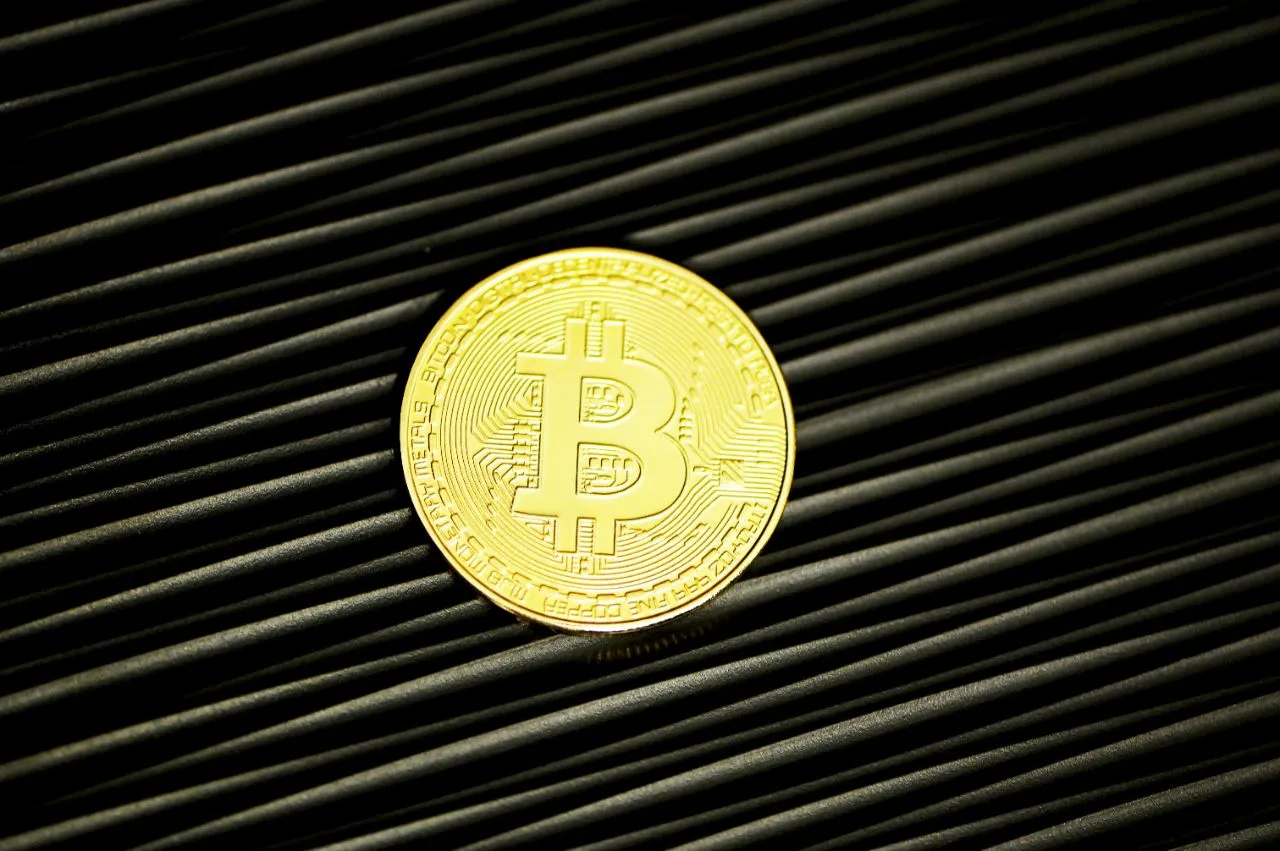
https://asset.coinness.com/en/news/51441a10d0048144065d9d0ed29425a1.webp
Photo by Kanchanara on Unsplash

BLIF token and Opal Protocol

The BLIF token, also known as the Opal Protocol Runes token, is hailed by Animoca as a means to enable a "true digital life" on Bitcoin. According to Animoca's executive chairman and co-founder Yat Siu, Bitcoin is now primed for Web3, transitioning from a mere store of value to a store of culture for the Web3 age.


Six of Animoca Brands' portfolio companies have already joined as Genesis members, signaling a strong start for the Opal Protocol. Additionally, all future Bitcoin-based projects from Animoca Brands will collaborate with the Opal Foundation.


Launched in 2024, the Opal protocol positions itself as a decentralized ecosystem protocol on Bitcoin, powered by BLIF. Its litepaper describes it as a seamless blend of virtual and real-life experiences, offering digital extensions of reality across various domains such as banking, entertainment, education and social interactions.


The launch date of the Opal protocol and BLIF airdrop is yet to be announced, but Opal's Telegram group has hinted at its impending arrival. Despite not being operational, Opal's X profile already boasts over 270,000 subscribers.


Strategic partnership

Animoca Brands is hailed as the first strategic launch partner for the Opal Foundation. The company's collaboration aims to integrate its vision into the open Opal protocol on Bitcoin and ordinals.


Animoca's venture into Bitcoin coincides with the recent trading debut of spot Bitcoin and Ether exchange-traded funds (ETF) in Hong Kong. However, the initial trading volumes of these ETFs were relatively modest compared to spot Bitcoin ETFs launched in the United States in January 2024.

 

More to Read
View All
Web3 & Enterprise·

Aug 16, 2023

Daegu Recruits First Cohort of Youth Blockchain Startup School

Daegu Recruits First Cohort of Youth Blockchain Startup SchoolThe Daegu Metropolitan City Public Agency for Social Service has opened applications for the first cohort of the new Youth Blockchain Startup School, which aims to foster a blockchain-based ecosystem in Daegu by offering education and support for local youth in pursuing entrepreneurship.Photo by topaz sun on UnsplashNurturing innovation among the youthA comprehensive program will be offered at the school, covering a wide range of areas from theory to entrepreneurship and consisting of five stages: theoretical and practical education on blockchain and digital assets, exploration of blockchain-based startup models, selection of viable startup models, support for practical entrepreneurship and growth, and monitoring business acceleration and issue support.The theoretical education courses will be led by Park Sung-joon, Director of the Blockchain Research Center at Dongguk University, and the practical education will be led by Professor Choi Sei-woong from the same university, according to the agency.The school will be in session for three separate programs, with the first starting this September, the second in January of next year, and the third scheduled for May 2024. Each program is set to span a period of four months. The upcoming inaugural program will run from September 1 to December 31.Application detailsApplications are open until August 31 to all youth, both as a team or individually. They can be submitted through the Daegu agency’s lifelong learning online website.

news
Policy & Regulation·

May 08, 2023

Henan Province Establishes Metaverse Fund

Henan Province Establishes Metaverse FundAn administrative body within China’s Henan Province has established a 150 million yuan ($21.7 million) private equity investment fund which will be centered on financing metaverse-related projects.In a social media post on Thursday, the Assets Supervision and Administration Commission of Henan, a state-owned body, said that the fund had been created last month. The objective of the fund is to promote the development of the virtual reality and metaverse sectors. Specifically, the agency wants to bring about the development of “internationally competitive digital industrial clusters.”Photo by Jéan Béller on UnsplashA metaverse strategyLast year, Henan province administrators released a plan, setting out the objective of achieving a local metaverse industry reaching a level of 30 billion yuan by 2025. The plan was titled “Henan’s metaverse industry development plan for the years 2022 to 2025.” Its authors set out the objective of creating an industrial metaverse, an energy metaverse, an education metaverse and a virtual human metaverse.Henan is one of a number of regions vying to capture the upside in terms of the promise of the development of innovation relative to the metaverse. Earlier in 2022 local government in Shanghai set out to establish an industry fund of 10 billion yuan (approximately $1.4 billion) in assets, focused purely upon metaverse-centric development and innovation.Earlier this year, a delegate attending one of the city’s most influential yearly political meetings called for efforts to be made to provide for adequate regulation to enable further metaverse development and effective supervision of the space.The Beijing-based and state-backed China Computer Industry Association (CCIA) also took an interest last year, forming a metaverse committee to draft industry standards. It too planned to establish a 1 billion yuan fund, while aspiring to help other regional authorities establish a blueprint to progress the industry.Not to be outdone, Hubei province’s Wuhan and Anhui administrative areas made a pledge to boost metaverse development over the course of the next five years. Within the Wuhan administrative area, city officials are said to be aiming to integrate the metaverse, cloud computing and blockchain into the conventional, real economy.Opposing viewsIt’s curious to note that when it comes to decentralized blockchain and cryptocurrency, China has been vehemently opposed to their development within its borders. In September 2021, the country banned cryptocurrency transactions. Prior to that, it had implemented a ban on cryptocurrency mining activity, forcing the large miners that had long since established there to move overseas.It’s difficult to see how it can be positive relative to the metaverse when a metaverse depends on the use of blockchain technology. To confuse matters further, over the course of the past six months, it seems to have given a mandate to the autonomous territory of Hong Kong to open its doors in facilitating the crypto and blockchain sector in total contrast to the stance taken within mainland China.Recently compiled industry and market research suggests that the metaverse industry in China is expected to grow by 39.5% in 2023, with the space having experienced significant growth in the country over the course of Q3 and Q4, 2022.

news
Markets·

Jul 10, 2023

Research Finds Over 90% of Korean Cryptos Prone to Pump-and-Dump Schemes

Research Finds Over 90% of Korean Cryptos Prone to Pump-and-Dump SchemesThe Korea Institute of Finance (KIF) has released a report revealing that 91.3% of South Korean-issued cryptocurrencies, known as “kimchi coins,” are prone to pump-and-dump (P&D) schemes. These schemes involve intentionally spreading false information on social media platforms to manipulate token prices. This is done with the intention of selling the tokens at artificially inflated prices.Photo by Maxim Hopman on UnsplashP&D prevalenceThese manipulative practices were frequently observed during the rapid growth of the cryptocurrency market from 2020 to 2022. Previous research papers indicate that P&D schemes commonly occur on multiple crypto exchanges and typically unfold within a time frame of 10 minutes. It has been observed that cryptocurrencies with lower liquidity and smaller market capitalization are particularly vulnerable to becoming prime targets for these schemes.Korean market and global marketThe Korean cryptocurrency market stands out with its significant number of cryptocurrencies listed on a single exchange, including kimchi coins. This distinction becomes evident when comparing it to the global market. In the Korean market, the top 10 global cryptocurrencies, ranked by their market capitalization, account for 59% of the total market share. Meanwhile, in the global market, they represent 84.9%. This contrast indicates that the Korean market has a larger proportion of alternative coins, also known as altcoins, which are more susceptible to pump-and-dump schemes and other manipulative activities.According to a survey conducted by the Financial Services Commission in the second half of 2022, there were a total of 625 listed coins (excluding duplicate listings), with 389 (62.24%) of them being listed on a single exchange. Among these single-exchange listed cryptos, 223 were kimchi coins, which is equivalent to 57%.OHLCV data analysisIn this KIF paper, research analyst Baik Yeon-ju delved into abnormal price patterns within the Korean cryptocurrency market. She analyzed the hourly Open-High-Low-Close-Volume (OHLCV) data of kimchi coins in October 2021. The study revealed that out of a total of 16,560 hourly price and volume observations, approximately 4.7% exhibited characteristics consistent with P&D schemes. Baik noted that 91.3% (21 of the 23) observed kimchi coins witnessed such movements.Legislative effortsMeanwhile, it is encouraging that the South Korean National Assembly passed the Virtual Asset User Protection Bill during its plenary session on June 30. This legislation, set to go effective in July next year, aims to provide protection for customers’ assets in the virtual asset space. The act not only establishes regulations to combat unfair trading practices but also enforces penalties for non-compliance.Call for further measuresHowever, Baik suggested that policies should be further strengthened to enhance investor protection within the crypto market. In order to achieve this, she proposed the implementation of a monitoring system for virtual asset service operators (VASPs) and the allocation of inspection and investigation personnel, as well as technical resources. It is also necessary to address potential conflicts that may arise with the Act on Real Name Financial Transactions and Confidentiality, particularly if the data required from VASPs falls under the classification of financial transaction information and personal information.Furthermore, considering the lack of transparency surrounding many altcoins regarding their projects and exchange listings, Baik suggests that the upcoming second virtual asset bill should tackle this issue by regulating the issuance and disclosure of these cryptocurrencies. Additionally, she highlighted the importance of conducting research based on empirical data to detect abnormal transactions. This approach enables the recognition of existing issues and the acquisition of concrete evidence, which serves as a credible basis for policymakers to enact relevant legislation.

news
Loading