Top

Turkish lira becomes third largest fiat currency in crypto trading

Markets·June 13, 2024, 5:51 AM

The Turkish Lira (TRY) has become the third largest fiat currency by volume in the cryptocurrency market, according to a report by Kaiko. This milestone was reached as TRY's share of the crypto market hit an all-time high of 19% in early June. The increase in volume is attributed to the country's economic challenges, notably its high inflation rate, which has surpassed 70%, making the lira one of the most volatile fiat currencies globally.

https://asset.coinness.com/en/news/5cc70303de0a0312d8740f0d093374dd.webp
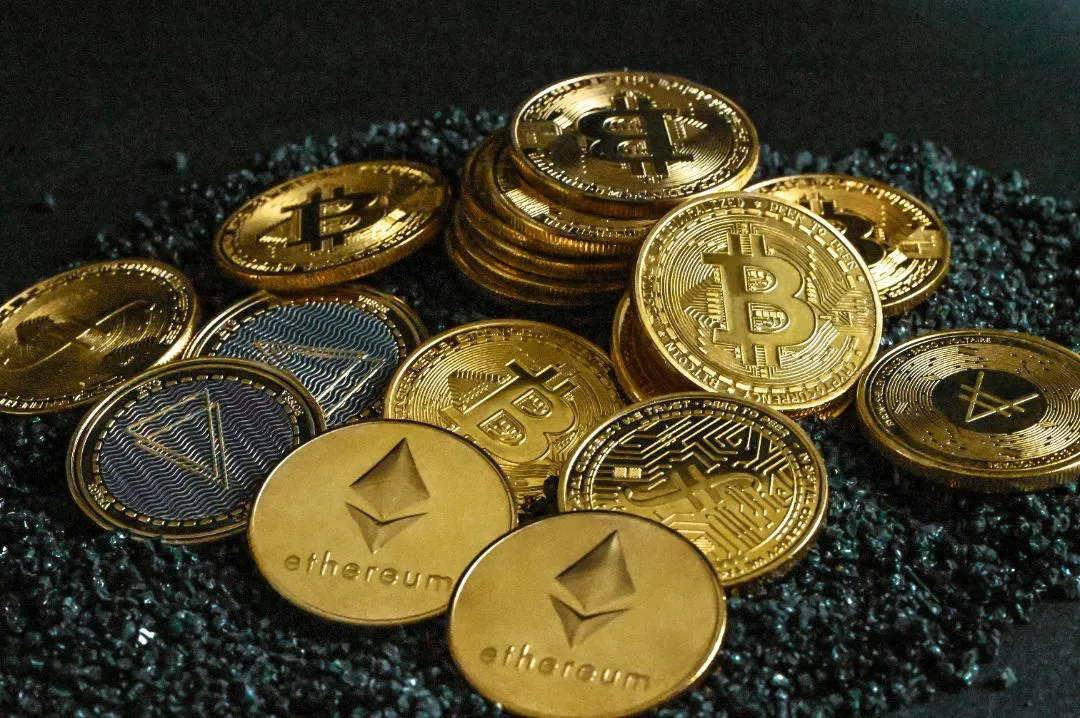
Photo by Afdhallul Ziqri on Unsplash

Factors influencing the increase

The shift in the Turkish lira's position in the crypto market is partly due to increased foreign exchange volatility and currency devaluation, common catalysts for cryptocurrency adoption in developing economies. Additionally, geopolitical factors such as a record number of elections and diverging monetary policies have intensified market fluctuations. This environment has favored cryptocurrencies like Bitcoin, which reached new highs against the lira in recent months. For instance, Bitcoin escalated to 2.3 million TRY in March from 979,000 TRY in October 2023. The recent adjustments in cryptocurrency trading platforms, particularly Binance's delisting of certain fiat trading pairs due to banking issues, have also increased the dominance of TRY in crypto transactions. This series of events underscores the growing interconnection between traditional and digital finance markets, highlighting the increasing role of cryptocurrencies in regions facing economic instability.


More to Read
View All
Web3 & Enterprise·

Oct 11, 2023

Dunamu Restructures Leadership at Its Blockchain Research Arm

Dunamu Restructures Leadership at Its Blockchain Research ArmDunamu, the operator of South Korea’s largest cryptocurrency exchange Upbit, has implemented leadership changes at its blockchain research arm, Lambda256. That’s according to a report by local media outlet Decenter.Photo by Lea L on UnsplashCo-leadership structureStarting this month, Lambda256 welcomes a co-leadership structure, with tech maven Chung Ui-chung and financial specialist Park Yong-shin stepping in as co-CEOs. Each CEO holds independent signing authority. Chung previously held the role of Chief Technology Officer (CTO) at internet messaging giant Kakao, while Park Yong-shin boasts a distinguished career in public administration and finance, having passed the civil service examination and later steering the helm at Heungkuk Investment Trust Management, currently known as Heungkuk Asset Management.Tech expert and gov’t affairs specialistThe reshuffle follows the departure of former CEO Park Jae-hyun, who resigned last month. Shedding light on the division of roles, a Lambda256 official mentioned that Chung will spearhead practical endeavors, whereas Park Yong-shin will liaise with government sectors. Industry analysts perceive this strategic move as Lambda256’s intensified drive to hone its technological edge and navigate the evolving government regulations surrounding security tokens and associated blockchain ventures.Dunamu, holding a dominant 60.6% ownership in Lambda256, established the company in 2018, entrusting the leadership to Park Jae-hyun, a former employee of SK Telecom and Samsung Electronics. The subsequent year saw Lambda256 evolve into a subsidiary, rolling out blockchain platforms like Luniverse. However, financial challenges loomed, with the firm recording net losses of KRW 2.1 billion ($1.6 million) in 2020, KRW 3.7 billion in 2021, and KRW 46.5 billion in 2022.

news
Markets·

Sep 08, 2025

Asia-Pacific leads a wider crypto uptake as legal and security risks persist

A new report indicates that the global use of cryptocurrency is not only growing but also quickening, with the Asia-Pacific (APAC) region setting the pace. According to the sixth Chainalysis Global Crypto Adoption Index, released on Sept. 2, India has emerged as the new leader in overall adoption across 151 countries. The index analyzes where value is being transferred, how new users are entering the ecosystem, and which areas are experiencing the most rapid expansion.Photo by Naveed Ahmed on UnsplashIndia leads global crypto adoptionIndia now holds the top spot in the overall index, with the U.S. following in second place. The APAC region demonstrates significant momentum, with Pakistan (3rd), Vietnam (4th), Indonesia (7th), and the Philippines (9th) all securing positions in the top ten. Further down, South Korea and Japan are ranked 15th and 19th, respectively.2025 Global Crypto Adoption Index Top 20 Source: ChainalysisThe picture changes when the data is adjusted for per capita GDP, which highlights grassroots movements. By this measure, Ukraine ranks first, followed by Moldova, Georgia, and Jordan. Hong Kong comes in fifth, Vietnam sixth, while Singapore and South Korea rank 16th and 18th, respectively.2025 Global Crypto Adoption Index Top 20 (Pop. adjusted) Source: ChainalysisRegional transactions surge as APAC gains groundOn-chain transaction data confirms a shift in economic gravity. In the year ending June 2025, APAC's transaction value soared by 69% year-over-year, climbing from $1.4 trillion to $2.36 trillion. While Europe ($2.6 trillion) and North America ($2.2 trillion) still handle larger absolute volumes, growth is accelerating nearly everywhere. APAC's growth rate more than doubled from 27% to 69%, while Latin America's rose from 53% to 63%. In terms of capital entering the crypto market via centralized exchanges, the U.S. leads as the largest fiat on-ramp, processing over $4.2 trillion. This is approximately four times the volume of South Korea (over $1 trillion), while the EU recorded just under $500 billion. Asset preferences also show regional variations; Bitcoin accounted for 47% of purchases in the U.K. and 45% in the EU, but just over 20% in South Korea.  India's top ranking aligns with the latest domestic developments, such as the Independence Day launch of the Bitcoin Policy Institute India, which aims to focus on sovereign mining, policy, and education. Legal and security challenges in IndiaHowever, this rapid growth is accompanied by notable legal and security hurdles. In a high-profile case, an Indian anti-corruption court sentenced 14 individuals, including 11 police officers, to life in prison for a 2018 kidnapping and crypto extortion scheme. In another development, creditors of India's crypto exchange WazirX approved a new restructuring plan over a year after a $234 million hack allegedly linked to North Korea’s Lazarus Group. An earlier proposal was rejected by the Singapore High Court in April. The revised plan shifts oversight of recovery tokens—representing outstanding balances—from WazirX’s Singapore entity to Zanmai India, regulated by India’s financial authority, with repayments funded by profits and recovered assets. Some 150,000 creditors, representing $206 million in claims, voted between July 30 and Aug. 6 as WazirX also moved operations to a Panama-based unit called Zensui. Separately, on April 16, India’s Supreme Court dismissed a petition from 54 hack victims, ruling it lacked authority to legislate on crypto policy. While India’s headlines highlight the frictions of rapid growth, the broader picture is clearer. The Chainalysis index illustrates a global crypto market expanding across all income levels for varied reasons. In developed nations, clearer regulations and institutional involvement are key drivers. In many emerging economies, factors like remittances and access to U.S. dollars via stablecoins are more prominent. 

news
Web3 & Enterprise·

Oct 05, 2023

Bithumb Eliminates Trading Fees to Attract Investors and Gain Greater Market Share

Bithumb Eliminates Trading Fees to Attract Investors and Gain Greater Market ShareSouth Korean cryptocurrency exchange Bithumb has waived trading fees for all cryptocurrencies available on its platform. Before this change, users were charged trading fees ranging from 0.04% to 0.25%.Photo by Nicholas Cappello on UnsplashKorean won and BTC marketsThe platform’s Korean won market offers trade for 241 cryptocurrencies, whereas its BTC market caters to 24. The no-fee policy will remain in effect until a further announcement is made.Many suggest this move by Bithumb aims to expand its domestic market share. According to local media outlet ZDNet Korea, Upbit dominates with 86% of the Korean crypto market, leaving Bithumb trailing with 11%.Revenue impact and long-term strategyWith its 10th anniversary approaching in January, Bithumb has made this decision, potentially to attract more investors. An official from the exchange highlighted the importance of attracting investors to secure liquidity. While the absence of trading fees, Bithumb’s main revenue channel, may result in a revenue dip, the official believes that a larger user base secured by this move will be beneficial in the long run.

news
Loading