Top

Malaysia launches operation to clamp down on crypto tax evasion

Policy & Regulation·June 17, 2024, 11:38 PM

The Inland Revenue Board (IRB) of Malaysia has launched an operation, which has been dubbed as “Ops Token,” to tackle tax evasion within crypto trading circles in the southeast Asian nation.


Klang Valley raids


According to the Malaysian English language newspaper, The Star, the special operation is a coordinated effort involving the Royal Malaysia Police and CyberSecurity Malaysia (CSM) alongside the IRB. The Malaysian tax authority raided ten locations, with 38 personnel involved in the raids, which were carried out within the Klang Valley region.


The main objective of the raids and the operation overall, is to identify crypto corporate entities and individuals that had failed to report trading activities and therefore, associated revenues, profits and taxes. The initiative aligns with the Malaysian government’s broader strategy of stamping out tax evasion across all sectors, reducing revenue leakage and optimizing the nation’s tax take.

https://asset.coinness.com/en/news/91151827ccfe118598b2077a15969dda.webp
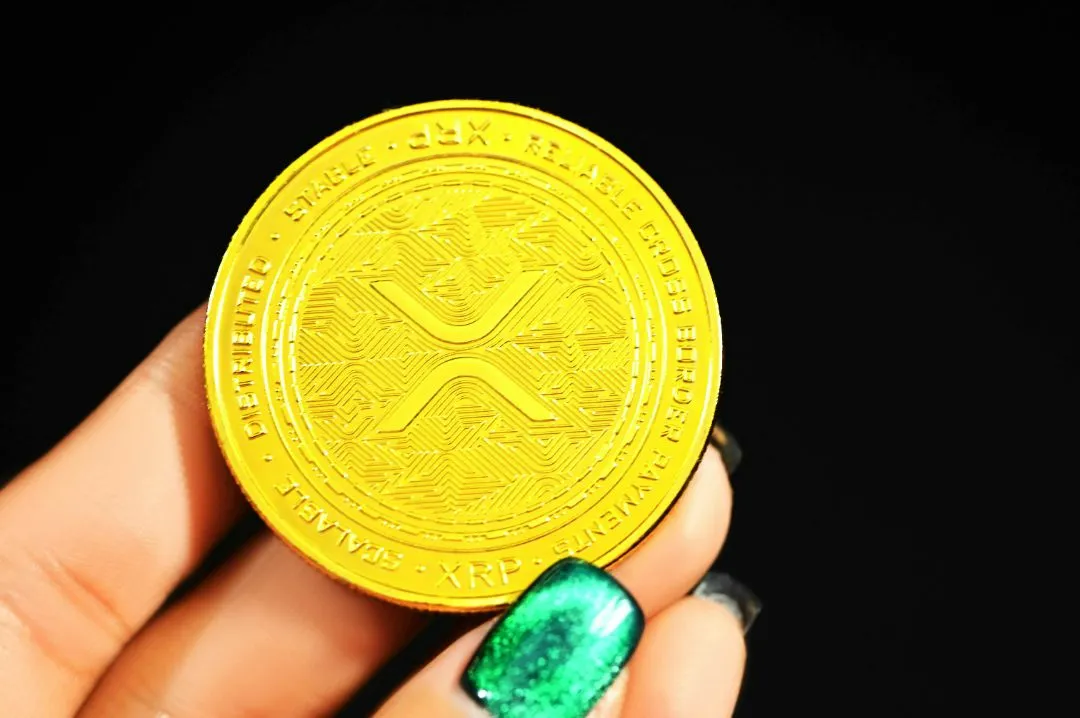
Photo by Esmonde Yong on Unsplash

Stern warning for traders


Datuk Abu Tariq Jamaluddin, CEO of the IRB, issued a stern warning to crypto traders: declare and pay taxes or face compliance actions. Jamaluddin clarified that crypto traders are subject to the same income tax rules that are applied to businesses across various sectors throughout Malaysia. While cryptocurrency is not regarded as legal tender by Malaysia’s central bank, crypto-centric businesses must adhere to the nation's income tax regulations.


The IRB commented on the operation via a statement published on June 15. It stated:


"Through this operation, it was possible to find stored cryptocurrency trading data in mobile devices and computers. We have successfully identified the digital assets that are traded, which has caused significant tax revenue leakage."


The agency intends to carry out further analysis on the data that it seized in a bid to ascertain the trading revenues generated, the profits derived from that trading activity and the taxes owed as a consequence.


The IRB has asserted that a number of corporate entities and partnerships were specifically formed with the purpose of tax evasion. The agency estimates the total value of crypto-related transactions to date in 2024 to amount to 1.441 trillion Malaysian ringgits, approximately $310 billion.


International enforcement efforts


Malaysia is not alone in its efforts to ensure tax compliance relative to cryptocurrency trading and investing. The Organization for Economic Cooperation and Development (OECD) has established a set of crypto tax rules, namely the Crypto-Asset Reporting Framework (CARF). The initiative is part of an effort to achieve a Common Reporting Standard (CRS) relative to crypto on an international basis, with OECD member states transposing the CARF into domestic law. The CARF is due to go live in 2027.


The International Monetary Fund (IMF) maintains that crypto presents itself as a major headache for tax authorities globally. In a research paper published last year, it outlined that countries would need to update their tax systems in order to deal with the challenge that crypto presents with the potential for a leakage in tax revenues. In the United States, an Internal Revenue Service (IRS) official stated in December 2023 that the agency has seen an increase in its caseload relative to crypto tax cases.



More to Read
View All
Markets·

Jun 09, 2023

Bullish Market Analysis Finding as Asia Doubles Crypto Users

Bullish Market Analysis Finding as Asia Doubles Crypto UsersComing off the back of the last bull run, the crypto sector has been challenged with cooling price levels also affected by global macroeconomic headwinds. Despite that, a recent crypto market study by financial news platform Finbold has found encouragement with a significant increase in crypto users, most notably in Asia.Photo by Jéan Béller on Unsplash37% increase in global usersAccording to the market data presented by Finbold on Thursday, the number of global crypto users has reached 417.5 million as of 2023, representing a year-over-year growth of 36.88%. This translates to an increase of 112.5 million users compared to the 2022 count of 305 million.Several factors contribute to the growth in crypto user numbers. The fear of missing out (FOMO) phenomenon plays a significant role, as individuals see market downturns as an opportunity to enter the market and potentially benefit from their investments.Mainstream adoption and awareness of cryptocurrencies have also attracted new users, aided by the accessibility and convenience of crypto platforms and exchanges. Additionally, the acceptance of cryptocurrencies as a form of payment by businesses has further fueled user growth.In emerging markets with unstable economies and limited access to traditional banking services, cryptocurrencies have been embraced as an alternative and inclusive financial solution, driving adoption in those regions.Standout growth in AsiaAsia leads the way with 260 million users as of May 2023, marking an astonishing 100% growth from the previous year’s figure of 130 million. North America follows with 54 million users, witnessing an addition of 3 million compared to the 2022 count of 51 million.When examining crypto ownership in relation to the population of each country, Thailand claims the top spot in 2023 with a share of 9.32%. India comes in second with 7.23%, followed by Brazil at 6.98%. Pakistan ranks fourth with 6.4%, while France rounds out the top five with 5.9%.Observers believe that regional crypto user trends will be influenced by regulations. Asia dominates the market, driven by the increasing adoption of blockchain-based payment solutions in countries like India, China, Singapore, South Korea, and Japan, particularly within the banking, financial services, and insurance sectors.African & European user declineAfrica experienced a decline of 28%, going from 53 million to 38 million users. Similarly, European users dropped from 43 million to 31 million. Notably, Europe has witnessed a drop in usage, coinciding with the enactment of the Markets in Crypto Assets (MiCA) law, which aims to create a legal framework for the crypto asset market.The growth in global user numbers is remarkable, considering the challenging phase the crypto sector has been going through. High-profile incidents, including the FTX crypto exchange collapse and the Terra (LUNA) ecosystem crash, have eroded trust within the sector. Moreover, the crypto market has had to navigate an uncertain regulatory landscape, with jurisdictions like the United States cracking down on the sector.Lawsuits filed by the US Securities and Exchange Commission (SEC) against Ripple, Binance, and Coinbase for alleged securities laws violations are likely to discourage investor involvement. Regions with stricter regulations, such as North America and Europe, are expected to lose crypto business to the Asia-Pacific region.

news
Web3 & Enterprise·

Feb 27, 2025

Bgin Blockchain files for Nasdaq listing

Bgin Blockchain Limited, a crypto mining equipment manufacturer headquartered in Singapore, filed documentation last Friday with the Securities and Exchange Commission (SEC) with a view towards launching an initial public offering (IPO) in the U.S. The Feb. 21 filing, a Form F-1 registration statement, outlines that the company wishes to go forward with the IPO after the effective date of the filing has been established. Bgin identified itself as an “emerging growth company.”  The registration statement was filed on behalf of Bgin by Hunter Taubman Fischer & Li LLC, in conjunction with the underwriters represented by Robinson & Cole LLP. It proposes to offer the U.S. investing public 59.54 million Class A ordinary shares and 15.69 million Class B shares. As part of its plan, Class A shares would be listed on the Nasdaq stock exchange using “BGIN” as the ticker symbol.Photo by Leslie Lopez Holder on Unsplash$50 million raiseIn a statement published on Renaissance Capital's website, the independent investment bank outlined that Bgin is seeking to raise $50 million in capital through the IPO.  It’s understood that funds raised by way of the IPO will be utilized to ramp up research and development efforts. The bookrunners, responsible for managing the IPO, are Chardan Capital Markets and The Benchmark Company. As yet, no information has been provided with regard to how Bgin will price its share offering. Renaissance described Bgin as a digital asset technology company “with proprietary cryptocurrency mining technologies and a strategic focus on alternative cryptocurrencies.”  The company, founded in 2019, focuses on the design, manufacture and distribution of mining equipment relative to Kaspa (KAS), Alephium (ALPH) and Radiant (RXD) blockchain networks. Bgin supplies 8nm and 12nm ASIC chips dedicated to these alternative blockchain networks, which all depend on the use of a proof-of-work (PoW) consensus mechanism. Additionally, Bgin mines cryptocurrency itself while providing a hosting service for crypto mining, with facilities in the U.S. and Hong Kong. It hosts 4,020 mining rigs for customers, with 3,330 of these located within facilities in Iowa and Nebraska.  Across various subsidiaries Bgin manages 33,862 active mining rigs in the U.S. within its own mining operations. And additional 12,000 non-operational rigs are currently in storage facilities in the U.S. and Hong Kong. Over a 12-month period ending on June 30, 2024, the company recorded revenues of $392 million. In 2023, the firm recorded sales of 68,000 mining rigs. In H1 2024, the company sold over 47,000 mining machines. The filing disclosed that the company’s Hong Kong subsidiary was responsible for considerable crypto mining facilities in mainland China prior to China deeming the activity to be illegal in 2021. Providing full disclosure in the lead-up to its IPO, the firm warned that it continued to operate crypto mining facilities in China for a number of months in violation of that law. It identifies this item as a risk factor as potentially, the firm could be penalized and fined.

news
Web3 & Enterprise·

Nov 23, 2023

Seoul Labs to build layer 2 blockchain mainnet using SASEUL

Seoul Labs to build layer 2 blockchain mainnet using SASEULSouth Korean blockchain solutions provider Seoul Labs announced Thursday (local time) that it will build a layer 2 mainnet utilizing the third-generation blockchain engine SASEUL. This comes in an effort to strengthen the scalability of the SASEUL network and improve capabilities for large-scale traffic processing. Layer 2 refers to a set of off-chain solutions built on top of a layer 1 network to reduce bottlenecks with scaling and data.Photo by Shubham Dhage on UnsplashScalability and stabilitySeoul Labs plans to actively utilize the mainnet’s core functions, such as its HAP-2 hypothesis acceptance verification algorithm and dual chain mechanism as well as its ability to solve storage space problems. In particular, the HAP-2 hypothesis acceptance verification algorithm is a more efficient method for generating blocks than the proof of Work (PoW) algorithm that is widely used in blockchain mainnets, significantly improving scalability.According to the company, the layer 2 mainnet will implement an approach to becoming a node on the network without a graphics processing unit (GPU).“By building the layer 2 mainnet, we will be able to build the SASEUL blockchain network into a stable and scalable platform,” said Dohee Jang, CEO of Seoul Labs.Multifaceted solutionThe project is also poised to become a solution to the excessive computing resources and electrical energy required to run blockchain networks that lead to environmental repercussions. In addition, the company is facilitating research and development for the implementation of central bank digital currencies (CBDCs) into the global economy. Notably, the South Korean government is also planning to launch a CBDC pilot project by 2024.“Recently, central banks around the world have been promoting the integration of CBDCs, but they are facing various problems in terms of scalability and speed,” said an unnamed employee at ArtiFriends, the company behind the SASEUL mainnet. “Layer 2 mainnet is a stable and scalable platform suitable for CBDCs.”

news
Loading