Top

Historic ruling sees Dubai court validate crypto as salary payment

Policy & Regulation·August 17, 2024, 4:48 AM

The Dubai Court of First Instance in the United Arab Emirates (UAE) has notched up another milestone relative to the continuing rollout of the use of and legal status of cryptocurrency by recognizing crypto as a legitimate means of payment where salaries are concerned.


The groundbreaking decision, which was revealed in the court via case number 1739 of 2024, gives confirmed legal recognition to the validity of crypto as a means of payment for salaries, which may be stipulated in an employment contract.

https://asset.coinness.com/en/news/413c7ae6388646ade3fd9ea9747e148a.webp
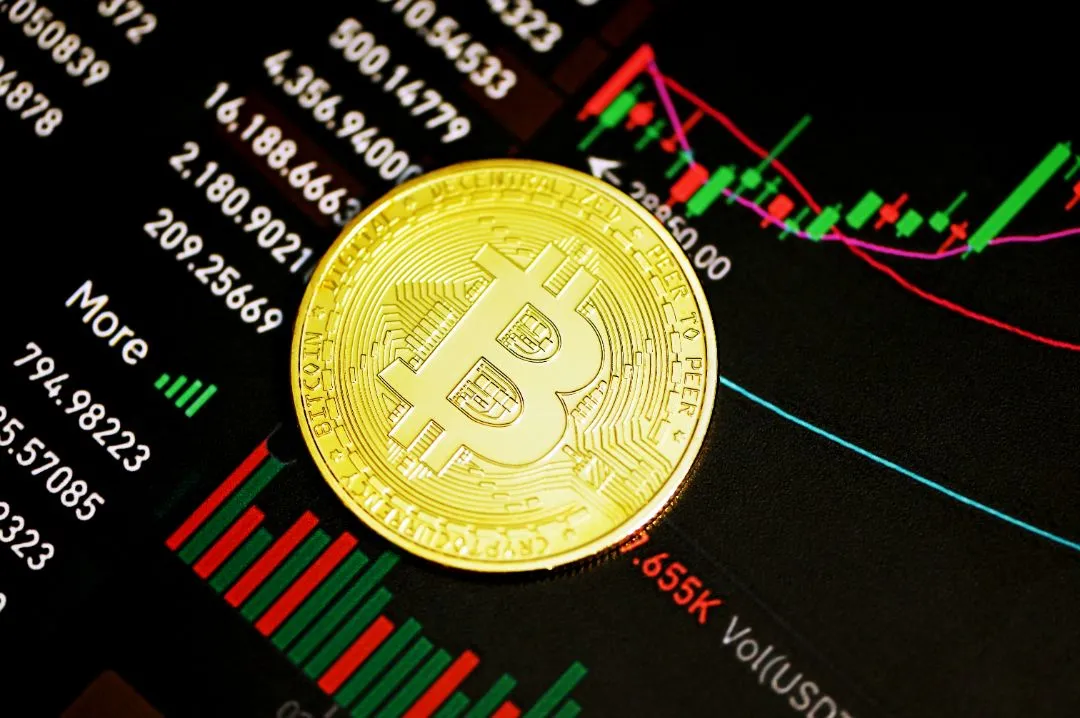
Photo by David Rodrigo on Unsplash

Ruling reflecting a progressive approach to crypto

The outcome hit the radar of a number of crypto-centric UAE-based lawyers, with Web3 lawyer Irina Heaver, a partner at NeosLegal, pointing out that the decision marks a shift from previous relevant case law in the UAE in 2023 when a similar set of circumstances led to crypto not being recognized for the purposes of salary payment. Commenting on the ruling of that previous case, she stated:


“This decision reflected a traditional viewpoint, emphasizing the need for concrete evidence when dealing with unconventional payment forms.”

Ecowatt (EWT) tokens

In this latest case, the circumstances revolved around a dispute whereby an employee claimed for unpaid salary, termination compensation and further benefits. The employee’s contract of employment outlined a payment in both fiat currency, alongside 5,250 Ecowatt (EWT) tokens. 


Ecowatt is a renewable energy blockchain project which claims to serve a purpose in reducing carbon impact on a global basis through the tokenization of green energy. It was the failure of the employer to pay out the tokenized portion of the employee’s salary that led to the dispute and the subsequent lawsuit.


The court ultimately sided with the employee, agreeing that the employer must fulfill its contractual obligation and pay out the remainder of the employee’s salary and benefits in Ecowatt tokens. The judgement stated:


“As the respondent did not provide evidence of payment in EcoWatt tokens, the court orders the respondent to pay the claimant the value of her wages in EcoWatt tokens.”


In weighing up this latest adjudication, Heaver concludes that the move is congruent with the progressive approach that is being taken to digital assets within the UAE. “This decision reflects a broader acceptance of cryptocurrency in employment contracts and highlights the court’s recognition of the evolving nature of financial transactions within the Web3 economy,” she stated.


Mahmoud Abuwasel, partner at Wasel & Wasel, an international firm with a presence in Abu Dhabi, also noted the relevance of the ruling, posting on the matter on legal update database, Lexology. 


Greater legal clarity

Little by little, greater clarity is emerging in jurisdictions worldwide with regard to the status of cryptocurrency and digital assets within the context of international legal systems. In 2023, a Chinese court recognized virtual assets as legal property, affirming the legal status of virtual assets as protected property under Chinese law.

Earlier in 2023, the courts in the Chinese autonomous territory of Hong Kong determined cryptocurrency to be property “capable of being held in trust.” Not all decisions have been positive however, with a Singaporean court determining in April 2023 that crypto is not money, albeit that the judge did acknowledge that the matter would require a more detailed examination of evidence in another court.

 

More to Read
View All
Policy & Regulation·

Jun 20, 2023

Hong Kong Analyzes Web3 Approach of Regional Peers

Hong Kong Analyzes Web3 Approach of Regional PeersHong Kong’s ambitions in Web3 are on the rise as it strives to establish itself as a global hub for digital assets. The Research Unit of the Legislative Council Secretariat of Hong Kong has recently released a summary of a document titled “Development of Selected Regional Web3 Technologies,” shedding light on the city’s involvement in Web3.According to the report summary which was published on June 14, the Hong Kong government is actively promoting the development and utilization of Web3. In the fiscal budget for 2023–2024, the Financial Secretary announced accelerated efforts to build Hong Kong’s Web3 ecosystem, along with the establishment of a dedicated development task force focused on virtual assets.Photo by Jimmy Chan on PexelsPace of developmentHowever, concerns have emerged about Hong Kong’s comparatively slower pace of development in contrast to other regions. Various regions across the globe, particularly in Asia and the Gulf region, have implemented measures to expedite the progress of Web3 and its associated technologies and applications.To address these concerns, the report suggests that Hong Kong should broaden its focus beyond financial services and virtual assets. Instead, it should actively promote innovation in other areas of Web3 technology, such as blockchain and metaverse technology.Scrutinizing regional Web3 developmentIn response to a request from Councilor Wu Kit Ching, the research group has conducted a study on leading regions in Web3 technology and application development, examining their strategies.The study primarily highlights Japan, Singapore, South Korea, and the United Arab Emirates (UAE) as these regions have demonstrated proactive approaches in developing Web3 technologies, and they have become global or regional innovation hubs. Japan, for instance, has established high-level policy guidance and dedicated offices to coordinate Web3 policies across various government departments.Other regions covered in the study have focused on specific areas of Web3. Singapore and the UAE, for example, are exploring blockchain technology through industry collaborations and the establishment of incubation centers. Meanwhile, South Korea is actively launching metaverse strategies to foster innovation across multiple sectors.The summary also provides an overview of the key characteristics, foundational technologies, and applications of Web3. It outlines recent developments in Web3 within Hong Kong and analyzes the development scenarios of selected regions, including Japan’s comprehensive approach and the application-focused initiatives of other regions.The document emphasizes that Web3 represents a decentralized network that empowers users with greater autonomy and control over their digital lives. While the Hong Kong government has introduced measures to support the development of the Web3 ecosystem, particularly in the virtual asset market and related financial services, concerns persist regarding Hong Kong’s slower progress in other areas of Web3 technology compared to its counterparts in Asia and the Gulf region. These regions are capitalizing on their strengths and exploring broader applications of Web3.Hong Kong’s engagement in Web3 and its ambition to thrive in this domain is becoming more evident with each passing day. The summary of the document sheds light on the Chinese autonomous territory’s efforts, while also highlighting the need to expand its focus and foster innovation in various areas of Web3 technology. By doing so, Hong Kong can position itself as a prominent global center for Web3 and leverage the advantages it offers for digital asset development and beyond.

news
Markets·

Dec 15, 2025

Japan’s rate hike looms over Bitcoin as institutional skepticism persists

Bitcoin is facing growing uncertainty as it trades near $90,000, down nearly 30% from its October peak of $126,000. While the cryptocurrency remains under pressure, investors are increasingly focused on Tokyo, where a potential change in monetary policy could tighten global liquidity. According to CoinDesk, which cited a report from Nikkei, the Bank of Japan (BOJ) is expected to raise its policy rate by 25 basis points to 0.75%, a move that would push borrowing costs to their highest level in nearly three decades. Historically, a stronger yen has often been associated with weaker Bitcoin performance amid tighter global liquidity.Photo by Kanchanara on UnsplashYen carry trade in focusThe report suggested that higher rates could unwind the yen carry trade, a strategy in which investors borrow cheap yen to fund positions in higher-yielding assets such as stocks and U.S. Treasuries. A similar dynamic played out following the Japanese central bank’s July hike, which precipitated a market-wide selloff that dragged Bitcoin from roughly $65,000 down to $50,000. However, CoinDesk noted that a recurrence of such volatility cannot be assumed. It added that speculative positioning is already skewed toward yen strength, while steadily rising Japanese bond yields suggest monetary policy is adjusting to prevailing market realities. Institutional skepticism toward BitcoinBeyond the macroeconomic landscape, fundamental skepticism remains entrenched among traditional finance heavyweights. John Ameriks, Vanguard’s global head of quantitative equity, said at Bloomberg’s ETFs in Depth conference that the asset behaves more like a speculative digital collectible, comparable to a Labubu toy, than a conventional investment, citing its lack of income generation, compounding, and cash-flow characteristics. Ameriks’ comments follow Vanguard’s move earlier this month to permit trading of select third-party crypto ETFs. He said the decision was based in part on the funds’ ability to establish a track record since their January 2024 launch. While acknowledging that Bitcoin could theoretically offer value during periods of high inflation or political instability, he maintained that its history remains too short to draw conclusions. Bullish case for BitcoinA contrasting view was offered by Katherine Dowling, president of the Bitcoin Standard Treasury Company. Speaking with DL News, Dowling projected that Bitcoin would surge to $150,000 by the end of 2026. She pinned this bullish outlook on favorable U.S. regulatory shifts, increased liquidity from Federal Reserve rate cuts, and sustained institutional adoption via ETFs.The perceived influence of institutional flows was also underscored by a recent weekly survey of 2,000 South Korean investors conducted by CoinNess and Cratos. The data showed that 42.3% of respondents view flows into and out of spot Bitcoin ETFs as the primary price driver. Monetary policies in major economies like the U.S. and Japan ranked second at 26.7%, while 16.3% pointed to shifts in equity markets. Another 11.5% attributed price action to the halving cycle, and 3.4% said they could identify no specific catalyst.

news
Web3 & Enterprise·

Dec 07, 2023

HashKey on-boards market makers to boost liquidity

HashKey on-boards market makers to boost liquidityHashKey, a licensed crypto exchange in Hong Kong, has unveiled plans to onboard individual and enterprise market makers to enhance liquidity on its platform.Photo by engin akyurt on UnsplashMarket maker programIn an announcement on Tuesday, the exchange disclosed that interested parties, whether individuals or entities, can apply to become market makers on HashKey. To qualify, applicants need to engage in cryptocurrency trading worth a minimum of $5 million per month on the exchange.The exchange outlined that the program aimed to “recognize and incentivize users actively contributing to the liquidity” of the platform.Upon submitting their business plans for review, successful applicants will be invited to enter into a contractual agreement with the exchange’s due diligence team, commencing trading activities from Dec. 28 onwards when the program goes live.Commission free tradingThe exchange aims to encourage liquidity providers by offering a commission ranging between 0.005% and 0.015% of the transaction value, determined by monthly rankings or trading volumes, falling within a tiered structure set out within the program. Market makers demonstrating a trading volume of at least $100 million per month stand to enjoy the highest tier of commission revenue. Notably, all market makers will be exempt from commission fees on their trades.Market makers who participate via the program will be on trial for an initial two-month period. Those who are participating in market maker programs on other platforms currently will be able to avail of equivalent trial fee rates through the HashKey exchange.Service expansion trendThe move by HashKey follows a broader trend in Hong Kong, where regulated exchanges have been expanding their services and forming strategic partnerships since the issuance of the first licenses in August. In a recent development, OSL, another Hong Kong licensed exchange, collaborated with Interactive Brokers on November 28, enabling Hong Kong clients to buy Bitcoin through Interactive Brokers’ investment accounts.Additionally, on November 30, OSL welcomed Victory Securities for crypto trading services on its platform. That move came about following Victory’s acquisition of a retail crypto trading license some days beforehand. Notably, OSL received a $90 million investment from blockchain entity BGX in November.While HashKey has been extending its altcoin offerings, exclusively available to accredited investors meeting a $1 million portfolio requirement, the exchange has been proactive in enhancing user security. On Nov. 16, the platform introduced comprehensive insurance coverage for users’ and enterprise assets stored within its digital wallets in collaboration with fintech firm OneDegree.Earlier this week, it emerged that the platform had experienced an unprecedented surge in daily trading volumes. The surge had been attributed to a token rewards program that the exchange is currently running, that offers the distribution of HSK tokens or EcoPoints.As HashKey opens its doors to market makers, the move is poised to contribute to increased liquidity on the exchange, aligning with the broader trend of Hong Kong’s regulated crypto exchanges expanding their offerings and forming strategic partnerships.

news
Loading