Top

Crypto community optimism across Asia following Trump’s election victory

Policy & Regulation·November 07, 2024, 7:20 AM

Recognition of Donald Trump’s victory in the U.S. presidential election on Nov. 6 has led to many crypto proponents in Asia foreseeing a positive outcome for crypto within the Asian region, and globally.

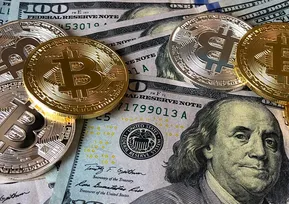
https://asset.coinness.com/en/news/13a4231c433ac46ab153319d2eb66c52.webp
Photo by Kevin Lanceplaine on Unsplash

Bright future for crypto

According to a report published by the South China Morning Post (SCMP), crypto proponents in China are expectant of a bright future for crypto both on the Chinese mainland and in Hong Kong. The mindset seems to be that a pro-crypto stance in the U.S. will lead to other jurisdictions taking a similar approach. HashKey CEO Livio Weng expressed such a view, stating:

“Trump’s pro-crypto stance is expected not only to invigorate the US virtual-asset industry, but also to encourage Hong Kong to further relax its own virtual-asset policies in its quest to become a global Web3 hub.” 


Prior to being elected, Trump had promised to fire Gary Gensler, who as Chair of the Securities and Exchange Commission (SEC) has pursued a strategy of regulation by enforcement, a course of action that has been broadly criticized by crypto market participants in the United States. Ripple CEO Brad Garlinghouse wasted no time in calling on Trump to act, and to fire Gensler.


Influencing regulatory attitudes

There seems to be a consensus among commentators that the regulatory approach to crypto in the U.S. is going to become crypto-friendly. Crypto analyst Miles Deutscher suggests that “a Trump victory is a WIN for US tech innovation, as it would solidify [the United States’] status as a crypto powerhouse.”


Weng believes that “this shift could also positively influence regulatory attitudes toward virtual assets in mainland China.” That view is mirrored in South Korea by KP Jang, head of Xangle Research. Jang asserts that “if Trump implements bold virtual asset policies while improving existing regulations, it is expected to accelerate regulatory reforms in Korea as well.”


Sumit Gupta, CEO and co-founder of India’s largest crypto exchange, CoinDCX, outlined on X that Trump’s victory is a pivotal moment for global crypto, adding:

”The direct effects of Trump’s policies might not alter India’s regulatory environment right away. However, global sentiment and investor behaviour will be influenced, eventually reaching India.”


The CoinDCX CEO believes that should Trump now appoint regulatory leadership that’s crypto-positive, any resultant crypto regulatory framework adopted by the U.S. could become a blueprint for use by other nations.


Gupta identified further potential upside insofar as the implementation of positive crypto policies by Trump would lead to a more attractive environment for crypto, “potentially opening up enhanced funding opportunities and partnerships for Indian startups as investors seek global growth.”


Bitcoin price surge

At the time of writing, the Bitcoin unit price is up 0.64% over the course of the past 24 hours, at $74,884. American business news channel CNBC reported that Bitcoin could reach $100,000 before Trump even takes office. 


Matthew Hougan, chief investment officer (CIO) at crypto asset fund manager Bitwise, said that Trump’s election victory could herald in a “golden age of crypto,” with a friendlier regulatory environment leading to greater institutional investment and mainstream adoption.

More to Read
View All
Policy & Regulation·

Dec 22, 2025

South Korea plans to revive crypto ICOs under stricter disclosure and oversight rules

South Korea is set to allow initial coin offerings (ICOs) next year, easing a ban on crypto fundraising that has been in place since 2017. A draft of the Digital Asset Basic Act, prepared by the Financial Services Commission, would allow domestic sales of digital assets if issuers meet disclosure requirements, the Maeil Business Newspaper reported. The measure is intended to address concerns about tokens that are initially listed on overseas exchanges before becoming available to South Korean investors. The legislation outlines tougher accountability standards for crypto issuers. Projects that provide false information or fail to disclose material details in their whitepapers ahead of an ICO could be held liable for investor losses. Liability would also extend to other parties substantially involved in an offering, including outsourced operators and market makers.Photo by Y K on UnsplashStablecoin issuers need Korean presenceSeparate provisions set out rules for stablecoins, barring tokens issued by entities without a physical presence in South Korea from domestic trading, a restriction that would apply to widely used stablecoins such as USDT and USDC. Issuers would be required to fully back stablecoins with reserves such as cash or government bonds held at banks or financial institutions and would be prohibited from paying interest to users. The proposal reflected the FSC’s position on the second phase of digital asset legislation focused on stablecoin issuers. The issue remains subject to inter-institutional debate, with the Bank of Korea pressing for a bank-led consortium model for stablecoin issuance. The ruling Democratic Party of Korea (DPK) is expected to review a consolidated bill combining proposals from the government and the National Assembly next month, with plans to advance the legislation during the regular parliamentary session in the first quarter of 2026. The FSC’s focus on consumer protection is also reflected in its plans to introduce a Digital Finance Security Act, detailed in a recent report to the presidential office. According to Digital Asset, the proposed legislation would establish rules for traditional financial institutions as well as electronic financial businesses and virtual asset service providers. The move came after a 44.5 billion won ($30 million) hacking incident last month at Upbit, the country’s largest crypto exchange. Existing regulations under the Virtual Asset User Protection Act do not contain provisions specifically covering such cases. Separately, the FSC is working to strengthen its response to emerging forms of financial crime, including transnational offenses and crypto-enabled money laundering. It said measures under consideration included adding state-level criminal organizations to the list of entities barred from financial transactions, improving anti-money-laundering (AML) rules to better align with international standards, and expanding the scope of the travel rule. On the supervisory side, the commission intends to make the Virtual Asset Division a permanent unit after initially establishing it as a temporary body, News1 reported. The Virtual Asset Inspection Division within the Financial Intelligence Unit is also set to become a standing unit. Price declines weigh on exchangesThe stepped-up regulatory focus has coincided with a broader downturn in the crypto market. Bitcoin is trading below $89,000, about 30% below its all-time high of $126,000 set earlier in October. CoinGecko data cited by IT Chosun showed average daily trading volume across South Korean exchanges falling to $2.95 billion in November from $4.41 billion in August, with trading fees accounting for about 98% of exchange revenue. The broader market weakness has also been accompanied by declines in altcoins. South Korean crypto investors attributed the recent drop in altcoin prices to capital flowing into major cryptocurrencies such as Bitcoin and Ethereum. A weekly survey conducted by CoinNess and Cratos showed that 41.7% of the 2,000 respondents cited capital concentration in leading tokens as the primary factor, followed by the growing number of altcoins at 31.6%, their limited practical value at 14.7%, and technical factors such as chart patterns at 12.1%. 

news
Policy & Regulation·

May 15, 2023

Korea’s Premier Law Firm to Jointly Hold Seminar on Preventing Crypto Exploits

Korea’s Premier Law Firm to Jointly Hold Seminar on Preventing Crypto ExploitsKim & Chang, a leading law firm in South Korea, has announced its collaboration with crypto exchange operator Dunamu to host a seminar on anti-money laundering (AML) and the prevention of crypto exploits. The event will take place at Korea University on Thursday, as reported by Moneytoday.Photo by David McBee on PexelsInauguration of a digital asset forumThe seminar is being organized by the Digital Assets Policy Forum, an organization dedicated to developing the digital asset market and safeguarding investors. The inauguration ceremony of the forum will also be held at the event.Talks by distinguished figuresThe seminar will commence with a keynote speech by Aaron Bice, Senior Subject Matter Expert at Chainalysis, a blockchain data analysis firm based in New York.Following Bice’s address, several distinguished individuals from South Korea will deliver presentations. Ahn Chang-kook, a high-level official from the Financial Intelligence Unit at the Korean Financial Services Commission, will elucidate the challenges and solutions associated with crypto exploits. Oh Jeong-eun, a prosecutor from the Incheon District Prosecutors’ Office, will provide insight into the investigations of unlawful foreign exchanges in banks and their implications. Advisor Ko Cheol-soo of Kim & Chang will shed light on the evolving global landscape of AML regulations in the crypto sector. In addition, Kim Kwang-hoon, a manager at Dunamu, will explore the topic of crypto AML systems.Panel discussionsA representative from Kim & Chang said that the event will gather a diverse group of experts in digital asset regulation, policy, and law from various sectors, including government, academia, and industries. These experts will not only deliver informative presentations but also actively engage in panel discussions during the event.

news
Web3 & Enterprise·

Oct 20, 2025

Sony Bank seeks OCC nod for U.S. dollar-backed stablecoin and crypto services

Sony Bank, a Japanese neobank headquartered in Tokyo, has applied to the U.S. Office of the Comptroller of the Currency (OCC) to establish a new trust bank, Connectia Trust, as part of a broader expansion into digital assets. According to Sony Bank’s application, if approved, Connectia Trust would issue U.S. dollar–pegged stablecoins and manage the corresponding reserves. The entity would also offer non-fiduciary custody of digital assets and provide fiduciary asset-management services for certain affiliates.Photo by P. L. on UnsplashSony among 11 crypto applicants to the OCCSony Bank’s filing is among 11 crypto-related applications before the OCC, alongside efforts by Coinbase, Nubank, Paxos, BitGo, Ripple, and others. To date, only two banks have advanced through the agency’s charter approval process. In 2021, the OCC conditionally approved the conversion of Anchorage Trust Company into Anchorage Digital Bank, granting it a national trust bank charter. More recently, last week, Erebor Bank, backed by PayPal co-founder Peter Thiel, received preliminary conditional approval for its de novo charter. The initiative reflects Japan’s growing openness to cryptocurrencies, underscored by the government’s recent regulatory approval of the country’s first yen-denominated stablecoin. Fintech firm JPYC Inc. plans to launch “JPYC” this fall, pegged at 1 yen per token and designed for person-to-person transfers and retail payments, with plans for point-of-sale integration. The issuer targets up to 10 trillion yen ($66.7 billion) in circulation within three years. There are no limits on holdings or wallet transfers, while redemptions are capped at 1 million yen ($6,700) per user per day. Sony Bank has been building its Web3 capabilities this year. Its board approved a new subsidiary for blockchain initiatives in May, later renamed BlockBloom in August. Now operational, BlockBloom aims to connect fans and artists and bridge digital and physical experiences, as well as fiat and digital assets. Its ultimate parent, Sony Group, launched a blockchain mainnet called Soneium in January through Sony Block Solutions Labs, S.BLOX, and SNFT. Built as an Ethereum layer-2 network powered by Optimism’s Superchain technology, Soneium recently announced support for meco.fun, a SocialFi platform that enables creators to earn through memes, content, and NFTs. MUFG’s blockchain initiatives at home and abroadJapan’s top traditional banks are also expanding their involvement in digital assets, with a growing focus on stablecoins. An Oct. 17 Nikkei report, cited by CoinDesk, said Mitsubishi UFJ Financial Group (MUFG), Sumitomo Mitsui Financial Group, and Mizuho Financial Group aim to develop a unified system to issue and transfer stablecoins among corporate clients. Their first rollout will focus on yen-pegged tokens, followed by a potential dollar-based offering. According to an earlier report from Reuters, MUFG and nine other major international banks, including Bank of America, Deutsche Bank, Goldman Sachs, and UBS, are collaborating on stablecoins tied to G7 currencies. MUFG has additionally rolled out a blockchain-based business with Mitsubishi UFJ Morgan Stanley Securities (MUMSS), which is offering bond security tokens and operating ASTOMO, a trading venue for retail investors that has debuted with tokens backed by real estate. The platform lets users invest from 100,000 yen (about $667) on their phones. In summer, MUFG’s trust unit, Mitsubishi UFJ Trust and Banking, acquired a high-rise building in Osaka for more than 100 billion yen ($667 million), with plans to issue digital securities tied to the asset. The tokenization strategy would offer fractional ownership to retail investors long excluded from major real estate opportunities. Taken together, Sony Bank’s OCC application and Japan’s accelerating tokenization efforts signal a race among major financial and technology players to build compliant, scalable infrastructure for digital assets—both at home and abroad. 

news
Loading