Top

GRVT snags license to become world’s first regulated DEX

Web3 & Enterprise·December 10, 2024, 9:25 AM

GRVT, a hybrid cryptocurrency exchange platform that bases its operations in Singapore, has secured a trading license in Bermuda which the project claims, makes it the first regulated decentralized exchange (DEX). 


In a press release published on the project’s behalf by PR Newswire on Dec. 6, the project, which aspires to be “Goldman Sachs on blockchain,” announced the acquisition of a Class M Digital Asset Business License from the Bermuda Monetary Authority (BMA). 

https://asset.coinness.com/en/news/db7d08fd5789fc327265d682815a6055.webp
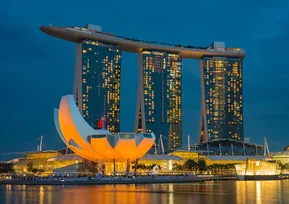
Photo by GuerrillaBuzz on Unsplash

Aiming for further licensing

The license puts the firm on a path to operate as a fully regulated DEX. Securing this Class M license isn’t the end of the project’s regulatory compliant endeavors, however. Class M confers a “modified” exchange license under the Bermuda Digital Asset Business Act (DABA).


Class M covers pre-operational activities while the service remains within a sandbox environment. The company hopes to have acquired Class F or “Full” licensing designation by mid-2025. At that point, GRVT will be in a position to take its service from a sandbox environment to full launch of its institutional-grade perps DEX in a regulatory compliant manner.


On X GRVT suggested that this licensing is pivotal in the movement of decentralized finance (DeFi) towards mainstream adoption. “With this milestone, DeFi evolves - safer for users and institutions alike,” the project wrote.


Hybrid approach

As a hybrid DEX, GRVT combines the decentralization of DeFi with the structure and compliance required for the participation of institutional investors. Commenting on this latest development, GRVT CEO Hong Yea stated:

”We've always believed compliance should be the foundation for crypto and DeFi, not an afterthought. Without it, earning institutional trust—and bringing revolutionary technologies to the mainstream—becomes nearly impossible."


Yea told Cointelegraph that in two weeks time, the project will officially launch its mainnet to all users. “Our trading volume will then be available through major external data providers,” he added.


In preparation for that mainnet launch, the project announced in September that it had partnered with 16 market makers including Galaxy Trading, Amber Group, QCP and others, in order to ensure that the platform has sufficient liquidity in place to enable a smooth launch.


Users have been testing the platform following its Open Beta Testnet launch in August.


The GRVT CEO believes that the project can “unify cryptocurrency and mainstream finance, creating a system where assets move freely and all forms of value coexist in one integrated ecosystem.”  


A regulated yet decentralized offering

Referring to the two main components baked into the GRVT offering, he said that “decentralization distributes control away from central authorities, promoting transparency, security, and user empowerment.” Meanwhile, “regulation establishes standards to protect users, ensure market integrity and promote fair practices.”


In successfully pursuing licensing in Bermuda, GRVT joins a list of more than 30 firms in the digital assets sector who have obtained licensing in the British overseas territory. In October global cryptocurrency exchange platform Kraken launched a Bermuda-based derivatives trading business having obtained licensing from the BMA.


USDM stablecoin issuer Mountain Protocol received a Class F license from the BMA in July. Other entities successfully licensed by the BMA include Coinbase, HashKey, Circle, Bittrex and Zero Hash.


More to Read
View All
Web3 & Enterprise·

Jul 31, 2023

Strategic Shift Sees Wintermute Expand Singapore Base

Strategic Shift Sees Wintermute Expand Singapore BaseCrypto market maker Wintermute is making a strategic shift towards Asia, specifically in Singapore, following the digital asset industry’s growing interest in the region’s growth opportunities.Photo by Hu Chen on Unsplash4% of staff moving to SingaporeIn an interview with Bloomberg last week, Wintermute Co-Founder Yoann Turpin said he will move from London, where the company is currently headquartered, to Singapore in the coming months. Additionally, approximately 4% of the company’s workforce, which currently comprises around 85 staff members, will also relocate to the city-state, where Wintermute conducts its derivatives business.At the time of publication, the company was also actively recruiting for an open position in the city-state. In further publicizing Wintermute’s developing presence in Singapore, Turpin took to social media recently to invite people to meet Wintermute’s Singapore-based team in September at Token 2049 Singapore. Evgeny Gaevoy, Wintermute Co-Founder and CEO, is scheduled to appear as a speaker at the event.Turpin emphasized the company’s focus on Asia and highlighted the significance of having a co-founder based in the region to drive the business forward. The move comes as the crypto industry faces the aftermath of a crackdown in the United States, triggered by bankruptcies at platforms like FTX and Celsius Network.Exploring global opportunitiesIn response, crypto businesses are exploring opportunities in Asian markets, with countries like Singapore, Hong Kong, Japan, and the United Arab Emirates vying to attract companies while ensuring robust regulatory frameworks in the wake of the market turbulence in 2022.Although tokens like Bitcoin and Ether have partially recovered from the crash experienced last year, spot digital-asset trading volumes and volatility have remained low, indicating reduced investor engagement. That said, demand for crypto futures and options has proven to be more resilient.Possible Dubai expansionWintermute established an office in Singapore in 2021, adding to its existing base in London. Turpin also confirmed to Bloomberg that the company is weighing up the possibility of establishing a third office in Dubai as part of its expansion plans. Dubai, like Singapore and Hong Kong, has been actively trying to attract crypto businesses over the course of the past twelve months.During the 2021 crypto bull market, the company reported trading volume worth $1.5 trillion and generated $1.05 billion in revenue. However, the market maker also faced challenges during the market turmoil, including exposure to around $55 million of assets on FTX. Moreover, in September of the same year, Wintermute experienced a hack that resulted in a loss of about $160 million from its decentralized finance operations.Despite the hurdles faced in 2022, Turpin expressed confidence in the company’s resilience and stated that they do not have immediate plans to raise funds. The company just celebrated six years in business, and has executed 8.4 million OTC trades over the course of the past twelve months.By relocating key personnel and expanding its presence in Singapore and possibly Dubai, the company aims to strengthen its foothold in the Asian market and navigate the challenges and opportunities that lie ahead.

news
Web3 & Enterprise·

Nov 14, 2023

dtcpay forges strategic partnership in launch of crypto payments system

dtcpay forges strategic partnership in launch of crypto payments systemSingapore-based dtcpay has announced a collaboration with Singaporean data-sharing platform PlatON and Chinese payments firm Allinpay International, marking the imminent launch of a digital currency payments system.Photo by Jonathan Borba on PexelsPOS terminal crypto paymentsThe trio is set to unveil a cutting-edge digital currency payment system, leveraging smart point of sale (POS) terminals supporting a range of currencies, including USDT, ETH and BTC. The primary goal of this partnership is to broaden the reach of digital payments, providing global users with faster, more cost-efficient and secure payment experiences.The overarching objective of the collaboration is to empower partners and merchants to seamlessly accept payments in both fiat and digital currencies. By doing so, dtcpay, PlatON and Allinpay International aim to enhance operational efficiency, broaden business outreach and capture the attention of a younger customer base.Officials emphasize that this venture aligns with dtcpay’s commitment to delivering secure and efficient digital payment solutions while diversifying its service offering. A spokesperson for Tonghua International, Allinpay International’s parent company, stated:“We are very pleased to cooperate with industry leaders, PlatON and dtcpay. This cooperation will not only promote the development of digital currency payments but also help merchants better adapt to the modern payment trend and meet the needs of young consumers.”A collaboration that relies on core competenciesThe collaborative effort capitalizes on the strengths of each entity. dtcpay facilitates swift and secure digital and fiat currency exchange. PlatON contributes advanced privacy computing technology for robust technical infrastructure, while Allinpay International provides smart terminals and online aggregate payment interfaces, eliminating entry barriers relative to Web3 payments.In addition to driving advancements in digital currency payments, Allinpay International seeks to support merchants in adapting to modern payment trends and meeting the preferences of younger customers. dtcpay’s comprehensive suite of services includes multi-currency swaps, online checkouts and in-store POS solutions, positioning the company as a one-stop solution for merchants embracing the future of payments.Founded in 2019 in Singapore, dtcpay operates as a regulated payment service provider licensed by the Major Payment Institution (MPI) under the Monetary Authority of Singapore (MAS).The company struck up a similar partnership in September, bringing crypto payments to the POS system of Jeripay, which has a network of 8,000 terminals in Singapore. In an interview earlier this year, the firm’s CEO Kanny Lee outlined that dtcpay had targeted Hong Kong and Dubai as markets in which the company plans to expand.Sumsub partnershipThe collaboration’s momentum was further solidified at the end of September 2023 when dtcpay partnered with Sumsub, a global full-cycle verification platform. This partnership aimed to enhance the security and reliability of digital currency payments in target markets such as Singapore, Hong Kong, Dubai, the UK and Europe. Sumsub integrated its electronic Know Your Customer (e-KYC) service into dtcpay’s wallet platform, streamlining the onboarding process for customers engaging in transactions through the platform.PlatON is an open financial infrastructure that features verifiable and privacy-preserving computation. It will endeavor to bring financial-level system stability and compliant digital asset management to the collaboration. Allinpay is a global financial payment company focused on providing diverse payment solutions while enhancing digital financial technology services globally.

news
Web3 & Enterprise·

Sep 15, 2023

Viver Boosts Business Expansion with Blockchain Integration

Viver Boosts Business Expansion with Blockchain IntegrationViver, a luxury watch trading platform and subsidiary of Dunamu, which operates the Upbit cryptocurrency exchange in South Korea, is gearing up to expand its business by securing operating funds and implementing blockchain technology to enhance the transparency and security of trades.Photo by Caramel on UnsplashIn particular, designated services in which Viver plans to incorporate blockchain technology include the management of transaction history and the authentication of buyers and sellers, which can be used for watch appraisals and guarantees.“We do not plan to introduce services incorporating blockchain right away this year, but we are exploring ways to bring Dunamu’s strengths in blockchain to Viver,” the platform explained.From acquisition to nurturing growthAfter its establishment in February 2021, Viver was soon acquired by Dunamu, which injected KRW 9.5 billion (approximately $7.2 million) into the company on June 30 of that same year.Since then, the platform has been receiving continued financial support from Dunamu. It received KRW 2 billion in operating funds last year and an additional KRW 5 billion last Wednesday through board approval. In total, Viver has received approximately KRW 16.5 billion in funding from Dunamu over the past two years. “We decided to inject these operating funds to facilitate business growth,” Dunamu explained. The company also filed for trademark rights to Viver in July.This move contrasts with Dunamu’s actions in the first half of the year, where it divested its entertainment subsidiary, rrr Entertainment, for KRW 3 billion and its video production subsidiary, Knowmerce, for KRW 2.7 billion.In its first year of establishment, Viver recorded a net loss of approximately KRW 433 million, followed by a net loss of KRW 3.8 billion in 2022. While it has not yet achieved a turnaround in financial performance, the platform is facing promising outlooks as it has witnessed a substantial tenfold increase in its user base over the past year. Furthermore, since the launch of the service in August last year, the number of products directly listed by sellers as of July this year spiked nearly thirty times, with monthly trade count and transaction volume increasing almost fifteen times.Solid leadership and the beginnings of monetizationViver’s efforts to grow as a commerce service have been led by CEO Moon Jae-yeon and Chief Operating Officer Seo Hee-seon. Moon is known for his expertise in the management of commerce platforms through his experience working at eBay Korea and Coupang. Seo has similarly worked at notable companies such as BGF Retail, Interpark, eBay Korea, and 11th Street.Since Tuesday, Viver has started implementing service fees, signaling its move toward monetization. While transaction fees are still free due to an ongoing promotional event, order management fees are set at 2%, and sellers are now responsible for shipping costs.“Since our platform facilitates brokered trades, there are costs involved in order management, shipping, and our own evaluation and diagnostics processes. We have started charging fees for some of these costs so we could provide an improved trade experience,” Viver explained in regard to these changes.Viver also has its own magazine section, where it recently unveiled a special article for its 100th issue outlining its most popular and expensive high-end timepieces.

news
Loading