Top

Chinese food company adds Bitcoin to balance sheet

Web3 & Enterprise·May 27, 2025, 1:20 AM

DDC Enterprise, a Chinese company headquartered in Hong Kong and listed on the New York Stock Exchange (NYSE), has become the latest corporation to add Bitcoin (BTC) to its balance sheet.
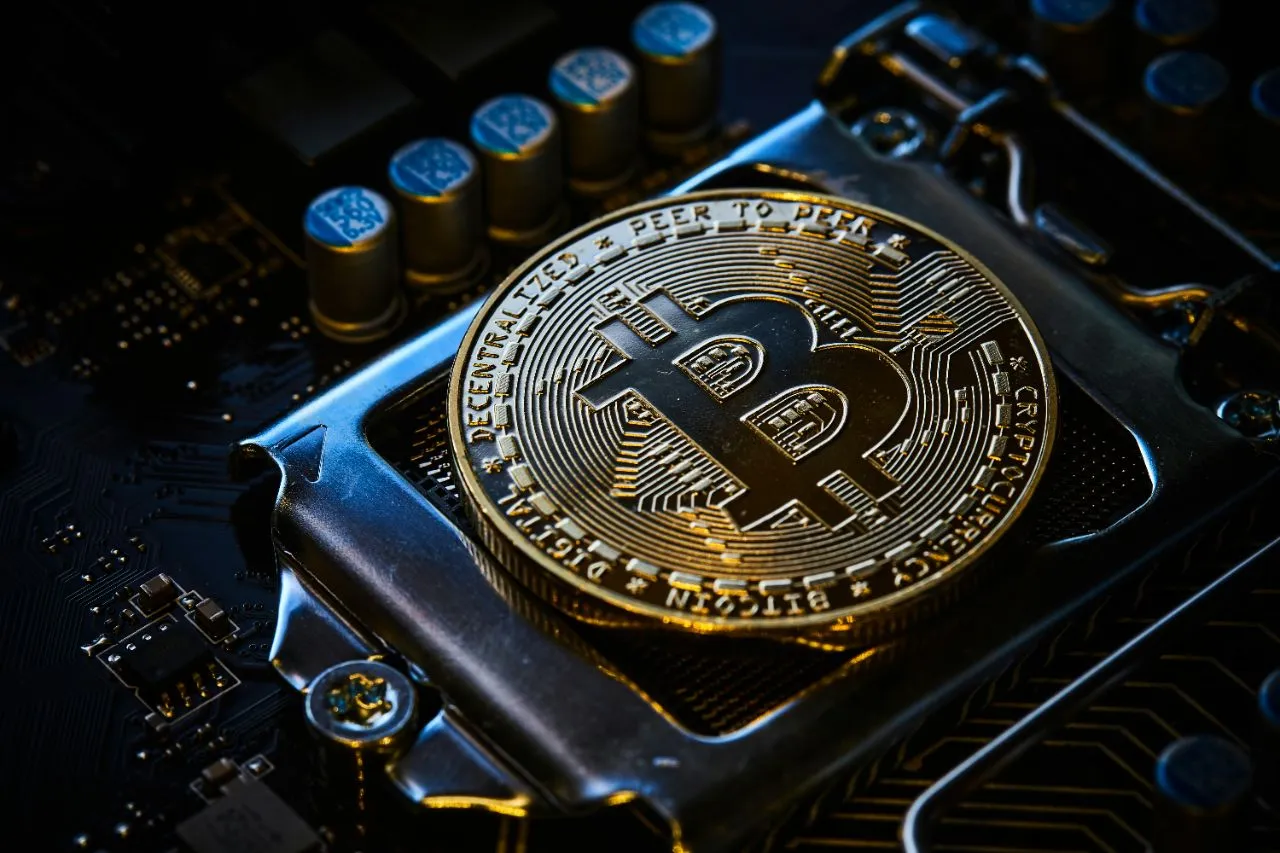
https://asset.coinness.com/en/news/fec0eb9dbc898b03122415d41d8d14f9.webp
Photo by Michael Förtsch on Unsplash

Initial 21 BTC purchase

The plant-based food products company which operates under the “DayDayCook” brand published a press release via Business Wire last Friday announcing its first Bitcoin purchase. It’s likely that there was a symbolic element to the firm’s first Bitcoin purchase, given that it bought 21 BTC while Bitcoin has a supply cap of 21 million BTC.


The company completed the transaction via share exchange with an investor group, issuing 254,333 class A ordinary shares while acquiring the 21 BTC at a market price of $2,283,667. DDC outlined that it plans to make two further purchases over the coming days of 79 BTC, at which point the firm’s corporate treasury will hold 100 BTC.


Targeting 5,000 BTC

The company has a much more ambitious Bitcoin accumulation plan, however. Over the course of the next three years, it is targeting the establishment of a Bitcoin treasury holding 5,000 BTC. At current market pricing, that would amount to a Bitcoin treasury of around half a billion dollars in value. In the near term, the firm is targeting the acquisition of 500 BTC by the end of this year.


DDC Founder and CEO Norma Chu described the development as a “pivotal moment” in the company’s evolution. She said that this plan reflects DDC’s “confidence in Bitcoin as a store of value,” while demonstrating the firm’s interest in pursuing innovation. “We are fully committed to ensuring the success of this strategy, which aligns with our vision to drive long-term value for our shareholders,” she added.


Web3 innovation

According to a DDC website, the company has innovative plans that go beyond just a Bitcoin treasury. It plans to deepen community engagement through the use of NFT loyalty programs and immersive Web3 experiences. It also plans to leverage blockchain transparency in its efforts to build greater community engagement. The website sets out a vision whereby DDC can blend its culinary heritage with next-generation technologies. 


The company suggests that real-world asset (RWA) tokenization has the potential to revolutionize consumer engagement, while offering the possibility of enabling fractional ownership of product lines. It has set out a roadmap where it outlines having established a digital platform in 2012, going on to engage in content creation and content commerce over the course of a decade. 


The firm carried out an initial public offering (IPO) in 2023 and from 2025 onwards, aside from its Bitcoin treasury strategy, it plans to integrate RWA tokenization and Web3 technology into its business, while also adopting AI technologies to enhance supply chain efficiency.


DDC is one of a growing list of corporations to adopt Bitcoin as a strategic asset over the course of the past 18 months. Earlier this month, another Chinese company, Nasdaq-listed Jiuzi Holdings, an electric vehicle (EV) retailer, announced that it had adopted a plan to acquire 1,000 BTC. Hong Kong-listed game developer Boyaa Interactive holds 3,350 BTC.

More to Read
View All
Policy & Regulation·

Apr 10, 2023

India’s Upcoming G20 Summit Bullish for Crypto

India’s Upcoming G20 Summit Bullish for CryptoThe upcoming G20 summit in Delhi, India, will mark the first-ever G20 summit hosted in South Asia. The G20 comprises 19 countries and the European Union. While the summit is focused on discussing critical issues related to the global economy, it will also include discussions on cryptocurrencies.©Pexels/Studio Art SmileCrypto policy precursor to mass adoptionRegulations and policy frameworks around crypto will be a significant topic of conversation at the summit, alongside discussions on international financial stability. India’s Finance Minister, Nirmala Sitharaman, confirmed that G20 nations are working towards creating an effective Standard Operating Procedure (SOP) for regulating crypto during the summit.India has been taking a systematic approach to regulate the evolving crypto space, as evidenced by the nation’s evolving stance on cryptocurrencies and the recently launched central bank digital currency (CBDC) pilot. With this in mind, the G20 summit in Delhi is expected to provide a platform for countries to discuss and collaborate on effective crypto regulations and policy frameworks.According to Gracy Chen, Managing Director of the Singapore-based Bitget cryptocurrency exchange, more work on policy relative to crypto in India is bullish for the development of the sector within the South Asian country. “India’s consistent growth in adapting to cryptocurrencies and forming newer policies around it has made it a hub for tech investments. With more development and a policy framework, we can expect higher mass adoption. The G20 summit will be bullish for crypto’s growth in India,” Chen told Indian weekly English-language news magazine, India Today.During the 2022 Budget discussions, the government of India proposed some significant changes to the taxation of cryptocurrencies. As a premium investment product, cryptocurrencies are known for their high volatility, and the government believed that they should be subject to a heavier tax burden. Specifically, they introduced a 30% tax on capital gains earned through the sale of digital assets, as well as a 1% tax on Tax Deducted at Source (TDS) for all crypto transactions.The tax on capital gains applies to all digital assets, and the government intends to track historical records to ensure compliance. Additionally, the 1% TDS is applied to every single transaction, regardless of its size or frequency. These changes were seen by some as a trial framework, and many in the crypto space hoped for greater leniency from the government in the future. However, it remains to be seen whether the government will revise these tax policies in the coming years.CBDC pilot projectsFurthermore, the Reserve Bank of India (RBI) has recently launched two CBDC pilots to test the feasibility of digital currencies in India. The first pilot is a wholesale CBDC, which is being conducted in collaboration with nine banks.The second pilot is a retail CBDC, launched in December, which is being tested in four major cities across India — Mumbai, New Delhi, Bengaluru, and Bhubaneswar. The goal of these pilots is to evaluate the potential of digital currencies in facilitating secure and efficient transactions, as well as to study the possible impact on the traditional banking system.By exploring both wholesale and retail CBDCs, the RBI is taking a comprehensive approach to CBDC development, which may inform future decisions regarding the adoption of digital currencies in India.Chen maintains that “discussions around cryptocurrency policy frameworks accelerate the possibilities of mass adoption in the region.” “With over 750 million internet users, India holds the potential to not just pilot but establish real-life crypto and blockchain use cases for the masses,” she added.

news
Policy & Regulation·

Aug 29, 2023

Laos Halts Crypto Miners’ Electricity Amid Drought and Debts

Laos Halts Crypto Miners’ Electricity Amid Drought and DebtsLaos, a leading producer and exporter of hydroelectricity, has made the decision to suspend electricity supply to cryptocurrency mining operations within its borders.Photo by Ioana Farcas on UnsplashTackling a perfect stormThe decision comes as a result of a perfect storm of challenges, including a struggle to meet escalating power demands due to drought conditions, impending commitments to export electricity to Thailand, and the mounting debts of cryptocurrency mining companies.In a calculated move in 2021, Laos initiated a public-private pilot program aimed at delving into cryptocurrency mining and trading. The context for this move was China’s sweeping crackdown on mining activities, compelling miners to scout for alternative jurisdictions for their operations.In response, Laos granted authorization to a handful of entities, spanning construction conglomerates and a bank, to partake in the mining and trading of Bitcoin, Ethereum, and Litecoin. This led to a commitment to regulatory collaboration between government ministries, the Bank of Laos, and Electricité du Laos (EDL).Exploiting hydropowerLaos’ abundant and affordable electricity has placed it on the short list of locations for crypto miners to settle in. With an abundance of rivers and waterfalls, hydropower stands as one of the nation’s primary energy sources, offering a renewable source of cost-effective electricity.However, events in 2023 have disrupted that narrative. A persistent drought has hit the country during the first half of the year, which triggered an unprecedented surge in the demand for electricity from sources other than hydro.The dependence on hydropower, constituting 95% of the nation’s energy generation, struggled to keep pace with the demand. As a direct consequence, EDL, a state-owned electricity distributor, announced the cessation of electricity supply to crypto mining operations.The problem has compounded as Laos finds itself committed to exporting substantial quantities of electricity to the Electricity Generating Authority of Thailand (EGET), serving as a lifeline for Thailand’s power grid during the forthcoming dry season. This external commitment has, in turn, further strained the local capacity for electricity supply.Another Asian country, Bhutan, has also gotten involved with crypto mining in an effort to exploit its hydropower resources, where 99% of electricity supply comes from hydropower within the kingdom.Unpaid billsAnother dimension to the saga is the growing debt crisis faced by cryptocurrency mining operations. A representative of EDL cited the inability of these mining businesses to settle their accumulating electricity bills as a key factor in the decision for suspension. The Bank of Laos has further escalated matters by deciding to halt loans to cryptocurrency companies in January.Laos has had bold objectives to transform itself into Southeast Asia’s premier exporter of clean electricity. The nation’s topography, featuring mountainous terrain covering 70% of the country, has immense potential for hydropower, with over 26,000 megawatts of installed capacity and ambitious plans to double this figure.Hydroelectric dams like Nam Theun 2 have become conduits for substantial volumes of low-cost electricity, primarily directed towards neighboring Thailand and Vietnam. Meanwhile, projects like the Luang Prabang dam, boasting an installed capacity of 1,460 megawatts, underscore the country’s ambitions to develop hydropower further.Revenues from power exports have become a vital component in Laos’ gross domestic product (GDP), contributing almost 15%, as per a report from October 2022.

news
Policy & Regulation·

Jun 01, 2023

Tokyo Government Launches Initiative to Support Security Token Businesses

Tokyo Government Launches Initiative to Support Security Token BusinessesThe Office of the Governor for Policy Planning under the Tokyo Metropolitan Government made an announcement yesterday regarding its new initiative aimed at promoting the issuance of security tokens.Photo by Ben Cheung on PexelsBlockchain-based security tokensGiven the growing interest in blockchain technology, which allows for decentralized peer-to-peer transactions, various applications have emerged within the financial sector. Notably, blockchain-based security tokens hold significance as they possess the potential to promote retail investments and reshape startup financing. This potential largely stems from the fact that these tokens can be issued in smaller denominations than traditional securities, facilitating direct connections between issuers and investors.Promoting growthIn an effort to broaden this market, the Tokyo government undertakes this initiative to foster the growth of security token issuance. This endeavor is expected to stimulate the development of various use cases for security tokens, as well as facilitate the widespread exchange of valuable expertise and insights into potential challenges within this sector.Financial supportIn accordance with the Financial Instruments and Exchange Act and the Specified Joint Real Estate Ventures Act, the Tokyo government will introduce subsidies for Tokyo-based businesses involved in security token-related activities. This initiative aims to provide financial support to businesses by covering a portion of the expenses associated with token issuance. Eligible expenses that can be subsidized by the government include platform usage, consultation, and system development costs.Under this program, the Tokyo government will offer financial assistance by funding up to half of the project-related expenses, with startups eligible for up to two-thirds. The maximum grant amount per project is set at 5 million yen ($36,000). Businesses can apply for these subsidies starting from May 31, 2023, with the application window remaining open until February 29, 2024. Although applications can be submitted at any point during this period, the window will close once the allocated budget is exhausted.

news
Loading
