Top

Ripple supports Japanese Web3 initiative & crypto research within APAC

Web3 & Enterprise·June 11, 2025, 6:03 AM

Ripple Labs, the American technology company that developed and supports XRP and the XRP Ledger (XRPL), has partnered with Japan’s Web3 Salon initiative, while in a separate development, the company is also funding crypto-related academic research within the Asia-Pacific (APAC) region.
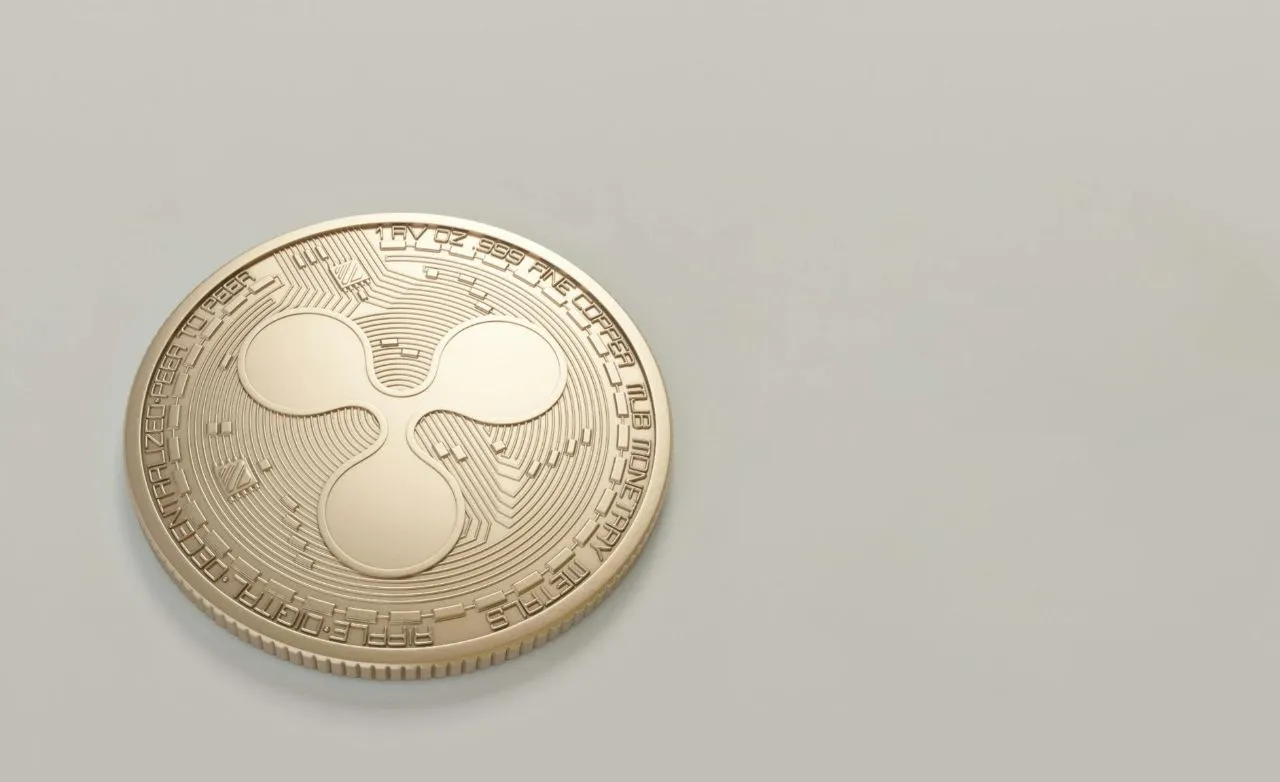
https://asset.coinness.com/en/news/1c6e63aacc8edb3e960521e94c422e6e.webp
Photo by Moose Photos on Pexels

Driving Web3 adoption in Japan

In a statement published to its website on June 9, the company outlined that it has partnered with Japan’s Web3 Salon project, a Web3 initiative with the objective of educating businesses and developers, nurturing blockchain startups and driving Web3 adoption through the provision of startup incubator programs and running hackathons and workshops.


One of Japan’s most active Web3 projects, Web3 Salon has the backing of the Japan External Trade Organization (JETRO). The project has also collaborated with a range of Japanese Web3 startups, Asia Web3 Alliance Japan (AWAJ), institutional investors and venture capital firms, as well as a number of key industry stakeholders.


Grant funding

As part of its involvement in this collaboration, Ripple will provide grant funding of up to $200,000 to Japanese startups who have developed their projects on XRPL. Ripple’s grant funding forms part of its broader initiative to finance XRPL-related startups in Japan and Korea. Earlier this month, it confirmed that it had established the XRPL Japan and Korea Fund for this purpose. 


At a broader level still, Ripple said that this latest funding commitment also falls under its one billion XRP commitment. Back in 2022 the company committed one billion XRP to advance XRPL ecosystem projects.


Christina Chan, Senior Director of Developer Growth at Ripple, commented on the development, stating:

“Ripple is proud to collaborate with Web3 Salon to unlock new opportunities in Japan’s thriving startup ecosystem. Together, we hope to fuel innovation and support the next generation of leaders.”


Supporting APAC university research

In a separate blog post published to its website on June 10, Ripple outlined that it was committing $5 million in funding within the APAC region as part of its University Blockchain Research Initiative (UBRI). The funding will cover blockchain-related academic research projects in Japan, South Korea, Singapore, Taiwan and Australia.


$1.1 million has been allocated to South Korea’s Korea University in funding that will be released over a six-year period. The funding builds on another relationship that had already been established with Yonsei University via the UBRI in 2024.


Equally, Japan’s Kyoto University had engaged with the UBRI last year. That support is now being renewed while funding is also being allocated to the University of Tokyo. The two institutions will be able to avail to funding in excess of $1.5 million.

Other APAC region educational institutions to benefit include the National Kaohsiung University of Science and Technology (NKUST) in Taiwan, the National University of Singapore (NUS) and Nanyang Technological University (NTU) in Singapore and the Australian National University (ANU) in Australia.

’An epicenter of digital finance’

Ripple called APAC “an epicenter of digital finance.” Expanding further on that assertion, it stated that the region has shown “an appetite for experimentation and boasting thriving communities for builders.” Consequently, it views the APAC region as a leader in payment technologies and digital asset adoption.


More to Read
View All
Web3 & Enterprise·

Feb 05, 2025

Metaplanet targeting 21K Bitcoin by 2026

Earlier this month Metaplanet, a Japanese Bitcoin treasury company, said that it was targeting 10,000 Bitcoin in 2025 but the company has raised the bar once again, planning on an acquisition of 21,000 Bitcoin by 2026. On Jan. 5, Metaplanet CEO Simon Gerovich set out a number of objectives for 2025. Among them was a goal for the company to acquire 10,000 Bitcoin in 2025. Gerovich explained that the firm intended to utilize “the most accretive capital market tools available” in order for Metaplanet to meet that target.Photo by André François McKenzie on Unsplash2025-2026 Bitcoin PlanAbout three weeks after the Metaplanet CEO announced that ambition, the company published a press release on Jan. 28 detailing its 2025-2026 Bitcoin Plan, which goes much further.  The plan outlines that 10,000 Bitcoin remains the target for 2025 but that the company has adopted the strategy to accumulate 21,000 Bitcoin by 2026. Gerovich stated that since Metaplanet embraced the Bitcoin Standard on April 8, 2024, the company has experienced exponential growth. Gerovich added: “The market has recognized Metaplanet as Tokyo’s preeminent Bitcoin company, and we are seizing this momentum to solidify our position as a global leader. Our vision is to lead the Bitcoin renaissance in Japan and emerge as one of the largest corporate Bitcoin holders globally. This plan is our commitment to that future.” Adopting MicroStrategy’s Bitcoin playbookMetaplanet has adopted the Bitcoin playbook first pioneered by U.S. business intelligence company turned Bitcoin development firm MicroStrategy. In short, that playbook involves financing Bitcoin purchases with debt. In this way, the company can capitalize on Bitcoin’s historical trend of positive returns over time, using convertible notes and equity to facilitate that.  The practice also creates a feedback loop in so far as MicroStrategy buys Bitcoin, resulting in the Bitcoin unit price increases. The MicroStrategy stock price goes up. Demand for MicroStrategy’s stock and debt goes up, enabling the company to buy more Bitcoin. In its press release, Metaplanet looked back on what had been achieved in terms of its Bitcoin strategy in 2024. In Q4 2024, the company achieved a Bitcoin yield of 309.82%, following on from a 41.7% Bitcoin yield in Q3.  At the close of the year, the Japanese Bitcoin treasury company held 1,761 Bitcoin, purchased at an average Bitcoin unit price of 11.85 million yen ($76,411). Shareholder growth has seen the company surpass 50,000 shareholders. Meanwhile, share trading volume has increased 430x, year-on-year. Since the firm adopted the Bitcoin Standard in April 2024, the company’s market capitalization has grown by 7,000%. Last month, the company celebrated the milestone of having reached a $1 billion market cap. Asia’s largest equity capital raise for BitcoinThe company has dubbed its new plan “The 21 Million Plan.” It will comprise the issuance of 21 million shares by means of moving strike warrants. Gerovich confirmed on X that at $750 million, the plan will involve Asia’s largest-ever public equity capital raise to buy Bitcoin.

news
Web3 & Enterprise·

Aug 10, 2023

Bithumb META Unveils Naemo World: A Sneak Peek into Immersive Metaverse Project

Bithumb META Unveils Naemo World: A Sneak Peek into Immersive Metaverse ProjectBithumb META, the metaverse subsidiary of leading South Korean cryptocurrency exchange Bithumb, has unveiled a demonstration video of its metaverse project, Naemo World.Photo by julien Tromeur on UnsplashA glimpse into the virtual urban realmShowcased on the official YouTube channel, the 20-second video clip provides a glimpse into a virtual urban landscape that features both indoor and outdoor environments. Naemo World, a creation brought to life with Epic Games’ advanced 3D creation tool Unreal Engine 5, replicates intricate details such as the texture of fashion items, encompassing garments and accessories.More collaborations to enhance user experienceSpeaking about this development, Bithumb META CEO Cho Hyun-sik said, “The Naemo World demo video offers just a brief preview of the extensive range of content we have created thus far.” Cho added, “While our focus lies in the development of a broad and captivating content portfolio, we strive to create a multitude of practical applications by integrating content into tangible real-world products and services. To achieve this and expand our ecosystem, we are looking forward to collaborating with domestic and international partners across diverse industries.”Presently, Bithumb META is in collaboration with innovative companies such as tech firm Tencent Cloud and 3D fashion design software developer CLO. With an eye toward expanding the user experience within the metaverse, the subsidiary is poised to establish further partnerships.The forthcoming official launch of Naemo World, scheduled for next year, is projected to contribute to bolstering Bithumb’s endeavors to diversify its business ventures and foster synergistic growth.

news
Web3 & Enterprise·

Mar 05, 2025

RWA tokenization gaining momentum in UAE

Real-world asset (RWA) tokenization, the conversion of tangible assets into digital tokens on a blockchain, is gaining momentum in the United Arab Emirates (UAE), according to a number of industry professionals working in the sector.Photo by ZQ Lee on Unsplash‘No lack of demand’Scott Thiel, founder and CEO of Dubai-based RWA token marketplace Tokinvest, recently outlined to Cointelegraph that the company is experiencing “no lack of demand” for tokenized RWAs. Thiel believes that demand is coming from real estate developers and large property owners who “want to explore how they can use this as an alternate means of financing or selling their property.” The Tokinvest CEO explained that a booming property market in the UAE,  particularly in Dubai, is contributing towards RWA tokenization demand in the country. He stated: “What’s the hottest real estate market in the world? Well, I think today it’s probably Dubai, and so, everyone would like to own a piece of this or to get access to the economic benefits of being a participant in that marketplace.” RWA tokenization dealsLast year, Liv Digital Bank, a subsidiary of Emirates NBD, the second largest bank in the UAE, signed a deal with RWA tokenization firm Ctrl Alt. At the time, Ctrl Alt CEO Matt Ong pointed to a Boston Consulting Group report that forecast a $16 trillion business opportunity with regard to the tokenization of global illiquid assets by 2030. In January, MANTRA, a layer-1 blockchain project that focuses on RWA tokenization, inked a $1 billion deal with Damac Group, an Emirati property development company. The objective of the partnership is to bring transparency, security and access to Damac’s assets using blockchain. Last month, MANTRA was awarded a Virtual Asset Service Provider (VASP) license by Dubai regulator, the Virtual Assets Regulatory Authority (VARA). MANTRA Co-founder and CEO John Patrick Mullin described the license award as “a validation of our purpose, which is to provide developers and institutions with a purpose-built RWA Layer 1 Blockchain, that’s capable of adhering to real world regulatory requirements.” Proactive regulationIt is with regard to regulation that many in the industry feel that the UAE is gaining the upper hand where RWA tokenization is concerned. Tokeninvest’s Thiel provided input into the formulation of VARA’s regulatory framework back in 2022. He said that the authorities there have taken a proactive approach to digital asset regulation, with a genuine desire to provide regulatory clarity. The Tokinvest CEO was sufficiently impressed by the regulatory approach in the UAE to relocate the company there. Back in January, VARA awarded the company a trading license for its tokenized RWA marketplace. Commenting following the announcement of the Damac deal, MANTRA’s Mullin complimented the UAE authorities on their business-friendly approach: “The UAE has shown time and again that they can lead the crypto industry in innovation.”  In a series of posts on X recently, Julian Kwan, CEO and founder of IXS, a Singapore-based institutional bridge for tokenized RWAs, cited the Damac tokenized real estate deal while asserting that tokenized “RWAs are no longer a concept — they are an unstoppable financial movement.”

news
Loading