Top

CFX surges as Conflux teases yuan-pegged stablecoin & 3.0 launch

Markets·July 22, 2025, 12:16 AM

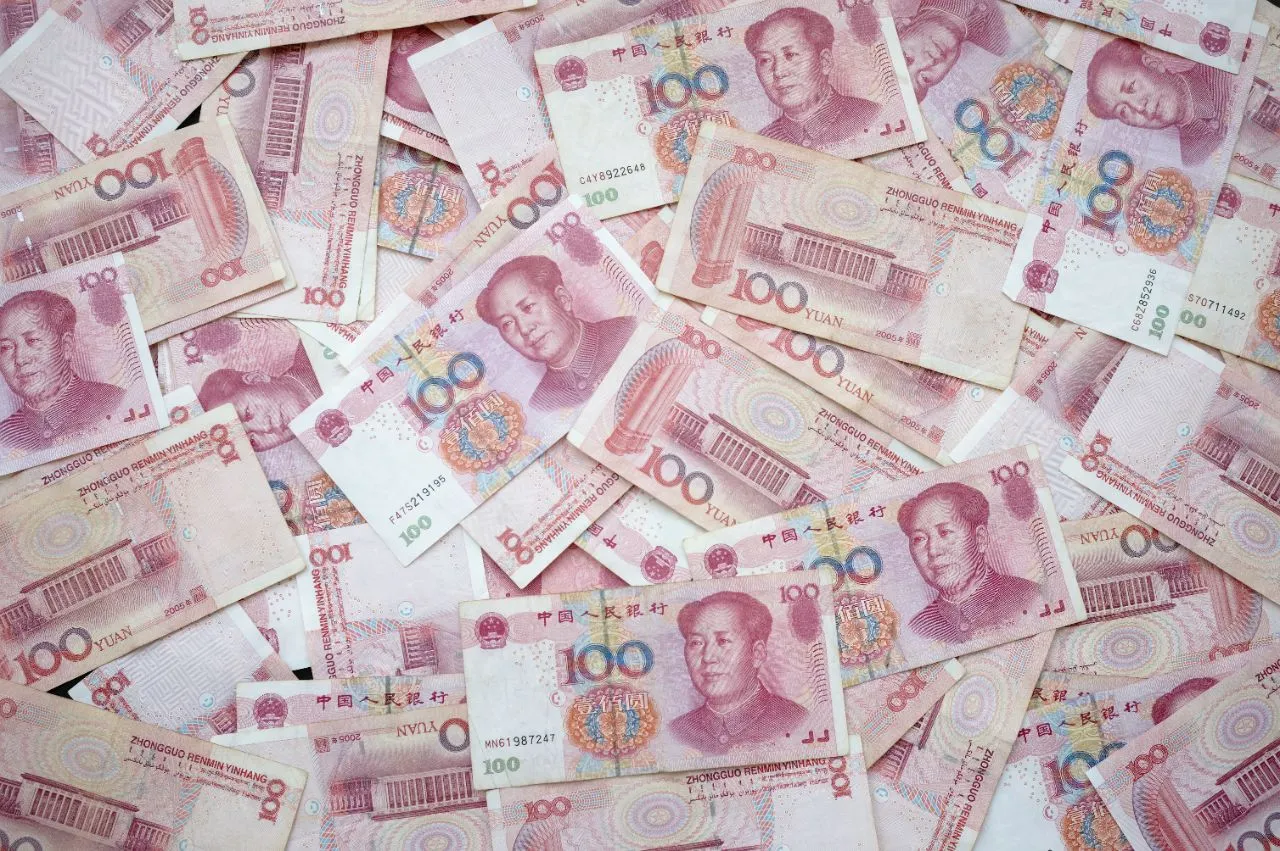
Conflux Network, a layer-1, regulatory-compliant Chinese blockchain focused on borderless transactions, has announced the upcoming launch of the Conflux 3.0 mainnet together with an offshore yuan-pegged stablecoin, resulting in its native CFX token surging.
https://asset.coinness.com/en/news/06040104449a2d7706a51662c1fc5865.webp
Photo by Eric Prouzet on Unsplash

Partnership

notice published on the website of the Shanghai Municipal People’s Government on July 20 reported on the Conflux Tree Graph Technology and Ecological Development Conference, which was held in Shanghai over three days from July 18 to July 20. Over the course of the three-day event, the project announced a partnership with AnchorX, a Hong Kong-based fintech firm specializing in stablecoins, and Shenzhen-based Eastcompeace Technology. 


The purpose of the initiative is to develop a stablecoin pegged to the offshore yuan (CNH), the version of China’s currency that circulates outside the mainland. The report outlined that in recent years, stablecoins and tokenized real-world assets (RWAs) have come to global attention. 


Belt & Road Initiative

Given this backdrop, it was outlined that “creating an independent and controllable high-performance public chain system” could be of great benefit to China and its Belt and Road Initiative (BRI), which sets out to develop infrastructure across 150 countries to facilitate trade with China.


This is not the first point at which AnchorX has collaborated with Conflux. Back in February, the company received in-principle approval from the Astana Financial Services Authority (AFSA) in Kazakhstan to issue CNH-pegged stablecoins. Growing bilateral trade between Kazakhstan and China was cited as the rationale behind the license, given the need for cross-border payments.


At the time, it was outlined that the AxCNH yuan-pegged stablecoin would be issued on the Conflux blockchain. It’s unclear if this same stablecoin is the focus of this latest development or whether an entirely new yuan-pegged stablecoin will be issued.

AnchorX collaborated with Conflux in 2024 to bring about the issuance of AxHKD, a Hong Kong dollar-pegged stablecoin. The stablecoin runs on the Conflux blockchain, with the stablecoin issuer using OKLink Trust as its custodian.


TokenPocket, a multi-chain crypto wallet project, also outlined on X on July 21 that it too is involved in the partnership with Conflux and AnchorX. The project outlined that it will support the growth of stablecoin adoption, the development of cross-border payment solutions and the promotion of tokenized RWAs in international markets through the collaboration. 


Pilot projects

TokenPocket went on to explain that the companies plan to launch pilot projects in Central Asia, Southeast Asia and other regions, building “a compliant, secure, and innovative fintech framework to boost the role of the Conflux ecosystem as critical infrastructure for cross-border trade.”


It was revealed at the conference that the mainnet release of Conflux 3.0 will occur in August. With the implementation of further optimized execution modules, the project expects 3.0 to result in a network throughput of 15,000 transactions per second (TPS). 


These developments over the course of the weekend have had an impact on the unit price of Conflux’s native token, CFX. On July 19, the token was trading at around $0.1043. According to CoinMarketCap data, at the time of writing, it’s trading at $0.2232, a 2.58% increase over the past day.


 

More to Read
View All
Web3 & Enterprise·

May 24, 2023

Wemade Signs MOU with Hub71 to Expand WEMIX Ecosystem in the UAE

Wemade Signs MOU with Hub71 to Expand WEMIX Ecosystem in the UAEWemade, a leading blockchain gaming company based in South Korea, has recently entered into a memorandum of understanding (MOU) with Hub71, a global tech hub situated in the United Arab Emirates (UAE).Photo by Mohamad on PexelsGlobal tech hubHub71, established in 2017, serves as a global tech hub that brings together startups, corporates, and investors in the Abu Dhabi Global Market (ADGM), which is also home to Wemade’s branch in the Middle East and North Africa (MENA) region called WEMIX MENA.Hub71 benefits from the support of several influential partners, including Mubadala, the Abu Dhabi Investment Office (ADIO), and ADGM. Mubadala, a sovereign investor, manages a diverse portfolio of assets in the UAE and overseas. ADIO acts as the pivotal government hub promoting investment in Abu Dhabi. Meanwhile, ADGM functions as an international financial center with a regulatory framework based on UK common law.Web3 initiativeIn February, Hub71 launched a dedicated initiative called Hub71+ Digital Assets, aimed at fostering Web3 startups and blockchain technologies in the UAE. The initiative has attracted over $2 billion in capital commitments. Notable partners include Binance, Algorand, Polygon, Mastercard, and Amazon Web Services.As part of this collaborative endeavor, Wemade will participate as a partner by leveraging its native WEMIX token. While WEMIX and startups within its ecosystem will have expedited access to Hub71’s programs, GameFi and DeFi companies in Hub71 will have the opportunity to join the WEMIX ecosystem.Korea and UAE’s investment cooperationEarlier this year, the UAE and South Korea signed an MOU, outlining a $30 billion investment plan in the East Asian nation. This agreement has facilitated the entry of Korean firms into the UAE while also attracting investment opportunities.Wemade aims to expand its WEMIX ecosystem by establishing partnerships with various blockchain projects, both domestically and internationally. The company views the MOU with Hub71 as a significant stepping stone for its expansion in the MENA region.

news
Policy & Regulation·

Feb 20, 2024

Japan progresses bill to enable VCs to hold crypto assets

Japan’s Ministry of Economy, Trade and Industry announced on Friday that it has approved a revision to the Industrial Competitiveness Enhancement Act, with the aim of broadening strategic investment opportunities. According to a local report from crypto publication Coinpost, this move would open avenues for venture capital (VC) firms to invest in projects exclusively issuing cryptocurrencies. Pending parliamentary deliberationWith cabinet approval secured, the revised bill will now undergo introduction and deliberation in the current session of the Diet, Japan's parliament. If passed, the amendment could pave the way for VC funding of Web3 startups in exchange for crypto assets. The Ministry highlighted that the amendment aligns with objectives to foster new businesses and industrial investment, with a particular focus on empowering Japan's economy through support for medium-sized companies and startups. Reports of Japan's intention to ease regulations for VC firms investing in crypto startups first emerged in September.Photo by Manuel Cosentino on UnsplashStablecoin frameworkJapan has further work to do to implement a comprehensive overall framework for digital assets. A move by the Japanese Financial Services Agency (FSA) earlier this month to implement measures designed to guard against unlawful crypto transfers is a case in point. The measure doesn’t appear to account for knock-on effects on the peer-to-peer (P2P) transactions market. However, its stance on crypto regulation is best characterized by efforts to establish a robust legal framework for stablecoins and digital assets. The nation has positioned itself as a global leader in stablecoin regulation, signaling plans to embrace Web3 technologies while maintaining stringent measures to protect users. Japan's stablecoin regulations, while providing clarity, present challenges for issuers, especially regarding profitability in a low-interest rate environment. Compliance with requirements such as maintaining 100% of assets within Japan's trust accounts poses operational hurdles for yen-based stablecoins. Recent developments indicate industry players' efforts to navigate regulatory requirements. Mitsubishi UFJ Financial Group, Japan's premier banking conglomerate, has engaged with stablecoin issuers to explore leveraging its blockchain platform. Web3 hope amid economic difficultiesJapan’s economy has seen better days. Last week, the bitcoin-yen trading pair saw bitcoin reach a record high valuation against the yen. New technologies like Web3 are seen as a potential mechanism for the East Asian country to improve its economic performance. In July of last year, Japanese Prime Minister Fumio Kishida emphasized the country’s commitment to nurturing the Web3 sector within Japan. Last year, Yudai Suzuki, the founder of a Tokyo-based Web3 incubator, suggested that the country could rediscover its past prowess at the forefront of innovation and technology by embracing blockchain and Web3. Japan's regulatory approach appears to be shifting to accommodate such sectoral growth and development. Last July, the Japan Blockchain Association (JBA) called on the government to address an issue within the Japanese tax code that was hampering the industry. That tax reform was subsequently implemented in December. This latest initiative, too, appears to underscore Japan's commitment to fostering innovation and economic growth through enabling further investment into emerging Web3 enterprises. 

news
Web3 & Enterprise·

Aug 01, 2023

Hong Kong’s Largest Bank in Lackluster Crypto Embrace

Hong Kong’s Largest Bank in Lackluster Crypto EmbraceFor all of its pro-crypto initiatives Hong Kong has been struggling with banking crypto companies. A recent report from the Hong Kong Economic Journal cited Lin Yansheng, Director of Commercial Banking at Hang Seng Bank, Hong Kong’s largest local bank, in outlining that the bank will accommodate crypto but that support is conditional.Photo by Florian Wehde on UnsplashCrypto in a high rates environmentYansheng shared his insights on interest rates, stating that he believes that interest rates will rise but reassures that any increase will be temporary in nature.The Commercial Banking Director acknowledged that Hong Kong’s current high-interest rates, in contrast to those of mainland China and neighboring regions, have caused a slowdown in the overall demand for bank loans. He predicts that loan growth will face pressure this year. However, he also offers a glimmer of hope, stating that a reduction in interest rates may not be far off. He suggests that next year’s expected interest rate cuts could lead to an improvement in loan growth.Data published recently by the Hong Kong Monetary Authority (HKMA) shows that annualized loan growth has been negative since May. It currently stands at -1.1%. Yansheng explained that as borrowing rates decrease in mainland China, Hong Kong’s banking industry is experiencing a downturn in loan growth. The high Hong Kong dollar interbank offered rate (HIBOR) currently limits the volume of corporate borrowing.The rising concerns over interest rates have prompted Hang Seng Bank to acknowledge the importance of cryptocurrencies.Unconvincing crypto embraceThe bank recently outlined the regulatory framework for virtual asset businesses seeking to operate within its purview. To open standard banking accounts, these businesses must obtain an Approval-in-Principle (AIP) license from the Securities Regulatory Commission (SRC), as per the bank’s announcement.The first issue is that obtaining an AIP license has proven to be incredibly difficult. Currently, only OSL and HashKey, two virtual asset trading platforms, have managed to obtain the required clearance. Hang Seng Bank acknowledges that it hasn’t received many inquiries about crypto-banking, attributing it to that challenging process of obtaining AIP certification. Meeting the demanding requirements for such permission poses a significant hurdle for most businesses.Getting beyond this obstacle, Yansheng clarified that even then crypto companies will only be able to obtain a “simple” bank account. He didn’t clarify what services would be excluded but Hang Seng’s embrace of crypto-related business sounds very much like it’s lacking in conviction.Both the China Securities Regulatory Commission and the Hong Kong Monetary Authority have conducted roundtable meetings to address the difficulties faced by virtual asset businesses. Yansheng reiterated Hang Seng’s commitment to complying with the regulators’ instructions and accommodating these companies. However, it’s clear that difficulties remain.Last month, it was reported that Hang Seng Investment Management Co., a wholly-owned subsidiary of Hang Seng Bank and the largest exchange-traded fund (ETF) manager in Hong Kong, was looking to add digital assets to its product line.

news
Loading