Top

Affiliate of Chinese bank launches crypto trading services in Hong Kong

Web3 & Enterprise·August 20, 2025, 1:38 AM

CMB International Securities, the brokerage and investment banking arm of China Merchants Bank (CMB), has acquired a virtual asset trading license and rolled out related trading services in Hong Kong.
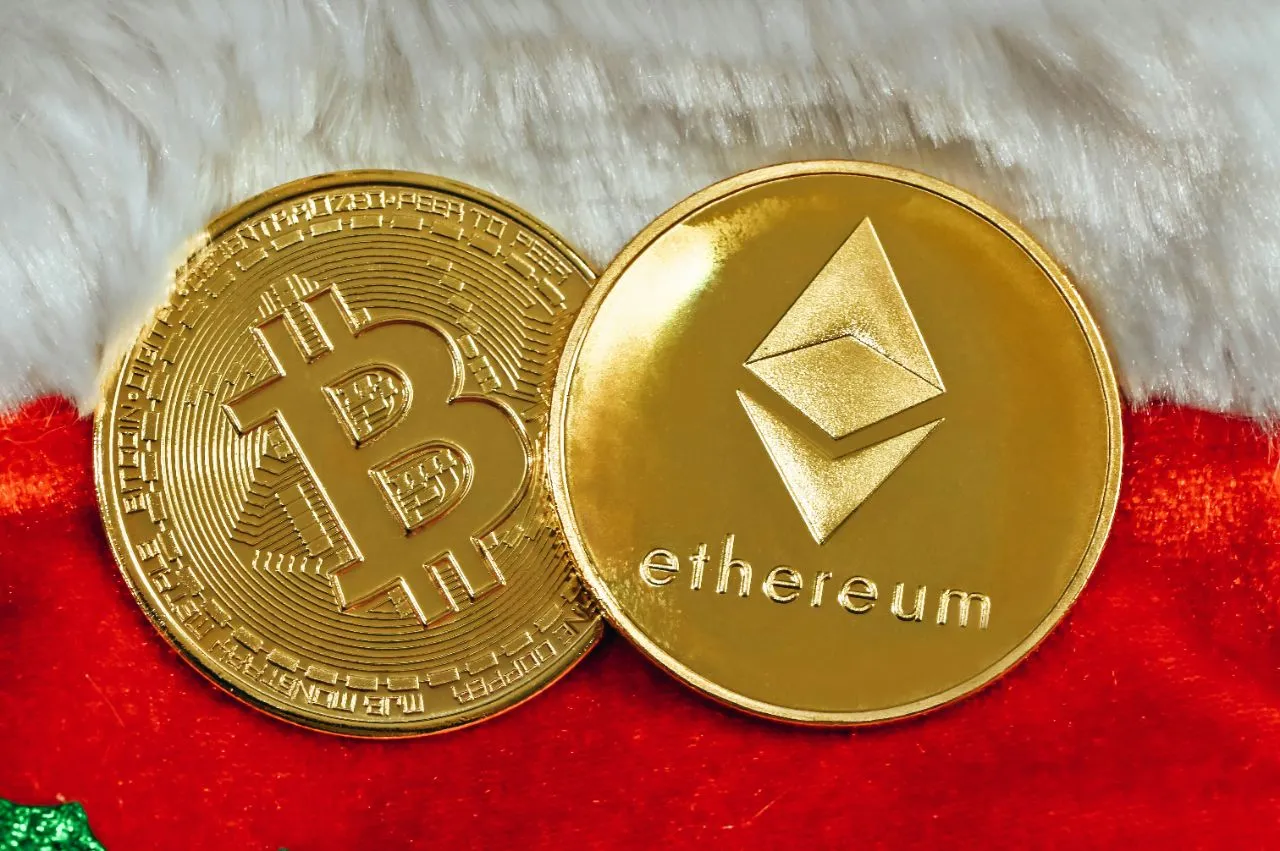
https://asset.coinness.com/en/news/a51b70a73c96c73ac6b53dc00248a1ce.webp
Photo by Traxer on Unsplash

First Chinese bank-affiliated brokerage to add crypto services

The development is significant as it marks the entry of the first brokerage firm directly affiliated with a Chinese bank into the digital assets arena. It takes on further significance due to the importance of its parent company within financial services in Asia.

Recent reports suggest that China Merchants Bank has assets under management (AUM) of RMB 15 trillion, equating to around $2.1 trillion. Headquartered in Shenzhen, the bank is China’s seventh largest in terms of AUM. Compared globally, an S&P Global Market Intelligence report published in 2024 positioned the bank in 25th place by measure of AUM.


CMB International Securities disclosed that it started offering such services on Aug. 18 via a post on the Chinese social media platform WeChat. It explained that the launch followed the company’s acquisition of an upgrade to its existing trading license from Hong Kong’s Securities and Futures Commission (SFC) on July 11, authorizing the brokerage to offer virtual asset trading.


24/7 digital asset trading

The company outlined that it has added virtual asset trading via its mobile application, offering qualified investors 24/7 digital asset trading. Following the launch, eligible investors can now trade Bitcoin (BTC), Ethereum (ETH) and the USDT stablecoin. These professional or eligible investors must open a CMB International Securities cash account before they can commence trading digital assets on the CMB platform.


Given the ongoing ban on crypto trading activity within mainland China, CMB International has to ensure that its product offering doesn’t reach mainland residents. At the time of the company being awarded its virtual assets trading license last month, Hong Kong Web3 Association Co-Chair Joshua Chu spoke to that requirement. He stated:

“By securing this licence, CMBI gains regulated access to Hong Kong’s dynamic crypto market, yet it must operate within strict boundaries that prevent direct mainland participation, reflecting the delicate balance of innovation and legal constraint.”


‘One country, two systems’

“One country, two systems” is a constitutional principle of the People’s Republic of China that enabled the reunification of Hong Kong with China back in 1997. Many believe that while Beijing continues to impose a ban on crypto and hasn’t been vocal in its support of Hong Kong’s embrace of the crypto sector, there is an implied support nonetheless of Hong Kong’s development as a crypto hub.

Hong Kong’s separate system allows China to let it develop as a proving ground for virtual assets. That tacit support has encouraged companies like Beijing-headquartered Tiger Brokers to pursue virtual asset trading licensing within the Chinese autonomous territory. Similarly, Victory Securities, a Hong Kong firm with a significant presence within the mainland Chinese market, has also pursued digital asset-related licensing in Hong Kong.


This isn’t CMB International’s only crypto-related venture. Earlier this month, the company partnered with Singaporean digital asset exchange DigiFT in launching the Hong Kong-Singapore Mutual Recognition Fund. The development marked the first money market fund to be hosted on the Solana blockchain.

 

More to Read
View All
Policy & Regulation·

Oct 22, 2025

Singapore launches BLOOM initiative to advance digital finance infrastructure

The Monetary Authority of Singapore (MAS) has unveiled a new initiative aimed at enhancing the nation’s financial infrastructure through the use of stablecoins and tokenized commercial bank money. Announced on Oct. 16, the project, known as BLOOM, short for Borderless, Liquid, Open, Online, Multi-currency, brings together 16 financial sector participants, including Anchorage Digital, Ant International, Circle, Coinbase, and DBS Bank. According to MAS, BLOOM is open to additional participants through a registration form available on its official website.Photo by Jason Leung on UnsplashBuilding on Project OrchidBLOOM operates under Project Orchid, a digital Singapore dollar initiative launched in 2021 to explore potential applications of central bank digital currency (CBDC) in strengthening Singapore’s financial ecosystem. Through BLOOM, it will examine use cases involving G10 and Asian currencies, covering both domestic and cross-border payments, as well as wholesale financial transactions. The project’s focus includes coordinating interoperability between different networks to enable the distribution and clearing of settlement assets. It will also explore automated compliance checks and study methods to make wholesale settlements more efficient and cost-effective. Artificial intelligence (AI) agents are expected to play a supporting role, executing transactions automatically within predefined limits and regulatory parameters. Expanding stablecoin usage in SingaporeThe MAS initiative comes shortly after the listing of XSGD, a Singapore dollar–backed stablecoin, on the U.S.-based crypto exchange Coinbase on Oct. 1. XSGD is issued by StraitsX, a digital payments provider, and is fully backed by reserve assets held with DBS Bank and Standard Chartered. Stablecoin payments have gained traction in Singapore’s retail sector as well. StraitsX recently began supporting settlements in USDT and USDC through OKX Pay. Consumers can use SGQR codes at participating GrabPay merchants to make everyday purchases, such as coffee, with transactions settled directly in Singapore dollars into merchant accounts. Rising local interest in digital assetsSingapore’s growing engagement with digital assets reflects a broader trend of public interest. A report from ApeX Protocol, cited by Cointelegraph, ranked Singapore as the world’s most “crypto-obsessed” nation, awarding it a composite score of 100. The ranking considered ownership rates, adoption growth, search activity, and ATM availability. The study found that 24.4% of Singapore’s population holds cryptocurrency, ahead of the United Arab Emirates (UAE), which scored 99.7 despite a 25.3% ownership rate. In a separate development, Channel News Asia reported that three Singaporeans have been implicated in a large-scale fraud scheme linked to Cambodia’s Prince Group. The U.S. Department of Justice recently confiscated 127,271 Bitcoin tied to the operation—the largest seizure in its history. Following the investigation, the U.S. Department of the Treasury’s Office of Foreign Assets Control imposed sanctions on the three individuals as well as 17 Singapore-registered entities. The sanctions block access to any property in their possession and prohibit U.S. persons from engaging in transactions with them, citing risks to U.S. national security and foreign policy interests. 

news
Web3 & Enterprise·

Sep 15, 2023

Galaxia Metaverse Teams Up with Rotonda to Expand Blockchain Ecosystem

Galaxia Metaverse Teams Up with Rotonda to Expand Blockchain EcosystemGalaxia Metaverse, a blockchain company under Galaxia Moneytree, said Thursday that it has signed a strategic partnership deal with Rotonda, a subsidiary of Korean crypto exchange Bithumb and the operator of the Web3 digital wallet Burrito Wallet.Photo by Shubham’s Web3 on UnsplashBolstering the blockchain ecosystemThrough this new collaboration with Rotonda, Galaxia Metaverse aims to establish a cooperative framework for expanding the blockchain ecosystem by seamlessly integrating their respective blockchain-based Web3 wallets, Galaxia Wallet and Burrito Wallet, into the on-chain environment to secure on-chain liquidity and more users. Burrito Wallet supports 11 major mainnets, such as Bitcoin, Ethereum, Solana, and Polygon, as well as over 1,300 cryptocurrencies.The two companies also plan to leverage Rotonda’s global business network to increase the user base of Galaxia Wallet.Advancing on a global scaleThis comes as part of Galaxia Metaverse’s ongoing efforts to expand its presence on the global stage through collaborations with various partners, including Gopax, MVL, Elysia, Klaytn, and Bithumb. The partnership also marks another significant step in the evolution of the blockchain and metaverse industry, as companies continue to forge alliances both domestically and abroad to create more accessible and integrated virtual ecosystems.Meanwhile, Rotonda recently signed a memorandum of understanding (MOU) with global metaverse platform The Sandbox to support wallet integration within The Sandbox’s platform. The company also teamed up with blockchain gaming platform Oasys in further efforts to expand its global business scope.

news
Web3 & Enterprise·

May 15, 2024

Deutsche Bank joins Singapore's asset tokenization initiative

German multinational investment bank Deutsche Bank, is collaborating with Singapore's central bank on asset tokenization.  Project GuardianThe company announced on May 14 via a press release that it has joined the Monetary Authority of Singapore’s (MAS) Project Guardian. Project Guardian is an international collaboration between a number of market regulators, led by MAS. Other participants in the initiative include the UK’s Financial Conduct Authority (FCA), Japan’s Financial Services Agency (FSA) and Switzerland’s Financial Market Supervisory Authority (FINMA). The project focuses on asset tokenization relative to wholesale funding markets and decentralized finance (DeFi) applications.Photo by Mariia Shalabaieva on UnsplashThe bank outlined how it intends to participate as part of the collaboration, stating: “As part of the asset and wealth management workstream, the bank will test an open architecture and interoperable blockchain platform to service tokenized and digital funds. It will then propose protocol standards and identify best practice to contribute to industry progress.” The bank’s participation in the project will be headed up by its Asia Pacific (APAC) head of securities and technology, Boon-Hiong Chan. Anand Rengarajan, Head of Securities Services for Asia Pacific and the Middle East, commented on the development, stating:“Contributing to Project Guardian will bolster our efforts to help shape the new frontier of asset servicing, and strongly position us to contribute to industry progress, and not only anticipate our clients’ needs but exceed their expectations.”  Memento Blockchain partnershipDeutsche Bank outlined that it intends to work closely with Memento Blockchain on the project. In fact, it has an existing ongoing collaboration in place with Memento, the developer of a decentralized asset management platform. Memento has developed multi asset swap products and it is currently working towards the development of a zero knowledge layer-2 solution. The duo have worked together over the course of the past two years. A proof-of-concept known as Project DAMA (Digital Assets Management Access) emerged from that partnership. That body of work will be extended into DAMA 2.  Memento Blockchain is the software developer behind the Domani Protocol. It stated on X that more technical details relative to the collaboration will be released in the coming weeks. It added that the collaboration will also involve Interop Labs, the developer of the Axelar Network, the programmable Web3 interoperability platform.  Earlier this year, the Axelar Foundation established a partnership with payment technology firm Ripple Labs with a view towards tokenizing real world assets (RWAs) on top of the XRP Ledger, enabled via Axelar. Axelar co-founder and Interop Labs CEO Sergey Gorbunov told Cointelegraph that “it’s now clear that secure blockchain interoperability is required to unlock the trillion-dollar potential in asset tokenization.” Gorbunov added that “Deutsche Bank and Project Guardian are leading innovation toward establishing the open systems that will enable this technology.” He highlighted the relevance of the Axelar Network in that endeavor, suggesting that “Axelar is critical infrastructure for institutional adoption."

news
Loading