Top

Japan’s finance minister acknowledges crypto investment merits

Policy & Regulation·August 27, 2025, 5:48 AM

Katsunobu Katō, a Liberal Democratic Party politician and Japan's Minister of Finance under Prime Minister Shigeru Ishiba's government since October 2024, has said that cryptocurrency assets can play a role in a diversified investment portfolio.


Katō made the remarks while speaking at an event that was held in Tokyo related to the subject of crypto assets on Aug. 25, according to Bloomberg. Katō stated:

''Crypto assets run the risk of high volatility, but if an appropriate investment environment is created, they can become targets for diversified investment.''

https://asset.coinness.com/en/news/46f9c0e01b513711c28add3d38da2146.webp
Photo by JJ Ying on Unsplash

Growing crypto user base

Katō acknowledged that there is a growing user base in Japan related to digital assets. With that, he intends to work towards the provision of a healthy trading environment in Japan for stakeholders within the digital assets sector.


The finance minister added that he has been trying to balance regulation with a need to leave the digital assets sector with sufficient freedom so as to enable the development of innovation.


Crypto tax reform

It emerged over the weekend that the Japanese financial regulator, the Financial Services Agency (FSA), intends to include tax reform measures in respect of the crypto sector in 2026 tax revision proposals that it will bring to the Japanese government. It’s expected that the proposals, scheduled for submission by the end of this month, will call for a separate taxation category for digital assets and the implementation of a flat 20% tax rate. 

Under Japan’s existing tax regimen, crypto trading gains must be reported under the categorization of “miscellaneous income,” with those gains subject to tax rates of up to 55%. The move would bring taxation on crypto trading gains in line with the tax treatment that’s currently in place for equity trading gains. Equities have been given their own category and are taxed at a flat rate of 20%.


Reclassifying cryptocurrencies

Additionally, the FSA plans to propose legislation next year that would result in the reclassification of cryptocurrencies, removing them from their current treatment as a means of payment under the Payment Services Act. The regulator wants crypto to come under the Financial Instruments and Exchange Act, reclassifying it as a financial product.


Katō has outlined his party’s commitment to the consideration of reviewing crypto asset taxation. That item was incorporated into his government’s tax reform plan for 2025, while the Japanese cabinet approved a proposal to amend the Payment Services Act back in March.


As part of plans to have digital assets categorized as financial products, the FSA is also understood to be interested in broadening the scope of insider trading restrictions.


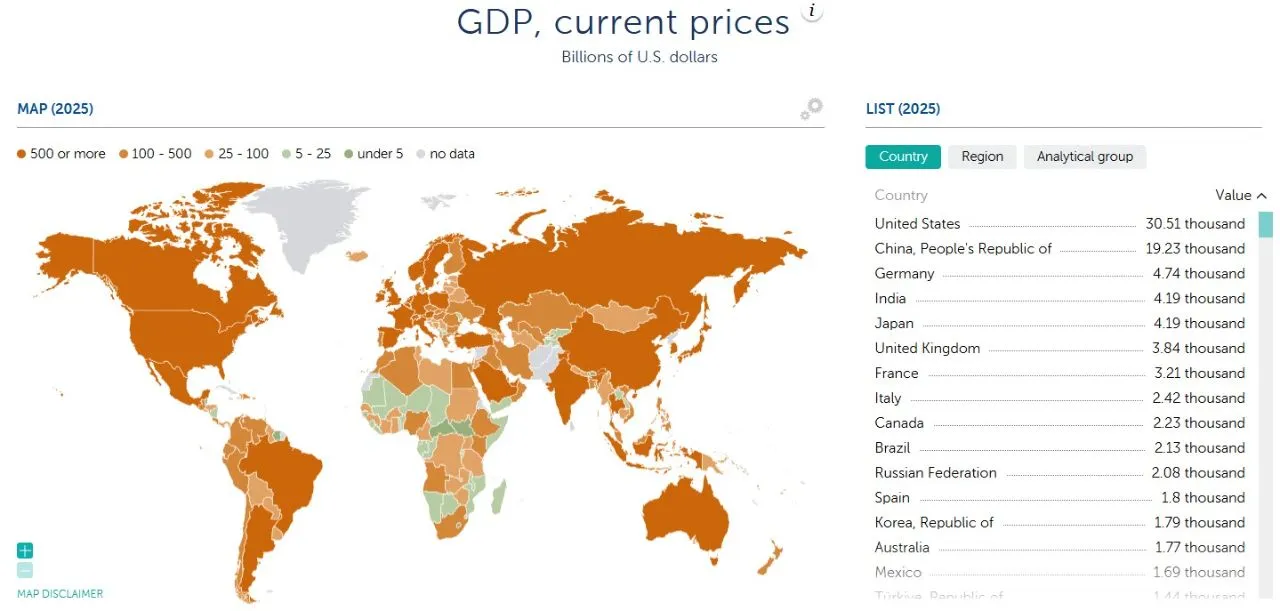
Kato’s remarks are being interpreted as positive for the crypto sector. According to International Monetary Fund (IMF) data, Japan is the world’s fifth-largest economy, with a gross domestic product (GDP) exceeding $4.1 trillion.
https://asset.coinness.com/en/news/7571af1cae99df69b112c000d61f717f.webp
Source: World Economic Outlook (April 2025)

In further positive news for the sector in Japan, it was reported on Aug. 18 that the FSA is likely to approve the issuance of JPYC, a Japanese yen-backed stablecoin, over the course of the coming months.


More to Read
View All
Web3 & Enterprise·

Nov 07, 2023

Kloint and Korea University to develop on-chain data analysis solutions

Kloint and Korea University to develop on-chain data analysis solutionsKloint, a company specializing in the tracking of virtual asset transactions, revealed on Tuesday a partnership with the College of Informatics and the Center for Information System Security at Korea University. The collaboration is set to focus on the joint development of algorithms and platforms for on-chain data analysis.Photo by Shubham Dhage on UnsplashSharing insights on regulatory frameworksAs part of this initiative, Kloint and Korea University will cooperate to understand the domestic and international demand for on-chain data analysis. They will also exchange insights on the regulatory and policy frameworks that govern the technologies involved.Growing crypto-related criminal activitiesThe collaborative effort between Kloint and Korea University is set against a backdrop where, with the expansion of the cryptocurrency market, there has been a corresponding uptick in its use for criminal activities like money laundering, drug trafficking, and embezzlement.Traditional techniques used by government bodies, such as the public prosecutor’s office and financial regulators, have proven expensive and increasingly ineffective in tracking virtual assets as they struggle to keep pace with the sophisticated methods now used to circumvent detection.Kloint was co-founded last September by three blockchain technology firms: Fair Square Lab, S2W and Ozys. With a vision set on the horizon, Kloint is gearing up to supply government entities and virtual asset service providers (VASPs) with analytical platforms and reporting services. In the more immediate term, the company is focusing its efforts on developing solutions for data collection and analysis tailored to the Korean cryptocurrency market.

news
Policy & Regulation·

Aug 17, 2023

Dubai Regulator Hits OPNX With $2.7M Penalty

Dubai Regulator Hits OPNX With $2.7M PenaltyCrypto bankruptcy claims trading platform OPNX and its founders have been hit with a hefty fine, imposed by Dubai’s Virtual Assets Regulatory Authority (VARA). The penalty, amounting to AED 10 million ($2.7 million), was levied on the newly established exchange in accordance with a notice published by the regulator on Wednesday.Photo by Agnieszka Stankiewicz on UnsplashPayment outstandingVARA’s recent announcement highlighted that the fine had been imposed in May and remains outstanding. The regulatory body disclosed that individual fines of AED 200,000 ($54,451) each were imposed on Su Zhu and Kyle Davies, the controversial founders of failed Singapore-based crypto hedge fund, Three Arrows Capital (3AC). Additionally, fines were also imposed on two other co-founders of OPNX. The penalties were attributed to failures in adhering to regulations governing marketing, advertising, and promotions.OPNX, established earlier this year by Su Zhu and Kyle Davies in collaboration with Mark Lamb and Sudhu Arumugam, positioned itself as a trading platform for crypto claims following the collapse of their Three Arrows Capital (3AC) fund last summer. The duo has since made Dubai their primary operational base.Further action“In light of the company’s unpaid fine, VARA shall determine consequential actions warranted against OPNX, which may include further fines, penalties, and/or taking any actions necessary to recover payment and definitively remedy the behavior,” stated VARA in an official statement.Dubai is making a concerted effort to nurture the development of crypto-related business, implementing various initiatives in order to bring that about. However, as part of that strategy, Dubai’s regulatory landscape for cryptocurrencies has taken a more stringent turn this year, with the introduction of a new regulatory framework mandating that companies catering to retail investors must secure full licensing from VARA.Concerns arose in February when regulatory authorities discovered that OPNX was actively seeking customers for its platform and collecting personal data without proper authorization.Formal reprimandsIn April VARA issued an investor alert, outlining that OPNX was not a regulated entity although it was operating from Dubai. Shortly afterwards, formal reprimands followed for the two 3AC founders, alongside Mark Lamb, Sudhu Arumugam, and OPNX’s CEO Leslie Lamb.Leslie Lamb, in a previous interview with Bloomberg, emphasized that OPNX had not actively marketed itself toward Dubai or the broader UAE market. She stressed the company’s full cooperation with VARA’s ongoing investigation, asserting that no regulatory guidelines had been breached.“While Kyle and I contributed the initial ideas for OPNX, Leslie is very much the CEO, and we aren’t involved in day-to-day operations,” stated Su Zhu, clarifying their roles.Despite the regulatory setback, both Su Zhu and Kyle Davies continued to promote OPNX on the X platform (formerly known as Twitter).It emerged recently that the claims trading platform has been eyeing the acquisition of failed crypto lender Hodlnaut, which is currently undergoing court-supervised restructuring in Singapore. Zhu and Davies have come in for a lot of criticism within the crypto sector, having left a long list of unpaid creditors as a consequence of the failure of 3AC. The duo recently suggested that they would contribute profits from OPNX to 3AC creditors despite the fact that they have been uncooperative with the 3AC bankruptcy process.

news
Markets·

May 04, 2023

Sui Token Debuts on Korea’s Top Five Crypto Exchanges

Sui Token Debuts on Korea’s Top Five Crypto ExchangesThe native token of Sui, a layer 1 blockchain platform, has debuted on South Korea’s five leading cryptocurrency exchanges — Upbit, Bithumb, Coinone, Korbit, and Gopax. This marks the first time a token has been listed simultaneously on all five exchanges, according to Korean news agency Newsis.Photo by Sigmund on UnsplashAptos’ successThe decision by these exchanges to list Sui may have been influenced by the success of the APT token, which belongs to Aptos, another scalable layer 1 blockchain platform also developed by former Meta employees. APT was listed on Binance two days after the launch of the Aptos’ mainnet on October 17 last year, and its price skyrocketed to $100 on the first day, a hundred times its listing price. Within a week, the trading volume of APT reached $1.3 billion.Sui’s mainnet launchWith the launch of its mainnet on May 3, Sui is garnering significant interest in the crypto sphere. An official from a notable Korean venture capital firm told Newsis that Sui and Aptos, both developed with the Move programming language, involve many top-tier investors and are highly anticipated by ecosystem participants.

news
Loading