Top

EU bans Ruble-backed stablecoin A7A5 in latest round of Russia sanctions

Policy & Regulation·October 29, 2025, 6:31 AM

The European Council has banned all transactions within the European Union (EU) involving the Russian Ruble-backed stablecoin A7A5, according to a press release published Oct. 23.


The prohibition targets the stablecoin itself, its developer, its Kyrgyzstan-based issuer, and the operator of a platform that facilitates major A7A5 trades. The package also takes aim at Russian crypto exchanges.
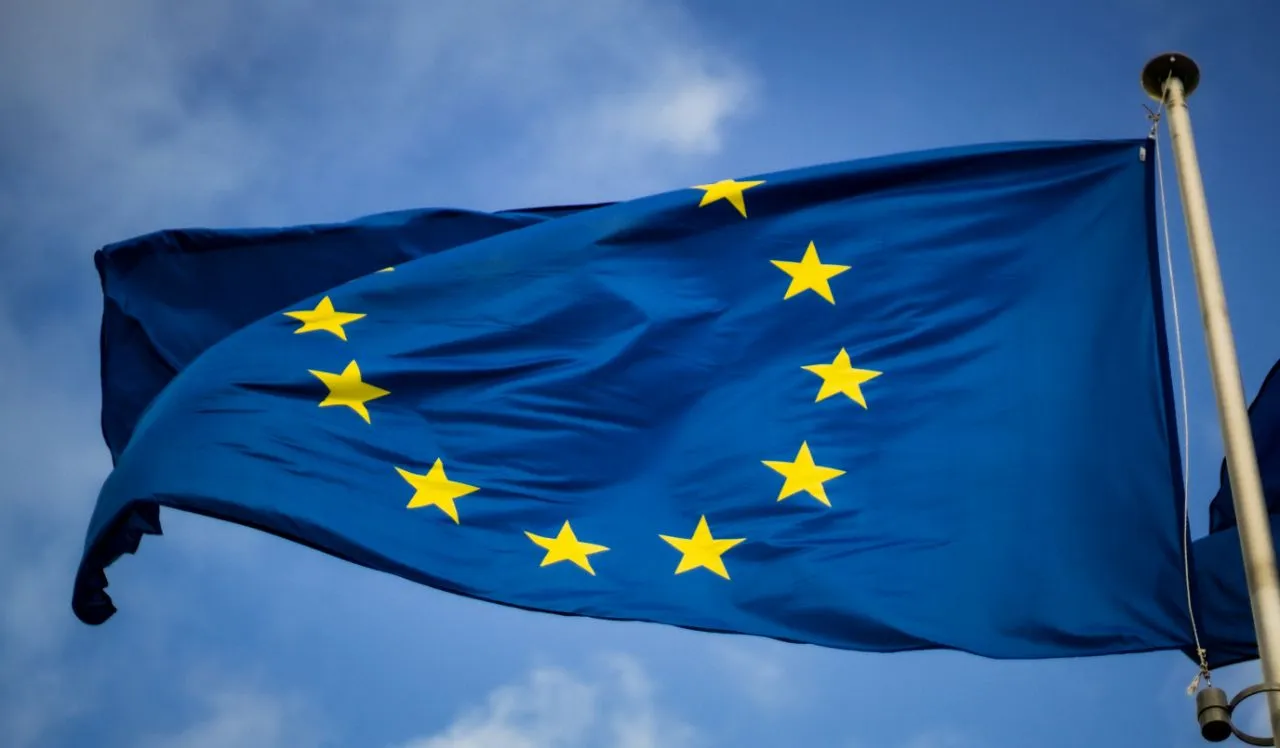
https://asset.coinness.com/en/news/8d2f3591b98e3daf67502602aacc4069.webp
Photo by Christian Lue on Unsplash

Additional banking restrictions

This measure is part of a broader set of economic sanctions against sectors the EU stated assist the Russian invasion of Ukraine, including energy, finance, and defense industries. As part of this financial clampdown, the EU will also impose a ban on five additional Russian lenders starting Nov. 12. One of those lenders, Alfa-Bank, recently began offering Bitcoin buying and selling services, according to an X post by journalist Pete Rizzo.


The European body said the new crypto measures address Russia’s increasing use of digital assets to circumvent existing sanctions. Russian banks were cut off from the SWIFT international payment system in early 2022, following the onset of the Russo-Ukrainian war.


Reports of Russia using cryptocurrency to finance malign activities have surfaced previously. Earlier this month, Sławomir Cenckiewicz, the head of the Polish National Security Bureau (BBN), told the Financial Times that Russia has employed crypto to finance attacks on EU countries. Cenckiewicz said that a network of agents recruited by Russia’s GRU military intelligence agency and uncovered in Poland in 2023 had been substantially funded with cryptocurrency.


Reflecting this concern, lawmakers in Poland’s lower house approved a bill in September to strengthen national crypto oversight, a move also expected to help curb Russian funding channels. Cenckiewicz noted that Polish intelligence agencies are closely monitoring the legislation to prevent loopholes that allow foreign actors to support agents using digital assets.


Russia’s evolving crypto policy

The EU’s action comes as Russia itself is attempting to refine its own cryptocurrency rules.


According to the Moscow Times, Russia's central bank wants to limit cryptocurrency use strictly to cross-border payments within an experimental legal regime (ELR). The institution continues to reject recognition of cryptocurrency as a legal means of payment and has advocated banning its use for domestic payments and retail investment, while permitting trading only for high-net-worth individuals through licensed platforms.


Russia’s finance ministry has expressed a more flexible view, pointing to the scale of crypto adoption among the public. Earlier this year, the central bank estimated that domestic crypto transactions exceeded 1 trillion rubles (about $12.4 billion) per month, and that as of March, wallets linked to Russian users held roughly 827 billion rubles (about $10.2 billion).


The finance ministry and the central bank have agreed to tighten supervision of the crypto market, with officials expecting to finalize the new framework before the end of the year.

 

More to Read
View All
Policy & Regulation·

May 31, 2023

Bank of Japan Publishes Results of CBDC PoC

Bank of Japan Publishes Results of CBDC PoCThe Bank of Japan (BoJ) recently concluded the second phase of its central bank digital currency (CBDC) proof of concept (PoC) project, which began in April. The results of this phase were published on Monday, and they shed light on key aspects such as the comparison between account-based and token-based CBDCs and the management of holding limits for users with multiple accounts.Photo by Manuel Cosentino on UnsplashToken-based CBDCsThe experiments conducted by the central bank covered a wide range of topics. Among the most intriguing findings were the advantages and disadvantages of token-based CBDCs and how to effectively impose holding limits for users with multiple CBDC balances.Token-based CBDCs have garnered interest from various central banks, with some adopting the UTXO token model used by Bitcoin without the use of a distributed ledger. A UTXO or unspent transaction output, defines where a blockchain transaction starts and finishes. The Bank of Japan explored this model and analyzed its pros and cons.In the initial proof of concept, both account-based and token-based CBDCs were examined, considering scenarios where the central bank managed the ledger or shared it with intermediaries like banks. In the token-based model, fixed token denominations were used, similar to physical cash in countries like India, and a centralized ledger was employed. However, in the recent phase, the central bank utilized flexible value tokens similar to UTXO and shared ledger functions with intermediaries.The Bank of Japan favored the flexible value token model due to its ability to handle multiple requests simultaneously. However, it acknowledged that this model may require more technical resources compared to the account-based approach. Challenges may arise when implementing additional functions, such as holding limits, while maintaining optimal performance. The European Central Bank (ECB) also noted in a recent report that most payment providers are accustomed to account-based payments and would incur costs to adapt to token-based systems.Another significant aspect explored by the BoJ was how to impose holding limits when users have multiple CBDC balances through different intermediaries. The challenge lies in determining if the overall holding limit has been breached without compromising user privacy.Homomorphic encryptionOne possible solution discussed in the report is the use of homomorphic encryption, which enables computations to be performed on encrypted data without it first needing to be decrypted. That allows for the necessary checks without intermediaries accessing the specific data being checked. Although this solution may slightly increase processing time, it could introduce a higher risk of data inconsistencies.Alternatively, a simpler approach proposed by the central bank is to establish a per-account holding limit and a limit on the number of accounts a single user can hold, rather than imposing global limits. Ideally, users with multiple accounts would have a higher per-account holding limit compared to those with fewer accounts.Phase 3 underwayWith the next pilot phase already underway, the BoJ aims to test the end-to-end process flow and identify challenges related to integrating with external systems. Additionally, they are creating a CBDC Forum to gather input from the private sector, ensuring a collaborative approach to CBDC development.While investigation and research into CBDCs continues, the BoJ has said that it will make a final decision on CBDC implementation by 2026.

news
Web3 & Enterprise·

Jun 28, 2023

Korbit and SK Planet Team Up to Promote NFT Membership Program

Korbit and SK Planet Team Up to Promote NFT Membership ProgramKorbit, one of South Korea’s prominent cryptocurrency exchanges, has teamed up with SK Planet, a technology affiliate of the major conglomerate SK Group, in an effort to attract new users to Road to Rich, a non-fungible token (NFT) membership program.Photo by Mo on UnsplashWin up to 0.1 BTCUnder this collaboration, Korbit users will have the opportunity to win up to 0.1 BTC by completing assigned tasks. From those participating, 511 fortunate individuals will be selected as winners. The breakdown of prizes is as follows: 500 participants will earn 0.001 BTC each as third place winners; 10 second place winners will receive 0.01 BTC each; and the single top winner will be awarded the grand prize of 0.1 BTC.Quests, rewards, and rabbit NFTsRoad to Rich was introduced earlier this month by OK Cashbag, a popular customer rewards system offered by SK Planet. Road to Rich offers users daily quests involving rabbit character NFTs. Successful completion of these tasks allows users to gain various benefits, such as OK Cashbag points, which can be used at hypermarkets, restaurant chains, and other partner businesses. To participate in Road to Rich, users need to install the UPTN Station, a decentralized wallet developed by SK Planet, which allows storage, retrieval, and transfer of NFTs.According to a report by local news outlet Newspim, Oh Se-jin, CEO of Korbit, expressed the crypto exchange’s excitement about participating in the expansion of SK Planet’s Web3 ecosystem. Oh said that Korbit is committed to collaborating with SK Planet to deliver more convenient and valuable services to customers in the Web3 space.

news
Web3 & Enterprise·

May 10, 2024

Tiger Brokers brings online crypto trading to Hong Kong

Tiger Brokers (Hong Kong) is gearing up to bring its virtual asset trading platform to professional investors in Hong Kong, with plans to extend the service to retail-level investors in the short to medium term. Unified solution for equities and digital assetsTiger Brokers is an online broker, headquartered in Beijing, with an office and operations in Hong Kong. Additionally, the company has been listed (TIGR) on the Nasdaq stock exchange in the United States since 2019. With this latest plan which it outlined in an announcement shared with Cointelegraph, the company will offer professional investors a single solution for the trading and portfolio management of both securities and digital assets.  In merging traditional securities and crypto assets, the firm has partnered with Hong Kong’s HashKey Exchange, allowing access to 18 digital assets. That offering will include Bitcoin and Ethereum. Alongside these digital assets, the company will offer investors traditional financial products such as equities, options, futures and U.S. Treasury bonds. Integrating traditional and digital assets within the one platform eliminates certain complexities that come with managing multiple accounts across distinct brokers and platforms. As a consequence, investors are being extended greater convenience and flexibility in terms of global asset allocation.Photo by Ansel Lee on PexelsExtending service to retailInvestors with a preference for exposure to the recently approved spot Bitcoin exchange-traded fund (ETF) products will be enabled to purchase those ETFs through the platform.  Tiger will become the first technology-led brokerage in Hong Kong to offer an all-encompassing service supporting both traditional securities and virtual assets. The firm has incorporated competitive rates and a 24/7 trading ability into the offering in an effort to gain traction. Additionally, it has waived digital asset custody fees.  Through the Tiger Trade platform, professional investors will be given access to this array of investment options. Initially, availability of the facility will be confined to professional investors in Hong Kong. Hong Kong residents with an investment portfolio valued above 8 million Hong Kong dollars ($1 million) and corporate entities with assets in excess of 40 million Hong Kong dollars ($5 million) qualify within the definition of accredited investors. Once it gains the relevant regulatory approval, Tiger Brokers intends to extend the service to retail investors. The company also outlined that it is considering adding cryptocurrency spot withdrawals and deposits as features within the new service offering. Zeng Qingfei, Chief Financial Officer of Tiger International, expressed the company's pride in leading the charge in virtual asset trading services. He emphasized Tiger Brokers' commitment to meeting the evolving needs of investors by expanding its product portfolio to include diversified investment opportunities. Through this strategic expansion, the company is aiming to equip investors with the tools they need to navigate dynamic market conditions effectively. The company hasn’t confined its efforts to achieve further growth to Hong Kong. In recent days, it has also enabled 24-hour trading of U.S. stocks and exchange-traded funds (ETFs) in New Zealand. Through extended trading hours, Kiwi investors will have greater opportunity than ever to participate in the market. 

news
Loading