Top

Four in 10 wealthy UAE investors hold crypto, survey finds

Markets·October 30, 2025, 6:51 AM

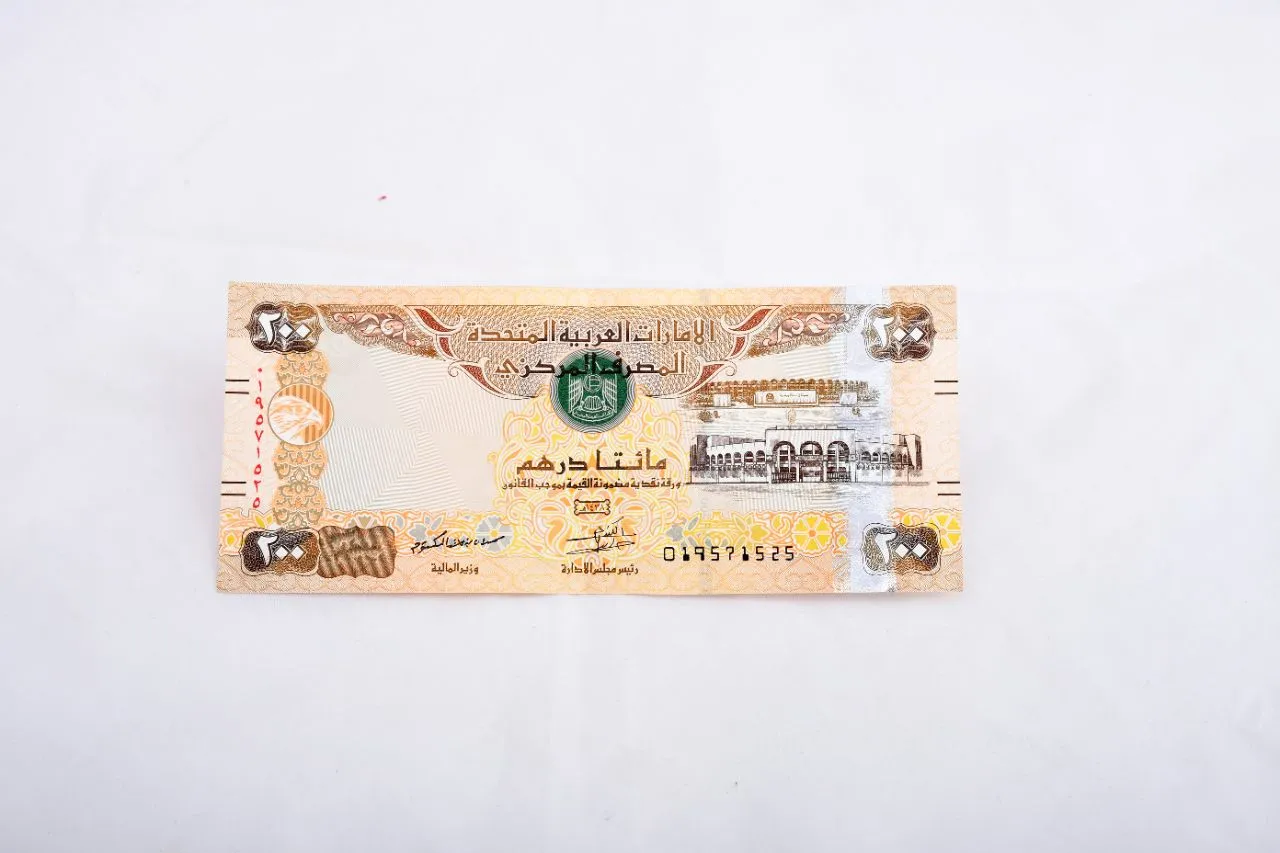
Wealthy investors in the United Arab Emirates (UAE) are warming to cryptocurrencies while largely bypassing traditional private banks, a new survey shows. The poll, conducted by Swiss wealth manager Avaloq and reported by CoinDesk, found that roughly four in 10 high-net-worth individuals in the country hold digital assets, though only about 20% used conventional wealth managers to make such allocations. The survey gathered responses from 3,851 investors and 456 wealth professionals.
https://asset.coinness.com/en/news/08e30cc0f3261d8e763c3c6d99f107ec.webp
Photo by Atikah Akhtar on Unsplash

A rising tide in crypto wealth

The findings land amid a broader run-up in crypto fortunes. Henley & Partners’ 2025 Crypto Wealth Report, published in September, estimates 241,700 crypto millionaires worldwide this year—about 40% more than in 2024. Even so, UAE respondents in Avaloq’s poll voiced caution, citing the market’s sharp swings as a primary deterrent.


Operational hurdles compound that wariness. Managing wallets, safeguarding private keys, and arranging custody remain friction points for would-be buyers. Among those who remain on the sidelines, Avaloq found that volatility topped the list of deterrents (38%), followed by limited understanding (36%) and distrust of trading platforms (32%).


Younger cohorts drive crypto uptake, advisor shifts

Family dynamics are increasingly driving crypto adoption. Younger members of ultra-wealthy households are introducing parents and grandparents to digital assets, Avaloq’s UAE survey found. Meanwhile, 63% of investors have either changed wealth managers or are considering doing so, often because they feel their questions about crypto are not being adequately addressed. Akash Anand, head of Middle East and Africa at Avaloq, described the moment as one of growing client curiosity met by a slow institutional response, prompting private banks to accelerate work on digital asset services.


Dubai’s growing role as a crypto hub will again be on display in December, when it hosts Binance Blockchain Week 2025. The two-day conference, slated for Dec. 3–4, features appearances by Binance co-founder Changpeng Zhao, Strategy Chairman Michael Saylor, Ripple CEO Brad Garlinghouse, and Solana Foundation President Lily Liu. A debate between Zhao and long-time crypto skeptic Peter Schiff on Bitcoin’s merits versus tokenized gold is also expected, after Zhao invited Schiff to participate via X.


Combined, the survey data and recent developments depict a UAE wealth market in the early stages of engagement with digital assets. While enthusiasm is building among younger investors and high-profile initiatives continue to draw attention, concerns about volatility and management complexity remain barriers to entry. The extent to which established wealth firms and new entrants can address those concerns will shape the next phase of the market’s growth.


 

More to Read
View All
Web3 & Enterprise·

Mar 26, 2025

Chainlink partners with Abu Dhabi’s ADGM on tokenization framework development

Chainlink, a prominent decentralized oracle network, has partnered with the Abu Dhabi Global Market (ADGM), a free zone and international financial center located on Al Maryah Island in Abu Dhabi in the United Arab Emirates (UAE), with a view towards further developing tokenization frameworks.Photo by Shubham Dhage on UnsplashCompliant tokenization frameworksAccording to an announcement on the ADGM website, the international financial center signed a memorandum of understanding (MOU) with Chainlink. It claimed that the collaboration marks “a major step in advancing compliant tokenisation frameworks.” Chainlink provides a suite of services. Central to that is the delivery of real-world data feeds into blockchain networks. ADGM believes that through the partnership, projects located within the free zone will be able to access this technology, while the ADGM’s Registration Authority will ensure regulatory compliance. The CEO of the ADGM Registration Authority, Hamad Sayah Al Mazrouei, said that the strategic alliance is a significant step towards ADGM leadership in blockchain innovation. He added: “By collaborating with Chainlink, we are aiming to set a global benchmark that spearheads transparency, security, and trust across the blockchain space.” The collaboration includes plans to host events and workshops aimed at educating the blockchain sector within the UAE. The two parties also aspire to the initiative, sparking greater dialogue on regulatory matters relative to blockchain, artificial intelligence and other emerging technologies. Global collaborationsThis is the latest in a long list of collaborations that Chainlink has entered into, relative to asset tokenization. In October, it partnered with Singapore’s DigiFT, an exchange dedicated to tokenized real-world assets (RWAs). The following month, it completed a pilot program alongside financial messaging service SWIFT and UBS Asset Management under the umbrella of the Monetary Authority of Singapore’s (MAS) Project Guardian. The project concerned itself with the settlement of tokenized funds. Earlier in 2024, Chainlink partnered with U.S. financial market infrastructure firm DTCC on the Smart NAV pilot project. The initiative centered on the creation and issuance of tokenized funds, counting JPMorgan, State Street, BNY Mellon, Invesco and Franklin Templeton among its participants. In the UAE, Chainlink has been added as a member of the Digital Asset Lab of one of the country’s largest banking groups, Emirates NBD. For its part, the ADGM has also been on the front foot with regard to tokenization initiatives. Its Regulatory Authority has established a regulatory framework with regard to asset tokenization, with an emphasis on investor protection. In October of last year, RWA tokenization platform Realize launched the financial center’s first tokenized U.S. treasury bill fund. At the time, the ADGM said that the development highlighted an objective for the region in becoming the global market leader where RWA tokenization is concerned. The ADGM began operations in 2015 with its own legal system. As of the end of 2024, the financial center hosted 134 fund and asset managers. Market maker and Web3 investment firm DWF Labs moved its headquarters from Singapore to Abu Dhabi’s ADGM at the end of last year, citing the goal of wanting to expand tokenized RWA-based projects as one of the reasons for the move.

news
Markets·

May 23, 2024

Japan’s largest bank collaborates with KlimaDAO on carbon credit marketplace

Japan’s largest bank, MUFG, has teamed up with KlimaDAO Japan, the provider of a digital reserve currency backed by carbon credits, to explore the use of the JPYC stablecoin for settling tokenized carbon credit transactions on the Progmat blockchain platform. Settlement on ProgmatProgmat provides the infrastructure to enable the issuance of various stablecoins. Last September, MUFG announced a collaboration with Binance geared towards stablecoin issuance. The JPYC stablecoin, operational since 2021, functions as a prepaid money instrument, similar to a prepaid card, due to its existence before Japan’s stablecoin legislation. Under new regulations, JPYC can either obtain a money transmitter license or issue a trust-style stablecoin with a bank like MUFG acting as the trustee for the stablecoin's reserves. Last year, JPYC formed a partnership with MUFG implicating the use of the Progmat platform.  This partnership, along with the involvement of Kansai Electric subsidiary Optage as the integration partner, sets the stage for the KlimaDAO stablecoin experiments. Optage will provide the corporate infrastructure required to manage the carbon credits added to the blockchain and provide a means for funds settlement to be achieved via bank transfer. Through the use of various local stablecoins for the purpose of settlement, it’s hoped that improved liquidity on a global basis may be achieved.Photo by Dan Meyers on UnsplashInitially recognized for making tokenized carbon credits accessible on public blockchains, KlimaDAO's functionality extends beyond this. The organization also offers the capability to retire credits. Last year, KlimaDAO expanded its reach by launching Carbonmark, an enterprise-focused marketplace.  This platform, which utilizes blockchain technology, namely Polygon, and smart contracts, offers a user-friendly experience by integrating traditional payment methods like bank transfers and SAP integration.  J-CreditsJapan operates a national scheme known as J-credits, and the Tokyo Stock Exchange has introduced a secondary market for these credits. J-credits are designed to certify the amount by which greenhouse gas emissions have been reduced through the use of carbon sinks in Japan. However, the volume of J-credit transactions remains low, reflecting the broader state of Japan's voluntary carbon market.  KlimaDAO aims to address this by launching the KlimaDAO Japan Market, simplifying the process for domestic companies to purchase and utilize carbon credits. This initiative will involve tokenizing J-credits, referred to as D-Carbons.  Andrew Bonneau, KlimaDAO co-founder, outlined on X that “@KlimaDAO is in a unique position to facilitate an efficient J-Credit market on chain, while serving as the base infrastructure for integrating these assets with 3rd party services.” While the initial phase will use traditional bank payments, the ultimate goal is to transition to using stablecoins, particularly the JPYC stablecoin. Norbert Gehrke, an observer of developments within the Japanese fintech scene, outlined on Medium that the Japanese carbon credit market is likely to reach three trillion yen ($19.15 billion) by 2030. Meanwhile, the global carbon credit market has a current value of 39 trillion yen ($249 billion). KlimaDAO Japan has mentioned the use of a permissionless blockchain for this initiative but has fallen short of confirming that the Polygon network will be relied upon. Japan has several homegrown blockchains, which might be considered for this project.  At the time of writing, the KLIMA token had risen 31% over the course of the previous 24 hours, with a unit price of $3.53 according to CoinGecko. 

news
Web3 & Enterprise·

Jan 13, 2024

Pontem secures funding to pioneer Move-compatible apps

Singapore-based startup Pontem, a Web3 product development studio, has successfully raised $6 million in a recent funding round. Broad venture capital participationThe firm announced details of the funding round via a press release published on Thursday.  The round was co-led by Faction and Lightspeed Venture Partners. The financing includes participation from notable contributors such as Pantera Capital, Aptos Foundation, market maker Wintermute, Singaporean trading firm Altonomy, Shima Capital and Kraken Ventures. This latest capital infusion brings Pontem's total raised funds to $10.5 million, building upon the $4.5 million secured in June 2021 through a private token sale led by Mechanism Capital, Kenetic Capital, Delphi Ventures and Hong Kong’s Animoca Brands.Pepi Stojanovski on UnsplashExpanding Move utilityThe primary focus of the funds is to empower developers in creating applications that are compatible with both the Ethereum Virtual Machine (EVM) and Move, expanding the utility of the Move programming language beyond its current usage on the Aptos and Sui blockchains. Move is a rust-derived programming language which was originally developed by Facebook with the intention of using it to power the Diem blockchain, prior to the company abandoning the project. It’s a platform-agnostic language designed for the writing of safe smart contracts. It distinguishes itself from the EVM's Solidity language by enhancing throughput through parallel processing. Pontem contends that Move is particularly appealing to Web2 developers from traditional finance and tech sectors due to its similarity to familiar static-type languages. Pontem envisions breaking the temporary vendor lock-in associated with the EVM, offering developers a versatile programming language that supports the security and scalability required for widespread adoption. Alejo Pinto, co-founder of Pontem, highlighted the objective of utilizing the capital influx to increase the usage of Move beyond the Aptos and Sui blockchains, providing dApp teams with a programming language that facilitates the addition of new features, promoting security and scalability. Pinto emphasized that Pontem seeks to address the vendor lock-in issue on Ethereum, enabling easier entry for Web2 developers and fostering their confidence in the decentralized space. Banafsheh Fathieh, Partner at Faction, praised Pontem's role in building critical primitives for the Move ecosystems. Pantera Capital Managing Partner Paul Veradittakit expressed excitement about investing in Pontem, recognizing the team's efforts in constructing essential financial and technical infrastructure to attract consumers and developers to the decentralized web. Lumio Layer 2The allocated capital is earmarked for developing Move Virtual Machine products on EVM-compatible blockchains like Ethereum. This includes Lumio, a Move-based Layer 2 solution which the company introduced in December. It operates as an optimistic rollup on Ethereum and leverages alternative Layer 1s like Aptos to process transactions. Pontem disclosed that products deployed on Aptos, such as the Pontem Wallet and Liquidswap DEX, have gained significant traction with 40,000 weekly active users and up to $1 million in daily volume. Looking ahead, Pontem envisions extending its support to the Solana Virtual Machine and other blockchain languages, underscoring its intention to provide a comprehensive development environment for decentralized applications. The funding secured in this round signifies a crucial step for the fledgling company in advancing the compatibility and accessibility of the Move programming language within the broader blockchain ecosystem. 

news
Loading