Top

StanChart CEO predicts blockchain will replace cash in everyday finance

Markets·November 05, 2025, 6:18 AM

Bill Winters, the American banker who heads the British financial group Standard Chartered, appeared at the Hong Kong FinTech Week conference earlier this week, where he predicted a future in which cash will give way to blockchain-based systems for everyday transactions.


According to Cointelegraph, Winters’ view aligns with that of Hong Kong regulators. At the same time, he stressed the importance of continued experimentation, noting that it remains uncertain how this transformation will ultimately take shape. Winters also commended Hong Kong’s leadership in exploring the potential of digital finance.


Tech-driven finance has certainly been one of the key initiatives Hong Kong has been exploring. Recently, the Hong Kong Monetary Authority (HKMA) released its e-HKD Pilot Programme Phase 2 Report, which showed public support for tokenized deposits.

https://asset.coinness.com/en/news/882f1a1655bf1dd9acbc19e6026652dd.webp
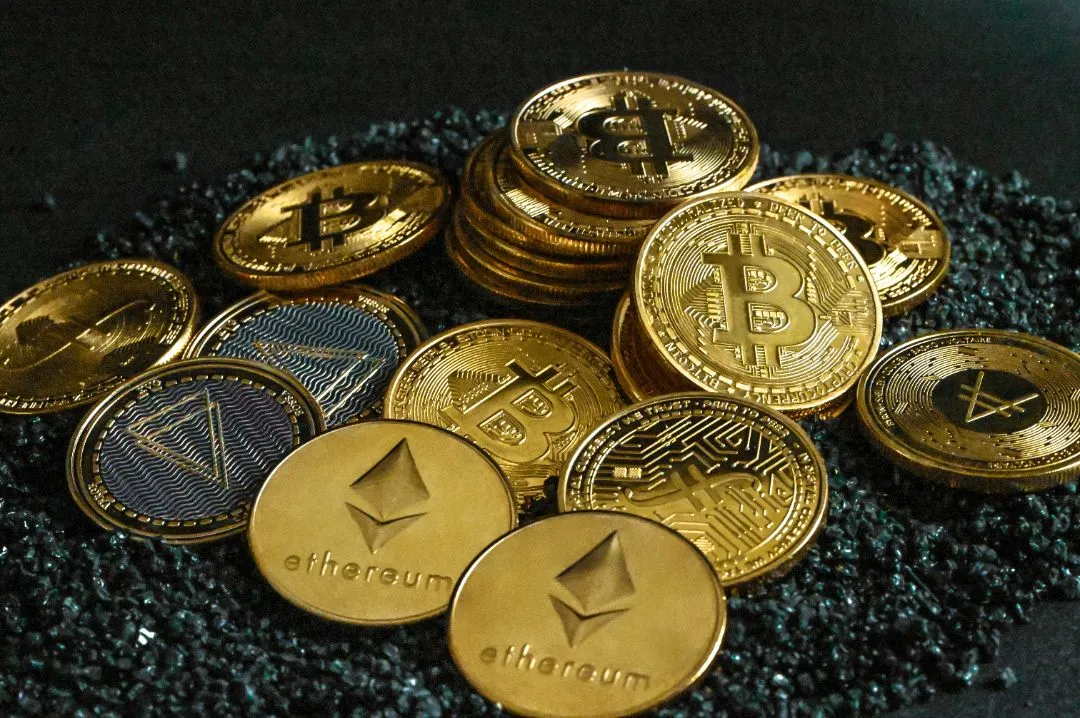
Photo by Shubham Dhage on Unsplash

Real-world assets gain ground on the blockchain

On-chain data also underscores the rapid growth of the tokenization sector. According to RWA.xyz, the total value of real-world assets (RWAs) deployed on-chain has climbed to $35.63 billion, up 7.8% from a month ago. A study by Ripple and Boston Consulting Group (BCG) estimates that tokenized assets could be worth $19 trillion by 2033, about 530 times their current value.


Among RWA assets, the BlackRock USD Institutional Digital Liquidity (BUIDL) Fund, Tether Gold (XAUT), and Paxos Gold (PAXG) currently lead the market in terms of value. Over the past 30 days, BlackRock’s BUIDL Fund slipped 0.06%, while the two tokenized gold products, XAUT and PAXG, jumped 46.65% and 14.19%, respectively.


These gains mirror gold’s bullish run in October, when its price surpassed $4,000 per ounce for the first time on Oct. 7. The momentum has since eased slightly, with gold now trading at around $3,969.55 per ounce.


Tokenization brings 24/7 markets and P2P flexibility

Industry experts point to the convenience of tokenization as a key advantage. Speaking to Yahoo Finance, Will Peck, head of digital assets at WisdomTree, explained that tokenized gold allows for around-the-clock trading and direct peer-to-peer (P2P) transactions. He added that gold and Bitcoin act as complementary stores of value, both serving as deflationary assets.


Ian Kane, CEO of fintech company Firepan, said tokenized gold appeals to investors as it enables them to retain ownership, leverage their holdings for loans, and generate extra yield, while preserving their principal against debasement or devaluation.


These views are not new. Earlier this month, Robinhood Markets CEO Vlad Tenev described tokenization as “a freight train” that “can’t be stopped,” predicting it will eventually transform the global financial system. Similarly, in his annual letter to investors in April, BlackRock CEO Larry Fink said the tokenization of assets could fundamentally reshape the way people invest. By digitizing ownership, tokenized venture capital funds could move beyond their closed circles, giving ordinary investors a stake in early-stage innovation and greater control over their capital.


Venture capital faces hurdles in tokenization push

While tokenization promises greater accessibility and liquidity, not all market segments are ready for it. According to TheStreet, tokenized venture capital (VC) funds could open a traditionally closed market to more investors, but the process is more complex than it appears.


In an interview with TheStreet, Elena Obukhova, founder of Supermoon Ventures, said that liquidity, not technology, is the main obstacle. Unlike tokenized company shares that can be traded freely on public markets, VC funds invest in private startups whose value may take years to materialize through an exit or acquisition. Allowing such funds to trade freely could increase volatility and pressure founders, as interim valuations might distort perceptions and weaken confidence in early-stage ventures.


Still, the promise of tokenized venture finance remains within reach. Firms are testing models that limit trading periods, protect investor data, and refine valuation methods to better reflect the illiquid nature of startup investments. Since liquidity events such as initial public offering (IPOs) or acquisitions typically occur only every one to two years for early-stage startups, the path forward will depend on creating systems that can maintain stable and accurate valuations in the interim.


Tokenization is rapidly emerging as a transformative force in the financial world, offering greater accessibility, liquidity, and efficiency. As more assets, from gold to venture capital, make their way onto the blockchain, the potential to reshape investment and trading markets grows. While challenges remain, particularly around liquidity and valuation in sectors like venture capital, the continued advancements in tokenization demonstrate its key role in the future of finance.

More to Read
View All
Web3 & Enterprise·

Jul 25, 2023

Wemade CEO Encourages Japanese Game Developers to Embrace Blockchain

Wemade CEO Encourages Japanese Game Developers to Embrace BlockchainHenry Chang, the CEO of South Korean gaming company Wemade, delivered a speech on Tuesday at the annual Japanese Web3 conference, WebX, in Tokyo to encourage Japanese game developers to venture into the blockchain industry.Photo by Louie Martinez on UnsplashIntegration of economies and gameplayChang expressed his belief that the integration of economies and gameplay across various games can be achieved through blockchains and non-fungible tokens (NFTs). He emphasized that this combination is innovative in the sense that it overcomes three significant barriers in the gaming world: giving users ownership of in-game assets, creating connections between different games, and tearing down the boundary between games and reality.Chang predicted that all games would evolve into blockchain-based games within the next three years. He presented WEMIX Play, the company’s blockchain game platform, as being fully equipped to support such a transition, with all the necessary features to provide blockchain game services.In a significant move towards realizing this vision, WEMIX Play has recently inked onboarding contracts with two gaming firms. One of them is MetaTokyo Studio, a game developer based in Japan, and the other is Skyjet Software, a Lithuania-based game publisher. WEMIX Play users will soon have the exciting opportunity to enjoy MetaTokyo Studio’s futuristic science fiction game, Chromata, and Skyjet Software’s thrilling 3D helicopter shooting game, Skybreakers.Prime Minister Kishida’s speechNotably, the event also saw a video speech from Japanese Prime Minister Fumio Kishida, who expressed his enthusiasm for Web3 and its potential to revolutionize society by innovating the existing Internet framework. According to Minister Kishida, the Japanese government is committed to fostering an environment conducive to Web3 initiatives.The Japanese Prime Minister further anticipated that the WebX conference would lead to enhanced business cooperation between Japanese and foreign companies. He also highlighted that leading Japanese firms would unveil major projects aimed at establishing valuable economic zones within the metaverse.

news
Web3 & Enterprise·

May 13, 2024

Coinbase Wallet and TransFi partnership expands crypto accessibility in Asia

TransFi, renowned for its global payment solutions, is collaborating with Coinbase Wallet to streamline the process of purchasing cryptocurrencies, with a particular focus on enhancing user experience in Asia.Photo by Traxer on UnsplashFacilitating seamless onboardingBy integrating with Coinbase Wallet, TransFi aims to simplify the onboarding process for businesses and individuals, ultimately fostering greater adoption of cryptocurrencies in the region. This strategic integration is designed to eliminate barriers to entry and make cryptocurrency transactions more efficient and accessible. Enhanced payment options across AsiaIn a significant move, users in the Philippines, Vietnam and Indonesia now have access to expanded payment options through Coinbase Wallet. In the Philippines, GCash and PayMaya, popular digital payment platforms, have been integrated, while Vietnam sees the addition of Viet QR, Momo and Viettel Pay. Indonesian users can utilize OVO and Dana, leading payment apps in the country. These partnerships leverage existing, widely-used payment infrastructures to provide users with more convenient avenues for purchasing cryptocurrencies. The expansion into the Asian market reflects the growing demand for cryptocurrencies in the region and highlights Coinbase's commitment to broadening its reach by collaborating with local payment services. This trend underscores the increasing integration between crypto platforms and local payment solutions, signaling a positive trajectory for cryptocurrency adoption across Asia. 

news
Policy & Regulation·

Jul 14, 2023

Busan City Aims to Cultivate Growth in Blockchain and Fintech Industries

Busan City Aims to Cultivate Growth in Blockchain and Fintech IndustriesThe South Korean Ministry of SMEs and Startups (MSS) convened a meeting at the Korea Technology Finance Corporation today to address issues related to emerging industries, including blockchain and fintech, and devise strategies for their growth in Busan, a city rapidly establishing itself as a global hub. That’s according to a report by local news media News1.Photo by Minku Kang on UnsplashBlockchain, fintech, and hydrogenThe meeting saw the presence of MSS Minister Lee Young, Lawmaker Park Soo-young, Busan government officials, and university representatives. Local business leaders specializing in blockchain, fintech, and hydrogen also attended to provide their opinions.During the meeting, two presentations were delivered, each focusing on key policies. The first presentation outlined Busan’s strategic initiatives aimed at bolstering the finance and hydrogen sectors. The second presentation detailed the plans of the MSS’ Busan branch to support innovative enterprises.Following the presentations, local businesses put forth additional ideas pertaining to the policies. Minister Lee presided over a 100-minute discussion, facilitating an in-depth exploration of these ideas and extracting valuable insights. The proposed ideas encompassed mid-to-long-term strategies aimed at strengthening the connections between innovative firms, streamlining inspection standards for hydrogen containers, and promoting systematic research and development to address the sluggish adoption of new services in the fintech industry.Government’s visionExpressing the government’s commitment, MSS Minister Lee stated that up to ten global innovation clusters will be established across the nation by 2027, accompanied by expanded R&D support for new technologies. She called upon local governments and businesses to collaborate and spearhead innovation in the region.Meanwhile, in February, the MSS implemented a regulatory forecasting system to provide small businesses with advance notice of forthcoming regulations and gather their opinions for consideration. Additionally, the MSS intends to select two municipalities outside of the Seoul metropolitan area by October to enable businesses to drive innovation with minimal regulatory barriers.Busan’s blockchain driveBusan has been actively promoting blockchain initiatives through various events. An example of such an event, as reported by local news outlet Erounnet, is an upcoming three-day educational program on blockchain technology, organized by the Busan Creative Economy Innovation Center. The program will take place from July 25 to 28, followed by another event scheduled for September.

news
Loading