Top

Japan eyes 20% crypto tax rate by 2025 in major regulatory shift

Policy & Regulation·September 04, 2024, 3:50 AM

Japan’s financial sector is poised for a significant change as the Financial Services Agency (FSA) unveils new tax reform guidelines for fiscal year 2025. This marks the first time virtual currency transactions will be addressed within Japan's tax framework, signaling a pivotal shift in the country’s stance on cryptocurrency taxation.


Current taxation issues

Presently, Japan imposes a maximum tax rate of up to 55% on cryptocurrency revenues, a figure that has been criticized for deterring investment in the growing crypto market. Crypto profits are taxed as miscellaneous income, with the highest rate applying to earnings over 200,000 Japanese yen. Corporate holders of crypto assets face a flat 30% tax on their holdings, irrespective of their income or profits. These high tax rates contribute to Japan's relatively low cryptocurrency adoption rate, placing the country 18th in the 2023 Global Crypto Adoption Index by Chainalysis.

https://asset.coinness.com/en/news/8a2eabeaa04eaa0a8bc919822715f748.webp
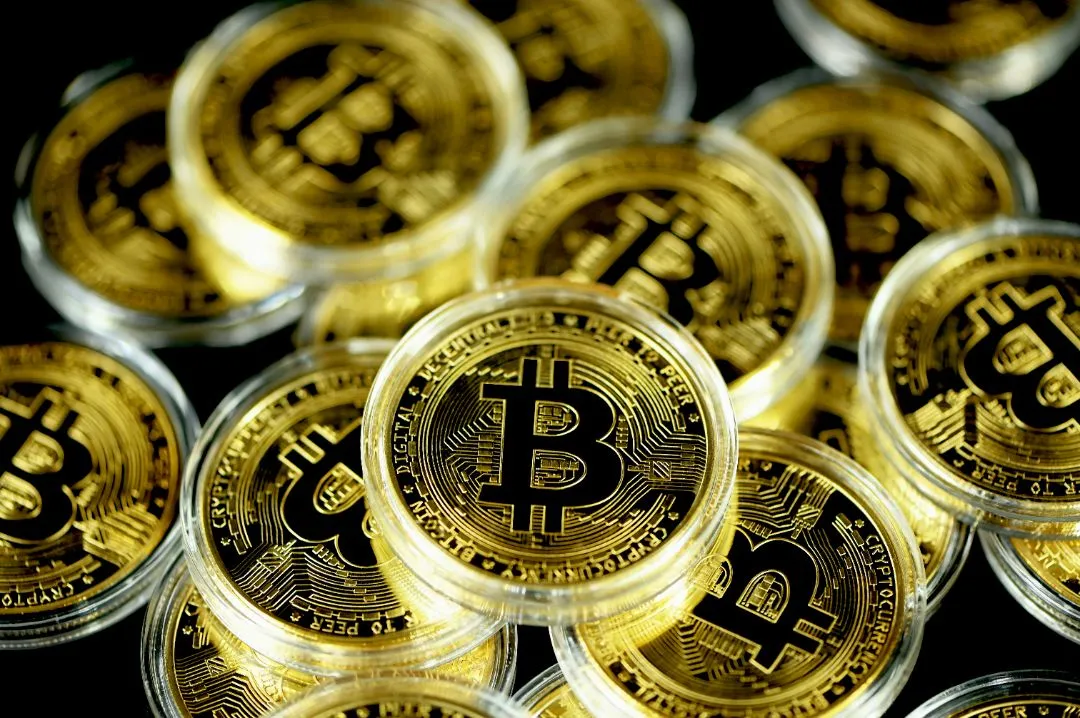
Photo by Tobias Wilden on Unsplash

In response to rising demands from both investors and businesses, there is strong advocacy for a more favorable tax structure. The new proposal suggests reducing the crypto tax rate to 20%, aligning it more closely with the tax rates applied to traditional financial assets like stocks. This reform is viewed as essential for rejuvenating the industry, especially given Japan’s increasing engagement with cryptocurrencies.


Japan's interest in cryptocurrencies extends beyond individual investors. Major institutions are making notable advancements in the field. Ripple, a key player in the crypto space, has teamed up with over 50 Japanese financial institutions to develop a new payment infrastructure leveraging blockchain technology. Meanwhile, private companies like Metaplanet are also expanding their crypto investments, recently securing a loan of 1 billion Japanese yen ($6.8 million) at an annual percentage rate of 0.1%. 


Impending tax changes

The FSA's decision to include crypto assets in the 2025 tax reform proposal represents a significant departure from previous reluctance to formally recognize the industry. The proposed changes would expand loss offset provisions, potentially aligning crypto assets with the tax treatment of public bonds and listed stocks. This adjustment could offer relief to investors by allowing them to offset losses against their crypto gains.


Despite these promising developments, the implementation of these proposals remains uncertain. A previous proposal to reduce the crypto tax burden has failed to produce policy changes. Nevertheless, the inclusion of crypto assets in the FSA’s reform agenda is a positive step toward a more supportive regulatory environment.


Japan’s current high tax rates contrast sharply with other crypto-friendly regions in Asia. For instance, the United Arab Emirates (UAE) has become a major hub for crypto businesses by imposing no taxes on crypto profits. Similarly, countries like Hong Kong, Singapore, Thailand and Indonesia have attracted significant crypto activity due to their progressive regulations and lower tax rates. Conversely, India’s 30% flat tax on crypto has prompted many companies to relocate to more favorable jurisdictions such as Dubai.


As Japan considers transitioning to a more crypto-friendly tax regime, there is cautious optimism about its potential impact on the industry. If successfully implemented, the proposed changes could boost adoption and growth, making Japan a more appealing location for crypto businesses and investors. The ultimate effect will depend on the government’s reception and execution of these proposals in the coming years. For now, the inclusion of crypto assets in the tax reform agenda marks a promising step toward a more balanced and supportive regulatory landscape for the cryptocurrency industry in Japan.


 

More to Read
View All
Web3 & Enterprise·

Apr 20, 2023

Koscom Partners with LG CNS to Develop Joint Security Token Platform

Koscom, the technology subsidiary of the nation’s sole securities exchange operator Korea Exchange, has partnered with LG CNS, an information technology service provider, to launch a joint security token platform, according to a Koscom announcement. Task and tech allianceThe collaboration between Koscom and Korean conglomerate LG Group’s affiliate aims to gain a competitive advantage in the increasingly crowded security token market. On Monday, Koscom signed a memorandum of understanding with LG CNS in Seoul to form a task and technology alliance for security token projects.The partnership will combine Koscom’s expertise in building tech-based capital market infrastructure with LG CNS’s blockchain technology to produce fruitful outcomes. The joint project intends to provide distributed ledgers and a joint platform for the issuance and distribution of security tokens. Securities firms operating their own platforms can also choose to use its distributed ledgers. Koscom’s preparationSince last year, Koscom has been conducting research in security token offering and has formed a working group with eight securities firms that have their own security token teams. The working group has been hosting seminars regularly since the second half of last year, and on April 4, Koscom revealed its project plan to 25 other Korean securities firms. LG CNS’s readinessLG CNS has been conducting research and development of security token technologies since last year and has complied with the Korean regulatory framework. The company manages a consortium blockchain network and has completed the development of key technologies for security token services, such as highly secure wallets.Using its corporate blockchain platform Monachain, LG CNS has achieved success in developing multiple projects, such as a pilot for central bank digital currencies involving NH Bank and Woori Bank and a non-fungible token (NFT) trading system for Bithumb Meta, a subsidiary of the major Korean crypto exchange Bithumb.Meanwhile, Koscom will support security token projects of not only securities companies but also fractional investment firms and banks. Currently, Koscom is in talks with relevant entities about building infrastructure.

news
Web3 & Enterprise·

Aug 31, 2024

WazirX seeks moratorium as it looks to restructure its liabilities

Zettai Pte Ltd., the Singapore-based holding company that controls Indian crypto exchange WazirX through its subsidiary Zanmai India, has filed an application for a moratorium with the Singaporean High Court, under section 64 of the Insolvency, Restructuring and Dissolution Act 2018. Six months requestedIn the filing (HC/OA 861/2024), the company has pleaded with the court to be granted a six-month moratorium, which would give the firm the space and time needed to restructure its liabilities. The company laid out details of its moratorium application in a blog post published to its website on August 28. The firm outlined that a moratorium represents “ the most efficient way to address users’ cryptocurrency balances on the Platform and facilitate recovery for users.” An automatic moratorium of 30 days has effectively been granted as a consequence of the application itself, and it is up to the court if it approves the six-month moratorium that is being sought. A date for the hearing of that matter has yet to be scheduled.Photo by Palu Malerba on Pexels$234 million hack falloutWazirX has been dealing with the fallout from a $234 million hack which occurred in July. One key entity that is owed funds is Indian crypto app CoinSwitch. In an effort to get its funds back, the company has sued WazirX. Taking to the X social media platform, CoinSwitch outlined why it felt the need to take legal action. It stated: "From the day of the incident, we have tried to be in constant touch with the WazirX team, seeking recovery of the funds that are stuck on their exchange. However, our efforts have not come to fruition." In a follow-up tweet, CoinSwitch assured its own users that its exposure to WazirX has no impact on user balances. The company has WazirX exposure that amounts to 2% of its overall user funds. That exposure is reduced further if WazirX’ claim that only ERC-20 tokens were affected is taken on board, accounting for 1% of CoinSwitch user deposits. White KnightWazirX co-founder Nischal Shetty spoke to the notion of a “white knight” in an affidavit submitted under the Zettai name to support the application. He outlined that WazirX is in talks with 11 crypto exchanges and has signed three non-disclosure agreements (NDAs). The company has also received offers for financing and for partnering with Zettai, the WazirX parent company. WazirX has outlined that it has set aside $12 million in digital assets to cover legal and associated costs that the company anticipates incurring as part of its restructuring efforts. Matters are further compounded by the fact that a cloud hangs over the ownership of the company. Shetty has claimed that he is no longer an owner of the exchange. In 2022, he wrote that Binance had acquired WazirX. Around the same time frame, Binance’s Changpeng Zhao (CZ) outlined that Binance didn’t control WazirX systems.  India’s economic intelligence agency, the Enforcement Directorate, has claimed in the past that Shetty has gone out of his way to obscure the ownership structure by way of a complex chain of companies in Singapore.

news
Markets·

Sep 21, 2024

Hong Kong leads East Asia in crypto transaction growth

An analysis of data recently published as part of Chainalysis’ Global Cryptocurrency Adoption Index demonstrates that Hong Kong has recorded a year-on-year crypto transaction value growth rate of 85.6%.  On that basis, the territory accounts for the sixth-largest crypto economy in the world. Furthermore, Hong Kong ranks 30th in terms of global crypto adoption. That’s an improvement of 17 places, as it was ranked 47th in 2023. Regulatory framework aiding crypto adoptionAn excerpt from the 2024 Geography of Cryptocurrency Report by Chainalysis was published on September 18. It found that the steps taken in the Chinese autonomous territory in terms of laying down a regulatory framework for digital assets has led to this uptick in transactional activity, due to the increased adoption of digital assets by institutions.  Over the course of the past eighteen months, Hong Kong has launched crypto trading licensing. Earlier this year, exchange-traded funds (ETFs) were given the green light, with the subsequent launch of Bitcoin and Ethereum ETF products.  On the topic of ETF’s, Kevin Cui, CEO of digital asset trading platform OSL said that “as market conditions improve, we are seeing indications of a growing institutional interest that could lead to increased capital inflows in the near future.” Meanwhile, the Chinese autonomous territory is working towards the establishment of regulations that cover the issuance and trading of stablecoins.lil artsy on PexelsHong Kong key to Chinese crypto resurgenceIn terms of crypto adoption, mainland China ranked 11th this year, dropping down one place by comparison with last year. The report notes the complicated history China has had with cryptocurrency in recent years, given that a crypto trading ban remains in place. However, last year’s report pointed to the strong usage of centralized crypto exchanges by mainland China residents, which suggests that the ban has either been ineffective or poorly enforced.  The Chainalysis report speculates that “Hong Kong may finally influence China to re-open its doors to crypto.” This is not the first time that Chainalysis has made such an assertion. In last year’s report, it made a similar claim, suggesting that the development of Hong Kong as a crypto industry hub would lead to a softening in the stance of mainland China towards crypto. This year’s report suggests that mainland China residents have turned to over-the-counter (OTC) platforms in order to access crypto as a means towards preserving their wealth. The report quoted Ben Charoenwang, associate professor of finance at the INSEAD Asia Campus as stating: “Nowadays, if you want to move money out of China through traditional unofficial means like using mules, fees can be as high as 25 to 30 percent. The increasing use of OTC crypto in China suggests that people are looking for faster options to move money.” The report finds that five of the top 50 grassroots adopters of crypto, South Korea, China, Japan, Hong Kong and Taiwan, are located in East Asia. South Korea leads the region in terms of the most crypto value transacted metric. Chainalysis suggests that South Korea’s strong interest in altcoins signals that it will remain a leader in the region from a cryptocurrency innovation perspective.

news
Loading