Top

Coincheck to become first Japanese crypto exchange to list on Nasdaq

Web3 & Enterprise·November 15, 2024, 1:36 AM

Coincheck, a subsidiary of Monex Group, a Tokyo-based global financial services firm, has gained U.S. Securities and Exchange Commission (SEC) approval to become the first Japanese crypto exchange to list on the Nasdaq, an American stock exchange.

https://asset.coinness.com/en/news/6ad966bb2b3d845b8112c6f76d33325e.webp
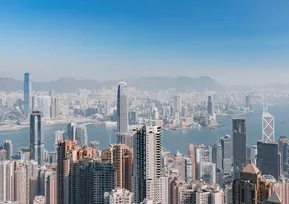
Photo by Denys Nevozhai on Unsplash

SPAC merger

The approval by the U.S. regulator was filed on Nov. 13. The listing has been enabled due to the company’s decision to enter into a merger with a special purpose acquisition company (SPAC), namely Thunder Bridge Capital Partners (TBCP). 


A SPAC raises money through an initial public offering (IPO) to either acquire or merge with an existing company. Opting for a SPAC means that Coincheck can forego a lot of the time and expense that would be necessary if it attempted to effect an IPO on its own.


Parent company Monex Group published a statement outlining that Coincheck CEO Yuko Seimei had “been diligently preparing for listing its common stock on the Nasdaq Global Market (“Nasdaq”) through a previously announced business combination with Thunder Bridge Capital Partners.”


Possible Nasdaq listing on Dec. 10 

In a press release issued by TBCP, the company claimed that the proposed merger is anticipated to close on or about Dec. 10, 2024. That eventuality is subject to stockholder approval, Nasdaq approval and specific closing conditions. Consequently, Coincheck’s Nasdaq listing could potentially happen as early as Dec. 10. TBCP is holding a shareholder vote on the merger on Dec. 5.


If all conditions are satisfied to pave the way for listing, the company’s stock will be listed using CNCK as the Nasdaq stock ticker.


Once the merger and Nasdaq listing have been accomplished, Coincheck will still remain a subsidiary of Monex Group. The merged business will gain access to $237 million, held in trust by TBCP, with Monex retaining an 82% stake in the company. Furthermore, Thunder Bridge CEO Gary Simanson will lead the new company.


The $1.25 billion merger had been in the works since 2022, having faced multiple delays on the path towards merger completion and Nasdaq listing. Coincheck finally filed with the SEC to merge back in May.


Parent company Monex has other interests in the digital asset sector beyond its involvement with Coincheck. Last December the company acquired a majority stake in 3iQ Digital Holdings, a Canadian crypto asset management company.

Monex has just launched a new brand, Monex Web3, comprising of Monex’s Web3 business portfolio. It also offers a Web3 consulting business, using its local know-how to guide Web3 startups in entering the Japanese market.


Coincheck has also engaged in partnerships to assist other firms in gaining access to the Japanese market. Earlier this year the leading Japanese crypto exchange partnered with USD Coin (USDC) stablecoin issuer Circle, in an effort to expand USDC access within the local market.


In January 2018 the exchange suffered what was at the time the world’s largest ever digital asset theft, losing $534 million in virtual assets in a hack of the platform.

More to Read
View All
Web3 & Enterprise·

Nov 09, 2023

Hong Kong licensing success sees SEBA Bank expand APAC crypto presence

Hong Kong licensing success sees SEBA Bank expand APAC crypto presenceSwitzerland-based SEBA Bank AG has taken a significant step in its global expansion strategy by securing a license from Hong Kong’s Securities and Futures Commission (SFC) to manage traditional securities and digital assets through its subsidiary, SEBA Hong Kong.Photo by Ruslan Bardash on UnsplashFirst move into APAC for crypto businessSEBA Hong Kong published a statement on Wednesday to announce the milestone. It marks the crypto-centric bank’s maiden entry into the Asia-Pacific (APAC) region and expands its footprint across three regulated hubs, including Switzerland and Abu Dhabi.The acquisition of the digital asset license from the SFC provides SEBA Bank with the ability to offer regulated services pertaining to digital assets, encompassing both virtual assets and securities. The move is seen as a reflection of SEBA’s confidence in the long-established capital markets and strong appetite for investment and trading in Hong Kong.SEBA Hong Kong’s CEO, Amy Yu, expressed her enthusiasm, stating:“We are tremendously excited by Hong Kong’s deep-rooted capital markets and appetite for investment and trading; to have secured this license from the SFC provides enormous potential for our business, owing to the well-established and defined regulatory framework that is present here.”Opening up OTC derivatives possibilitiesThe license grants SEBA Bank the authority to engage in a wide range of regulated activities related to traditional securities and digital assets within Hong Kong. This includes dealing with and distributing all types of securities, including virtual asset-related products like over-the-counter (OTC) derivatives.What is likely to give SEBA Bank’s licensed services the upper hand is their accessibility to a diverse clientele, including institutional investors, corporate treasuries, funds, family offices and high-net-worth individuals. The aim is to cater to a broad spectrum of clients seeking exposure to the digital asset landscape, from sophisticated institutional investors to individuals with substantial assets.This milestone comes after SEBA’s previous in-principle approval (AIP) for virtual asset trading services, granted in August. The full approval allows SEBA Bank to significantly broaden its product and service offerings in Hong Kong, contributing to the wider adoption of cryptocurrencies and digital assets in the region.Franz Bergmueller, Chief Executive Officer of SEBA Bank, highlighted the significance of this regulatory achievement, not only for the bank but for Hong Kong’s position as a global financial services hub. He stated:“This regulatory clarity not only benefits our business but also supplements Hong Kong’s status as a global financial services hub. The region’s robust legal system provides a solid foundation to conduct crypto-related services, and we look forward to beginning that from today.”The regulatory breakthrough achieved by SEBA Bank in Hong Kong aligns with the broader trend of evolving and expanding regulations in the digital asset space within the region. Hong Kong has been progressively adapting its regulatory landscape to accommodate the growth of digital assets.SEBA Bank’s move also echoes the welcoming environment for crypto firms in Hong Kong. As Standard Chartered-backed Zodia Custody recently announced plans to launch its services in the city, it underscores Hong Kong’s emergence as a prominent player in the APAC region. SEBA's presence in Hong Kong not only strengthens the region’s stature as a global financial services hub but is also suggestive of its interest in fostering the growth of the digital asset industry within the Chinese autonomous territory.

news
Policy & Regulation·

Jun 05, 2023

South Korea to Revive Tech Exports with Metaverse, Blockchain

South Korea to Revive Tech Exports with Metaverse, BlockchainThe South Korean Ministry of Science and ICT revealed today a strategy to enhance the country’s tech exports. The plan includes leveraging the potential of the metaverse and blockchain as promising export items.Photo by Pixabay on PexelsEmphasis on the digital sectorIn response to the recent decline in exports, the strategy seeks to establish new sources of growth by prioritizing the digital sector, which has historically been a key driver of Korea’s exports. Recognizing the complex challenge posed by the global economic slowdown and other factors, all government ministries are collaborating to counteract the export slowdown.The plan leverages South Korea’s digital capabilities and implements proactive measures to adapt to evolving export trends, including the recent advancement of generative artificial intelligence (AI) tools and the acceleration of digital transformation. By tapping into emerging markets and nurturing innovative companies, the government strives to diversify its export portfolio and strengthen its position in the global market.Despite achieving a record high of $248.8 billion in tech exports in 2022, Korea has faced year-on-year declines since July 2022 due to the global economic downturn. The semiconductor sector, which accounts for more than half of the nation’s tech exports, has been particularly sluggish. Nevertheless, the rise of new tech markets driven by significant technological advancements, such as ChatGPT, and the global push for digital transformation offer opportunities to overcome the current export slump.Emerging marketsAgainst this backdrop, the government is committed to backing the development of products that resonate with the evolving export landscape. It is eyeing emerging markets, notably the Middle East, Southeast Asia, and Latin America, recognizing their fertile grounds for the swift adoption of evolving tech trends, fueled by their substantial youth populations. Furthermore, the government plans to provide policy-level support to tech companies.Government supportUnder this plan, the government will identify promising companies and offer assistance, including consultation and guidance on product commercialization. It will also support metaverse companies participating in overseas projects by covering localization development costs.In the blockchain field, comprehensive support, including technology verification, consulting, and marketing, will be provided to those working towards international standardization for NFTs and their overseas commercialization.As part of this initiative, exhibition rooms will be established on metaverse platforms like ZEPETO and IFLAND in September. These platforms will provide opportunities for innovative firms to showcase their products. At the same time, the plan will facilitate interaction between Korean companies and overseas buyers through online and offline events to boost exports.

news
Web3 & Enterprise·

Sep 25, 2023

Crypto Titans Clash on Elon Musk’s X

Crypto Titans Clash on Elon Musk’s XA subtle panel discussion photo posted by Andrei Grachev of Singapore’s DWF Labs turned into a war of words among crypto trading titans on Elon Musk’s X (formerly Twitter).Photo by Marek Piwnicki on UnsplashDWF vs GSRGrachev, who is a Managing Partner at the market maker and Web3 investment firm, thanked his fellow panelists in the post. However, the tone quickly soured as Cristian Gil, Co-Founder of rival market-making giant GSR, took offense to Grachev’s presence on the panel and voiced his disapproval on the platform.Gil didn’t mince his words, stating: “[Andrei Grachev] had absolutely no business to be on that panel. It’s insulting to [GSR] , [OKX] and [Wintermute] to be in the same room as [DWF Labs].”DWF vs WintermuteHis remarks received a “Like” from Evgeny Gaevoy, the CEO of market maker Wintermute. In response, Grachev defended his presence, asserting that DWF was superior in technology, trading, and business development compared to its rivals, going so far as to suggest to Gil: “Yeah, if I were you — I would be also crying all the time.”The exchange continued with Grachev claiming that DWF was capturing market share from Wintermute, and Gaevoy responded with a nonchalant “lol,” challenging Grachev to invest more if he believed DWF posed a threat.DWF Labs’ rapid growthWhile the exchange consisted of mere words, it shed light on DWF Labs’ sudden rise to prominence earlier over recent months. The company has featured prominently in an array of investments in Web3 startups and blockchain networks over the course of 2023. Prominent among them have been investments in EOS, the Algorand ecosystem, and the TRON ecosystem.Recently appearing on the BlockBeats podcast, Grachev defended the company, outlining that it was not involved in market manipulation in response to recent assertions to the contrary.“We do not engage in any manipulative behavior,” Grachev stated. “Of course, we have the futures market, which is a tool for hedging positions and trading clubs. We are completely different from directional traders,” he added.Gaevoy added some humor to the mix by sharing a meme, raising questions about the maturity level of these prominent figures in the crypto industry. The spat provoked a broad array of commentary from the crypto community.Crypto immaturityThe very public clash raises concerns about how traditional Wall Street firms, currently making bold moves into the crypto space, might perceive such behavior. Notably, firms like BlackRock have been involved in Bitcoin ETF applications, signaling a growing interest in cryptocurrency among mainstream financial institutions. In response to Gaevoy and Grachev, one commentator wrote: “The institutions are never coming back.”While it would appear that there’s no love lost between DWF, GSR, and Wintermute, it also seems evident that both market makers can agree on Singapore as being an appropriate location from where to operate a crypto business. While Wintermute is London-based, it revealed recently that it was expanding its operations in Singapore. Like Wintermute, GSR is primarily based in London although it too maintains a presence in Singapore to service Asia-centric business.

news
Loading