Top

Metaplanet targeting 21K Bitcoin by 2026

Web3 & Enterprise·February 05, 2025, 2:00 AM

Earlier this month Metaplanet, a Japanese Bitcoin treasury company, said that it was targeting 10,000 Bitcoin in 2025 but the company has raised the bar once again, planning on an acquisition of 21,000 Bitcoin by 2026.


On Jan. 5, Metaplanet CEO Simon Gerovich set out a number of objectives for 2025. Among them was a goal for the company to acquire 10,000 Bitcoin in 2025. Gerovich explained that the firm intended to utilize “the most accretive capital market tools available” in order for Metaplanet to meet that target.
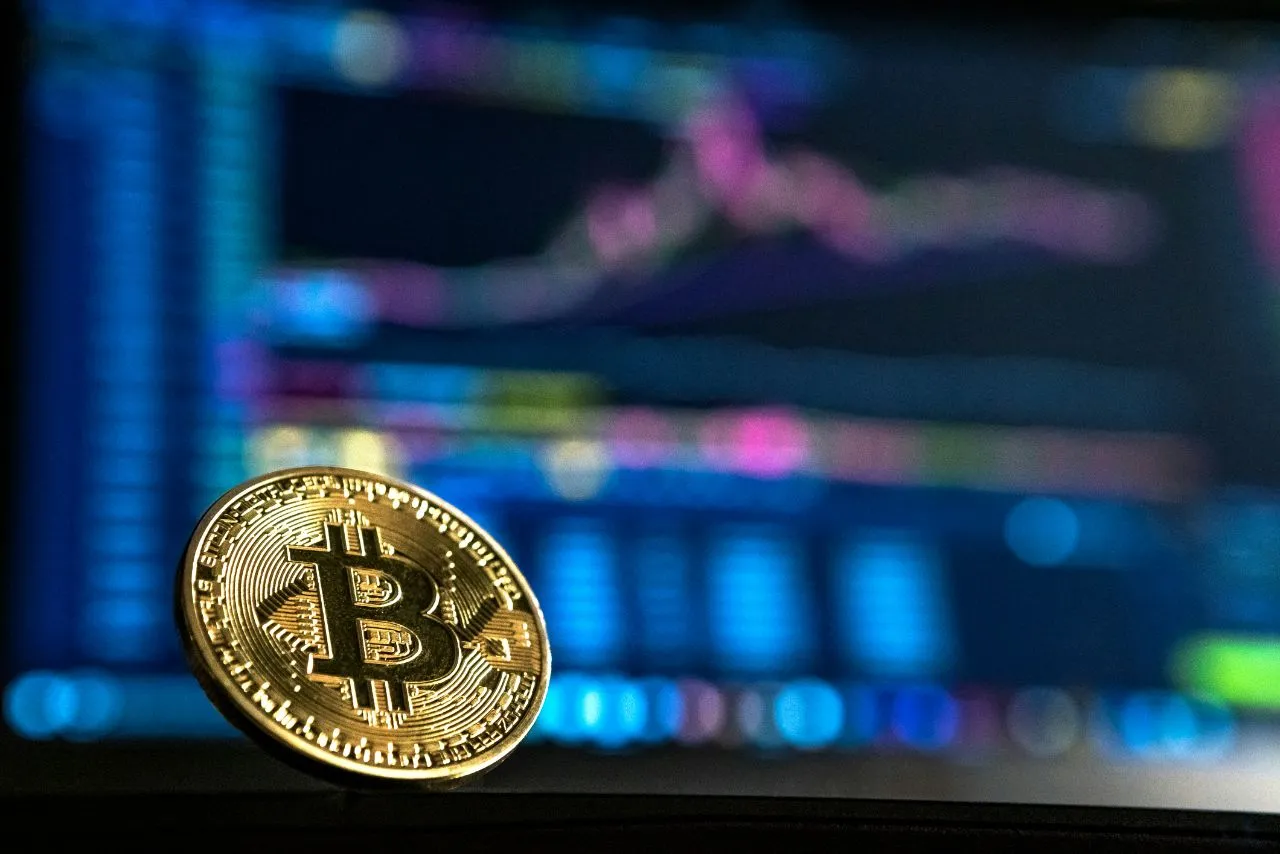
https://asset.coinness.com/en/news/7bad39aeea6483f1ef2ae081507294f0.webp
Photo by André François McKenzie on Unsplash

2025-2026 Bitcoin Plan

About three weeks after the Metaplanet CEO announced that ambition, the company published a press release on Jan. 28 detailing its 2025-2026 Bitcoin Plan, which goes much further. 


The plan outlines that 10,000 Bitcoin remains the target for 2025 but that the company has adopted the strategy to accumulate 21,000 Bitcoin by 2026. Gerovich stated that since Metaplanet embraced the Bitcoin Standard on April 8, 2024, the company has experienced exponential growth.


Gerovich added:


“The market has recognized Metaplanet as Tokyo’s preeminent Bitcoin company, and we are seizing this momentum to solidify our position as a global leader. Our vision is to lead the Bitcoin renaissance in Japan and emerge as one of the largest corporate Bitcoin holders globally. This plan is our commitment to that future.”


Adopting MicroStrategy’s Bitcoin playbook

Metaplanet has adopted the Bitcoin playbook first pioneered by U.S. business intelligence company turned Bitcoin development firm MicroStrategy. In short, that playbook involves financing Bitcoin purchases with debt. In this way, the company can capitalize on Bitcoin’s historical trend of positive returns over time, using convertible notes and equity to facilitate that. 


The practice also creates a feedback loop in so far as MicroStrategy buys Bitcoin, resulting in the Bitcoin unit price increases. The MicroStrategy stock price goes up. Demand for MicroStrategy’s stock and debt goes up, enabling the company to buy more Bitcoin.


In its press release, Metaplanet looked back on what had been achieved in terms of its Bitcoin strategy in 2024. In Q4 2024, the company achieved a Bitcoin yield of 309.82%, following on from a 41.7% Bitcoin yield in Q3. 


At the close of the year, the Japanese Bitcoin treasury company held 1,761 Bitcoin, purchased at an average Bitcoin unit price of 11.85 million yen ($76,411). Shareholder growth has seen the company surpass 50,000 shareholders. Meanwhile, share trading volume has increased 430x, year-on-year.


Since the firm adopted the Bitcoin Standard in April 2024, the company’s market capitalization has grown by 7,000%. Last month, the company celebrated the milestone of having reached a $1 billion market cap.


Asia’s largest equity capital raise for Bitcoin

The company has dubbed its new plan “The 21 Million Plan.” It will comprise the issuance of 21 million shares by means of moving strike warrants. Gerovich confirmed on X that at $750 million, the plan will involve Asia’s largest-ever public equity capital raise to buy Bitcoin.

More to Read
View All
Policy & Regulation·

Apr 26, 2023

Web3 Offers Potential for Japan to Rediscover its Mojo

Web3 Offers Potential for Japan to Rediscover its MojoEveryone recognizes that Japan has been at the forefront of innovation and the development of technology in the past but can it rediscover that cutting edge through Web3 and blockchain? In a recent interview with Forkast News, Yudai Suzuki, Co-Founder of a Tokyo-based Web3 incubator, suggested that it has that potential.©Pexels/邱 韬Re-establishing a competitive edgeSuzuki, who heads up Fracton Ventures, believes that such a pivot is possible for Japan in making Web3 the means through which it can rediscover the innovative edge it has been lacking in more recent years.Despite an historical strength and depth in technology and innovation, Japan has struggled when it comes to adopting and implementing new technology on a global scale more recently.Legacy techEarlier this year, it emerged that leading Japanese technology companies were collaborating with a view to creating a new open metaverse infrastructure called “Ryugukoku.” That project implicates the creation of a Japan Metaverse Economic Zone. Suzuki cites this project as demonstrative of a key issue relative to the overall development of Web3 in Japan.The project involves Japan’s legacy tech companies such as Fujitsu and Mitsubishi. He goes on to clarify that the majority of Web3 projects in Japan are being led by the existing technology behemoths despite the fact that Japan is seeing the emergence of a Web3-native generation.Suzuki identifies that one of the fundamental aspects of Web3 is that every decentralized autonomous organization (DAO) that’s created is immediately global in nature. Allied with that, most of that 18–25 year old Web3 native generation in Japan want to break through language barriers and communicate on a global basis.That outward looking characteristic is positive but it’s not how venture investment has traditionally worked in Japan. He explains that the conventional approach to investing in start-ups in Japan has been to first look to dominate the Japanese market before going global. The Fracton Ventures founder believes that this is a flawed approach in today’s world and that by the time they’ve gotten to number one in Japan, it’s already too late in trying to achieve that on a global basis.Government responsibilitySuzuki places much of the responsibility in affecting a more appropriate approach on the Japanese Government. “If they focus only on these huge Japanese companies, they will not succeed,” he says. He is also critical of the regulatory approach. Suzuki believes that “the government wants to change the laws and set new regulations at an early date,” and with that, such over-regulation has resulted in crypto entrepreneurs leaving the field. Regulation needs to be set on a more flexible basis so that it can be easily updated and upgraded as the technology develops.Global MindsetHe highlights the importance of having a global mindset and being open to different ideas and perspectives in order to succeed in the Web3 space. The entrepreneur points to that Web3-native demographic in Japan, explaining that their mindset has changed to a more global one as a consequence of dabbling in Web3. The same he believes is necessary on the part of the government if Japan is to become a leader in the tech industry once again.

news
Web3 & Enterprise·

May 13, 2024

Coinbase Wallet and TransFi partnership expands crypto accessibility in Asia

TransFi, renowned for its global payment solutions, is collaborating with Coinbase Wallet to streamline the process of purchasing cryptocurrencies, with a particular focus on enhancing user experience in Asia.Photo by Traxer on UnsplashFacilitating seamless onboardingBy integrating with Coinbase Wallet, TransFi aims to simplify the onboarding process for businesses and individuals, ultimately fostering greater adoption of cryptocurrencies in the region. This strategic integration is designed to eliminate barriers to entry and make cryptocurrency transactions more efficient and accessible. Enhanced payment options across AsiaIn a significant move, users in the Philippines, Vietnam and Indonesia now have access to expanded payment options through Coinbase Wallet. In the Philippines, GCash and PayMaya, popular digital payment platforms, have been integrated, while Vietnam sees the addition of Viet QR, Momo and Viettel Pay. Indonesian users can utilize OVO and Dana, leading payment apps in the country. These partnerships leverage existing, widely-used payment infrastructures to provide users with more convenient avenues for purchasing cryptocurrencies. The expansion into the Asian market reflects the growing demand for cryptocurrencies in the region and highlights Coinbase's commitment to broadening its reach by collaborating with local payment services. This trend underscores the increasing integration between crypto platforms and local payment solutions, signaling a positive trajectory for cryptocurrency adoption across Asia. 

news
Policy & Regulation·

Nov 23, 2023

Mammoth Foundation signs deal with the Philippines’ AFAB for blockchain business collaboration

Mammoth Foundation signs deal with the Philippines’ AFAB for blockchain business collaborationThe Mammoth Foundation, a blockchain research and development company, announced on Thursday that it has signed a memorandum of understanding (MOU) with the Authority of the Freeport Area of Bataan (AFAB) of the Philippines to establish business partnerships in the blockchain field. Under this agreement, the Mammoth Foundation intends to bring its blockchain technology to the Philippines as a part of efforts to expand its global business.Photo by Sean Yoro on UnsplashFostering innovation in the PhilippinesAFAB is a free economic zone in the Philippines dedicated to pushing development, economic growth and sustainability through creating jobs and establishing technologically-relevant infrastructure systems. In particular, it is focusing on the adoption of cutting-edge technologies such as blockchain, artificial intelligence (AI) and fintech. As one of the oldest free economic zones in Asia, companies residing in the zone are granted preferential measures such as tax exemptions and special visas. Firms that operate innovative businesses can also receive licenses to support the development of the global IT industry — the Mammoth Foundation being one of these.Global expansion and daily engagementHeadquartered in Singapore with offices in the United Kingdom and several Asian countries, the Mammoth Foundation offers dApps in a range of fields such as healthcare, e-commerce, entertainment and gaming through its mainnet Giant Mammoth Chain (GMMT). GMMT is built on the BNB Chain Application Sidechain and is fully compatible with the Ethereum virtual machine (EVM).Participants in GMMT can acquire token rewards through Play-to-Earn (P2E) and Life-to-Earn (L2E) mechanisms by participating in everyday activities and hobbies like walking, shopping, gaming and reading comics. These tokens can then be used within the Mammoth ecosystem.“The Philippines’ market for advanced technologies such as AI and blockchain is expected to grow in the future,” said John Baek, Chairman of the Mammoth Foundation. “We will strive to expand GMMT globally.”

news
Loading