Top

Thailand plans to enable tourists to spend crypto

Policy & Regulation·May 29, 2025, 5:27 AM

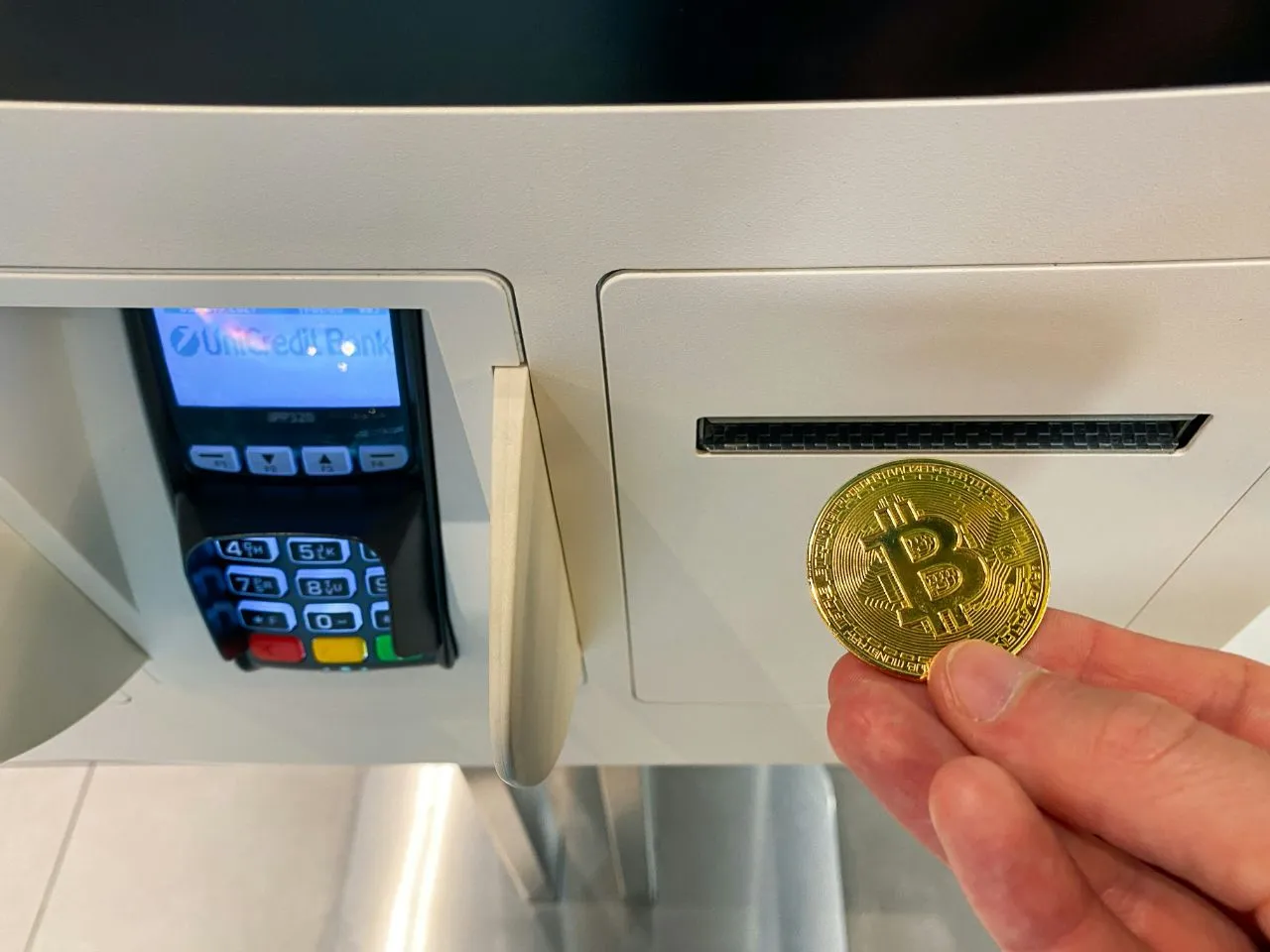
The Thai government is planning to enable tourists to spend crypto via credit card, according to information revealed by Thailand’s finance minister on May 26.
https://asset.coinness.com/en/news/6f1ef91bbb685b21725ae76f1c130e8c.webp
Photo by rc.xyz NFT gallery on Unsplash

Pichai Chunhavajira, the Southeast Asian nation’s finance minister and deputy prime minister, delivered a keynote speech at an investment seminar in Bangkok in which he outlined that while some countries enable people to purchase goods directly with cryptocurrency, another option is to allow consumers to link their digital assets with other services such as credit cards. 


In that way, the consumer can spend crypto through credit card services. English language news outlet The Nation reported that Chunhavajira confirmed that the government is preparing to launch a pilot project that would allow tourists to spend crypto in this manner within Thailand.


Seamless conversion from crypto to fiat

With this system, merchants would still receive payment in Thai baht. From the point of view of the user, crypto could be spent but any exchange between crypto and fiat currency would happen seamlessly and automatically via the credit card service provider’s platform.

Discussions between officials from the Bank of Thailand and the Ministry of Finance are ongoing with regard to the proposed scheme. It’s understood that similar existing models which have been introduced overseas are being examined.


It’s likely that the pilot program is the same as the project that was announced by Chunhavajira in January when he alluded to a program enabled for foreign tourists visiting the Thai tourist resort of Phuket.


At that time, it was envisaged that the scheme would adhere to existing legal frameworks and implicate identity verification through a third party service provider, with conversion from crypto to Thai baht to be enabled such that there would be no material difference experienced by merchants.


Targeting tourists

This is not the first occasion in which tourists have been targeted by crypto-related initiatives. Earlier this month, it was announced that Binance Pay, a crypto payment service offered by global crypto exchange Binance, had partnered with the government of the Buddhist kingdom of Bhutan to launch the world’s first national-level crypto tourism payment system.


In July 2024, the governor of Jeju Province in South Korea advocated for the use of non-fungible tokens (NFTs) and crypto as part of Jeju Island’s tourism strategy. Last December the province announced a digital transformation roadmap that sets out a cashless future. Plans include the introduction of a system for converting digital assets and facilitating payment methods from neighboring countries like China and Japan.


However, not all governments have been keen to facilitate tourists in spending crypto. In May 2023, the governor of the province of Bali in Indonesia cautioned foreign visitors to the region against the use of cryptocurrencies as a means of payment for goods and services. Governor Wayan Koster warned that visitors using cryptocurrency for payments could face severe consequences, including criminal penalties and deportation.


More to Read
View All
Web3 & Enterprise·

Sep 22, 2023

Korean Metaverse Platforms Face Uncertain Future Amidst Mounting Challenges

Korean Metaverse Platforms Face Uncertain Future Amidst Mounting ChallengesSeveral Korean metaverse platforms, which had promised to usher in a new world bridging online and offline experiences, have found themselves in premature jeopardy, according to industry observations. Various companies that had earmarked metaverse platforms as their future growth driver failed to establish an effective revenue structure to bring this to fruition, leading to speculation that there are limits to successfully developing this branch of business.Photo by GuerrillaBuzz on UnsplashDwindling popularityMetaverse platforms first garnered significant attention during the COVID-19 pandemic, but interest has waned since then — in Google Trends, the keyword “metaverse” has been showing a clear decline since reaching its peak in November of 2021.The actual usage rates of such platforms have also been low. According to the Korea Information Society Development Institute, last year’s usage rate was a mere 4.2%, and some local government-funded platforms had only about 200 daily visitors despite considerable budget sizes.As a result, companies struggling with financial difficulties have opted to downsize their operations, strategizing for mid- to long-term approaches to improving efficiency until an era of metaverse popularization arrives.Roadblocks for small and large companies alikeAccording to industry sources on Friday, platforms like Cytown, developed by social networking space Cyworld, have shut down after just a year, while Kakao Games’ collaborative metaverse venture Colorverse and Com2us Group’s Com2Verse have entered into restructuring phases.Com2verse’s decision comes just two months after the official release of its all-in-one metaverse platform. The company plans to provide three months’ salary to those applying for voluntary resignation and prioritize hiring new faces when expanding the workforce in the future. The scale of voluntary resignation has not been disclosed.The restructuring process will affect all employees except those involved in core functions such as development and services. Employees opting for voluntary resignation will also have the option to transfer to other subsidiaries under Com2us Group.Founded in April of last year, Com2Verse recorded an operating loss of KRW 8.3 billion (approximately $6.2 million) in the first half of this year. Its parent company, Com2us, also recorded consecutive deficits, starting with an operating loss of KRW 19.4 billion in last year’s fourth quarter, followed by losses of KRW 14.8 billion and KRW 5.6 billion in this year’s first and second quarters, respectively. Despite maintaining a stable revenue in its game business, the company faced challenges due to the poor performance of its subsidiary companies and the mounting labor costs needed for accelerating new business endeavors.Com2us has thus determined that it would be difficult to boost revenue and improve cost structure in the short term. Hence, the company chose to restructure its organization while retaining key personnel working under the Convention Center, an event platform on Com2Verse, which is expected to drive the business forward.Com2us emphasized that its commitment to the metaverse market remains unchanged, stating, “Given the current situation of local and international metaverse industries, we believe that significant time and investment will always be necessary. Therefore, we have decided that choosing our priorities and focusing on them is the best way to respond to long-term market changes.”Similarly, Kakao Entertainment had signed a memorandum of understanding (MOU) last year with Neptune, a game developer in which Kakao Games owns a 35% share, and Colorverse, a metaverse company in which Neptune owns a 44% share, to jointly work on an open three-dimensional metaverse platform also called Colorverse. However, Colorverse has also undergone restructuring since earlier this year to reduce its workforce after it posted an operating loss of KRW 11.5 billion last year.Industry analysts have attributed Colorverse’s business slump to the departure of Namkoong Whon, the former CEO who had pinned his hopes on a metaverse as one of the conglomerate’s promising enterprises.Korean game developer NCSOFT had also said that it is building its own metaverse platform dubbed “Miniverse,” which allows various types of online gatherings from community meetups and study groups to remote classes and work. The company had even conducted a welcome presentation for new employees through Miniverse, but news regarding the project has been scant since then.As these major corporations have been struggling to overcome such hurdles, smaller startups have undoubtedly been facing increasingly dire circumstances as well, with some even resorting to unexpected suspensions of service operations without prior notice. Others have promoted themselves as metaverse platforms and issued virtual assets that can be used within the virtual world, but in many cases, these assets have proven to be of little benefit or use.“A revenue structure that can generate income from metaverse platforms has not yet been established. With the gradual decline in remote education, meetings, and telecommuting after the easing of the pandemic, the value of metaverse platforms has also decreased. Also, factors like increased information technology (IT) labor costs and the overall state of the global economy are influencing business momentum,” an industry insider commented.

news
Web3 & Enterprise·

May 20, 2025

Ripple expands in UAE with new partners Zand Bank and Mamo

Ripple, the blockchain company behind the XRP token, announced in a May 19 press release that it has added two new customers in the United Arab Emirates (UAE)—Zand Bank and Mamo. Both institutions will use Ripple Payments, the company’s blockchain-based platform for cross-border transactions. Photo by Dmytro Demidko on UnsplashExpanding under Dubai license obtained in MarchThis partnership comes after Ripple’s obtainment of a license from the Dubai Financial Services Authority (DFSA) in March to offer regulated crypto payments and services in the Dubai International Finance Centre (DIFC). Ripple Payments facilitates end-to-end payment management for its customers. The platform enables funds to be transferred globally around the clock, with payments settled within minutes. Ripple’s latest move follows growing demand for blockchain-powered payment solutions in the Middle East. Ripple’s 2025 New Value Report shows 64% of Middle East and Africa (MEA) finance leaders see faster payments as the main reason to adopt blockchain for cross-border transactions. “Our new partnerships with Zand Bank and Mamo are testament to the momentum that the license has created for our business,” said Reece Merrick, Managing Director for the Middle East and Africa at Ripple. Zand Bank, the UAE’s first fully licensed all-digital bank, will leverage Ripple’s technology to enhance its payment solutions. “Our collaboration with Ripple highlights our commitment to empowering global payment solutions through blockchain technology. Moreover, we are excited to soon launch an AED-backed stablecoin,” said Chirag Sampat, Head of Treasury and Markets at Zand Bank. Meanwhile, Mamo, a company that helps businesses consolidate payment collection, corporate cards and expense management, sees the partnership as an opportunity to support the UAE’s growth. “The UAE is on an incredible growth path, with over a million businesses expected to call it home by 2030. At Mamo, we're proud to be at the forefront of this journey making global payments simpler and more accessible for everyone,” said Imad Gharazeddine, CEO and co-founder of Mamo. Ripple faces legal setback in U.S.While Ripple continues to expand its business globally, it is facing ongoing legal challenges in the U.S. On May 15, U.S. District Judge Analisa Torres rejected a joint request by Ripple and the U.S. Securities and Exchange Commission (SEC) to approve a proposed $50 million settlement. The settlement would have reduced Ripple's fine from $125 million to $50 million, effectively concluding a four-year legal dispute. The case began in December 2020, when the SEC accused Ripple of raising $1.3 billion through unregistered XRP sales. In July 2023, Judge Torres ruled that Ripple’s institutional XRP sales violated securities laws, while sales on exchanges to retail investors did not. Despite the SEC easing its crypto enforcement activities under the Trump administration, Judge Torres rejected the proposed settlement, calling it “procedurally improper.” Ripple’s bid to acquire USDC issuerIn a related development, Ripple made an offer to acquire Circle, the issuer of the USDC stablecoin. Circle, which is preparing for an initial public offering (IPO), is also exploring a potential sale and has reportedly engaged in informal discussions with both Coinbase and Ripple, seeking a valuation of $5 billion. However, Ripple’s offer was reportedly turned down. Meanwhile, XRP is trading at $2.39, up 2.57% over the past 24 hours, according to CoinMarketCap data at the time of publication.

news
Web3 & Enterprise·

Nov 25, 2023

Harvest Global to establish fixed income tokenized fund

Harvest Global to establish fixed income tokenized fundHong Kong investment firm Harvest Global Investments, in partnership with Meta Lab HK, is set to offer a tokenized U.S. dollar bond fund.The collaboration between Harvest Global Investments (HGI), an affiliate of Harvest Fund Management, and Meta Lab HK, backed by Harvest Digital Assets, marks a significant development in the crypto investment landscape within Hong Kong and the broader Asian region.Photo by Giorgio Trovato on UnsplashFirst fixed-income tokenized fund from Chinese institutionMeta Lab HK announced details of the new offering, detailed in a Nov. 22 post on X (formerly Twitter). The fund targets professional investors and will concentrate on U.S. dollar bonds with an investment-grade rating. Meta Lab wrote:”We have learned that this will be the first fixed-income tokenized fund introduced by a Chinese financial institution in Asia with a tokenization arrangement. The fund is exclusively available to professional investors and primarily invests in investment grade U.S. dollar bonds.”Meta Lab added, “The offering is set to be managed by HGI, a subsidiary of Harvest Fund in Hong Kong, with Meta Lab HK providing the tokenization solution.”The tokenization of the fund, a process transforming traditional financial assets into digital tokens, is expected to enhance accessibility and efficiency for investors. The notification to Hong Kong’s securities regulator has been duly completed, underscoring the compliance and regulatory adherence of the initiative.The move comes amidst a series of noteworthy developments emerging from Asia, occurring against the backdrop of persistent regulatory challenges facing the cryptocurrency industry in the United States.CoinFund market entryThis announcement follows closely on the heels of CoinFund, a New York-based investment firm, which revealed its plans to expand services into Asia earlier this week. Choosing Hong Kong as the inaugural location for this expansion, CoinFund cited the city’s appeal to crypto talents as a key factor. As Asia takes strides in pioneering tokenized funds, it suggests a competitive landscape in digital asset development that could rival the United States.It’s likely that Hong Kong is providing a workable environment for Harvest Global to take this tokenized product to market. In August, the local regulator, the Hong Kong Monetary Authority (HKMA), published a report where it indicated an interest in pursuing tokenization as a means to improve aspects of the bond market. The report presented outcomes of Project Evergreen, an initiative the HKMA had been running to examine the potential of tokenization, which also incorporated the launch of a first-of-its-kind tokenized green bond.Regional tokenization interestRecent weeks have also seen further efforts being made within the Asian region in terms of bond tokenization. Last week, SC Ventures, the Singaporean investment subsidiary of British banking group Standard Chartered, unveiled a new platform called Libeara. That platform is working towards the launch of the first-ever tokenized Singapore dollar government bond fund.In the same week, the Bureau of the Treasury in the Philippines announced that it is issuing $179 million in one-year tokenized bonds, with the bonds being facilitated by the Development Bank of the Philippines and the Land Bank of the Philippines.

news
Loading