Top

ETH surge being led by Asian market

Markets·July 18, 2025, 6:34 AM

Over the course of the past two weeks, the unit price of Ethereum (ETH) has surged 32%, with a report from a Singapore-based crypto financial services firm asserting that the Asian market has had a large part to play in that increase.


Taking to X on July 16, Matrixport, a crypto financial services platform, provided its daily analysis in which it suggested that “Ethereum’s recent outperformance appears to be heavily influenced by Asia.”
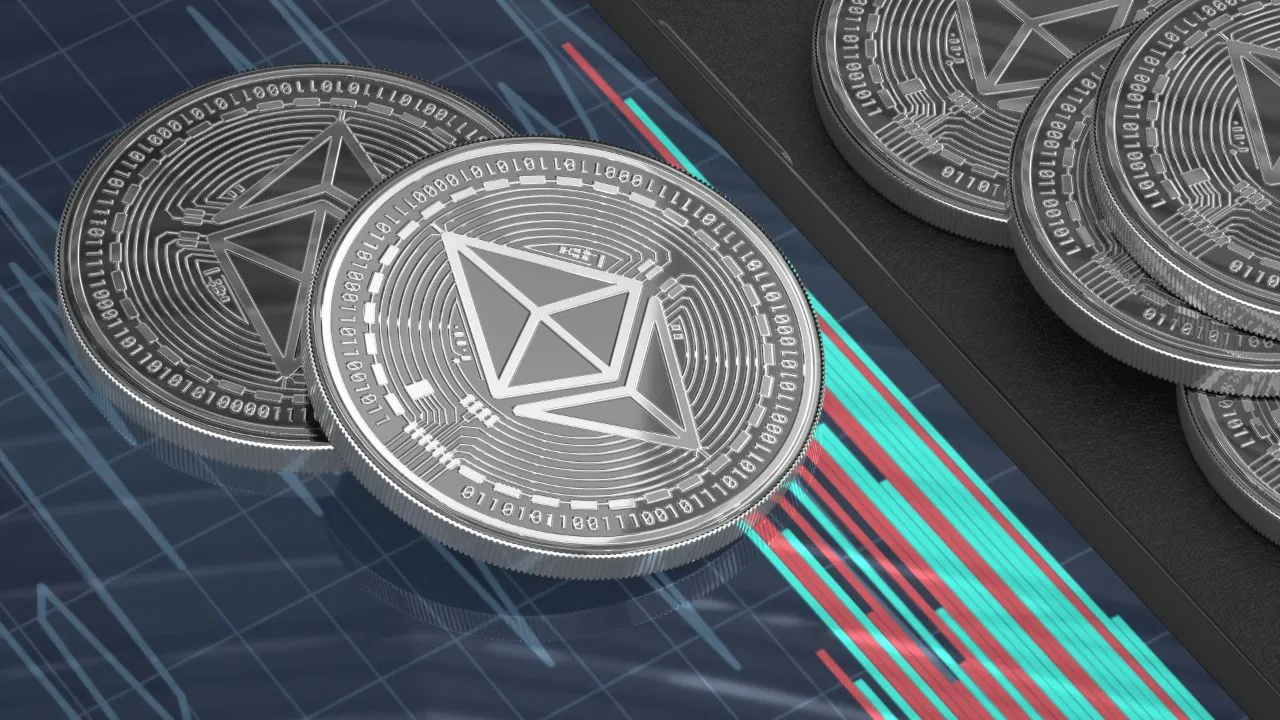
https://asset.coinness.com/en/news/315b26e4b17b798858af87540e3d71d7.webp
Photo by DrawKit Illustrations on Unsplash

Asian market influence

The company included a graph in which it had plotted Ethereum’s recent performance during Asian trading hours, asserting that as much as 17% of the uptick in the Ether unit price can be accounted for by the actions of market participants within the Asian market. It added:

"The influence of the Asian market in the pricing of crypto assets is continuing to rise, whether in terms of volatility or trading momentum.”


ETH ETFs in Hong Kong

Spot ETH exchange-traded funds (ETFs) were approved in Hong Kong in April 2024. Hong Kong ETH ETF volumes have risen substantially in July, with significant inflows being recorded related to both retail and institutional investors. 


In the past, many commentators have suggested that the addition of staking would be an attractive prospect for institutional investors who like the idea of accumulating an ongoing yield. With that, Asian investors may be enticed to delve further into Ethereum positions going forward, given that ETF issuers are trying to add that component to their offerings. Huaxia Fund, a subsidiary of China Asset Management (ChinaAMC), is preparing to launch staking as part of its ETH ETF.


Another potential driver for ETH in Asia in the future lies with the ongoing enablement of trading via established institutions. Earlier this week, China Merchants Bank’s brokerage arm received a virtual asset license in Hong Kong to trade crypto assets. It’s the first mainland China-affiliated brokerage to be awarded such a license, with licensing enabling it to offer trading services related to assets like Ether.


Global asset

While Asia is playing a role in ETH’s recent move upwards, the asset is traded globally and with that, factors further afield are also playing a role. Tom Lee, founder of American financial research firm Fundstrat, pointed out on X that ETH had been range-bound since 2021. However, he believes that the rise of stablecoins, which by and large run on Ethereum, together with ongoing growth in the tokenization of real-world assets (RWAs), is driving demand for the digital asset.


While Bitcoin treasury companies have played a significant part in driving Bitcoin in recent months, Ethereum is starting to see similar activity. Lee made the point that Strategy (formerly MicroStrategy) “set the standard for Treasuries,” but that now BitMine “wants to be the Microstrategy of Ethereum.” The crypto mining and treasury firm confirmed on July 17 that it now holds $1 billion worth of Ethereum.


Arthur Hayes, co-founder of BitMEX and chief investment officer (CIO) at Hong Kong family office, Maelstrom, said that it was “ETH szn” and that the Maelstrom Fund is buying the digital asset. Tom Dunleavy, head of venture at Varys Capital, asserts that ETH will hit a unit price of $10,000 by the end of 2026.

More to Read
View All
Web3 & Enterprise·

Oct 10, 2023

NEOPIN and MEVerse Join Hands to Expand Blockchain Ecosystem

NEOPIN and MEVerse Join Hands to Expand Blockchain EcosystemCentralized decentralized finance (CeDeFi) protocol provider NEOPIN said Tuesday that it has teamed up with MEVerse, the blockchain mainnet operated by gaming company ME2ON Group, to expand the global blockchain ecosystem and optimize the accessibility and functionality of their respective platforms.Photo by Gerd Altmann on PixabayPromoting blockchain worldwideBoth parties have agreed to collaborate on integrating their platforms to build a global user base consisting of those who have completed necessary verification procedures like Know Your Customer (KYC) and Anti-Money Laundering (AML). They will also support each other’s global partner networks, contributing to service enhancement and ecosystem expansion. NEOPIN has also vowed to introduce MEVerse to its global user community.“Initiating the integration of NEOPIN and MEVerse platforms, we are poised to play an active role in fostering the growth and widespread adoption of the blockchain ecosystem. This includes the enduring fusion of blockchain technology with Korean content.” said Ethan Kim, CEO of NEOPIN.Collaborative synergyMEVerse possesses various blockchain infrastructures, including the Web3 P2E casual game portal MEVerse GameZ, non-fungible token (NFT) marketplace MEVerse DEX, blockchain explorer MEVerse Scan, and more. The platform said that it is currently in the process of establishing a borderless Web3 ecosystem by boosting compatibility with its mainnet ecosystem and leveraging cross-chain technology.“MEVerse’s strengths lie in its possession of a wide range of blockchain platforms and content, from its blockchain mainnet to the Web3 gaming ecosystem and Korean content,” Kim commented.Meanwhile, NEOPIN has accumulated knowledge and expertise on blockchain operations during its time as a node validator for various blockchain networks such as Ethereum and Cardano since 2017. Last year, the platform launched its CeDeFi protocol, providing a secure and user-friendly DeFi platform.“We are thrilled to partner with NEOPIN, a pioneer in the DeFi sector. Through tangible integration examples, we look forward to facilitating user engagement and cultivating an expanded Web3 ecosystem,” said Jong-ho Hong, CEO of MEVerse.

news
Web3 & Enterprise·

Dec 29, 2023

Token pre-sale for Web3 mental health dApp sells out in nine hours

The official token pre-sale for Bit of Mind – a project operated by Singapore-based DAO company investor K Stadium to launch a Web3-based AI mental health platform – sold out in nine hours on K Stadium's LaunchPad on Tuesday (KST), according to an official press release on K Stadium’s Medium page. Photo by Total Shape on UnsplashSupporting mental wellnessBit of Mind is an upcoming mobile decentralized application (dApp) that integrates AI and a combination of Web2 and Web3 technology to provide personalized mental health care services like journal writing, mood tracking, meditation and virtual counseling. In particular, it incorporates an incentivized token reward system where users can earn tokens by participating in the aforementioned self-care practices within the app. Fueling innovationA total of 45,000,000 Bit of Mind (BOM) tokens were available during the pre-sale, with 1 BOM worth 1 KSTA. KSTA is the native token that operates the K Stadium ecosystem. The early sell-out is a testament to the community's strong support and belief in Bit of Mind’s mission to redefine the standard of mental health care, the platform said. It also demonstrates investors’ strong support for and confidence in Bit of Mind's vision.  "Bit of Mind's LaunchPad is a testament to K Stadium's influence in identifying high-potential projects in the blockchain space. The funds raised will play an important role in advancing the development of Bit of Mind's ecosystem, including enhancing AI capabilities, expanding new features and providing opportunities for Web3 paradigm collaborations," K Stadium said. In the future, Bit of Mind is poised to venture into the metaverse as well, merging Web2 and Web3 paradigms and implementing picture-for-profile non-fungible tokens (PFP NFTs).

news
Policy & Regulation·

Jun 13, 2023

Thai Central Bank Collaborates With Singapore’s 2C2P on CBDC Pilot

Thai Central Bank Collaborates With Singapore’s 2C2P on CBDC PilotThe Bank of Thailand is set to commence a pilot project for a retail central bank digital currency (CBDC) within a regulatory sandbox later this month.Three participating fintech firmsThat’s according to local media, with reports suggesting that three payment providers will participate in the project, which is expected to involve up to 10,000 users and run until August.The scheme will involve two Thai banks, Bank of Ayudhya (Krungsri), Thailand’s fifth largest bank, and Siam Commercial Bank. Singapore-based payments service provider 2C2P will also collaborate with the Thai central bank on the CBDC initiative. 2C2P is a global payments platform which helps businesses to accept payments securely online, on mobile, and in-store. Each organization has developed an app exclusively available to selected users, encompassing a digital wallet and a QR code scanner.Krungsri plans to engage up to 2,000 staff members and approximately 100 merchants in the project, focusing on locations around the bank’s headquarters. Furthermore, the project will expand to include the Ploenchit branch.Photo by Florian Wehde on UnsplashMaintaining relevanceBanks are having to embrace the need to adapt to the eventuality of developments like CBDCs as, depending upon how they’re implemented, they could render some banking products obsolete. Sam Tanskul, the Managing Director of Krungsri Finnovate, a division of the Thai banking business that focuses on strategic investments, expressed the need for the bank to establish a distinct strategy for differentiating the retail CBDC from its existing PromptPay mobile payments service.Siam Commercial Bank’s pilot project will operate in a similar manner to Krungsri’s, involving staff members and nearby merchants as participants. The Bank of Thailand has emphasized that the project aims to facilitate learning rather than serve as an official pilot launch. At present, the central bank has not disclosed any official plans to implement a CBDC.Wholesale and retail CBDCsThe Bank of Thailand commenced the development of a wholesale CBDC back in 2018. It has actively participated in various projects such as the Bank for International Settlements’ (BIS) mBridge cross-border payment initiative and the Project Inthanon-Lion Rock collaboration with the Hong Kong Monetary Authority (HKMA).In a move to foster the growth of the digital token market, Thailand waived corporate income tax and value-added tax for companies issuing investment tokens in March. While this decision is expected to result in an approximate loss of $1 billion in revenue for the country, it is projected that investment tokens will generate $3.7 billion over the next two years, as stated by a government spokesperson.The Bank of Thailand’s forthcoming retail CBDC pilot project is one of a plethora of such projects being pursued throughout the Asia-Pacific region. In Japan, the Bank of Japan recently completed the second phase of a proof of concept project relative to its CBDC, with the project now progressing to phase three. Last month, it emerged that the Bank of Korea is collaborating with Samsung Electronics relative to its CBDC project. Meanwhile, India is progressing further in trialing its CBDC, while China is further along the development curve than all others in that respect.

news
Loading