Top

Zetrix launches product to simplify KYC for Chinese nationals

Web3 & Enterprise·October 07, 2024, 7:21 AM

Zetrix, a layer-1 blockchain project for real-world applications, has launched an electronic Know Your Customer (KYC) verification product for Chinese nationals.


The Malaysian enterprise, which is a subsidiary of digital services company My E.G. Services Berhad (MYEG), has launched ZCert. The offering is available to Chinese nationals who opt to have their digital identities published to the Xinghuo BF network, a Chinese national blockchain infrastructure network developed under the guidance of China’s Ministry of Industry and Information Technology and managed by the China Academy of Information and Communications Technology.

https://asset.coinness.com/en/news/624a005a4d33db5f77a859507a16f9de.webp
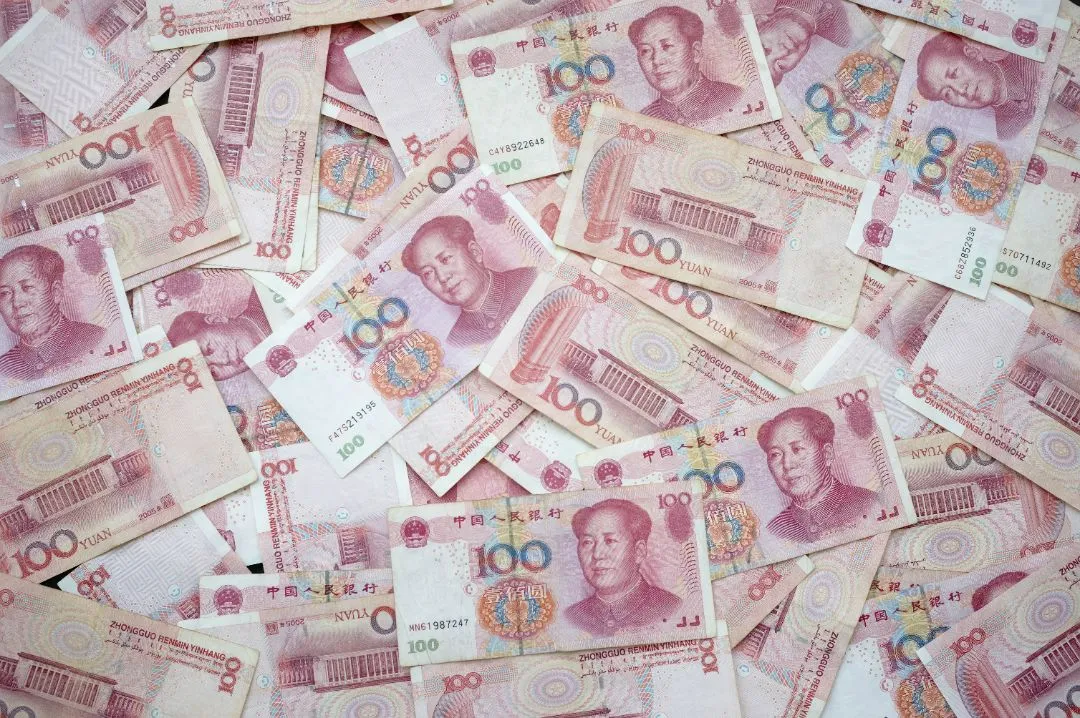
Photo by Diego Jimenez on Unsplash

First-of-its-kind application

Zetrix acts as an international super-node relative to the Xinghuo blockchain. In a press release published by PR Newswire on Oct. 3, the company outlined that ZCert had been launched as a first-of-its-kind application, enabling Chinese nationals “to be authenticated and verified digitally overseas, paving the way for a seamless, efficient, and secure verification process for verifiers and identity holders. ”


The service simplifies the issue of identity verification for verifiers located outside of China, as a consequence of Zetrix’s integration with the Xinghuo BIF network. 


Connecting to ‘China Web3’

Xinghuo signed a memorandum of understanding (MoU) with Zetrix’s parent company, MYEG, to establish the international super-node back in November 2022. The tie-up was seen as an opportunity to provide access to Chinese government agencies and businesses internationally. 


At the time, MYEG Managing Director and Zetrix Co-Founder Wong Thean Soon said that “with the commencement of the Xinghuo International Supernode, the rest of the world can connect and be part of the China Web 3 evolution that will promote the establishment of international communities and facilitate global trade and finance.” 


On this occasion, Wong said that the new product “enables a new wave of services powered by smart contracts.” He added that KYC processes can be simplified and automated, while “user data is retained by users at all times and only critical information is shared in an encrypted manner."


The company has already digitized Chinese driving licenses for the purpose of overseas verification. Furthermore, it has plans to expand its offering beyond ID verification soon. In April of this year, Zetrix and MYEG signed an MOU with MaiCapital, a Hong Kong-based virtual assets manager, with a view towards collaborating on the launch of a digital asset fund or digital asset-based exchange-traded fund (ETF).


Last year Zetrix engaged in a pilot project with the Bank of China with the aim of offering supply chain financing products. On a similar theme, its parent company entered into a partnership with the Philippines Bureau of Customs (BOC) and Cargo Data Exchange Center Inc. (CDEC), also in 2023. The collaboration involved the use of Zetrix’s ZTrade product, a Web3 platform that enables digitized trade document verification.


Zetrix launched its ZETRIX token in October 2023 through an initial exchange offering (IEO) facilitated by the Coinstore exchange.

More to Read
View All
Policy & Regulation·

Jul 29, 2023

Kyrgyzstani President Embraces Hydro-Powered Crypto Mining

Kyrgyzstani President Embraces Hydro-Powered Crypto MiningIn a move that signals the Republic of Kyrgyzstan’s growing interest in cryptocurrency mining, President Sadyr Japarov has given the green light to establish a crypto mining farm at a hydroelectric power plant within the Central Asian country.The ambitious project, set to be built at the Kambar-Ata-2 hydropower plant, has been allocated a budget of up to $20 million, as reported by Kyrgyzstan’s national news agency, Kabar, on Thursday.Photo by Collab Media on PexelsMore efficient use of powerThe primary motivation behind this endeavor is to address energy losses linked to non-utilized power from the Kambar-Ata-2 plant, which has been operational since 2010. According to President Japarov, approximately 6.8 billion kilowatt-hours (kWh) of energy have been wasted due to this issue. By harnessing the excess energy for cryptocurrency mining, the Kyrgyz government aims to optimize resource usage and bolster the country’s budget.President Japarov emphasized that the profits generated from the mining farm would directly benefit the people, particularly the power engineers who are responsible for the plant’s operations. He asserted that the earnings would be meticulously controlled and allocated, with complete automation and oversight.Energy grid challengesHowever, this recent decision appears to contradict the state of emergency announced by President Japarov in Kyrgyzstan’s energy sector on July 24. The emergency status, which will be in effect from August 1, 2023, until December 31, 2026, is attributed to climate challenges, insufficient water inflow into the Naryn River basin, and a lack of generating capacity due to escalating energy consumption.Despite these apparent contradictions, President Japarov affirmed that crypto mining at the hydro plant would be subject to the highest tariff in Kyrgyzstan, amounting to approximately 5 Kyrgyz soms ($0.057) per kW.As early as March 2022, Kyrgyz lawmaker Karim Khanjeza urged the government to legalize the cryptocurrency industry during a parliamentary committee meeting, citing the rapid expansion of the crypto space. Although Kyrgyzstan introduced some regulations for crypto exchanges in 2021, it has not yet enacted specific laws governing cryptocurrencies.The integration of hydro-powered crypto mining presents both opportunities and challenges for Kyrgyzstan. If executed strategically, the venture could harness underutilized energy to boost the national economy and provide benefits to the people.Learning from KazakhstanThat said, the Central Asian country would do well to pay heed to events that unfolded in neighboring Kazakhstan relative to crypto mining over the course of the last few years. Following a major crackdown on crypto mining activity in China, many miners upped and moved their operations to Kazakhstan. That sudden unplanned and unregulated upsurge destabilized the country’s power grid, forcing the government to crack down on mining. It has since regulated the activity in order to accommodate it without it having a detrimental effect on the energy grid.As developments unfold, Kyrgyzstan’s foray into cryptocurrency mining will undoubtedly be closely monitored by industry observers and stakeholders. President Japarov’s vision to distribute the earnings to ordinary citizens brings an element of promise to the project. Crypto mining can be a positive development for the country, leading to more efficient energy use, so long as the authorities plan accordingly.

news
Policy & Regulation·

Feb 27, 2024

Korean and U.S. regulators to discuss recognizing NFTs as virtual assets in May

Lee Bok-hyun, the governor of South Korea’s Financial Supervisory Service (FSS), is set to have a meeting with Gary Gensler, the chair of the U.S. Securities and Exchange Commission (SEC), in May. The purpose of their meeting is to discuss whether to classify non-fungible tokens (NFTs) as virtual assets. Currently, NFTs are not seen as virtual assets in Korea, but there is a high likelihood of them being acknowledged as such following the meeting in May, local financial media outlet Edaily reported.Photo by Andrey Metelev on UnsplashLack of definition for NFTsAn NFT is a digital certificate of authenticity that is not fungible or replicable. NFTs tokenize content or assets of various types – from images, music, videos, games and artworks to real-estates – by assigning a unique token ID to them. Many see 2018 as the year NFT technology was first introduced.  Despite its wide range of applications, no legal definition has been made for NFTs. Some view NFTs as technology, and others as virtual assets or securities. The Korean government decided not to recognize NFTs as virtual assets under the Virtual Asset Protection Act (Virtual Asset Act), effective in July. Behind this decision is a perception that NFTs are less likely to pose significant risks to the market, as a large portion of NFTs are now traded by collectors seeking to expand their private collections.  However, NFTs are increasingly seen as speculative destinations by many investors over time, as prices of virtual assets including BTC surge. This shift backs the local movement to recognize NFTs as well as spot bitcoin ETFs as virtual assets. Opposition from NFT businessesBlockchain industry insiders say defining NFTs is of utmost importance, noting that classifying NFTs as virtual assets headfirst could deal a heavy blow to businesses in this sector. One finance insider mentioned that defining NFTs comes down to understanding their purposes and how they are utilized. If NFTs are primarily used for speculative purposes or as currency, they could be recognized as virtual assets, the person said.  The biggest resistance is coming from NFT-related businesses. That is because recognizing NFTs as virtual assets would require these businesses to obtain a virtual asset service provider (VASP) license from the financial authority, which takes significant costs and workforce in the process. A CEO of a blockchain startup, who preferred to remain anonymous, expressed concerns about the possibility of NFTs becoming virtual assets, saying that such recognition would enable NFT transaction tracing, potentially leading to severe violations of human rights. While many industry insiders expect that the financial authorities will bring NFTs under the forthcoming Virtual Asset Act, the FSS stated that no decisions have been made regarding details of the upcoming meeting with the U.S. SEC. 

news
Web3 & Enterprise·

Sep 08, 2023

Saudi Arabia Looks to Diversify Through Web3

Saudi Arabia Looks to Diversify Through Web3Saudi Arabia is intensifying its efforts to diversify its economy as part of its ambitious Vision 2030 initiative. In a move away from its traditional reliance on oil, the kingdom is embracing cutting-edge technologies like blockchain and artificial intelligence (AI) and is delving into the burgeoning gaming industry.That’s the view of Animoca Brands Co-Founder Yat Siu, who, in a recent interview with Cointelegraph, highlighted Saudi Arabia’s keen interest in Web3, emphasizing the country’s partnerships with entities like The Sandbox and Animoca itself.Photo by Hala AlGhanim on UnsplashDriving gaming growthSiu believes that Saudi Arabia is making a concerted effort to explore the possibilities of the new iteration of the internet, particularly in the realm of Web3 gaming and blockchain gaming, where asset ownership is verified on the blockchain. He stated:“I think Saudi [Arabia] understands the principle that Web3 gaming or blockchain gaming — the one that we actually prove the owner assets — is going to be the future of gaming.”While Saudi Arabia has yet to make a significant global impact in game and AI development, experts in the emerging field of Web3 believe that the kingdom’s investments in gaming could have far-reaching implications.The Boston Consulting Group reported that Saudi Arabia accounts for 45% of the region’s gaming sector, with a total value exceeding $1.8 billion. It also boasts one of the highest game revenues in the area, according to Ireland-based gaming content creator, Allcorrect.$38 billion gaming fundSiu is not the only one to believe in the efficacy of Saudi’s Web3 efforts. Poland-based Web3 gaming platform GameSwift also articulated a similar view recently. In a tweet thread published last month, the firm acknowledged the $38 billion gaming fund launched by the Saudi royal family.That initiative involves a Gaming Hub, the first incubator for esports in the world. The objective of the hub is to empower early-stage studios and provide an accelerator program for their growth, with direct investment going to top ten studios.Cryptocurrency uncertaintyDespite its understanding of the high-level concept of Web3, Saudi Arabia faces uncertainties regarding the integration of cryptocurrencies and virtual assets into gaming due to the absence of clear regulations. Siu explained that while Saudi Arabia is proactive in investigating cryptocurrencies, other regions like Hong Kong, Japan, and the United Arab Emirates (UAE) offer more clarity on what can be done with crypto and Web3.Siu noted that Saudi Arabia is actively seeking information on best practices and strategies from experts like Animoca. To encourage Web3 adoption, financial literacy is key, according to Siu.He emphasized that users must have a certain level of financial literacy to fully embrace Web3, as it goes beyond traditional banking. Understanding the potential value of digital assets and their network effects is crucial for Web3 users.Saudi Arabia is not the only Gulf nation to pivot to Web3. Oman is looking to do likewise based on similar rationale — to diversify away from an oil-based economy. The UAE is also actively working towards creating the right conditions to nurture Web3 startup businesses.

news
Loading