Top

Hong Kong criminalizing promotion of unlicensed stablecoins

Policy & Regulation·July 25, 2025, 11:31 PM

The CEO of Hong Kong’s central banking institution, the Hong Kong Monetary Authority (HKMA), has outlined that the introduction of the Chinese autonomous territory’s Stablecoins Ordinance on Aug. 1 will criminalize the unlicensed promotion of stablecoins.


In an article published on the HKMA website on July 23, CEO Eddie Yue stated:

”According to the Ordinance, starting from the commencement date, it will be illegal for any person to offer any unlicensed fiat-referenced stablecoin (FRS) to a retail investor, or actively market the issue of unlicensed FRS to the public of Hong Kong.”

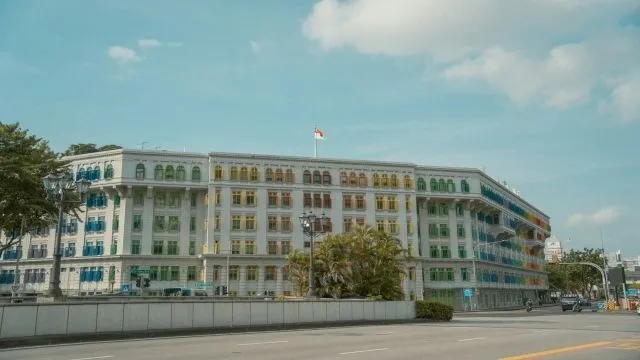
https://asset.coinness.com/en/news/30964a6e095caae7a873178d30094bae.webp
Photo by Manson Yim on Unsplash

Subject to fine & imprisonment

If an individual is found to have promoted an unlicensed stablecoin, they will be subject to a fine of HK$50,000 ($6,400) and imprisonment of up to six months. Yue warned the public to remain vigilant and to exercise caution if they come across marketing material related to an unlicensed stablecoin offering.


The HKMA CEO is conscious of the fact that stablecoins are an emerging payment instrument that is being gradually integrated into the mainstream financial system. However, he feels that some discussion on stablecoins has been overly idealistic.

Yue outlined that interactions with the few dozen institutions that have reached out to the HKMA with regard to stablecoin licensing have led him to believe that “many proposals remain conceptual.” He claimed that many of the institutions putting forward these proposals “fail to put together viable and concrete plans as well as implementation roadmaps, let alone demonstrate their awareness of risks and competence in managing them.”


Limited license issuance

Yue believes that in many instances, these institutions would be better served to collaborate with stablecoin issuers rather than becoming stablecoin issuers themselves. It’s on that basis that the HKMA will only grant a handful of stablecoin issuer licenses.


Bloomberg reported that in the region of 50 companies have been seeking to apply for stablecoin licensing in the city, with the HKMA likely to approve around 10 licenses. It referenced particular interest from Chinese brokerages and a related move recently by asset management firm ChinaAMC in launching a yuan-denominated tokenized money market fund that facilitates subscriptions via stablecoins. 


Significant Chinese businesses such as JD.com and Ant Group have been preparing to acquire stablecoin licensing in Hong Kong.


Chinese stablecoin urgency

In its Asia Morning Briefing, CoinDesk pointed out that in 2021, the Chinese authorities had been critical of the development of global stablecoins, preferring instead to concentrate on their own central bank digital currency (CBDC), the digital yuan. However, it asserts that “Beijing’s caution on stablecoins is giving way to a sense of urgency.”


Animoca Group President Evan Ayuang told the publication that China’s interest in stablecoins is on the rise. Ayuang asserted that actions taken by the Trump administration in the U.S. related to stablecoin policy are “pressuring China to act a lot faster.”


Developments in Hong Kong are relevant in the context of China’s newfound interest in stablecoins. Lily King, chief operating officer (COO) at crypto custodian Cobo, stated recently that Hong Kong continues to be a testing ground for mainland China. 


In keeping with that outlook, analysts at Morgan Stanley recently asserted that yuan-denominated stablecoin projects launched in Hong Kong would potentially serve as a developmental stablecoin sandbox for mainland China.

More to Read
View All
Policy & Regulation·

Apr 10, 2023

The Philippines Forging Crypto Reg. Path US Could Learn From

The Philippines Forging Crypto Reg. Path US Could Learn FromThe Philippines has demonstrated best practice in operating a sensible regulatory framework relative to cryptocurrency while the United States has erred by engaging in regulation via enforcement while responding after the horse has bolted in relation to a string of crypto company collapses. That’s according to Robert De Guzman, Head of Legal Compliance at Philippines-based cryptocurrency exchange Coins.ph.©Unsplash/C BuezaIn an opinion piece published in Forkcast News on Tuesday, De Guzman lays out his view as to what’s required in terms of regulation, while drawing comparisons between the application of regulation relative to crypto in both jurisdictions.The need for “sensible” regulationDe Guzman believes that the crypto industry’s recent failures are a wake-up call for the whole sector. Losses of billions of dollars affected Celsius Network, BlockFi, Voyager Digital, Genesis, and FTX, and led to Silvergate, Silicon Valley Bank (SVB), and Signature banks’ collapse in a week. To maintain consumers’ trust, he believes that sensible regulation is necessary for the crypto exchanges dealing with digital assets.The legal compliance expert cites the FTX collapse. FTX’s Sam Bankman-Fried’s empire was among the largest collapses. FTX pretended to support regulation, but its true nature was an offshore exchange for global clients. Nonetheless, some businesses act on their regulation support by acquiring licenses and complying with central bank audits in the countries of operation.State-level and industry-level regulationThe crypto industry being open to self regulation is one element of the solution, he says. Regulators must proactively protect their consumers from scams and business failures, not just clean up the mess after millions of people have been harmed.Regulatory failuresDe Guzman points the finger at reactionary regulatory action. Regulators filed charges against crypto industry founders after their collapse. Previously, they missed the problems of the largest companies. FTX, based in the Bahamas, was mismanaged, and American regulators only responded after customer issues. Regulations by enforcement, preferred in several countries, wait for failure to happen before taking action. Over-regulation through enforcement pushes platforms offshore, where Wild West-type environments thrive, with clear consequences.Regulators in some countries focus on surface-level questions, like which tokens should be considered securities, while others, like in the Philippines, prioritize execution-level details to protect consumers. Anti-money laundering measures and custody are core issues, with the G-7’s Financial Action Task Force’s Travel Rule likely to be more strictly applied. Active regulation and audits are needed to ensure financial platforms act responsibly with customer deposits. Basic rules need to be put in place through a licensing regime, followed by regulation of market practices like commingling of assets, self-dealing, and trading against customers.The Philippines sensible approach to regulationThe Coins.ph legal guru holds out his home country as exemplary in terms of its approach to regulation. The Philippines’ regulatory regime requires a virtual asset service provider (VASP) license to operate a crypto exchange, as well as additional licenses for other services. The country’s central bank, BSP, directly regulates all crypto exchanges and expands its crypto regulations to adapt to market needs. KYC processes in the Philippines require recognition of valid ID documents from across 82 provinces.Additionally, the BSP expects the industry to cooperate in quarterly audits where they share balance sheet information and disclose digital assets in hot and cold wallets. Regulators in the Philippines are proactive and knowledgeable about the crypto space, which sets a sensible framework based on customer protection.

news
Policy & Regulation·

Feb 17, 2024

Ethiopia may be embracing Bitcoin mining with new data mining partnership

Ethiopian Investment Holdings, the largest sovereign wealth fund in Africa, has announced the signing of a memorandum of understanding (MoU), which is suspected to involve a deal on Bitcoin mining. Deal uncertaintyTaking to LinkedIn on Feb. 15, the sovereign wealth fund outlined details of a partnership with Data Center Service, a subsidiary of Hong Kong’s West Data Group. Separately, Kal Kassa, CEO of Ethiopian operations at Hashlabs Mining, posted on the X social media platform, outlining that it was a stakeholder in the project and that it involved Bitcoin mining. The matter lacks full confirmation however, given that Kassa subsequently deleted his post while the sovereign fund’s statement falls short of mentioning Bitcoin mining. Once verified, the project would signify a substantial investment of $250 million. It’s understood that the investment would be directed towards the establishment of state-of-the-art infrastructure tailored for data mining and artificial intelligence (AI) training operations within Ethiopia.Photo by Kelly on PexelsExploiting abundant energy resourcesA key component of this venture may involve the setup of Bitcoin mining operations utilizing Canaan Avalon miners. This initiative would align with Ethiopia's broader strategy to capitalize on its abundant energy resources to attract international investment and stimulate economic growth.Ethiopia has about 5,200 MW of installed generation capacity, 90% of it coming from hydropower and the remainder from wind and thermal sources. While the official confirmation from the government is pending, the ambitious project has sparked both excitement and skepticism within the industry. Concerns linger regarding the energy-intensive nature of Bitcoin mining and its potential strain on the local electricity supply, an issue of particular relevance in a nation where energy accessibility remains a pressing challenge for many. Bloomberg reportEarlier this month, a report from Bloomberg highlighted Ethiopia as being a new haven for Chinese crypto miners. Following the imposition of a mining ban in China in 2021, many operations were redeployed overseas. Kazakhstan in particular was a popular choice. The Eurasian country wasn’t prepared for the influx, leading to power blackouts.Hashlabs Mining co-founders Jaran Mellerud and Alen Makhmetov both featured in the article. Mellerud outlined the difficulty, stating:“Firstly, countries can run out of available electricity, leaving no room for miners to expand. Secondly, miners can suddenly be deemed unwelcome by the government and be forced to pack up and leave.”Makhmetov outlined that he had a 10 MW facility in Kazakhstan which still sits idle today as curbs and taxes enforced in Kazakhstan on miners “basically killed the industry.” Despite these difficulties in Kazakhstan and China's official ban on cryptocurrency trading, the legalization of Bitcoin mining in Ethiopia in 2022 has spurred a notable influx of Chinese miners seeking new investment avenues. Ethiopia will need to be mindful of the difficulties experienced in Kazakhstan. With that, the Ethiopian government's move towards regulating cryptographic products, including mining activities, reflects a measured yet optimistic approach towards harnessing the economic potential of Bitcoin mining. This regulatory framework aims to strike a balance between fostering sector growth and safeguarding the country's energy security and environmental commitments.  

news
Web3 & Enterprise·

Jun 26, 2023

HSBC Expands Offering to Include Crypto ETFs in Hong Kong

HSBC Expands Offering to Include Crypto ETFs in Hong KongThe Hong Kong and Shanghai Banking Corporation (HSBC), the largest bank in Hong Kong, has reportedly introduced its first cryptocurrency services for local customers.According to journalist Colin Wu’s tweet on Monday, HSBC now allows its customers to buy and sell Bitcoin-based exchange-traded funds (ETFs).Photo by Cheung Yin on UnsplashOffering three crypto ETFsHSBC’s cryptocurrency services specifically focus on the cryptocurrency ETFs listed on the Stock Exchange of Hong Kong. Currently, the exchange offers three crypto ETFs, including CSOP Bitcoin Futures ETF, CSOP Ethereum Futures ETF, and Samsung Bitcoin Futures Active ETF.The introduction of these services will provide Hong Kong users with more exposure to cryptocurrencies. As of March 2022, HSBC Hong Kong had approximately 1.7 million active mobile customers, with about 95% of all retail transactions processed online. Plenty of the customers that currently access TradFi financial services don’t touch crypto-native products. Bridging this gap and bringing crypto to a more traditional financial services client base is a major step towards mass market adoption of crypto.Educating the marketIn addition to the roll-out of cryptocurrency services, HSBC reportedly launched the Virtual Asset Investor Education Center. The initiative is designed to protect investors from cryptocurrency-related risks by requiring them to read and confirm educational materials and risk disclosures before investing.The Virtual Asset Investor Education Center is accessible through HSBC’s virtual asset-related products, such as the HSBC HK Easy Invest app, HSBC HK Mobile Banking app, and online banking.This is also a significant step forward. It’s entirely valid that while there are good actors in the crypto space, the sector has also had a lot of sharp practice that reflects badly on it. This alone may be reason enough for many conventional investors not to touch digital assets. Their trust in a platform like HSBC will allow them to include crypto within their portfolios.The second aspect to that reluctance is rooted in a misunderstanding of digital assets, the risks involved, and how risk can be minimized. HSBC has clearly identified this by taking the initiative and launching its Virtual Asset Investor Education Center.Crypto ETF growth potentialThis development follows reports in mid-June that the Hong Kong Monetary Authority (HKMA) had exerted pressure on major banks to accept crypto exchanges as clients. The central bank and regulator specifically questioned HSBC and Standard Chartered about their reluctance to onboard crypto exchanges as clients.HSBC’s move to offer cryptocurrency services in Hong Kong reflects the growing acceptance and recognition of cryptocurrencies in the financial industry. By providing access to crypto ETFs, HSBC aims to cater to the increasing demand for digital assets among its customers in the region.The crypto ETF products that are currently on offer in Hong Kong are very recent. As an example, Samsung’s Bitcoin futures ETF was launched in January. The product has already seen a lot of interest due to growing uncertainty relative to the traditional global financial system.A report produced by the Hong Kong stock exchange in April found that crypto ETFs have the potential to play a significant part in unlocking the next phase of digital asset expansion in Asia. Clearly, HSBC have taken notice with this move to further enable that potential.

news
Loading