Top

Japan’s finance minister acknowledges crypto investment merits

Policy & Regulation·August 27, 2025, 5:48 AM

Katsunobu Katō, a Liberal Democratic Party politician and Japan's Minister of Finance under Prime Minister Shigeru Ishiba's government since October 2024, has said that cryptocurrency assets can play a role in a diversified investment portfolio.


Katō made the remarks while speaking at an event that was held in Tokyo related to the subject of crypto assets on Aug. 25, according to Bloomberg. Katō stated:

''Crypto assets run the risk of high volatility, but if an appropriate investment environment is created, they can become targets for diversified investment.''

https://asset.coinness.com/en/news/46f9c0e01b513711c28add3d38da2146.webp
Photo by JJ Ying on Unsplash

Growing crypto user base

Katō acknowledged that there is a growing user base in Japan related to digital assets. With that, he intends to work towards the provision of a healthy trading environment in Japan for stakeholders within the digital assets sector.


The finance minister added that he has been trying to balance regulation with a need to leave the digital assets sector with sufficient freedom so as to enable the development of innovation.


Crypto tax reform

It emerged over the weekend that the Japanese financial regulator, the Financial Services Agency (FSA), intends to include tax reform measures in respect of the crypto sector in 2026 tax revision proposals that it will bring to the Japanese government. It’s expected that the proposals, scheduled for submission by the end of this month, will call for a separate taxation category for digital assets and the implementation of a flat 20% tax rate. 

Under Japan’s existing tax regimen, crypto trading gains must be reported under the categorization of “miscellaneous income,” with those gains subject to tax rates of up to 55%. The move would bring taxation on crypto trading gains in line with the tax treatment that’s currently in place for equity trading gains. Equities have been given their own category and are taxed at a flat rate of 20%.


Reclassifying cryptocurrencies

Additionally, the FSA plans to propose legislation next year that would result in the reclassification of cryptocurrencies, removing them from their current treatment as a means of payment under the Payment Services Act. The regulator wants crypto to come under the Financial Instruments and Exchange Act, reclassifying it as a financial product.


Katō has outlined his party’s commitment to the consideration of reviewing crypto asset taxation. That item was incorporated into his government’s tax reform plan for 2025, while the Japanese cabinet approved a proposal to amend the Payment Services Act back in March.


As part of plans to have digital assets categorized as financial products, the FSA is also understood to be interested in broadening the scope of insider trading restrictions.


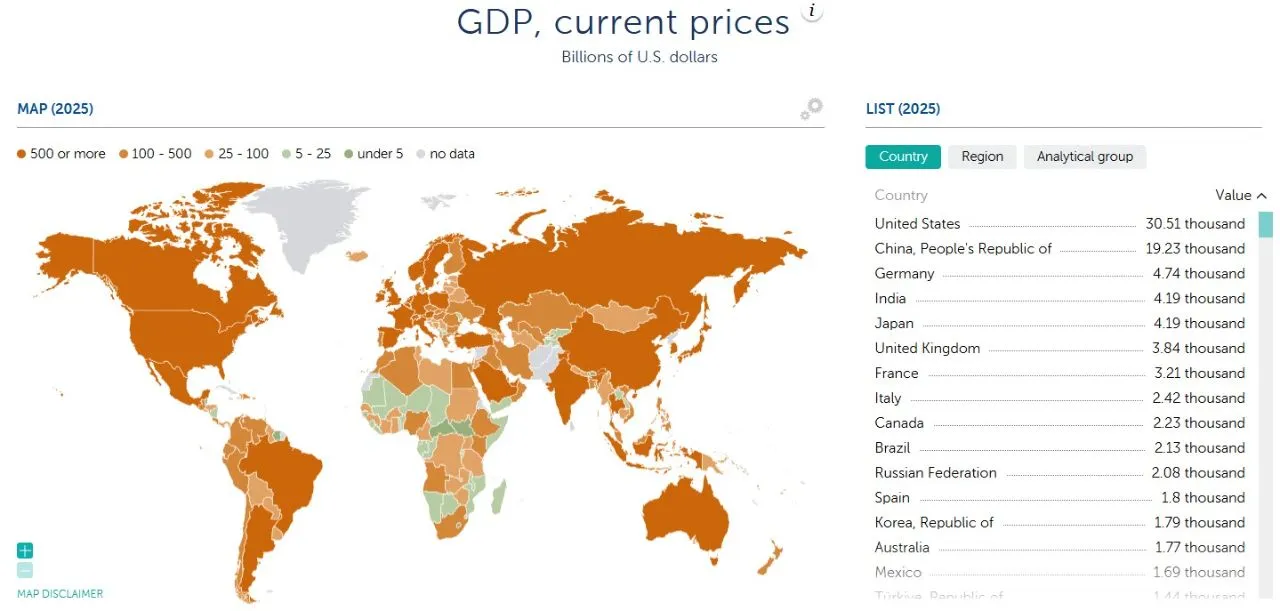
Kato’s remarks are being interpreted as positive for the crypto sector. According to International Monetary Fund (IMF) data, Japan is the world’s fifth-largest economy, with a gross domestic product (GDP) exceeding $4.1 trillion.
https://asset.coinness.com/en/news/7571af1cae99df69b112c000d61f717f.webp
Source: World Economic Outlook (April 2025)

In further positive news for the sector in Japan, it was reported on Aug. 18 that the FSA is likely to approve the issuance of JPYC, a Japanese yen-backed stablecoin, over the course of the coming months.


More to Read
View All
Web3 & Enterprise·

Dec 13, 2023

Bitget invests in Morph layer 2 network

Bitget invests in Morph layer 2 networkBitget, the Seychelles-incorporated crypto derivatives exchange, has injected a multi-million dollar investment into Morph, a Layer 2 blockchain that puts consumer experience at the forefront.Photo by Shubham Dhage on UnsplashCombining zero knowledge and optimistic rollupsThe collaboration, unveiled on Monday, signals a significant stride toward cultivating a novel, value-driven decentralized application (dApp) ecosystem. Morph, formerly known as Morphism, has garnered attention for its unique use of roll-up technology. By seamlessly blending optimistic and zero-knowledge (ZK) roll-ups, Morph aims to revolutionize scalability, reduce cost barriers, expedite dispute resolutions and ensure secure and adaptable transactions.The project’s modular framework allows individual components of the ecosystem to evolve independently, staying abreast of rapid innovations in consumer applications.Combating MEVA distinctive feature of Morph’s design is the Decentralized Sequencer Network, a mechanism that ensures swift and cost-effective Layer 2 transactions. This challenges the dominance of maximal extractable value (MEV) and eradicates central points of control. MEV involves the maximum amount of value that can be extracted from a block on a blockchain network. It may be manipulated through the ordering and sequencing of transactions on the chain.Technological innovation is not the sole objective of the Morph development team. Their ambition extends to creating a space where dApps seamlessly integrate into users’ daily lives, delivering tangible value. This consumer-centric approach prioritizes user experience through easy onboarding processes and intuitive interfaces. The network is attractive to developers due to lower cost barriers and accelerated dispute resolution.Gracy Chen, Managing Director of Bitget, underscored the significance of the collaboration, praising Morph’s exceptional team, multicultural approach and strategic capabilities. Chen notes that Morph’s emphasis on a decentralized and consumer-centric approach aligns seamlessly with Bitget’s vision. This partnership, she believes, has the potential to transform the blockchain space, making the technology more accessible for everyday use and unlocking widespread consumer adoption.Cecilia Hsueh, Co-Founder and CEO of Morph, expressed gratitude for Bitget’s support, emphasizing that the recent capital infusion underscores confidence in Morph’s unique value proposition, setting the stage for an upcoming seed funding round. The strategic alliance with Bitget provides Morph with a robust platform for growth, tapping into Bitget’s expansive user base of 20 million exchange users and 12 million Bitget Wallet users. Notably, Morph had previously entered into a strategic alliance with Foresight Ventures, a crypto fund based in Singapore.Looking ahead, Morph is gearing up for significant milestones as it develops further. The project plans to intensify the refinement of its technical framework and broader ecosystem in the coming months. Notably, Morph is slated to launch its public testnet in January 2024, followed by the beta mainnet of its Optimistic zkEVM, which is scheduled for Q2 2024.As Bitget continues to forge ties with up-and-coming Web3 entities, this collaboration with Morph has the potential to propel the project towards its strategic goals but also sets the stage for a transformative shift in the landscape of Layer 2 solutions.

news
Web3 & Enterprise·

Nov 16, 2023

Korean pro female golfers to compete in WEMIX golf tournament this weekend

Korean pro female golfers to compete in WEMIX golf tournament this weekendThe world’s first blockchain-assisted golf tournament, WEMIX Championship 2023, will take place this weekend at the Haeundae Beach Golf and Resort in Busan. 24 female golfers from the Korea Ladies Professional Golf Association (KLPGA) — including the top 20 who earned the most WEMIX points during the preliminary Race to WEMIX Championship — are set to compete.Photo by Mick De Paola on UnsplashBringing blockchain to sportsNotably, blockchain technology is incorporated into all aspects of the tournament. This includes dynamic Real World Event NFTs that are available via NFT Is Life Evolution (NILE), Wemade’s decentralized autonomous organization (DAO) and NFT platform. These NFTs come in two categories: “ticket NFTs,” which function as admission tickets and food or parking vouchers for spectators, and “prize NFTs,” which contain WEMIX token awards for tournament winners. The total prize budget is one million WEMIX, or approximately KRW 2.4 billion ($1.9 million) as of 4:30 p.m. on Thursday (local time). The first-place winner will receive 250,000 WEMIXThe tournament venue will also have a Gallery Plaza with various activities and showcases for visitors to enjoy, like exhibitions for Volvo’s newest vehicles, photo zones and putting games. The food and beverage zone will serve BAYC-themed burgers from Californian burger brand Bored and Hungry, as well as beverages from Hide Me, Please, a Korean food and beverage NFT membership brand. BAYC is the globally renowned IP from the Bored Ape Yacht Club NFT collection.The competition’s top playersMeanwhile, the subject of many golfing enthusiasts’ interest is Im Jin-hee, the golfer who won the most WEMIX points during the Race to WEMIX Championship with 6,450 points. She secured 90,000 WEMIX for earning the top ranking, adding another personal achievement to her successful season this year. Coming in second and third place were Lee Ye-won and Kim Min-byeol. The final results of the competition were determined based on the golfers’ performances in the Lotte Rent-a-Car’s Ladies Open and the SK Shieldus-SK Telecom Championship.

news
Policy & Regulation·

Jan 03, 2025

INDODAX snags full licensing in Indonesia

INDODAX, Indonesia’s largest virtual asset trading platform by trading volume, has acquired full licensing in Indonesia from the local regulator. That’s according to a report published by local media outlet VOI. The license, a Physical Crypto Asset Trader (PFAK) license, has been awarded to the company by Indonesia’s Commodity Futures Trading Supervisory Agency, better known as BAPPEBTI.  The license will place INDODAX in a complaint position within the Indonesian market, relative to local regulations. The business has been issued certificate number 10/BAPPEBTI/PFAK/12/2024 by the regulator, its approval certificate as a Physical Crypto Asset Trader.Photo by Mark König on UnsplashMandatory registration requirementIn December 2023 the authorities in Indonesia set out a mandatory requirement for crypto trading entities to register with the Commodity Future Exchange (CFX). CFX is Indonesia’s national crypto bourse, while INDODAX is a member. As of April 2024, 35 crypto exchanges had been registered with the regulator. CFX has been given the mandate to monitor crypto exchange operations, to safeguard investors by ensuring exchanges abide by local regulations. Fendy Tan, chief financial officer (CFO) at INDODAX commented on the firm’s recent licensing milestone, stating: "We are grateful to BAPPEBTI and CFX for the trust given through this full license. The long process that must be passed reflects our commitment to providing the best protection for users. The license number 10 also has a special meaning, which symbolizes perfection, and symbolizes the 10-year journey of INDODAX in leading the crypto industry in Indonesia."  Liquidity and SOP requirementsIn order to acquire this license INDODAX had to comply with BAPPEBTI Regulation Number 8 of 2021 and Number 13 of 2022. It has also had to ensure a minimum paid-up capital of 100 billion Indonesian Rupiahs ($6,158,000), and a minimum equity of IDR 50 billion ($3,079,000). Furthermore, the company has had to implement a set of standard operating procedures (SOPs), together with achieving ISO certification in accordance with global security standards, with specific emphasis on complying with regulations to safeguard customer funds according to the balances held on account of fiat currency and digital assets by INDODAX customers. INDODAX is understood to have 7.1 million customers while a transaction volume of 109 trillion Indonesian rupiahs was reached for the period January to November 2024. BAPPEBTI had extended a deadline for the crypto licensing of exchanges late last year, a move welcomed at the time by INDODAX CEO Oscar Darmawan. Darmawan said that the move would strengthen the industry by ensuring that market participants were compliant with recently introduced regulations. While this licensing milestone is a positive for INDODAX, the firm had faced challenges in 2024. In September it emerged that the platform had been compromised with the loss of around $18 million in digital assets. Meanwhile, the authorities in Indonesia had planned to switch crypto market oversight from BAPPEBTI to the Financial Services Authority (OJK) by Jan. 12. However, a recent report published by the Jakarta Globe suggests that the Indonesian government has yet to finalize this regulatory transfer.

news
Loading