Top

Boyaa Interactive Greenlights $5 Million Investment in Bitcoin and Ether

Web3 & Enterprise·August 12, 2023, 1:55 AM

Boyaa Interactive International Limited, a Hong Kong-based investment holding company with a track record in developing online chess, card, and puzzle games, has made a strategic move with a proposed investment in digital assets.

The company’s board of directors has recently given the green light for the allocation of a substantial budget amounting to $5 million for the purpose of acquiring cryptocurrencies.
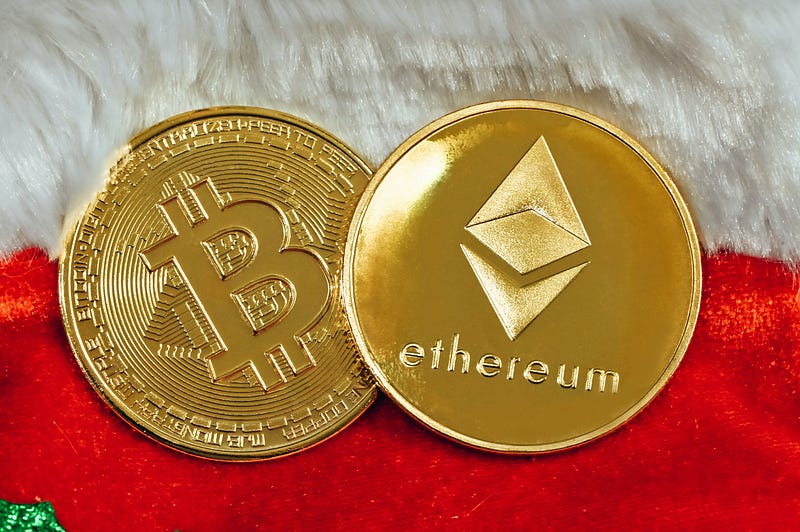
Photo by Traxer on Unsplash


Web3 positioning

The Chinese company, incorporated in the Cayman Islands, announced the move as Boyaa Interactive seeks to position itself for a dynamic shift into the realm of Web3.

While the exact allocation breakdown was not detailed in the disclosure, the company outlined that its primary focus would be on procuring established cryptocurrencies, specifically Bitcoin (BTC) and Ether (ETH). Boyaa Interactive intends to execute these purchases through regulated and licensed trading platforms within the upcoming year.

In a letter addressed to its shareholders and potential investors, the company emphasized the strategic nature of this decision:

“The purchases of cryptocurrencies are for the consideration of the Group’s future business layout into the field of Web3. The Board is of the view that the purchases of cryptocurrencies (including mainly Bitcoin (BTC) and Ether (ETH)) by the Group are in the interests of the Company and its shareholders as a whole.”


A challenging recent history

The move towards cryptocurrencies is a significant pivot for Boyaa Interactive, a company that has navigated a series of challenges in recent years. In 2018, the company’s Chairman and CEO, Zhang Wei, faced legal troubles and was sentenced to 12 months in prison for bribery, which led to his resignation from all executive and management positions.

Subsequent restructuring saw Dai Zhikang stepping in as the new Chairman of the board, while Tao Ying assumed the role of an Executive Director and Chairman of the Nomination Committee.

Financially, Boyaa Interactive experienced a tough period marked by revenue contraction. The company reported revenue declines over the course of 2018, largely attributed to a governmental crackdown on online poker applications and the discontinuation of poker as a recognized competitive sport. Regulatory risks stemming from the Chinese government’s stance on Texas Hold’em poker games resulted in a substantial falloff in revenue by comparison with past performance.


Funds seizure

These challenges cascaded into the following year, when the company encountered a substantial freeze on its funds. In 2019, a Chinese court ordered the freezing of RMB 635 million (approximately $88.6 million) belonging to Boyaa Interactive, following the legal actions against Zhang Wei and his associated entities.

One of the company’s subsidiaries, Boyaa Shenzhen, was found guilty of offering bribes. The company responded by clarifying that the frozen funds could potentially be confiscated if linked to Zhang’s misconduct. However, Boyaa Interactive also stressed that it had not been directly implicated in the case, thus mitigating the legal risks to the broader organization.

Amidst these adversities, Boyaa Interactive’s decision to invest in cryptocurrencies demonstrates its openness to adapting to changing technological landscapes and exploring new opportunities in Web3.


More to Read
View All
Policy & Regulation·

Jan 10, 2024

Report finds Asian nations strengthening regulatory oversight of crypto

In a global effort to bolster regulatory control over the cryptocurrency sector, Asian nations feature prominently among 17 jurisdictions globally, who have implemented tighter cryptocurrency regulations in 2023. That’s the view expressed by blockchain analytics firm TRM Labs in a report published on Monday.Photo by CARTER SAUNDERS on Unsplash2023 notable for regulatory tighteningThe increased scrutiny comes on the heels of several crypto meltdowns in 2022, including the collapse of major platforms like Terraform Labs, Celsius, BlockFi and FTX, resulting in a market rout that wiped out trillions of dollars in value. The subsequent year witnessed an extraordinary surge in regulatory measures globally, with governments prioritizing consumer protection in the volatile crypto space. TRM Labs' report indicates that the jurisdictions strengthening consumer protection measures accounted for 80% of the 21 studied, representing 70% of global exposure to cryptocurrencies. As the crypto ecosystem grappled with the aftermath of the FTX collapse at the beginning of 2023, regulatory actions surged, shaping a transformative year for the industry. The TRM Labs report emphasizes that nearly half of the jurisdictions tightening crypto regulations in 2023 prioritized increasing consumer protection measures. Additionally, international organizations, including the G20, Financial Action Task Force, Financial Stability Board, International Monetary Fund and the International Organization of Securities Commissions, played a role in shaping global frameworks and policy recommendations for cryptocurrency regulation. While prominent regulatory moves included the European Union's implementation of the Markets in Crypto Assets Regulation (MiCA) in June, Asian countries were particularly active in rolling out regulatory controls and measures relative to digital asset markets.  Stronger measures in SingaporeSingapore, recognized as an early adopter of crypto regulation, took significant steps in November to curb retail speculation in cryptocurrencies. The city-state’s central bank and financial regulator, the Monetary Authority of Singapore (MAS), brought in these restrictions following a year-long public consultation process, together with a review of cryptocurrency platforms. The country set itself apart from other jurisdictions by becoming one of the first to finalize rules governing stablecoins. That regulatory action included the establishment of a comprehensive framework relative to stablecoin operations. South Korea and Australia increased scrutiny of the cryptocurrency sector, contributing to the global trend of regulatory tightening. Hong Kong licensingHong Kong introduced a new licensing regime for centralized crypto exchanges, aligning with its goal to become a global hub for virtual asset businesses. Following its major initiative in October 2022 to support the virtual asset sector, it has since implemented a mandatory licensing regime for centralized crypto exchanges, allowing them to accept retail investors. Eleven companies, including OKX, one of the largest exchanges by trading volume, have submitted applications for the license in the city. In December, Hong Kong followed Singapore’s lead, by proposing stringent rules for stablecoin issuers, prohibiting unlicensed companies from selling stablecoins to the city's retail investors through regulated channels or actively marketing their tokens within the city. These rules are considered challenging for stablecoin issuers and may potentially deter major stablecoin operators like Tether and USDC from entering the city, according to experts. As Hong Kong solidifies its regulatory stance, it positions itself alongside other major players, contributing to the global evolution of cryptocurrency oversight.

news
Web3 & Enterprise·

Sep 21, 2023

Gala Music’s First K-pop NFT Drop Sells Out in Seconds

Gala Music’s First K-pop NFT Drop Sells Out in SecondsWeb3 music streaming platform Gala Music announced on Wednesday that the NFT drop for its first K-pop artist Ferry Blue’s latest single, “Breaking the Rules”, has sold out in just 3.4 seconds.Photo by C D-X on UnsplashFerry Blue’s journey to NFT successFerry Blue is an independent girl group that debuted in September 2021 with their album “Call My Name.” The members — Dozin, Xiho, Hyeyoung, Seul, Seona, and Hyunji — are unaffiliated with any entertainment agency, often working part-time jobs. Their new single, “Breaking The Rules,” which was composed using generative artificial intelligence (AI), was released on Gala Music last Tuesday where it is currently available for streaming. The NFT drop opened for public sale the following day at 5 AM KST, during which a total of 90 NFTs were minted and sold for $99 each.The drop garnered significant attention as it was Gala Music’s first collaboration with a K-pop artist. “Ferry Blue has made a mark not only on our platform but also in the global Web3 market,” Gala Music said. “We look forward to more K-pop artists expanding their presence worldwide through our platform in the future.”Gala Music’s innovative approach to enjoying musicEstablished in February last year, Gala Music has released over 350 songs from 86 artists, including rapper Snoop Dogg and DJ Steve Aoki. The decentralized music platform operates under a Learn-to-Earn (L2E) system, where listeners can stream and collect music tracks and then pair them to a node to share with others. Node operators and track owners can receive tokens for their contribution to the platform.

news
Web3 & Enterprise·

Jul 03, 2025

South Korea seeks buyer for NXC shares tied to gaming giant Nexon

The South Korean government has begun the process of selling its stake in NXC, the largest shareholder of Nexon, a video game company originally founded in South Korea and now headquartered in Japan. According to the Seoul Economic Daily, which cited industry sources, the Ministry of Economy and Finance began a public sale process on June 30 for its shares in NXC. These shares were received as payment for inheritance tax from the family of Nexon’s late founder, Kim Jung-ju. In February 2023, Kim’s widow, Yoo Jung-hyun—who also serves as chair of the board at NXC—along with other family members, transferred 851,968 NXC shares to the government to settle the inheritance tax liability.Photo by Kelly Sikkema on UnsplashEarlier failed sale attemptsThe government’s latest attempt to sell the shares follows two previous efforts that failed, primarily due to high asking prices at the time. The current estimated value of the shares stands at 4.7 trillion won (approximately $3.47 billion), reflecting a 20% premium over their net value due to the rights associated with company control. However, the shares are expected to sell at a lower price, since acquiring them would not lead to actual control of the company—Kim’s surviving family still holds a majority stake in NXC. Industry insiders view Chinese tech giant Tencent as a strong contender to purchase the shares. However, Tencent recently denied reports from last month that claimed it had approached Kim’s surviving family to discuss a possible acquisition of Nexon. The company had also expressed interest in acquiring Nexon back in 2019 but ultimately did not take part in the bidding process. According to Chosun Ilbo, a Tencent acquisition is being viewed as a possibility, as the Shenzhen-based firm continues efforts to secure overseas intellectual property. One industry source noted that Tencent tends to invest in Korean game developers every three to four years. The source also mentioned that Tencent had approached Korean venture capital analysts specializing in gaming last year to gather information for a potential acquisition shortlist. If Tencent were to purchase all of the government-held NXC shares, it would become the second-largest shareholder in the company. Given its ongoing investments in the Korean gaming sector, the source said it is likely Tencent will participate in the sale process organized by the government. Nexon’s blockchain pushNotably, Nexon has been expanding its presence in the cryptocurrency space. According to data from Bitcoin Treasuries, the company holds 1,717 Bitcoin (BTC), acquired at an average price of $58,226 per coin. Beyond its BTC investment, Nexon is actively exploring blockchain technology through its Web3 IP-expansion project, NEXPACE.  This initiative features the MapleStory Universe ecosystem, along with MapleStory N, a PC-based massively multiplayer online role-playing game (MMORPG) that incorporates blockchain technology. Both projects are powered by the NXPC token. MapleStory was originally developed by Wizet Studio in 2003 and became part of Nexon when the company acquired the studio the following year. 

news
Loading