Top

SGX to list Bitcoin perpetual futures in H2

Web3 & Enterprise·March 13, 2025, 8:21 AM

Singapore Exchange Limited (SGX), the city-state’s primary asset exchange, is in the process of establishing Bitcoin perpetual futures trading on the platform.
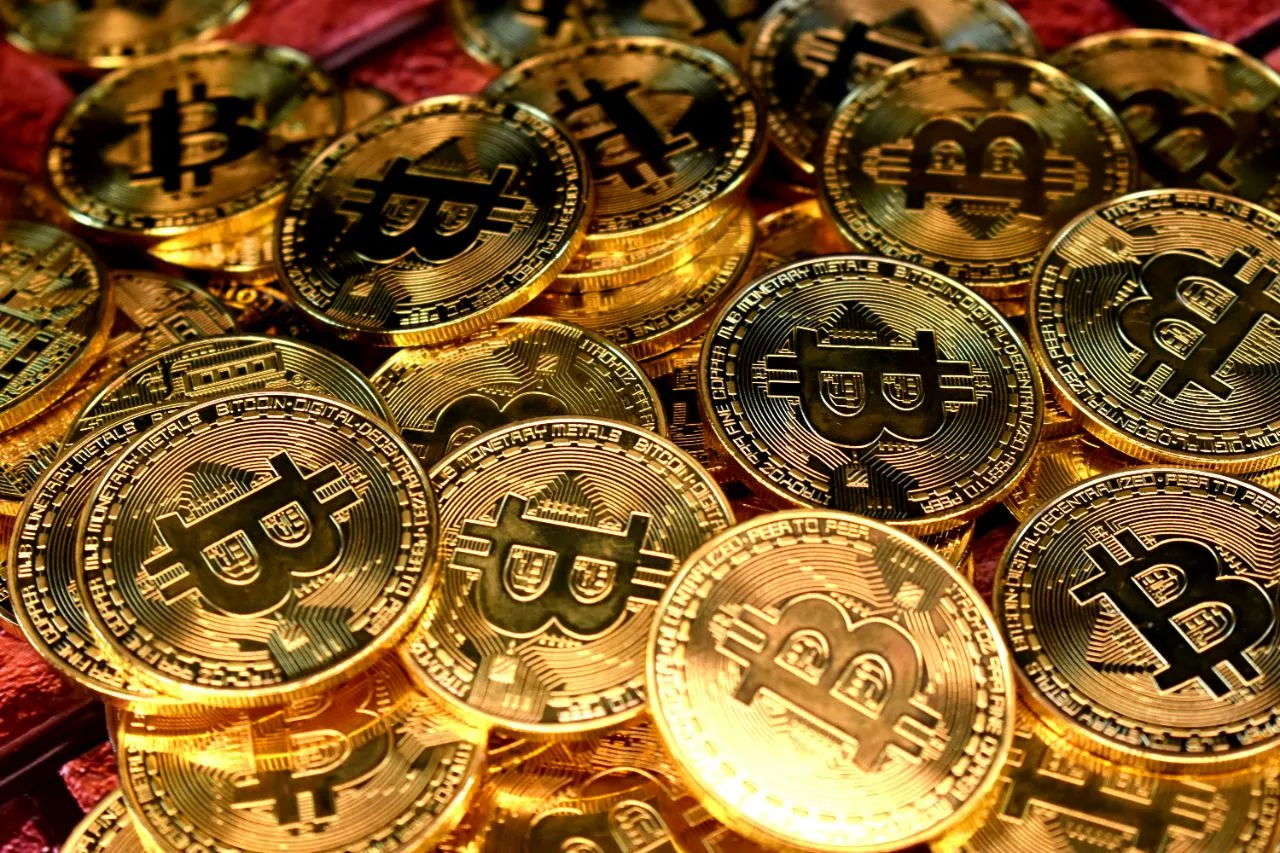
https://asset.coinness.com/en/news/df33c6d2d3dd1561e10b71712e87a852.webp
Photo by Kanchanara on Unsplash

Institutional product offering

According to a report published by Bloomberg earlier this week, the exchange platform intends to launch Bitcoin futures sometime during H2 2025. The product launch will be subject to regulatory approval from the Monetary Authority of Singapore (MAS).


A spokesperson for the company told Bloomberg that the product offering will be geared exclusively towards institutional investors and traders in an effort to “significantly expand institutional market access.” Retail access to the product will be prohibited.


Once launched, these Bitcoin perpetual futures contracts, being offered through a traditional finance (TradFi) outfit like SGX, will help to blur the lines between TradFi and the emerging crypto sector.


Perpetual futures have no expiry date. They offer a means for traders to bet on price changes in an underlying asset while doing away with the need to take ownership of the asset itself.


Cautious approach

SGX has been cautious in listing crypto assets and derivative products. Last year the firm’s CEO, Loh Boon Chye, said that the time was not yet right for such listings. 


His concern back then was that any such product launches would need “sustainable ecosystem support,” adding that “that means demand, that means governance, that means structure.”


While spot Bitcoin exchange-traded funds (ETFs) had been approved in the United States at that point, there has been much further development in the crypto-sphere since then, following the election of a pro-crypto administration in the U.S. That event has had knock-on effects globally.


Singapore’s SGX isn’t the only traditional exchange platform to respond. Japanese futures exchange, the Osaka Dojima Exchange (ODEX), is gearing up to file an application with the Financial Services Agency (FSA) to list a Bitcoin futures product later this month.


Closer to home, an American digital asset marketplace that focuses on institutional trading, EDX Markets, has plans to introduce Bitcoin perpetual futures products to the Singaporean market, according to a report which emerged in January. In May 2024, EDX launched EDXM Global, a settlement platform, in Singapore.


This product launch by SGX serves the purposes of decision-makers in Singapore, who have been trying to position the city-state as a digital asset industry hub. Additionally, the move will bring greater acceptance of the digital assets sector from traditional market participants.


Crypto perpetual futures contracts were first pioneered by crypto derivatives exchanges like BitMEX back in 2016. Since then, other crypto-native platforms like Binance and OKX have offered these products.


In the case of unregulated offshore exchanges, the products have proven to be controversial, as at times, they have been used in a manner that has exposed market participants to counterparty risk. Failed crypto exchange FTX, together with its sister company Alameda Research, relied on the products in their trading activities.


SGX, as a seasoned, regulated TradFi operator, which holds an Aa2 rating from Moody’s, is likely to prove to be a more palatable option for institutional players.

More to Read
View All
Policy & Regulation·

Aug 01, 2023

Bank of Korea Explores Jeju, Busan, and Incheon for Citizen-Centric CBDC Pilot Test

Bank of Korea Explores Jeju, Busan, and Incheon for Citizen-Centric CBDC Pilot TestThe Bank of Korea (BOK) is reportedly reviewing three potential locations for a pilot test of a citizen-centric payment system utilizing the Korean Won central bank digital currency (CBDC). Instead of choosing Seoul, the nation’s capital city, the BOK is considering Jeju, Busan, and Incheon for the pilot. That’s according to local tech news outlet IT Chosun.The three cities have been selected as possible testbeds, and discussions with commercial banks are ongoing to move the project forward. Once a city is chosen, the BOK will collaborate with local retailers, including hypermarkets, to test the CBDC payment and distribution system.Photo by Ethan Brooke on UnsplashRegional currency modelThe CBDC test will be limited to a specific area, operating similarly to regional currencies issued by municipal governments to stimulate local economies. The CBDC wallet app will be available to all citizens, but its usage will be restricted to retailers in the designated area. Presently, Jeju, Busan, and Incheon already have their own regional currencies managed by local banks and financial institutions.However, implementing the CBDC system poses technical challenges. In remote tests last year, the BOK discovered that transaction speeds for small transfers were slower compared to traditional payment processing providers in regions outside the Seoul Metropolitan Area.Against this backdrop, the BOK seeks to recruit an unusually large number of tech experts in order to build a large-scale system for small payments. The bank has been actively hiring individuals for this purpose since the beginning of the year.CBDC test next yearWith the test scheduled for next year, the BOK aims to promptly select the test destination based on the system’s expected performance, estimated user numbers, and potential economic impact.While Busan is more or less shunned due to its large population, Jeju is emerging as a preferred choice. However, the final decision has been tentatively postponed due to internal issues within the BOK.Following the pilot test results, the BOK may gradually broaden the scope of the CBDC system. Meanwhile, in a similar development, China began its CBDC pilots in 2020 and has now expanded its CBDC use to 26 cities across 17 provinces.According to a BOK official, the Korean central bank is making seamless preparation for the test and engaging in discussions with commercial banks to explore their operating models and devise effective implementation strategies.

news
Policy & Regulation·

Aug 29, 2023

Laos Halts Crypto Miners’ Electricity Amid Drought and Debts

Laos Halts Crypto Miners’ Electricity Amid Drought and DebtsLaos, a leading producer and exporter of hydroelectricity, has made the decision to suspend electricity supply to cryptocurrency mining operations within its borders.Photo by Ioana Farcas on UnsplashTackling a perfect stormThe decision comes as a result of a perfect storm of challenges, including a struggle to meet escalating power demands due to drought conditions, impending commitments to export electricity to Thailand, and the mounting debts of cryptocurrency mining companies.In a calculated move in 2021, Laos initiated a public-private pilot program aimed at delving into cryptocurrency mining and trading. The context for this move was China’s sweeping crackdown on mining activities, compelling miners to scout for alternative jurisdictions for their operations.In response, Laos granted authorization to a handful of entities, spanning construction conglomerates and a bank, to partake in the mining and trading of Bitcoin, Ethereum, and Litecoin. This led to a commitment to regulatory collaboration between government ministries, the Bank of Laos, and Electricité du Laos (EDL).Exploiting hydropowerLaos’ abundant and affordable electricity has placed it on the short list of locations for crypto miners to settle in. With an abundance of rivers and waterfalls, hydropower stands as one of the nation’s primary energy sources, offering a renewable source of cost-effective electricity.However, events in 2023 have disrupted that narrative. A persistent drought has hit the country during the first half of the year, which triggered an unprecedented surge in the demand for electricity from sources other than hydro.The dependence on hydropower, constituting 95% of the nation’s energy generation, struggled to keep pace with the demand. As a direct consequence, EDL, a state-owned electricity distributor, announced the cessation of electricity supply to crypto mining operations.The problem has compounded as Laos finds itself committed to exporting substantial quantities of electricity to the Electricity Generating Authority of Thailand (EGET), serving as a lifeline for Thailand’s power grid during the forthcoming dry season. This external commitment has, in turn, further strained the local capacity for electricity supply.Another Asian country, Bhutan, has also gotten involved with crypto mining in an effort to exploit its hydropower resources, where 99% of electricity supply comes from hydropower within the kingdom.Unpaid billsAnother dimension to the saga is the growing debt crisis faced by cryptocurrency mining operations. A representative of EDL cited the inability of these mining businesses to settle their accumulating electricity bills as a key factor in the decision for suspension. The Bank of Laos has further escalated matters by deciding to halt loans to cryptocurrency companies in January.Laos has had bold objectives to transform itself into Southeast Asia’s premier exporter of clean electricity. The nation’s topography, featuring mountainous terrain covering 70% of the country, has immense potential for hydropower, with over 26,000 megawatts of installed capacity and ambitious plans to double this figure.Hydroelectric dams like Nam Theun 2 have become conduits for substantial volumes of low-cost electricity, primarily directed towards neighboring Thailand and Vietnam. Meanwhile, projects like the Luang Prabang dam, boasting an installed capacity of 1,460 megawatts, underscore the country’s ambitions to develop hydropower further.Revenues from power exports have become a vital component in Laos’ gross domestic product (GDP), contributing almost 15%, as per a report from October 2022.

news
Markets·

Jun 23, 2023

Matrixport Forecasts Bitcoin Bull Market Breather Ahead

Matrixport Forecasts Bitcoin Bull Market Breather AheadMatrixport, the Singapore-headquartered digital asset financial services provider, has reported a significant surge in its Bitcoin Greed & Fear Index (GFI) over the past week.Photo by Karolina Grabowska on PexelsBitcoin Greed & Fear Index (GFI)The index, which tracks market sentiments, has skyrocketed from below 10% to a staggering 93%. Such a rapid increase indicates a prevailing sense of greed and excessive optimism among Bitcoin investors. As a result, industry experts are suggesting that a breather in the ongoing Bitcoin rally may be on the cards.Markus Thielen, the Head of Research and Strategy at Matrixport, has advised short-term traders to consider capitalizing on their gains given the exuberant levels recorded by the Bitcoin Greed & Fear Index. Historical analysis reveals that readings above 90% have often signaled interim tops in Bitcoin’s price, while readings below 10% have preceded notable price rallies.Upward movement favorableDespite the current high reading, the 21-day simple moving average of the index remains below the critical 90% mark. This implies that the overall trajectory for Bitcoin still favors upward movement. Thielen points out that the rising 21-day moving average indicates the potential for further upside once the current phase of exuberance subsides, allowing for consolidation in the market.Chart analysts share an optimistic view of Bitcoin’s future, with some predicting a potential rally towards the $35,000 mark and beyond. Josh Olszewicz, Head of Research at digital asset investment firm Valkyrie, highlights a falling wedge setup in Bitcoin’s recent price action.The successful bounce off the support level, combined with the completion of the falling wedge pattern, has heightened expectations for a move towards the mid-$30,000 range. Olszewicz does caution that significant resistance may arise in that zone, likely leading to a subsequent period of re-consolidation before any further upward progress can be made.In recent weeks, Bitcoin experienced a pullback from its mid-April high of $31,000, eventually finding support around the $25,200 level earlier this month. This pullback, often referred to as a “throwback,” historically acts as a catalyst for price rallies, as has been evident in the past few days.Ether gain potentialWhile Bitcoin’s rally has been impressive, Ether (ETH), the second-largest cryptocurrency by market capitalization, has seen a gain of 15.9% since last Thursday. However, Ether’s GFI index has yet to reach the 90% threshold, indicating potential room for further growth while Bitcoin takes a breather.Matrixport’s Bitcoin Greed & Fear Index has surged to an astonishing 93%, signaling heightened levels of greed and optimism among Bitcoin investors. Traders are advised to consider securing their gains as the index reaches exuberant levels.Nonetheless, the rising 21-day moving average suggests the potential for Bitcoin’s upward momentum to continue following a period of consolidation. At the time of writing, Bitcoin is trading around $31,200, based on CoinGecko data. Going into the weekend, that’s demonstrating continued growth. Meanwhile, Ether shows promising performance, with potential for further growth.

news
Loading