Top

China mulls yuan-pegged stablecoin approval

Markets·August 21, 2025, 2:33 AM

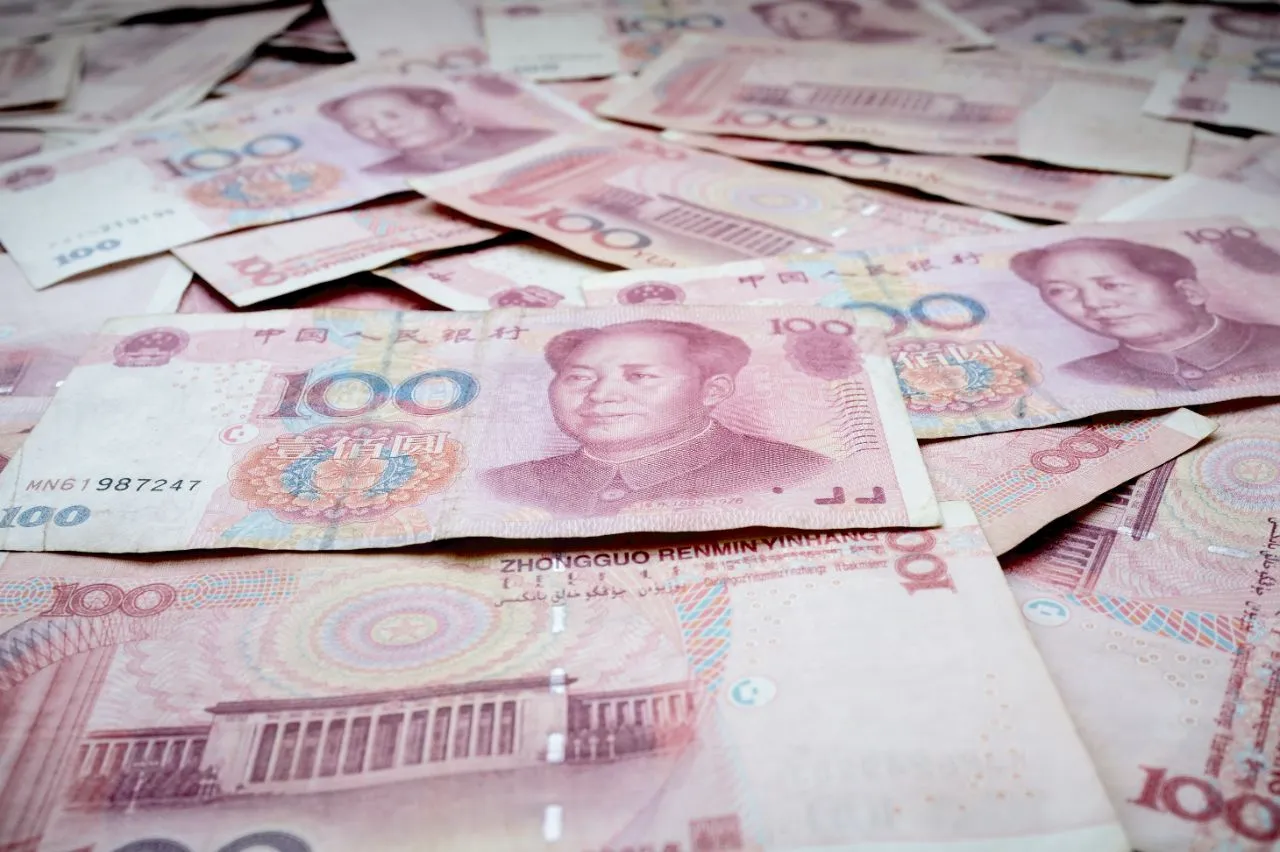
The Chinese authorities are reportedly mulling over the possibility of approving the use of stablecoins pegged to and backed by the Chinese yuan.


That’s according to a report published by Reuters on Aug. 20, with the publication citing “sources familiar with the matter.”
https://asset.coinness.com/en/news/cf8b7f92c82a395ababfae664b500dbc.webp
Photo by Eric Prouzet on Unsplash

Internationalization of the Chinese yuan

China’s State Council, its cabinet and primary administrative authority, has scheduled a review of yuan-backed stablecoins for later this month, a development that could potentially lead to their approval.


The Chinese have been leaders in recent years in the development of a central bank digital currency (CBDC), the digital yuan. The digital yuan was further along in its development than any other CBDC globally, with the Chinese making concerted efforts to bring the digital currency into use at home, with an eye toward global use for international trade.


While the U.S. dollar has enjoyed an extended period as the world’s reserve currency, the weaponization of the currency by the U.S., particularly through the application of sanctions, has led BRICS (Brazil, Russia, India, China and South Africa) nations to consider alternatives.


One of Reuters sources asserted that the Chinese authorities are now homing in on the potential to internationalize the yuan via stablecoins.


Setting the tone for stablecoin use

Members of the Chinese government leadership are expected to establish the tone for stablecoin use following their upcoming review, outlining the parameters within which the Chinese authorities will permit their use.


Reacting to this development, Robin Brooks, a senior fellow at the Brookings Institution, asserted that China’s newfound interest in yuan-backed stablecoins is a sign of “how insecure China is in the global financial system.”

Brooks added that the way to internationalize a sovereign currency is to promote the rule of law and property rights rather than pursue the use of stablecoins, which he described as “ridiculous.” 


Growing global interest

While the Brookings Institution is not directly backed by the U.S. government, the organization is nevertheless a Washington, D.C.-based think tank. Despite Brooks’ objection to the use of stablecoins, China is not the only nation to show interest in using them.

Taking to X, Raphaël Bloch, co-founder of crypto media platform The Big Whale, pointed out that increasingly, nations around the world are embracing stablecoins due to the efficiency of global currency distribution that is possible via public blockchain networks. 


Additionally, stablecoins offer an effective means of government debt financing, given that stablecoin reserves are backed by government bonds.


In the U.S., President Donald Trump has ruled out the pursuit of a CBDC. Last month, the U.S. House of Representatives passed the Anti-CBDC Act to prohibit the development of a CBDC by the Federal Reserve. Instead, Trump has said that a stablecoin regulatory bill working its way through the legislative system will ensure global dominance for the U.S. in the crypto sector.


In June a Deutsche Bank strategist claimed that the legislation would strengthen the U.S. dollar’s global dominance, with several American politicians having since expressed the same view.

Earlier this week, Japan’s Financial Services Agency (FSA) signaled that it is likely to approve the issuance of a yen-pegged stablecoin. Meanwhile, the authorities in South Korea are working on a bill related to won-pegged stablecoins.

More to Read
View All
Web3 & Enterprise·

Feb 03, 2024

3AC-founded OPNX Exchange announces closure

In a recent announcement OPNX, the Seychelles-incorporated cryptocurrency bankruptcy claims platform co-founded by the creators of the now-defunct hedge fund Three Arrows Capital (3AC), has revealed its decision to cease all operations.Photo by Kelly Sikkema on UnsplashFebruary 14 shutdownIn a message to its users, subsequently shared on social media on Thursday, the OPNX team expressed its commitment to ensuring an orderly closure, urging users to settle all positions by Feb. 7 and withdraw their funds from the platform before Feb. 14, as all withdrawal functionality will be disabled thereafter. The team expressed gratitude to the OPNX community, acknowledging their dedication and trust throughout the platform's existence. Short for "Open Exchange," OPNX served as both a hybrid bankruptcy claims platform and a crypto exchange, enabling users to trade creditor claims of bankrupt crypto companies. The origin of OPNX can be linked to two defunct crypto entities — Coinflex and 3AC. Seychelles-based Coinflex was a crypto yield platform that was forced to suspend withdrawals in June 2022. It subsequently entered into a bankruptcy process. Coinflex co-founder Mark Lamb joined forces with 3AC’s Kyle Davies and Su Zhu to found OPNX. In October, Coinflex creditors sued Lamb, alleging that he had appropriated Coinflex's intellectual property, customer base, employees and technology to establish OPNX. Mired in problemsWithin its short existence, OPNX has been mired in problems. From the very outset, there was little goodwill for the new venture, given that many crypto sector participants took a dim view of Zhu and Davies due to the turmoil the collapse of 3AC caused within the industry. In April of last year, OPNX claimed to have significant venture capital backing, only for many of the VC entities mentioned to quickly deny such claims subsequently. The following month, the local regulator in Dubai, the Virtual Assets Regulatory Authority, formally reprimanded the OPNX founders for promoting an unregulated business within the Emirate of Dubai. In August, it emerged that VARA had hit OPNX and its founders with a hefty fine. Following the closure announcement, the native OX token of OPNX experienced a significant price decline. Over the course of the past 24 hours, the token unit price has fallen 13.6% to $0.007981. The failure of 3AC led to Teneo, the firm responsible for liquidating 3AC's assets, subpoenaing Zhu and Davies for concealing details of their physical whereabouts through messages on social media platform X. The closure of OPNX adds to the challenges faced by Zhu and Davies, as Teneo is actively seeking to recover $1.3 billion directly from the co-founders. The claim asserts that Zhu and Davies engaged in substantial leverage with investor funds after the insolvency of their hedge fund. In September 2023, Singapore's central bank issued nine-year prohibition orders against Davies and Zhu, citing alleged violations of the country's securities laws at Three Arrows Capital. All the while, crypto community sentiment remains negative where OPNX and its founders are concerned. Taking to social media, Ikigai Asset Management’s Travis Kling didn’t mince his words, stating:”I mean it from the bottom of my heart when I say **** these criminals.” As OPNX concludes its operations, the unfolding events surrounding its co-founders and their association with the failed hedge fund continue to draw attention to the need for the industry to raise its standards.  

news
Web3 & Enterprise·

Nov 17, 2023

Metaworld Global’s Web3-based shopping metaverse to be launched worldwide next month

Metaworld Global’s Web3-based shopping metaverse to be launched worldwide next monthHong Kong-based Metaworld Global’s shopping metaverse, MWCC, is scheduled for global release on Dec. 25. As a Buy-to-Earn (B2E) platform, it is expected to surpass the limitations of traditional online shopping by incorporating a Web3-based online store and offering a unique, rewards-based shopping experience for customers.“This will be a shopping mall that no consumer has ever experienced before,” said Lee Geun-ho, who is in charge of development at Metaworld Global.Photo by Lucrezia Carnelos on UnsplashForging a new digital frontierMWCC aims to become a decentralized commerce ecosystem built together by buyers, sellers and influencers. The ecosystem will run on tokens that can be used across several social settings, thus expanding the scope of cryptocurrency beyond traditional settings. It will also harness various blockchain technologies to create a social media-based consumer network, ultimately handing over digital ownership to shoppers.What also sets MWCC apart is that it will employ a multi-purpose middleware to carry out global-scale commerce activities such as intermediary payment and copyright monetization via NFT marketplaces, among others. Notably, the platform plans to mint high-value, collectible NFTs.Supporting all participants in the shopping processSuppliers within the MWCC network who own manufacturing facilities will be able to export their products to over 200 countries through the platform’s promotion and logistics systems. Sellers can also use social media to sell their products to customers overseas and get their transactions settled in real-time. In turn, these customers can easily purchase Korean products without the hassle that is usually associated with making payments on overseas online shopping sites.“MWCC offers benefits for buyers, sellers and suppliers, which will serve as the base for a new operation system in the digital era,” Lee explained.

news
Policy & Regulation·

Dec 23, 2023

Terraform Labs civil trial proceeds with confidential filings

Terraform Labs civil trial proceeds with confidential filingsSingaporean blockchain development firm Terraform Labs, the creator of the failed Terra blockchain protocol, has reached an agreement on a protective order in their ongoing civil case with the United States’ Securities and Exchange Commission (SEC).Photo by Thomas Habr on UnsplashData shielded from public disclosureThe decision, sanctioned by the U.S. District Court Judge Jed Rakoff in the Southern District of New York on Wednesday, ensures that materials marked as confidential by the involved parties will remain shielded from public disclosure. The court is obligated to seal any discovery filings labeled confidential ahead of the trial.Judge Rakoff conveyed his likelihood of denying requests to unseal these confidential documents, although the order did not delve into the specific rationale for maintaining their confidential status beyond citing “good cause.” The finalized agreement on this protective order took place on Dec. 18, with legal representatives from both the SEC and Terraform Labs, including co-founder Do Kwon, giving their consent. Kwon, presently detained in Montenegro, faces potential extradition to the United States or South Korea.Pivotal momentThe depegging of Terraform’s stablecoin TerraUSD (UST) from the U.S. dollar marked a turning point in the cryptocurrency sector. This event is believed to have significantly contributed to the crypto market downturn in 2022, as it had a knock-on effect on countless other crypto businesses and platforms that were over-exposed to the flawed algorithmic currency.That chain of events led to the SEC taking action after the fact. However, it has subsequently also pursued a much criticized “regulation by enforcement” policy relative to the crypto sector. To that end, the Commission has pending cases against Coinbase, Ripple, Kraken and Binance, among others.In February, the SEC accused Terraform Labs and Do Kwon of conducting a multi-billion dollar crypto asset securities fraud by offering and selling unregistered securities. As proceedings have unfolded, both Terraform and the SEC have traded unsuccessful attempts to obtain summary judgment.Far-reaching consequencesThe ongoing SEC vs. Terraform civil case carries potential far-reaching consequences in terms of legal precedents within the cryptocurrency sector. In a separate ruling in August, the court allowed Terra to issue subpoenas to FTX entities as part of FTX’s bankruptcy proceedings. Judge Rakoff, in November, accepted confidential materials from Jump Crypto Holdings for discovery in this case.Troubled crypto lender Genesis Trading has also been tangled up in the proceedings with the courts directing it to comply with a subpoena initiated by Terraform Labs. The outcome of this case is poised to offer essential legal guidance for numerous companies operating in the crypto space.The SEC’s regulatory approach toward cryptocurrency firms in the United States has been subject to considerable debate and criticism. The commission’s alleged “regulation by enforcement” strategy, especially in dealings with major players in the crypto industry, has drawn accusations.While many in the U.S. have been unhappy with “regulation by enforcement,” the upside is that over the longer haul, the courts will be able to eventually furnish the regulatory clarity that the SEC refuses to provide. The ongoing scrutiny of regulatory approaches and the outcomes of cases like Terraform Labs vs. SEC will undoubtedly shape the future legal landscape of the cryptocurrency industry.

news
Loading