Top

Bybit restores app access in India amid evolving regulatory stance

Web3 & Enterprise·September 15, 2025, 12:39 AM

Cryptocurrency exchange Bybit has reinstated access to its mobile app for users in India via Apple’s App Store and Google Play, saying website access has been restored following regulatory steps taken earlier this year. The company said it registered with the Financial Intelligence Unit–India (FIU-IND) in January 2025 and re-enabled trading functions for eligible users on Feb. 25, with full app access announced on Sept. 8.
https://asset.coinness.com/en/news/eab1f85d79c1905fb34c1cc0640f817b.webp
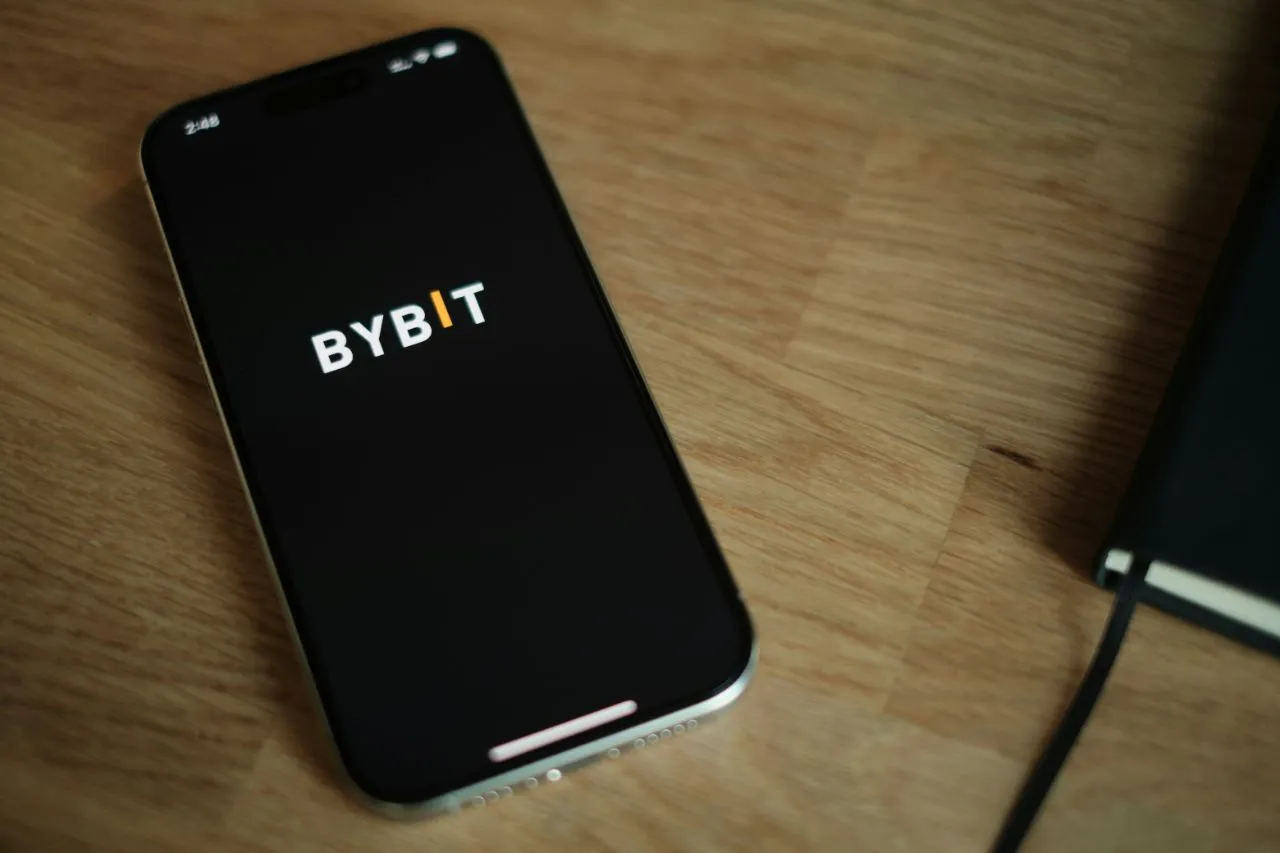
Photo by appshunter.io on Unsplash

Penalty and registration paved way for Bybit’s comeback

The return follows an enforcement action at the start of the year. On Jan. 31, FIU-IND imposed a penalty of 92.7 million Indian rupees (approximately $1.05 million) on Bybit for violations under India’s anti-money laundering law and said its website had been blocked under the Information Technology Act until compliance was achieved. The following month Bybit announced it had paid the penalty and completed its FIU registration.


Bybit’s latest announcement comes against the backdrop of India’s cautious approach to sector-wide rules. A government document reviewed by Reuters indicates New Delhi is distancing itself from a comprehensive cryptocurrency law, citing the Reserve Bank of India’s view that regulation could confer “legitimacy” and elevate systemic risks, while an outright ban would not stop peer-to-peer or decentralized exchange activity.


India does not have a comprehensive crypto law but applies a flat 30% tax on income from transfers of virtual digital assets (VDAs) and a 1% tax deducted at source (TDS) on consideration paid for VDA transfers under section 194S of the Income-tax Act.


Platforms bet on India despite tighter oversight

It's worth noting that authorities had moved to bring offshore platforms within local oversight. FIU-IND issued show-cause notices to nine foreign exchanges (Bitfinex, Bittrex, Binance, Bitstamp, Gate.io, Huobi, Kraken, KuCoin and MEXC Global) in December 2023 and sought to block access to non-compliant services. App store removals of several offshore exchange apps occurred in January 2024 following the notices.


Binance later registered with FIU-IND as a reporting entity after paying a fine of 188.2 million Indian rupees (about $2.14 million) for earlier violations, imposed in June 2024. KuCoin also registered, with a smaller penalty of $41,000. In March 2025, Coinbase joined the list by gaining clearance from the Indian financial regulator, announcing plans to launch offerings for retail customers in the country later this year, with other products to follow. Their rush to establish a foothold makes sense, as India topped the Chainalysis Global Crypto Adoption Index, underscoring the country’s widespread embrace of digital assets.


Bybit’s re-entry follows a major security incident unrelated to India’s rules. In February, the exchange reported a theft of roughly $1.5 billion in Ethereum (ETH), which the U.S. Federal Bureau of Investigation later attributed to North Korean actors known as “TraderTraitor.” Shortly after the incident, Bybit CEO Ben Zhou said the exchange had replenished the gap in the ETH reserves.

 

More to Read
View All
Policy & Regulation·

May 19, 2023

BOK Staffers Assess Crypto Market Vulnerabilities and Their Implications

BOK Staffers Assess Crypto Market Vulnerabilities and Their ImplicationsOn Thursday, the Bank of Korea’s (BOK) staff members published an assessment of the vulnerabilities in the cryptocurrency market and their potential implications. Here is the summary of the report.Photo by D Tan on Unsplash2022 crypto winterThroughout 2022, the worldwide crypto market faced a series of adverse occurrences, such as significant drops in the prices of major crypto-assets and the collapse of prominent crypto companies. These events shed light on the vulnerabilities that had accumulated during the rapid growth of the market.The first major event occurred in May 2022 when the algorithmic stablecoin TerraUSD experienced a sharp decline, resulting in substantial losses and bankruptcies for numerous retail investors and crypto firms. This incident significantly eroded confidence in the overall crypto market. The subsequent bankruptcies of prominent crypto lender Celsius and hedge fund Three Arrows Capital (3AC) further highlighted the realization of risks commonly associated with traditional financial markets, such as multiple collateral loans and maturity and liquidity mismatches, within the crypto market.In November 2022, the well-known crypto exchange FTX filed for bankruptcy, demonstrating that the activities of a large crypto company can propagate risks through moral hazard and excessive profit-seeking behavior when it operates outside the realm of regulatory oversight.Similarities with TradFiThese negative events that unfolded in the global crypto market in 2022 share similarities with issues previously observed in financial markets, such as unsustainable business models, liquidity risk, leverage, and lack of transparency in financial conditions. These parallels suggest that if the crypto markets were subjected to comparable levels of regulation as traditional financial markets, it is plausible that the triggering of these risks could have been avoided altogether, or at the very least, the resulting damage could have been mitigated to some extent.Implications for the Korean marketAt present, it is deemed unlikely that events akin to those witnessed in overseas crypto markets will transpire in the Korean market. The Korean crypto-asset market has primarily evolved through exchanges, with limited influence from other enterprises such as crypto issuers and decentralized lending platforms. In addition, Korean crypto exchanges are subject to regulation under the Act on Reporting and Using Specified Financial Transaction Information. This mandates the separation of customer deposits from exchange assets and the strict management of custodial crypto-assets through secure wallets. Additionally, Korean exchanges are prohibited from listing their own tokens on their platforms.However, there remains a dearth of information regarding the business structures of crypto companies that offer services similar to those in the traditional financial industry. This lack of information poses challenges in accurately assessing risk and providing adequate investor protection. Meanwhile, there is a potential for a deeper integration between the crypto market and users’ daily lives, particularly through major technology companies, gaming companies, and security tokens.SuggestionsIt is vital to ensure that crypto-assets are regulated based on the principle of “same activity, same risk, same regulation” through the ongoing development of crypto-asset-related legislation. The Financial Stability Board, an international body monitoring the global financial system, explained this principle in a 2022 paper: “Where crypto-assets and intermediaries perform an equivalent economic function to one performed by instruments and intermediaries of the traditional financial sector, they should be subject to equivalent regulation.”Additionally, it is necessary to stay aligned with major countries in terms of the speed and comprehensiveness of regulatory measures to prevent regulatory discrepancies across borders due to the global nature of crypto risks.Enhancing the effectiveness and efficiency of regulation requires the establishment and maintenance of a close cooperation system between authorities. This collaborative effort should encompass various aspects, including monitoring, information gathering, and supervision of the crypto-asset market. Notably, the widespread adoption of stablecoins can affect the stability of the overall financial system, including monetary systems and payment and settlement systems. Hence, it is necessary to strengthen the involvement of central banks in the monitoring and supervision framework for crypto-assets, including stablecoins, as demonstrated by legislative approaches adopted by major economies like the EU. Furthermore, imposing disclosure requirements, external audits, and documentation submission obligations on crypto-asset operators is advisable.

news
Policy & Regulation·

Aug 02, 2023

3AC Co-Founder Disputes US Jurisdiction Citing Singaporean Citizenship

3AC Co-Founder Disputes US Jurisdiction Citing Singaporean CitizenshipKyle Davies, the Co-Founder of the failed Singaporean crypto hedge fund Three Arrows Capital (3AC), has asserted that he is solely a citizen of Singapore and not of the United States.Photo by Towfiqu barbhuiya on PexelsEvading pursuit of damagesThe assertion may have relevance as it may mean that Davies can evade actions taken against him in a US court on the basis of a lack of jurisdiction. In a recent filing with the US Bankruptcy Court for the Southern District of New York (SDNY), Davies presented documents demonstrating that he had renounced his US citizenship in December 2020. He emphasized that he obtained citizenship in Singapore after being issued a passport in early 2021 and that he does not subject himself to the jurisdiction of US courts.$3.5 billion owedIn June it emerged that liquidators appointed for 3AC were seeking to recover $1.3 billion from the fund’s co-founders, Davies and Su Zhu. The firm reportedly owes creditors a staggering $3.5 billion.In the midst of public criticism surrounding the events leading to 3AC’s collapse, Zhu and Davies launched a platform called Open Exchange (OPNX), allowing trading claims against bankrupt crypto firms. Despite a deficit of goodwill for the duo in the crypto sector, they have been putting all their energies into the new venture.Last month, they outlined that they would donate future earnings from OPNX to 3AC creditors. It’s difficult to reconcile that claim when with this action, Davies is trying to evade contributing to creditors via the 3AC bankruptcy process and this legal action taken by the liquidator.Renounced citizenshipAccording to court documents, Davies officially renounced his US citizenship at the US Embassy in Singapore, citing his decision to reside in the country on a long-term basis. He revealed that he got married to a Singaporean national in 2017 and subsequently gained permanent residency in Singapore. Because Singapore does not permit dual nationality, Davies chose to renounce his US citizenship to establish himself fully as a Singaporean citizen.The submission of these documents came after 3AC’s liquidators requested a subpoena to gather information on the crypto hedge fund’s collapse. Both Kyle Davies and Zhu, were subpoenaed on Twitter, as their whereabouts were unknown. However, while Zhu, being a Singaporean national, might not be subject to the subpoena while residing outside the United States, Davies’ refusal to comply with the order led to discussions about holding him in contempt of court.In response to the subpoena controversy, Davies’ legal representatives claimed that he cannot be validly served with process as a non-party in the case, as he has not been a US citizen or resident since well before the case was initiated. They stated that the court lacks personal jurisdiction over him due to his renunciation of US citizenship. Accordingly, they requested that the Service Order and Compel Order, which were based on the assumption that Davies was a US citizen, be vacated.

news
Policy & Regulation·

Nov 30, 2023

Regulatory breach sees Philippines initiate blockade on Binance

Regulatory breach sees Philippines initiate blockade on BinanceIt’s been a very challenging year for global crypto platform Binance — one that doesn’t appear to be improving with the latest move to block access to the platform in the Philippines.Photo by Alexes Gerard on UnsplashUnlicensed to tradeIn a noteworthy development, the Philippines Securities and Exchange Commission (SEC) declared on Tuesday its intention to block access to the Binance platform due to regulatory irregularities.The SEC asserted in a statement that Binance lacks the necessary license to operate in the Philippines, cautioning the public against engaging in investment products on the platform. The regulator stated:”BINANCE is NOT REGISTERED as a corporation in the Philippines and OPERATES WITHOUT THE NECESSARY LICENSE AND/OR AUTHORITY.”The regulatory body is actively working to have Binance blocked in the country, citing concerns about unregistered investment products. The impending ban is set to take effect within three months, allowing investors a window to exit their positions held through Binance.Pushback on advertisingIn addition to its attempts to block access to the platform, the SEC has also approached tech giants Google and Meta (Facebook’s parent company), requesting the blocking of Binance advertisements on their platforms within the country. This is a response to social media campaigns designed to attract Filipino investors to the embattled cryptocurrency exchange. While users can still download the Binance app from Google and Apple app stores in the Philippines, the extent of investor activity in the country remains uncertain.Follows U.S. regulatory actionThese actions in the Philippines come hot on the heels of Binance’s CEO Changpeng Zhao (CZ) stepping down and pleading guilty in a U.S. money-laundering case. The Philippines’ ban adds to Binance’s challenges as it aims to expand in Southeast Asia amid legal troubles in the U.S. and restrictions on operations in China.Over the course of a three-month period earlier this year, the world’s largest crypto exchange platform lost its ability to trade in Germany, Canada, Belgium, the Netherlands and Cyprus. Additionally, French authorities have been investigating the platform for alleged illegal provision of digital asset services and aggravated money laundering.Facing regulatory pushback in the U.S. and Europe, Binance appeared to be concentrating on making further in-roads in Asian markets over the course of this past year. It had recently pursued a joint venture with Gulf Energy in Thailand to launch a new digital assets exchange.Media reports previously suggested that Binance was considering acquiring a Philippine company to obtain operating licenses in the country. The SEC’s move to ban the platform follows a warning issued last year against using Binance, and it represents a broader effort to regulate the cryptocurrency sector and protect the public interest.The recent guilty plea by CZ for violating U.S. money laundering laws has added to the legal woes of the cryptocurrency giant. CZ agreed to personally pay $50 million in penalties as part of a $4.3 billion settlement to resolve investigations into Binance’s practices. He may also still face prison time in the U.S. In the Philippines, the SEC warns that Section 28 of the Securities Regulation Code (SRC) allows the application of a fine of up to five million pesos ($90,000) and a maximum prison term of 21 years.

news
Loading