Top

OSL raises $300M to finance expansion

Web3 & Enterprise·July 27, 2025, 11:43 PM

OSL Group, a Hong Kong-based publicly listed digital asset exchange platform, has raised $300 million to finance further expansion of the business.

https://asset.coinness.com/en/news/bef1eed7545fc5d1e24ac2879d59d773.webp
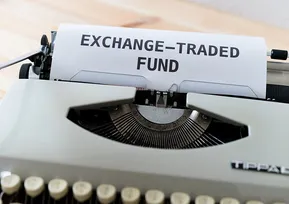
Photo by Towfiqu barbhuiya on Unsplash

Largest publicly disclosed crypto equity raise in Asia

In a press release published on July 25, the company claimed that it has completed the largest publicly disclosed equity raise to date within Asia’s digital asset sector. It suggested the funding signaled market confidence in the digital asset business model that the firm is pursuing. 


OSL intends to allocate the funding across three primary areas. Acquisition opportunities are one core area the company plans to home in on. It says that it will continue its “aggressive global expansion drive” through a combination of licensing, partnerships and acquisitions. 


As part of its global expansion strategy, last month the company acquired a 90% stake in Evergreen Crest Holdings, an Indonesian crypto exchange operator. In February, it rebranded CoinBest, a Japanese crypto exchange, as OSL Japan after acquiring it late last year.


Stablecoin initiatives

OSL plans to pursue new global business initiatives, including initiatives related to stablecoins and payments. It stated that it will accelerate its “build-out of global business and payment networks, integrating fiat currencies, stablecoins, and major digital assets.” The company feels that investment in infrastructure of this nature will facilitate its institutional and enterprise clients, giving them access to “secure, efficient, and seamless cross-border payment solutions.”


The third core area it will allocate funding to is working capital. OSL believes that enhancing the strength and depth of its working capital will give the firm a competitive advantage over its rivals in terms of reach, coverage, scale and volume.


The company’s Chief Financial Officer (CFO), Ian Wong, commented on this latest development, stating:


"This US$300 million equity raise marks a major milestone in our journey and reflects strong conviction in OSL's digital asset strategy and execution.”


OSL is already well established as a key player in the digital assets space in Hong Kong. Founded in 2003 as BC Technology Group, it later rebranded and in 2018 the company expanded its services to cater to the digital assets sector. In 2023, OSL, alongside rival HashKey, became the first digital assets companies in the Chinese autonomous territory to be licensed by the Securities and Futures Commission (SFC).


Supporting spot crypto ETF issuers

OSL supports asset management firms that have listed Bitcoin and Ether exchange-traded funds (ETFs) on the Hong Kong Stock Exchange (HKEX), through its staking and digital asset custody infrastructure. In April, the company was approved by the SFC to offer Ethereum staking services. In July 2024, the company claimed that 88% of spot digital asset ETF trading in Hong Kong had been carried out by firms that it has partnerships with.


The timing of the announcement of this latest development is interesting, given that one of the focuses for the funds raised is to develop stablecoin-related business, against a backdrop of Hong Kong’s new Stablecoins Ordinance coming into effect in less than a week from now.


Bloomberg reported last week that around fifty companies have expressed interest in obtaining stablecoin licensing in the city, with the local regulator and central banking institution, the Hong Kong Monetary Authority (HKMA), likely to issue ten licenses. 
More to Read
View All
Web3 & Enterprise·

Jul 13, 2023

Suspected Malicious Activity Drains AnySwap Tokens via Multichain Executor

Suspected Malicious Activity Drains AnySwap Tokens via Multichain ExecutorAccording to an on-chain sleuth known as Spreek, a person is using the Multichain Executor to drain tokens associated with the AnySwap bridging protocol.Multichain is a cross-chain routing network, established and maintained by a Chinese developer team. It supports in excess of 25 blockchains and more than 1,100 tokens.Photo by Marek Piwnicki on Unsplash$100 million outflowThis revelation comes after abnormal outflows of over $100 million from Multichain bridges on July 7, which were flagged by the Multichain team. Spreek’s report via Twitter on July 10 states that the Multichain Executor address has been draining anyToken addresses across multiple chains and transferring them to a new externally owned account (EOA).Evidence provided in the report includes an Ethereum transaction, 0x53ede4462d90978b992b0a88727de19afe4e96f0374aa1a221b8ff65fda5a6fe, which called the “anySwapFeeTo” method on the Multichain Router: V4 contract. This transaction resulted in approximately $15,275.90 worth of anyDAI being minted on Ethereum, sent to the Multichain Executor, burned, and exchanged for the underlying DAI backing the asset.The funds from these transactions were sent to the following address:0x1eed63efba5f81d95bfe37d82c8e736b974f477b. Similarly, on the BNB Smart Chain (BSC), the Multichain Executor used the anySwapFeeTo function to convert $208,997 worth of anyUSDC into Binance-pegged USDC and sent them to the same address. Additionally, 50.80 anyBTC, equivalent to $39,251.43 at the time, was converted into Binance-pegged Bitcoin and sent to the address.In total, approximately $263,524.33 worth of tokens were sent to this address through the anySwapFeeTo method. Spreek suggests that this behavior could be part of the protocol’s normal functioning. However, a different account engaged in similar activity the day before and ultimately sold the drained tokens, indicating malicious intent.Potential exploitSpreek theorizes that the attacker may be exploiting the anySwapFeeTo function by setting fees to an arbitrarily large amount, allowing them to drain users’ funds. The function apparently permits setting any value, enabling the address to choose the total value of the token held in that anyToken.The Multichain incident has puzzled blockchain analysts, as it remains unclear whether it resulted from an exploit or if it was simply large token-holders moving their funds between networks. The mystery began on July 7 when over $100 million worth of tokens were withdrawn from the Ethereum side of Multichain’s bridges and transferred to wallet addresses with no prior transactions. This represented the majority of funds held on each bridge.Hack or rug pullThe Multichain team labeled these withdrawals as “abnormal” and advised users to stop using the protocol. However, they have not disclosed the source or nature of the anomaly. In response to the incident, stablecoin issuers Circle and Tether froze some of the addresses involved in the suspicious transactions. Chainanalysis, a blockchain analytics firm, has commented that the incident appears more like a hack or rug pull rather than a migration.Adding to the complexity, the Multichain team has reported that their CEO is missing, and they have shut down certain bridges due to losing access to some of the network’s multi-party computation network servers. There have been various concerns relative to Multichain since May. The situation continues to evolve, with ongoing investigations and efforts to mitigate any potential damage caused by the suspected malicious activity.

news
Policy & Regulation·

Oct 31, 2023

Busan Blockchain Special Zone Gears Up with Expert-Led Operations Committee

Busan Blockchain Special Zone Gears Up with Expert-Led Operations CommitteeGovernment officials and various executives from financial enterprises have been appointed as members of the operations committee of the Busan Blockchain Regulation Free Special Zone project, according to local news outlet Etoday on Tuesday. This project is geared towards growing the city as a blockchain hub and nurturing blockchain-related businesses in the special zone that are exempt from regulatory oversight. The operations committee will be responsible for overseeing the designated area, fostering new businesses and facilitating the development of Busan’s blockchain industry.Photo by Maicon Fonseca Zanco on PixabayDiverse lineup of expertsA total of 25 members have been appointed to the committee, including two ex-officio members — Lee Sung-kwon, Deputy Mayor of Busan for Economic Affairs, and Son Sung-eun, Policy Advisor for Financial Startups in Busan. Other members include Kim Sang-min, the leader of Busan’s initiative to establish its own digital asset exchange; Lee Keun-ju, President of the Korea Fintech Industry Association; and Jin Hyeong-gu, Vice President of KakaoPay, along with other relevant personnel and academic experts. Notably, the only representative affiliated with a cryptocurrency exchange is Seo Byung-yoon, Director of Bithumb’s Economic Research Institute.The participation of Jin Hyeong-gu, Vice President of KakaoPay, is also noteworthy given the fact that KakaoPay is under the internet juggernaut Kakao Group along with GroundX and Klaytn Foundation — two entities that served as the main driving force of blockchain projects at Kakao. However, KakaoPay clarified that its involvement in the operations committee is unrelated to any plans for blockchain and virtual asset-related businesses, instead attributing it to Jin’s experience and expertise in anti-money laundering (AML) procedures. Prior to joining KakaoPay, he had been an AML expert at prominent financial institutions like the Financial Services Commission (FSC) and Kookmin Bank.In addition, Kiwoom Securities and Hanwha Asset Management are both members of the Busan Blockchain Industry Association. Kiwoom Securities explained that it was asked to join the committee to serve as a representative of the association.Key milestones and plansThe committee’s first meeting is scheduled for Nov. 9, the first day of this year’s Blockchain Week in Busan (BWB) event, during which it will discuss matters such as the appointment of a chairman and detailed plans for setting the special zone in motion.The promotion committee of the city’s plan for a digital asset exchange, which has been active until now, is also being dissolved as the term for the members serving in the committee has ended. Subsequently, the new operations committee will become a priority.The committee’s detailed blueprint and action plan will be unveiled during BWB. Touting the theme “Target 2026 Blockchain Busan,” the event is set to host local and overseas experts in the field of blockchain and Web3 to jointly discuss the prospects and potential of Busan to become an urban blockchain hub by 2026.

news
Web3 & Enterprise·

May 26, 2025

Bybit enables stock trading with USDT

Dubai-headquartered crypto derivatives trading platform Bybit has moved to enable stock trading on its platform.  The offering, initially featuring 78 stocks, is being provided via Bybit’s MT5 platform, which includes access to various financial instruments including forex, commodities, contracts for difference (CFDs) and crypto, according to an announcement made by the company last week.Photo by Ishant Mishra on UnsplashStock derivatives via CFDsIndividual stocks are being offered in a pairing with U.S. dollar stablecoin USDT. Bybit’s MT5 is a trading platform originally developed by software company MetaQuotes, facilitating the integration of various asset classes within one platform. Enabled through the use of CFDs, holders of such stock-derived CFDs can receive dividend adjustments based upon the ex-dividend events of the underlying stocks. A trading fee of 0.04 USDT has been set, with a minimum charge of 5 USDT per order. Access to leading global equitiesBybit users will now be able to gain exposure to leading U.S. equities such as Apple (AAPL), Amazon (AMZN), Meta (META), Microsoft (MSFT) and Nvidia (NVDA). By adding this product to its multi-asset trading platform, Bybit has reduced a degree of friction for market participants. In pairing these stocks with USDT, it means that there is no fiat onboarding required and transferring funds in fiat from outside the crypto ecosystem is not required. In a press release, the firm asserted that the development was a “landmark move bridging traditional and decentralized finance.” Bybit further asserted that with this product launch, it has become “the first and only major crypto exchange to unify crypto, stocks, and traditional assets under one roof.” Previous offeringsA few years ago, global crypto exchange platform Binance had offered tokenized stocks through a partnership with German global financial services firm CM-Equity AG. However, it withdrew that product offering in 2021 when faced with growing regulatory pressure.  Failed crypto exchange FTX also offered its users exposure to tokenized stocks, which was also facilitated by CM-Equity AG. That product offering came to an abrupt halt in November 2022 when the platform collapsed. With a more positive regulatory position having been adopted in the United States following the election of U.S. President Donald Trump, tokenized stock offerings are emerging once again. In March Coinbase CFO Alesia Haas said that the Securities and Exchange Commission (SEC) could facilitate such offerings going forward. The U.S. crypto exchange platform has revived plans to tokenize its own COIN stock, alongside other securities.Bernstein analysts recently predicted that the crypto sector is moving towards integrated platforms that offer both traditional financial products alongside digital assets. Further evidence of this approach emerged on May 22 with the news that global crypto exchange platform Kraken plans to add access soon to a range of tokenized stocks for its global user base.  The company’s U.S. clients can already access in excess of 11,000 stocks and exchange-traded funds (ETFs). Blurring the lines further between TradFi and the digital assets space, JPMorgan CEO Jamie Dimon indicated last week that the investment bank will facilitate Bitcoin trading for clients from now on.

news
Loading