Top

Hong Kong SFC opens door to global order book integration for digital assets

Policy & Regulation·November 04, 2025, 7:07 AM

At Hong Kong FinTech Week 2025, Securities and Futures Commission (SFC) Chief Executive Julia Leung outlined plans to link Hong Kong’s crypto market with global liquidity. She announced that licensed virtual asset trading platforms (VATPs) will be allowed to share a global order book with their overseas counterparts.


According to a statement published on the SFC’s website, this step will enable local investors to access international markets more efficiently, improving price discovery and competitiveness. Leung added that more initiatives are on the way to connect local brokers directly to global liquidity networks.


This latest connectivity push comes as Hong Kong considers new guardrails for crypto holding companies such as digital asset treasuries (DATs), which hold cryptocurrencies as strategic assets.

https://asset.coinness.com/en/news/13829c6e0b103b2f0c775773720d8b6c.webp
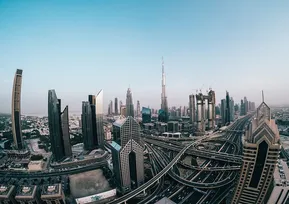
Photo by Manson Yim on Unsplash

SFC points to regulatory gaps for digital asset treasuries

The state-owned newspaper Wen Wei Po reported that Securities and Futures Commission (SFC) Chairman Kelvin Wong noted the current lack of regulations governing listed companies operating as DATs and the limited understanding of such entities.


Chairman Wong added that firms seeking to list in Hong Kong as DATs would need to persuade both the SFC and the Hong Kong Stock Exchange (HKEX) of their suitability. For companies already listed, he urged investors to remain alert to the potential risks involved.


This regulatory concern over crypto investing companies emerges as Hong Kong simultaneously presses ahead with its ambition to become a leading hub for digital finance.


City advances on e-HKD and tokenization

In line with that ambition, the Hong Kong Monetary Authority (HKMA) unveiled its e-HKD Pilot Programme Phase 2 Report in an Oct. 28 press release. The report outlines the potential benefits of its central bank digital currency (CBDC), the e-HKD, and tokenized deposits, noting that public feedback on both concepts has been broadly positive.


The program's second phase involved 11 pilot projects led by various consortiums. These projects explored retail use cases, emphasizing the e-HKD’s commercial viability and scalability. Key focus areas included the settlement of tokenized assets, programmability, and offline payments. Participants in the program included Aptos Labs, the Boston Consulting Group (BCG), Hang Seng Bank, Standard Chartered, and BlackRock.


Based on the report's findings, the HKMA stated it would initially prioritize the e-HKD’s application in wholesale or large-value payments, leveraging its credit risk–free nature as a central bank liability. Concurrently, the authority plans to continue studying potential retail and corporate applications, aiming to lay the groundwork for broader implementation by the first half of 2026.


Survey shows strong investor appetite

Among the program’s participants, Aptos Labs, Boston Consulting Group (BCG), and Hang Seng Bank reported accelerating interest in tokenized funds. A survey they conducted found that 61% of retail investors in Hong Kong and mainland China planned to double their exposure.


Held between May and June 2025 among more than 500 retail fund investors, the survey tracked sentiment and appetite for tokenized products. Mainland participants showed particularly strong demand for cross-border access.


The findings also detailed differing motivations among Hong Kong investors. Active traders expect to lift tokenized fund allocations from 10% to 26%, attracted by round-the-clock trading and greater flexibility. Wealth transfer planners indicated an expected expansion from 5% to 16%, highlighting programmable fund structures for tailored trusts and transparent oversight. Long-term investors aim to raise exposure from 8% to 25%, citing instant liquidity and the ability to use tokenized assets as loan collateral.


Mainland investors projected their allocations would climb from 11% to 24%, reportedly viewing tokenized funds as a practical route around capital restrictions. The survey noted that programmable features could support dynamic allocation across Hong Kong products, the onshore use of profits, and smoother cross-border transfers.


BCG commented that the survey outcomes align with Hong Kong's measured advance in crypto oversight, pointing to the city’s stablecoin regime that came into force in August. The Hong Kong Monetary Authority (HKMA) has signaled, however, that licensing under that regime will not begin until early next year.


The ongoing development of the e-HKD and the prospective regulation of digital-asset treasuries point to Hong Kong’s broader strategy of integrating digital finance into its mainstream economy. Together, these initiatives underscore a cautious yet steady effort to position the city as a global center for digital finance.

 

More to Read
View All
Web3 & Enterprise·

Jul 17, 2023

KITC Cooperates with Buysell Standards to Develop Security Token Products in Korea

KITC Cooperates with Buysell Standards to Develop Security Token Products in KoreaKorea Investment and Securities Co. (KITC), a leading securities company in South Korea, has partnered with Buysell Standards, the operator of the fractional investment platform PIECE, to jointly develop security token services.Photo by Tierra Mallorca on UnsplashNon-traditional securitiesAccording to a report from local news outlet News1, the two entities have agreed to collaborate comprehensively on security token products. This includes offering non-traditional securities such as investment contracts and non-monetary trust contracts, establishing infrastructure for launching investment products on token issuance platforms, and setting up processes for trust agreements.Buysell Standards has been expanding its range of fractional investment products from art and luxury goods to ships. The company has successfully completed various blockchain-related projects, including the development of its own blockchain mainnet for security token issuance.KITC’s security token effortsIn March, KITC established ST Friends, an alliance established in cooperation with Internet-only banks Kakao Bank and Toss Bank. The alliance has been actively working towards commercializing security tokens by signing business agreements with fractional investment firms like content investment platform Funderful and proptech platform Valuemap Corp. Proptech, the abbreviation of property technology, refers to the use of information technology to facilitate real estate buying, selling, and management.KITC believes that the partnership with Buysell Standards will accelerate the process of providing innovative financial products. Choi Seo-ryong, the head of the platform division at KITC, expressed excitement about collaborating with Buysell Standards, renowned for its expertise in digitizing real-world assets (RWAs). Choi emphasized KITC’s commitment to converting various content that we encounter in our daily lives into security tokens.Last month, KITC inked a memorandum of understanding (MOU) with Open Asset, a blockchain fintech company based in Seoul, to develop a distributed ledger system for ST Friends.Similarly, Buysell Standards has also been proactive in forming partnerships for security token projects. In February and April, the fractional investment platform operator entered into collaborations with Shinhan Securities and KB Securities, respectively.

news
Markets·

May 29, 2024

Mt. Gox moves $9B in Bitcoin for first time in years

Wallets belonging to the defunct Japanese Bitcoin exchange Mt. Gox have transferred over 140,000 Bitcoin (BTC), valued at approximately $9 billion, to an unknown address.  Sell-off fearsThis significant movement began in the early hours of Tuesday morning in Asia, marking the first such transfer from Mt. Gox’s cold wallets in over five years. Julio Moreno, head of research at CryptoQuant, initially confirmed that 12,239 Bitcoin had been transferred from Mt. Gox over the course of an hour. A short time later, he provided an update on X, stating:"All coins have been transferred to a new address." Despite market disquiet, the prevailing view which subsequently emerged is that the transfer is believed to be part of a plan to distribute assets back to creditors before the October 31, 2024 deadline. Alex Thorn, head of research at Galaxy Digital, shared his perspective on X, suggesting that most of the transferred Bitcoin would likely be held by creditors rather than being sold on the open market. Despite these reassurances, the market reacted negatively for a time. Bitcoin's price dropped by 1.4% since the start of Asian trading hours, falling to a low of $67,680 from a Monday high of over $70,000.Photo by Kanchanara on UnsplashNo Bitcoin FiresaleTo quell fears of a massive Bitcoin sell-off, Mark Karpeles, the former CEO of Mt. Gox, addressed the situation on X. He stated: “As far as I know, everything is fine with MtGox. The trustee is moving coins to a different wallet in preparation for the distribution that will likely happen this year. There is no imminent sale of bitcoins happening." Rehabilitation trustee Nobuaki Kobayashi also issued a press release, clarifying that no sale of Bitcoin or Bitcoin Cash (BCH) had taken place. He assured that the group was "managing bitcoin and bitcoin cash in a secure manner." Wallet activity reveals that these movements were executed through thirteen transactions. A test transaction worth $3 was made on May 20, followed by another smaller transaction of $160 early Tuesday. The remaining transactions varied from $1.2 million to $2.2 billion worth of Bitcoin. Bitinfocharts data shows that all of Mt. Gox's Bitcoin has now been consolidated into a single wallet. A long road to repaymentIn September 2023, Mt. Gox’s trustee announced that the repayment deadline had been extended by 12 months to October 31, 2024. It looked like repayments were imminent in November. However, those communications referenced cash repayments rather than the distribution of Bitcoin and Bitcoin Cash. Some cash repayments had started in December 2023. Speculation in January that the bankruptcy estate would begin the distribution of Bitcoin led to market fears of the impact that would have on the Bitcoin unit price. The extension provided a longer timeframe for preparing the distribution of assets to creditors. Mt. Gox, launched in 2010, quickly rose to prominence, becoming the largest Bitcoin exchange by 2013, handling 70% of all Bitcoin trades worldwide. However, the exchange faced a dramatic downfall in early 2014.  It suspended trading and stopped all withdrawals after losing hundreds of thousands of Bitcoin in a hack. Subsequently, the site went offline, and the company filed for bankruptcy protection after losing over 800,000 Bitcoins. Creditors have been waiting for repayment ever since.

news
Policy & Regulation·

Aug 09, 2023

UAE Forges Partnership to Develop Blockchain-Based Carbon Credit System

UAE Forges Partnership to Develop Blockchain-Based Carbon Credit SystemIn an endeavor to combat climate change, the UAE Ministry of Climate Change and Environment (MOCCAE) has joined forces in an initial collaboration with the Industrial Innovation Group and the Venom Foundation to pioneer a groundbreaking blockchain-based carbon credit system.Photo by Daniel Zacatenco on UnsplashThis is the latest commitment by the Middle Eastern country to combat climate change after announcing an ambitious target to slash carbon emissions by a substantial 40% before 2030, a significant escalation from its prior commitments.According to local news sources, a memorandum of understanding (MoU) outlining the partnership was signed by the three entities at MCCE offices in Dubai recently.Carbon credits on blockchainAt the heart of this innovative endeavor lies blockchain technology, heralded as a pivotal tool for both organizations and nations to meticulously trace carbon credits. By virtue of its immutability, data enshrined within the blockchain ensures ironclad security, enabling the seamless sale or exchange of credits while upholding complete transparency among stakeholders.Functioning as crucial intermediaries, government entities such as the UAE’s MOCCAE are poised to either allocate or sell dual-purpose credits to businesses. Beneficiaries can deploy the credits, authorizing the emission of a predetermined quantum of carbon within specific timeframes, or they can be lucratively traded, thereby aiding other establishments in mitigating their ecological footprint.Venom blockchainVenom blockchain is a network developed by the Abu Dhabi-based Venom Foundation. As an asynchronous blockchain, its design implements dynamic sharding with flexible nodes that adapt to traffic changes, rendering it infinitely scalable. The project has established itself within the Abu Dhabi Global Market (ADGM), an international finance center and fintech hub.Revised environmental goalsThe UAE leadership recently orchestrated a sweeping recalibration of the nation’s environmental goals and carbon offset strategies. Envisioning a sustainable horizon, their overarching aspiration revolves around achieving carbon neutrality by 2050.Mariam Al Mheiri, UAE Minister of Climate Change and Environment, articulated how these shifts have cast a positive impact on the nation’s emissions reduction roadmaps:“The UAE believes in its ability to make a difference in this field and has pledged, through the third update of its second Nationally Determined Contributions (NDCs), to reduce its emissions by 40% compared to a business-as-usual scenario, an increase of 9% over its previous pledge.”Even though the UAE ranks 31st on a global scale in terms of total carbon emissions as of 2023, there stands a more sobering reality — the nation ranked sixth worldwide in terms of per capita emissions according to 2021 data. It also emitted a staggering 21.79 tonnes of carbon per capita in the same year.Concurrently with its overarching national push towards emissions reduction, each of the UAE’s seven emirates has unveiled localized initiatives to align with the bold “net zero by 2050” target.Among these, a comprehensive program championed by Crown Prince Sheikh Khaled bin Mohamed bin Zayed Al Nahyan has recently gained approval in Abu Dhabi, emblematic of a collective commitment to fostering a sustainable future.

news
Loading