Top

Coinone adds asset analysis service and fiat currency deposit feature

Web3 & Enterprise·November 20, 2023, 4:00 AM

South Korean cryptocurrency exchange Coinone has added a new asset analysis service, which allows users to easily track their profits and losses, as well as asset trends over time. The latest feature is designed to provide investors with comprehensive insights into their investment performance, including detailed information on their asset history. It is accessible through the “Assets” category on the Coinone website and mobile app.

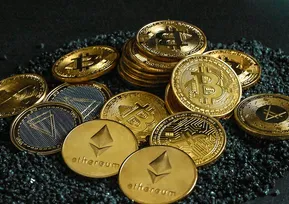
Photo by Markus Winkler on Unsplash

“Coinone has been dedicated to enhancing user convenience, conducting over ten service updates this year alone. Moving forward, we will prioritize user needs by conducting in-house analysis and receiving customer feedback in order to provide the best crypto trading services,” said the exchange’s CEO Cha Myung-hun.


Charting profit paths

Users can analyze the trends of their profits and losses over certain periods ranging from weeks to years, the exchange explained, which are displayed on various charts and tables. They can choose to view either daily or cumulative figures along with other relevant information. The “Asset Trends” category also offers a detailed overview of the fluctuation in the total value of a user’s assets. This includes easily accessible data on how the values of the fiat currency (Korean won) and virtual assets that they hold have changed over time.


Seamless transactions

Coinone has also added another feature where users can make fiat deposits directly during transactions. In the case that a user does not have enough fiat currency deposited into their account when purchasing virtual assets, a pop-up window appears, leading to a screen that displays the necessary amount that must be deposited and a function that allows them to do so. Upon completing the deposit, users can continue with their purchase. They can also navigate to the fiat deposit screen by selecting the plus symbol icon next to the available purchase amount.

More to Read
View All
Policy & Regulation·

Jul 13, 2023

Japanese Survey Finds One-Third Familiar with Web3

Japanese Survey Finds One-Third Familiar with Web3bitbank, a Japanese cryptocurrency exchange, has released the findings of a survey conducted between June 2 and 8, targeting 547 Internet users to explore their awareness and understanding of Web3. Approximately one-third of the participants reported being familiar with the term Web3.Photo by Bastian Riccardi on UnsplashLevels of knowledgeThe remaining portion of the survey pertained to individuals acquainted with the term. Within this group, 21.6% claimed to possess adequate knowledge of Web3, while 47.9% possessed a general understanding.Familiar conceptsWhen asked about the word “Web3,” 42.1% associated it with the concept of the “metaverse,” followed by cryptocurrency (26.8%) and non-fungible tokens (26.8%). The concepts of decentralized finance (DeFi) and decentralized autonomous organizations (DAOs) were less familiar, with 15.3% and 12.6% of respondents selecting them, respectively.Web3 experienceConcerning initial steps for utilizing Web3 services, 23.7% identified creating an account at a cryptocurrency exchange as the first requirement, while 21.6% believed purchasing a non-fungible token (NFT) was necessary. Additionally, 28.4% stated they had invested in cryptocurrencies. The most popular Web3 service after cryptocurrencies was the metaverse, favored by 27.4% of respondents. Roughly 30% of participants hoped that the Japanese government’s Web3 initiatives include support for startups, followed by expectations of crypto tax revisions (27.3%) and blockchain and metaverse development (25.8%).Notably, among those possessing sufficient or general knowledge of Web3, over 80% expressed positive sentiments towards the Japanese government’s Web3 initiatives.

news
Policy & Regulation·

May 28, 2024

UAE agency applies fines amid ban on crypto mining on farms

The Abu Dhabi Agriculture and Food Safety Authority has announced a ban on cryptocurrency mining on farms, addressing concerns over the misuse of agricultural land.Photo by Kamil Rogalinski on UnsplashClaims of farm misuseAccording to the Khaleej Times, the Authority has informed UAE farmers that their lands are not to be used for Bitcoin and crypto mining. This activity is deemed a “misuse of the farm for purposes other than its intended use.” The new regulation aims to preserve the primary agricultural function of these lands and imposes penalties of up to 10,000 United Arab Emirates Dirhams (approximately $2,722) for violations. Cryptocurrency mining requires significant computational power and electricity, which conflicts with the farms’ intended agricultural use.  Broader support for miningDespite this specific restriction, the United Arab Emirates (UAE) maintains a supportive stance towards cryptocurrency and cryptocurrency mining beyond a farm setting. In 2023, the country emerged as a notable player in the global Bitcoin mining industry, with a combined mining capacity of around 400 megawatts, contributing approximately 4% of the global Bitcoin hash rate. It’s proven to be a popular place in which to locate a mining facility as the country has a robust infrastructure. Stable power is essential in order for miners to be able to run their machines in a sustainable manner. Additionally, the government has generally been supportive of the activity, fostering a conducive environment for both crypto and Bitcoin mining and blockchain technology more generally. Furthermore, the country occupies a strategic location at the crossroads of major trade routes. Regulatory clarity has also been provided by the authorities in the UAE with regard to how crypto mining activity is to be carried out. While this latest move against mining within a farm setting is a restriction, it still feeds into that overall framework of regulatory clarity and certainty. Attracting mining firmsGiven the aforementioned reasons in support of mining in the UAE, the Middle Eastern country continues to attract cryptocurrency mining firms.  In December of last year, a Dubai-headquartered Bitcoin mining company, Phoenix Group, struck a $380 million deal with Chinese mining equipment manufacturer MicroBT. That same month, the company was listed on the Abu Dhabi Securities Exchange (ADX). In May 2023, Abu Dhabi-based digital assets development company Zero Two entered into a partnership with North American crypto miner Marathon Digital with a view towards developing the region’s first large-scale crypto mining facility. Beyond mining, the location is also proving popular for crypto firms more generally. In May 2023, Chainalysis, a leading blockchain analytics company, established its regional headquarters in Dubai. Similarly, Blockdaemon, a provider of institutional infrastructure, expanded its operations in Abu Dhabi, facilitated by the Abu Dhabi Global Market (ADGM), a key financial regulator. Speaking at the Dubai FinTech Summit recently, Reece Merrick, Managing Director of enterprise blockchain company Ripple for the Middle East and North Africa (MENA) region, said that “the UAE has done a remarkable job in really putting itself in a position to be the global crypto hub.”

news
Markets·

Apr 19, 2023

Crypto Winter Halves Korean Bank Fee Profits

Crypto Winter Halves Korean Bank Fee ProfitsLast year, Korean banks collected only half the amount in fees from crypto exchanges compared to the previous year, according to Korean news agency News1.©Pexels/PixabayDeclining bank fee profitsFiles submitted by the Korean Financial Services Commission to Yun Chang-hyun, a member of the ruling People Power Party, revealed that the five major Korean crypto exchanges paid 20.4 billion KRW (~$15.6 million) in fees to banks last year, which is a 49.4% decrease from the previous year’s 40.3 billion KRW (~$30.7 million). These exchanges (Upbit, Bithumb, Coinone, Korbit, and Gopax) have established agreements with banks to hold real-name bank accounts, which is a legal requirement for exchanges that wish to conduct trades in Korean won.Banks that have provided real-name accounts to crypto exchanges saw an increase in fee profits from 2019 to 2021. However, due to a decline in market sentiment last year, trade volume decreased, resulting in a reduction of bank fees. Last year’s crypto winter is attributable to various factors, including uncertainties in the global economy and collapses of crypto enterprises such as Terraform Labs and FTX.Fees by exchangesIn terms of fees paid to banks by exchanges last year, the largest exchange, Upbit, paid 13.9 billion KRW (~$10.6 million) in fees to Kbank, a mobile banking service provider. Bithumb and Coinone paid 4.9 billion KRW (~$3.7 million) and 989 million KRW (~$750,000) in fees to NH Bank, respectively. It is worth noting that Coinone switched its bank from NH Bank to Kakao Bank last November, paying 72 million KRW (~$55,000) to Kakao Bank in the fourth quarter. Korbit paid 486 million KRW (~$370,000) and 19 million KRW (~$14,500) to Shinhan Bank and Jeonbuk Bank, respectively. Gopax partnered with Jeonbuk Bank to obtain its real-name accounts in April last year.Lawmaker Yun said it was apparent that partnerships were being forged between only a handful of banks and crypto enterprises. Current regulations have to be reviewed to encourage more banks to participate in various blockchain businesses, he added.

news
Loading