Top

Singapore’s MAS gears up for live CBDC pilot

Policy & Regulation·November 18, 2023, 12:16 AM

The Monetary Authority of Singapore (MAS) has unveiled plans to initiate a live central bank digital currency (CBDC) pilot for wholesale interbank settlement in 2024.
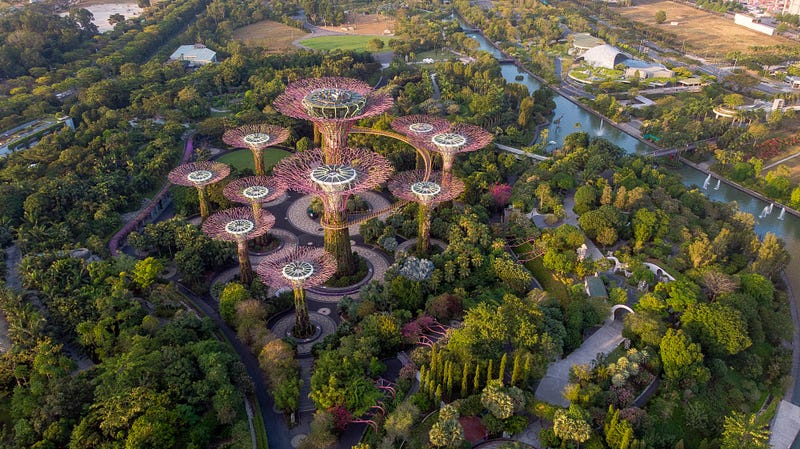
Photo by Sergio Sala on Unsplash


Moving beyond simulation

This pilot will move beyond simulation, involving the actual utilization of a live wholesale CBDC for settling payments between commercial banks. Furthermore, MAS indicated that upcoming pilots may extend to leveraging wholesale CBDCs for the settlement of cross-border securities trade.

MAS Managing Director Ravi Menon expressed the significance of this move, stating:

“The ‘live’ issuance of central bank digital money for use as a common settlement asset in payments is a significant milestone in MAS’ digital money journey that began in 2016. The issuance of wholesale CBDC reinforces the role that central bank money plays in facilitating safe and efficient payments.”


Orchid Blueprint

This announcement is a key component of the Orchid Blueprint, a comprehensive plan detailing the infrastructure essential for facilitating the pilot and future developments. In addition to the wholesale CBDC initiative, the Orchid Blueprint outlines the expansion of trials to encompass tokenized bank liabilities and regulated stablecoins, solidifying Singapore’s commitment to fostering innovation in the digital finance space.

As part of the Orchid Blueprint, MAS is set to create a settlement ledger to record digital money transfers. This ledger will incorporate features like programmability and atomic settlement of digital tokens. To enhance user experience, a “Name Service” for customer-friendly wallet addresses and name identifiers is on the agenda. Additionally, a tokenization bridge will be developed to connect existing account-based settlement systems with ledgers compatible with tokenized forms of digital money.


Purpose-bound money

The Orchid Blueprint introduces a “programmability protocol” based on the concept of “purpose-bound money” (PBM). PBM, a concept considered by the MAS in a whitepaper that it published earlier this year, allows for the specification of certain conditions for the use of digital money, enabling automation of transactions and predefined conditions for settlement. This innovative approach empowers centralized planners to define the conditions for usage, bringing a new level of flexibility to the digital financial landscape.

This development aligns with the broader trend of increasing institutional interest in digital currencies and blockchain technology. The move towards live CBDC pilots, tokenization and stablecoins underscores Singapore’s commitment to staying at the forefront of financial innovation. As the Orchid Blueprint unfolds, it sets the stage for a dynamic and technologically advanced financial ecosystem, reinforcing Singapore’s position as a leader in the global digital finance arena.

In a related move within the region, crypto firm Paxos recently announced plans to launch a new USD-backed stablecoin in Singapore, receiving in-principle approval from MAS to issue the stablecoin. Meanwhile, International Monetary Fund (IMF) Managing Director Kristalina Georgieva outlined in a keynote speech at the Singapore FinTech Festival earlier this week that CBDCs not only could replace cash but also improve financial inclusion.

These concurrent developments indicate the growing convergence of traditional financial systems with the expanding digital currency landscape.


More to Read
View All
Policy & Regulation·

Apr 11, 2025

Standard Chartered & OKX partner on collateral mirroring program in Dubai

British multinational banking conglomerate Standard Chartered has partnered with global crypto exchange OKX in Dubai on a collateral mirroring pilot program.Photo by appshunter.io on UnsplashOff-chain collateralIn a press release published on April 10, the companies set out details of the collaboration. The initiative will facilitate institutional clients to utilize digital assets and tokenized money market funds for trading as off-chain collateral. Trading activity requires the ongoing movement of funds and assets between custodians and exchange platforms. The activity is expensive and slow. Back in 2023, OKX had collaborated with crypto custodian Komainu and asset manager CoinShares to enable collateral mirroring to overcome this operational inefficiency. In that instance, CoinShares was enabled to trade on OKX using a collateral mirroring facility provided by OKX with Komainu acting as asset custodian. This latest initiative has also seen OKX work with alternative investment management firm Brevan Howard, global investment management company Franklin Templeton and local regulator in Dubai, the Virtual Assets Regulatory Authority (VARA).  Developed within regulatory frameworkThe collateral mirroring facility has been established on a pilot program basis to start with, having been developed within the regulatory framework established in Dubai by VARA. Standard Chartered will act as the digital asset custodian as part of the arrangement.  The press release points out that Standard Chartered is a Globally Systemically Important Bank (G-SIB), asserting that this will afford clients a higher level of security. By not having to manually move the digital assets, there is an additional security-related process improvement, given the ongoing risks associated with digital assets held on exchanges due to incidents of hacking. Hong Fang, OKX president, provided some insight into why the company has partnered with Standard Chartered, stating:”By leveraging Standard Chartered's position as a top custodian globally, as well as OKX's market leadership in cryptocurrency trading, the partnership sets an industry standard for current and potential institutional clients to deploy trading capital at scale in a trusted environment." OKX CEO Star Xu outlined on X that the service offering is geared towards tokenized money market funds with the aim of improving capital efficiency and counterparty risk protection. Standard Chartered launched its crypto custody services in Dubai last September. The service was established in partnership with Brevan Howard Digital, having been licensed by the Dubai Financial Services Authority (DFSA), the independent regulator for financial service providers located within the Dubai International Financial Centre (DIFC), an economic free zone. In October 2024, OKX selected Standard Chartered as its digital asset custodian for the crypto exchange platform’s institutional clients. First clientsBrevan Howard Digital and Franklin Templeton will participate as the first clients to trial the new service offering. Furthermore, as part of the collaboration, OKX platform users will gain access to tokenized on-chain assets developed and offered by Franklin Templeton. Franklin Templeton’s head of digital assets, Roger Bayston, commented on the firm’s on-chain product offering, stating: “By ensuring assets are minted on-chain, we enable true ownership, allowing them to move and settle at blockchain speed – eliminating the need for traditional infrastructure.”

news
Web3 & Enterprise·

Dec 23, 2024

IOTA co-founder meets with Philippine Secretary of Trade to further adoption

Dominik Schiener, the co-founder of distributed ledger technology (DLT) project IOTA, outlined on X on Dec. 12 that he had met with Cristina Aldeguer-Roque, Secretary of Trade of the Philippines. Commenting further, Schiener wrote: “We are looking forward to expand IOTA and our trade infrastructure TWIN across South East Asia in 2025.” Photo by iSawRed on UnsplashCutting through trade barriersTWIN refers to IOTA’s Trade Worldwide Information Network, a continuation of another longstanding IOTA project, the Trade and Logistics Information Pipeline (TLIP). The objective of TWIN is to cut through trade barriers and improve connections between disparate national trading systems. In rolling out the network, IOTA has formed a consortium which includes organizations such as TradeMark Africa, the Global Alliance for Trade Facilitation and the Chartered Institute of Export & International Trade. TWIN seeks to optimize trade processes by merging physical goods with digital infrastructure, eliminating inefficiencies and boosting transparency. Schiener anticipates that once participants place data on the network, they will ultimately tokenize assets on it. In turn, this will result in utility for the IOTA token, once TWIN is released on the IOTA mainnet. The TWIN project is currently staffed by 28 people but Schiener believes that this will grow to 100 people over the course of the next two years. The project originally emerged in Germany, with the IOTA Foundation having its headquarters in Berlin. Initially, IOTA concerned itself with European blockchain initiatives in trying to find its place in the industry. Earlier this year, its Web3 identity authentication solution was chosen by the European Commission for inclusion within the European Blockchain Sandbox Initiative (EBSI). In August, the IOTA Foundation completed the final stage of the European Union’s blockchain pre-commercial procurement (PCP) program. Strategic expansionHowever, over the course of the past year, the project has expanded towards searching for product market fit within emerging markets. In November 2023, the project established the IOTA Ecosystem DLT Foundation within the Abu Dhabi Global Market (ADGM) financial center in the United Arab Emirates (UAE). This marked the first DLT foundation to have established itself within the ADGM.  $100 million in funding was provided with the objective of nurturing the IOTA ecosystem and accelerating the growth of the IOTA protocol. Since then, the TON Foundation and the Aptos Foundation have moved to register under the ADGM’s DLT Foundations framework. East Africa has been ground zero for IOTA’s attempts to enhance cross-border processes related to trade documentation, where it has been working with TradeMark Africa and local regulators. In Singapore, the IOTA Foundation has collaborated with global innovation ecosystem Tenity to establish the IOTA Accelerator, a 12-week initiative aimed at assisting early-stage startups concerned with real-world asset (RWA) tokenization within the IOTA ecosystem. Schiener’s meeting in the Philippines would suggest that the project is making greater efforts still in terms of bringing about the adoption of the technology in Southeast Asia. In his X post, Schiener wrote: “Let's connect the world with sovereign digital infrastructure.”

news
Markets·

May 23, 2023

STX Token Debuts on Korean Exchange Bithumb

STX Token Debuts on Korean Exchange BithumbSTX, the native token of the Stacks network, made its debut on the KRW market of Bithumb, a renowned Korean cryptocurrency exchange, at noon (Korea Standard Time) on Tuesday. The listing price is 828.5 KRW per unit.Photo by Jonathan Borba on UnsplashBitcoin scalability solutionStacks is a Bitcoin scalability solution that addresses the challenge of transaction latency through the use of microblocks. It utilizes the programming language Clarity and benefits from the security of Bitcoin by employing its unique consensus algorithm called Proof of Transfer (PoX). This mechanism enables Stacks to settle transactions on the Bitcoin network.Stacks is one of the most anticipated projects associated with Bitcoin, and its token was approved by the U.S. Securities and Exchange Commission in 2019.STX token usageThe STX token serves multiple purposes within the Stacks blockchain ecosystem. Users can utilize it for stacking, participating in governance activities, and paying transaction fees.

news
Loading