Top

Busan Introduces Blockchain-Powered Cards for Multi-Children Families to Offer Social Benefits

Policy & Regulation·October 20, 2023, 6:36 AM

Busan Metropolitan City, home to South Korea’s largest port, announced on October 20 (local time) a revision in its criteria for “multi-children families” who enjoy social welfare benefits and the launch of new blockchain-powered cards for these families. The city will reduce the requisite number of children in these families from three to two to extend benefits and encourage a higher fertility rate. To qualify for these benefits, at least one child in the family must be under the age of 19.
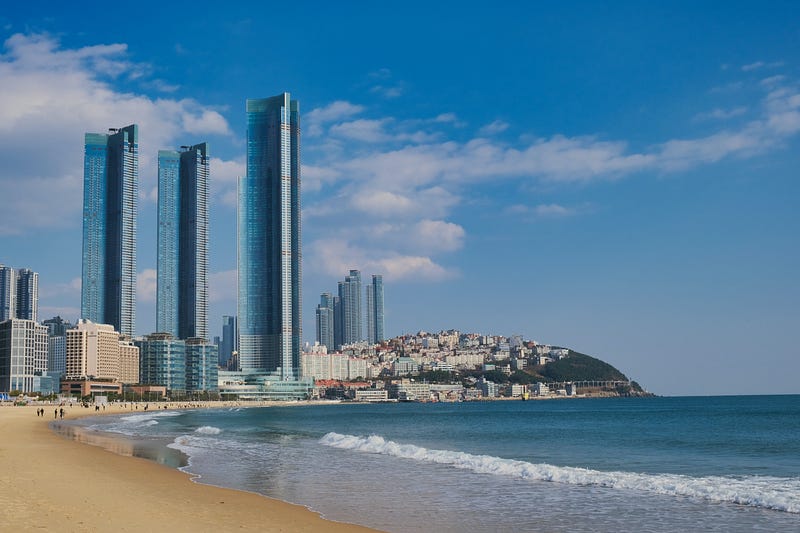
Photo by Minku Kang on Unsplash


Blockchain integration

Starting October 31, eligible families can access these benefits through “family love cards,” which will be available on BPASS, a mobile identification card app developed with blockchain technology. Some of these family love cards will be issued in collaboration with credit card company Shinhan Card.


Diverse benefits

The benefits include discounts at public facilities, restaurants, cram schools (commonly referred to as hagwons), and daycare centers. Specifically, public parking lots and sports facilities will offer services at half the usual rate. Meanwhile, other establishments targeting adolescents and women will either waive their fees entirely or provide reductions.

On November 1, Busan will host the 16th annual Multi-Children Family Day ceremony at the City Hall’s international conference center. Having started this event in 2008, Busan stands out as the only metropolitan municipality to celebrate this occasion each year.


Efforts to boost fertility rate

This year’s ceremony will highlight Busan’s initiatives to enhance support for multi-child families. The event will honor outstanding families and a childbirth-friendly organization, as well as districts and counties that have been exceptional in implementing childbirth promotion policies. Additionally, the occasion will be marked by special commemorative performances.

Busan Mayor Park Heong-joon affirmed the city’s dedication to nurturing children alongside their families. He added that Busan will persistently refine and improve its childbirth policies to offer full support.


More to Read
View All
Web3 & Enterprise·

Aug 11, 2023

KONKRIT NFT Platform Offers Exclusive Reservation Tickets for Hyundai Card’s Cultural Festival

KONKRIT NFT Platform Offers Exclusive Reservation Tickets for Hyundai Card’s Cultural FestivalModern Lion, an NFT marketplace operator in South Korea, recently announced that its NFT trading platform KONKRIT has the exclusive privilege of offering reservation tickets to the upcoming Davinci Motel festival. This cultural event is organized by Hyundai Card, the nation’s renowned credit card company.Distinguished artists and speakersScheduled from September 15 to 17 in Itaewon, Seoul, the Davinci Motel festival will feature performances by distinguished Korean artists. Among them are K-pop singer Lee Hyo-ri, crossover vocal ensemble LA POEM, violinist Park Soe-ye, and pianist Kim Hong-gi.Additionally, attendees will have the chance to engage with NFT artist Tom Sachs as he shares insights pertaining to his artworks. Meanwhile, former LPGA golfer Annika Sorenstam will give tips on hitting the sweet spot and former anchor and current TV personality Jeon Hyun-moo will offer intriguing perspectives on his life’s journey.NFTs as ticketsReservation tickets are available for purchase in the form of NFT on the KONKRIT app. The utilization of blockchain technology within this system serves to address persistent problems associated with concert ticketing, such as ticketing bots, unauthorized resales, and illicit secondary markets.Modern Lion allows customers to use a credit card to buy NFT tickets, reducing purchase barriers and facilitating easier access to the show.Lee Ji-hun, Managing Director at Modern Lion, noted that the company has leveraged blockchain technology to tackle ticketing issues and ensure a seamless experience for customers throughout the entire journey of the event, from ticket purchasing to performance enjoyment. Lee underscored Modern Lion’s dedication to enhancing user satisfaction by integrating Web3 technology into the KONKRIT app.

news
Web3 & Enterprise·

Oct 27, 2023

Bithumb and Korbit Struggle to Gain Traction Despite Zero Trading Fees

Bithumb and Korbit Struggle to Gain Traction Despite Zero Trading FeesSouth Korean cryptocurrency exchanges Bithumb and Korbit have recently eliminated trading fees, but their bold decision hasn’t yielded much results. Bithumb was the first to implement this change and attracted users for about a week, but it is now seeing a loss in market share. Korbit, following Bithumb’s example, is also struggling to achieve meaningful outcomes.Photo by Alexander Grey on UnsplashLimited impactLocal media outlet Chosun Biz used data from crypto data platform CoinGecko to draw this conclusion. On October 26, Korbit’s daily trading volume represented 0.19% of the total trading volume among South Korea’s top five crypto exchanges (Upbit, Bithumb, Coinone, Korbit, and Gopax). This figure marked a 0.14 percentage point increase compared to the 0.05% recorded on October 19. Korbit had implemented a zero trading fee policy at 9 a.m. (KST) on October 20. Additionally, they launched a promotion offering KRW 5,000 ($3.69) worth of bitcoin to users who transferred virtual assets totaling KRW 1 million or more from Travel Rule-compliant exchanges to Korbit. While the promotion did contribute to Korbit’s market share, it still remains below 1%.Bithumb’s performance showed some improvement, albeit briefly. As of October 26, Bithumb’s market share stood at 18%, marking a 4.7 percentage point increase from its 13.3% share on October 3, the day before it eliminated trading fees. However, it’s worth noting that its market share had reached almost 30% shortly after the promotion’s launch. This indicates that its strategy is losing efficacy over time.The less-than-enthusiastic results from their daring marketing endeavors can be attributed to their inability to draw in retail investors. To begin with, Upbit, the leading player in the market, had already been providing a relatively low fee of 0.05%. Furthermore, adapting to new user interfaces on these exchanges posed a challenge. Zero trading fees weren’t attractive enough for crypto investors to leave their current platforms.Trading volume mattersIn the case of Korbit, its lower trading volume was a disadvantage when it came to attracting users. On crypto exchanges, a higher trading volume typically translates to faster trade executions. As a result, users of Korbit might experience delays in executing trades at their preferred price.Jeong Hye-won, a research associate at crypto data analytics platform Xangle, told Chosun Biz that users on exchanges with lower trading volumes tend to experience slippages due to slower transaction speeds and sparsely populated order books. A slippage means the difference between the initially placed order price and the executed order price. Jeong further explained that Korbit’s zero trading fee policy didn’t have a significant impact because it offers fewer listed tokens compared to Upbit and Bithumb.There is speculation that the free-trading fee promotions introduced by Bithumb and Korbit, despite their revenue sacrifices, might conclude sooner than initially anticipated due to their perceived ineffectiveness. Bithumb derives 99.95% of its revenue from trading fees, while Korbit relies on trading fees for 99.79% of its income. An industry insider has commented that trading fees play a vital role in an exchange’s revenue, and given Bithumb’s reported loss in earnings during the second quarter, there are concerns about their capacity to sustain this strategy.

news
Policy & Regulation·

Dec 23, 2023

3AC liquidators estimate 46% recovery while BVI court freezes $1B

3AC liquidators estimate 46% recovery while BVI court freezes $1BThe joint liquidators of the now-defunct Singaporean crypto hedge fund Three Arrows Capital (3AC) have provided creditors with an estimated 45.74% recovery rate for their claims in the bankrupt estate. Meanwhile, in parallel proceedings in the British Virgin Islands (BVI), a court has frozen $1 billion of founders’ assets.According to The Block, the details were disclosed in a December report to creditors by joint liquidators Russell Crumpler and Christopher Farmer of Teneo, the firm appointed to oversee the liquidation of the failed business.$1.16B in assetsAs of Dec. 18, the estimated value of 3AC’s assets was reported to be $1.16 billion, while claims totaling $2.7 billion are expected to be recognized for distribution. The liquidators highlighted that settlements in litigation against various parties, including DCG, Genesis and BlockFi, increased reported assets by an estimated $292 million. It’s important to note that the BlockFi settlement is still pending approval.A total of 154 claims, valued at $3.4 billion, were filed against the 3AC estate. The report indicates that $200 million of claims were not admitted for distribution, and $322 million in claims have either been rejected or are expected to be rejected. Additionally, $76 million in claims are currently under dispute. The report reveals that initial distributions to creditors are being planned for the first quarter of the upcoming year.Illiquid tokensThe breakdown of assets reveals that a large majority are illiquid tokens, subject to vesting periods, comprising 82% of the total. Only 6% of the portfolio is liquid, while equity and investments account for 6.9% and 4.8% is in cash. These illiquid tokens, totaling $563 million at current prices, consist of 13 different tokens with vesting schedules unlocking assets over the next three years, reaching $200 million by the end of 2024.To date, the liquidators have staked some of these tokens, resulting in $5.4 million in staking rewards. Liquidation efforts, including the sale of $34.5 million worth of liquid tokens and $15 million in NFTs, along with other asset sales, have generated a total of $66 million.Photo by Kemp Fuller on UnsplashFrozen assetsIn a related development, Bloomberg reported on Thursday that a British Virgin Islands court has frozen assets totaling $1.1 billion belonging to 3AC co-founders Su Zhu and Kyle Davies, along with Davies’ wife Kelly Chen. The liquidators filed a claim for insolvent trading against the founders for $1.078 billion, with additional claims against Davies for $66 million and Chen for $4.6 million.Teneo outlined the rationale behind the move in the following statement it made to Decrypt:“The worldwide freezing order has been sought in connection with claims that are being pursued by the liquidators that allege, amongst other things, that the Founders should be held responsible for causing 3AC’s position to deteriorate by an amount that is equivalent to the value of the freezing orders sought.”Su Zhu, who was under house arrest for the last few weeks, became free on Dec. 20. Zhu had been arrested in Singapore on Sept. 29 and sentenced to four months imprisonment, serving two-thirds of his sentence under house arrest.Throughout the bankruptcy proceedings, legal fees have accumulated to $49.7 million while the report suggests ongoing efforts to maximize creditor recovery.

news
Loading