Top

Crypto Trading Surges in South Korea While Global Trends Decline

Markets·August 04, 2023, 7:25 AM

Despite a global decrease in cryptocurrency trading on centralized exchanges, South Korea has witnessed a significant increase in trading activities. Upbit, the nation’s largest crypto exchange, climbed to the second spot in global spot trading volume for July.
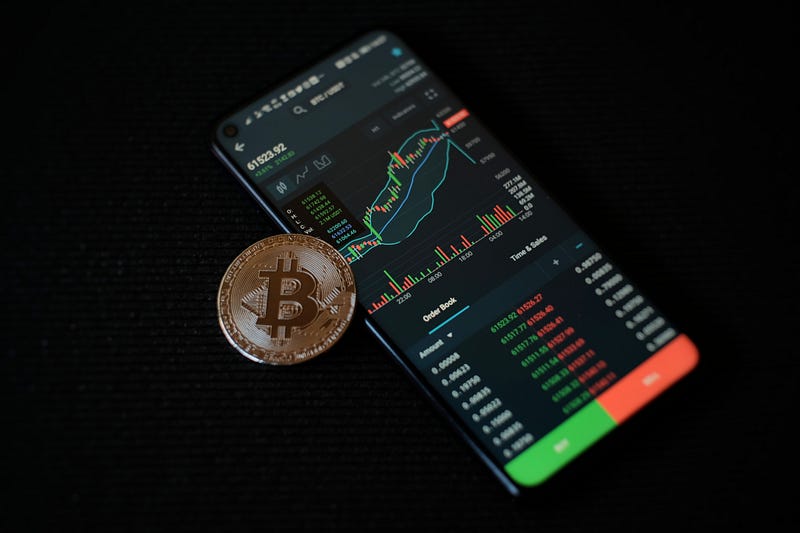
Photo by Viktor Forgacs on Unsplash


Plunges in global trading volumes

According to an Exchange Review for July 2023 by CCData, a virtual asset data provider, the total global spot trading volumes on centralized exchanges dropped to $515 billion in July, a 10.5% decrease compared to the previous month, marking the second lowest level since 2019. Additionally, derivative trading volumes fell by 12.7% to $1.85 trillion, the second-lowest since December 2020.

Experts attribute these declines to increased regulations on cryptocurrencies worldwide, such as legal crackdowns on exchanges like Binance and Coinbase by the US Securities and Exchange Commission.

Binance, the world’s largest cryptocurrency exchange, recorded a trading volume of $208 billion with a market share of 40.4% in July, marking a five-month consecutive decline, although it still maintained its title as the largest platform worldwide for crypto spot trading.

Coinbase — the largest cryptocurrency exchange in the US — and global exchange OKX also saw a decline in trading volume of 11.6% and 5.75% to $28.6 billion and $29 billion, respectively.


Crypto exchanges flourish in Korea

Contrarily, the majority of major crypto exchanges in Korea experienced significant growth in trading volume. Upbit’s trading volume skyrocketed by 42.3% to $29.8 billion in July, surpassing Coinbase and OKX for the first time to claim the second spot in global cryptocurrency exchanges behind Binance.

Other Korean exchanges also saw remarkable increases in trading volume. Bithumb recorded $6.09 billion, a surge of 27.9%, while Coinone’s volume rose by 4.72% to $1.39 billion.

These spikes in trading volume can be accredited to an increased interest in cryptocurrencies and blockchain technology among citizens throughout the country, despite global regulatory challenges impacting the market. As the cryptocurrency industry continues to evolve, Korean exchanges are showing resilience and maintaining their competitive positions on the global stage.


More to Read
View All
Web3 & Enterprise·

Nov 27, 2023

Metabora Singapore officially launches blockchain-based app for golf fans

Metabora Singapore officially launches blockchain-based app for golf fansMetabora Singapore, a subsidiary of South Korean blockchain game developer Metabora formerly known as Kakao Friends Games, has officially launched BirdieSquad, a blockchain-based community platform for fans of professional golfers in the Korea Ladies Professional Golf Association (KLPGA). This comes after the beta version that was launched in August quickly gained popularity, topping the ranks of sports-related apps.Photo by Splash Pic on UnsplashRevolutionizing the golf fandomBirdieSquad was developed by Kakao VX, the digital sports arm of Korean internet juggernaut Kakao, with the goal of creating an innovative and fun playground for golf fans to interact and create a fandom-based community. Users can own NFTs of their favorite golfers — which come in six tiers: Uncommon, Rare, Super Rare, Epic and Legendary — which are stored in personal wallets, and earn various rewards based on players’ actual performance results. They can also interact with other users and compete in “cheer-offs”. During off-seasons, Metabora plans to host various events such as AI-based championship tournaments.The platform is currently working with 46 professional golfers, including Han Jin-seon, Park Hyun-kyung, Lee Ye-won and Kim Min-byul. The platform said that it would bring more athletes in the future.“As we strive to create a new fandom culture where pro golfers and fans can interact, we will expand our ecosystem by onboarding various entertainment content revolving around gaming and sports,” said Lim Young-joon, Chief Business Officer of Metabora Singapore.Expanding partnershipsMeanwhile, the company has been expanding its partnerships with various global blockchain networks such as Polygon, NEAR Protocol, Ethereum and BNB Chain to expand its global ecosystem.

news
Policy & Regulation·

Nov 04, 2025

Hong Kong SFC opens door to global order book integration for digital assets

At Hong Kong FinTech Week 2025, Securities and Futures Commission (SFC) Chief Executive Julia Leung outlined plans to link Hong Kong’s crypto market with global liquidity. She announced that licensed virtual asset trading platforms (VATPs) will be allowed to share a global order book with their overseas counterparts. According to a statement published on the SFC’s website, this step will enable local investors to access international markets more efficiently, improving price discovery and competitiveness. Leung added that more initiatives are on the way to connect local brokers directly to global liquidity networks. This latest connectivity push comes as Hong Kong considers new guardrails for crypto holding companies such as digital asset treasuries (DATs), which hold cryptocurrencies as strategic assets.Photo by Manson Yim on UnsplashSFC points to regulatory gaps for digital asset treasuriesThe state-owned newspaper Wen Wei Po reported that Securities and Futures Commission (SFC) Chairman Kelvin Wong noted the current lack of regulations governing listed companies operating as DATs and the limited understanding of such entities. Chairman Wong added that firms seeking to list in Hong Kong as DATs would need to persuade both the SFC and the Hong Kong Stock Exchange (HKEX) of their suitability. For companies already listed, he urged investors to remain alert to the potential risks involved. This regulatory concern over crypto investing companies emerges as Hong Kong simultaneously presses ahead with its ambition to become a leading hub for digital finance. City advances on e-HKD and tokenizationIn line with that ambition, the Hong Kong Monetary Authority (HKMA) unveiled its e-HKD Pilot Programme Phase 2 Report in an Oct. 28 press release. The report outlines the potential benefits of its central bank digital currency (CBDC), the e-HKD, and tokenized deposits, noting that public feedback on both concepts has been broadly positive. The program's second phase involved 11 pilot projects led by various consortiums. These projects explored retail use cases, emphasizing the e-HKD’s commercial viability and scalability. Key focus areas included the settlement of tokenized assets, programmability, and offline payments. Participants in the program included Aptos Labs, the Boston Consulting Group (BCG), Hang Seng Bank, Standard Chartered, and BlackRock. Based on the report's findings, the HKMA stated it would initially prioritize the e-HKD’s application in wholesale or large-value payments, leveraging its credit risk–free nature as a central bank liability. Concurrently, the authority plans to continue studying potential retail and corporate applications, aiming to lay the groundwork for broader implementation by the first half of 2026. Survey shows strong investor appetiteAmong the program’s participants, Aptos Labs, Boston Consulting Group (BCG), and Hang Seng Bank reported accelerating interest in tokenized funds. A survey they conducted found that 61% of retail investors in Hong Kong and mainland China planned to double their exposure. Held between May and June 2025 among more than 500 retail fund investors, the survey tracked sentiment and appetite for tokenized products. Mainland participants showed particularly strong demand for cross-border access. The findings also detailed differing motivations among Hong Kong investors. Active traders expect to lift tokenized fund allocations from 10% to 26%, attracted by round-the-clock trading and greater flexibility. Wealth transfer planners indicated an expected expansion from 5% to 16%, highlighting programmable fund structures for tailored trusts and transparent oversight. Long-term investors aim to raise exposure from 8% to 25%, citing instant liquidity and the ability to use tokenized assets as loan collateral. Mainland investors projected their allocations would climb from 11% to 24%, reportedly viewing tokenized funds as a practical route around capital restrictions. The survey noted that programmable features could support dynamic allocation across Hong Kong products, the onshore use of profits, and smoother cross-border transfers. BCG commented that the survey outcomes align with Hong Kong's measured advance in crypto oversight, pointing to the city’s stablecoin regime that came into force in August. The Hong Kong Monetary Authority (HKMA) has signaled, however, that licensing under that regime will not begin until early next year. The ongoing development of the e-HKD and the prospective regulation of digital-asset treasuries point to Hong Kong’s broader strategy of integrating digital finance into its mainstream economy. Together, these initiatives underscore a cautious yet steady effort to position the city as a global center for digital finance. 

news
Markets·

Oct 30, 2025

Four in 10 wealthy UAE investors hold crypto, survey finds

Wealthy investors in the United Arab Emirates (UAE) are warming to cryptocurrencies while largely bypassing traditional private banks, a new survey shows. The poll, conducted by Swiss wealth manager Avaloq and reported by CoinDesk, found that roughly four in 10 high-net-worth individuals in the country hold digital assets, though only about 20% used conventional wealth managers to make such allocations. The survey gathered responses from 3,851 investors and 456 wealth professionals.Photo by Atikah Akhtar on UnsplashA rising tide in crypto wealthThe findings land amid a broader run-up in crypto fortunes. Henley & Partners’ 2025 Crypto Wealth Report, published in September, estimates 241,700 crypto millionaires worldwide this year—about 40% more than in 2024. Even so, UAE respondents in Avaloq’s poll voiced caution, citing the market’s sharp swings as a primary deterrent. Operational hurdles compound that wariness. Managing wallets, safeguarding private keys, and arranging custody remain friction points for would-be buyers. Among those who remain on the sidelines, Avaloq found that volatility topped the list of deterrents (38%), followed by limited understanding (36%) and distrust of trading platforms (32%). Younger cohorts drive crypto uptake, advisor shiftsFamily dynamics are increasingly driving crypto adoption. Younger members of ultra-wealthy households are introducing parents and grandparents to digital assets, Avaloq’s UAE survey found. Meanwhile, 63% of investors have either changed wealth managers or are considering doing so, often because they feel their questions about crypto are not being adequately addressed. Akash Anand, head of Middle East and Africa at Avaloq, described the moment as one of growing client curiosity met by a slow institutional response, prompting private banks to accelerate work on digital asset services. Dubai’s growing role as a crypto hub will again be on display in December, when it hosts Binance Blockchain Week 2025. The two-day conference, slated for Dec. 3–4, features appearances by Binance co-founder Changpeng Zhao, Strategy Chairman Michael Saylor, Ripple CEO Brad Garlinghouse, and Solana Foundation President Lily Liu. A debate between Zhao and long-time crypto skeptic Peter Schiff on Bitcoin’s merits versus tokenized gold is also expected, after Zhao invited Schiff to participate via X. Combined, the survey data and recent developments depict a UAE wealth market in the early stages of engagement with digital assets. While enthusiasm is building among younger investors and high-profile initiatives continue to draw attention, concerns about volatility and management complexity remain barriers to entry. The extent to which established wealth firms and new entrants can address those concerns will shape the next phase of the market’s growth. 

news
Loading