Top

Gnosis Plans Crypto Visa Card Launch for Singapore and Hong Kong

Web3 & Enterprise·July 18, 2023, 1:19 AM

Gnosis, the Ethereum-centric decentralized infrastructure firm, is launching a Visa card in the UK and the EU, with plans for expansion to Brazil, Mexico, Singapore, and Hong Kong.
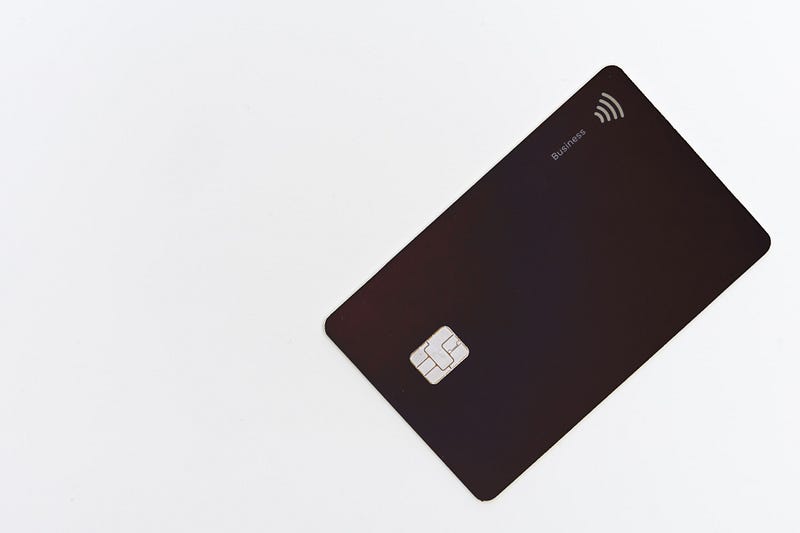
Photo by Markus Winkler on Unsplash


Bridging the gap

The Visa card allows users to spend funds from their self-custodial wallets at any merchant accepting Visa. These products are important given that crypto doesn’t exist in a vacuum, and there’s a gap to be bridged between traditional payment methods, such as Visa, and the crypto ecosystem.

Traditionally, the crypto industry has struggled with limited usability, but Gnosis wants to erase the divide between crypto and the real world. By enabling users to spend their crypto assets in traditional settings, Gnosis Card paves the way for wider adoption and showcases the potential of DeFi for society as a whole.


Expanding reach to Asia

While initially launching in Europe, Gnosis Card has ambitious plans for expansion. The company aims to introduce its innovative payment solution to markets beyond Europe. Among the target locations are Hong Kong and Singapore, known for their progressive approach to fintech and in particular, to crypto. By entering these dynamic markets, Gnosis seeks to tap into the growing demand for self-custodial crypto spending options in the Asian region and further empower individuals to utilize their digital assets in everyday transactions.


Collaborations for seamless integration

Gnosis has partnered with Monerium, the provider of the regulated euro-denominated stablecoin EURe, to facilitate the seamless conversion between traditional currencies and cryptocurrencies. Monerium allows users to connect their wallets to an International Bank Account Number (IBAN), ensuring smooth transactions and interoperability.

Additionally, Gnosis Pay, a suite of developer tools, will enable other wallets to issue their own customized payment cards. This collaboration with Fractal, a decentralized identity startup, ensures a smooth know-your-customer (KYC) process. By leveraging strategic partnerships, Gnosis is attempting to create an integrated ecosystem that combines the best of both traditional finance and blockchain technology.


Simplifying compliance and security

To address compliance and security concerns, Gnosis Pay utilizes the Safe smart contract wallet infrastructure. Each user has a Safe account on the Layer 1 chain of Gnosis and another on the Layer 2 Ethereum scaling solution, zkEVM, developed by Polygon.

This dual-layer architecture ensures compliance with anti-money laundering (AML) and combating the financing of terrorism (CFT) regulations while providing instant payment processing through the Visa network. Gnosis Pay’s partnerships enable effective screening for fraudulent activities and ensure data privacy compliance, empowering users with control over their personal information.

With the launch of the Gnosis Card, Gnosis is likely to change the way individuals spend digital assets held within their self-custodial wallets in the real world. Additionally, by expanding to Hong Kong and Singapore, Gnosis Card is set to make a significant impact in vibrant Asian markets.

Through strategic collaborations and a user-centric approach, the company is driving the adoption of cryptocurrencies, promoting financial inclusion, and accelerating the integration of blockchain technology with traditional finance.


More to Read
View All
Web3 & Enterprise·

Jul 13, 2023

Suspected Malicious Activity Drains AnySwap Tokens via Multichain Executor

Suspected Malicious Activity Drains AnySwap Tokens via Multichain ExecutorAccording to an on-chain sleuth known as Spreek, a person is using the Multichain Executor to drain tokens associated with the AnySwap bridging protocol.Multichain is a cross-chain routing network, established and maintained by a Chinese developer team. It supports in excess of 25 blockchains and more than 1,100 tokens.Photo by Marek Piwnicki on Unsplash$100 million outflowThis revelation comes after abnormal outflows of over $100 million from Multichain bridges on July 7, which were flagged by the Multichain team. Spreek’s report via Twitter on July 10 states that the Multichain Executor address has been draining anyToken addresses across multiple chains and transferring them to a new externally owned account (EOA).Evidence provided in the report includes an Ethereum transaction, 0x53ede4462d90978b992b0a88727de19afe4e96f0374aa1a221b8ff65fda5a6fe, which called the “anySwapFeeTo” method on the Multichain Router: V4 contract. This transaction resulted in approximately $15,275.90 worth of anyDAI being minted on Ethereum, sent to the Multichain Executor, burned, and exchanged for the underlying DAI backing the asset.The funds from these transactions were sent to the following address:0x1eed63efba5f81d95bfe37d82c8e736b974f477b. Similarly, on the BNB Smart Chain (BSC), the Multichain Executor used the anySwapFeeTo function to convert $208,997 worth of anyUSDC into Binance-pegged USDC and sent them to the same address. Additionally, 50.80 anyBTC, equivalent to $39,251.43 at the time, was converted into Binance-pegged Bitcoin and sent to the address.In total, approximately $263,524.33 worth of tokens were sent to this address through the anySwapFeeTo method. Spreek suggests that this behavior could be part of the protocol’s normal functioning. However, a different account engaged in similar activity the day before and ultimately sold the drained tokens, indicating malicious intent.Potential exploitSpreek theorizes that the attacker may be exploiting the anySwapFeeTo function by setting fees to an arbitrarily large amount, allowing them to drain users’ funds. The function apparently permits setting any value, enabling the address to choose the total value of the token held in that anyToken.The Multichain incident has puzzled blockchain analysts, as it remains unclear whether it resulted from an exploit or if it was simply large token-holders moving their funds between networks. The mystery began on July 7 when over $100 million worth of tokens were withdrawn from the Ethereum side of Multichain’s bridges and transferred to wallet addresses with no prior transactions. This represented the majority of funds held on each bridge.Hack or rug pullThe Multichain team labeled these withdrawals as “abnormal” and advised users to stop using the protocol. However, they have not disclosed the source or nature of the anomaly. In response to the incident, stablecoin issuers Circle and Tether froze some of the addresses involved in the suspicious transactions. Chainanalysis, a blockchain analytics firm, has commented that the incident appears more like a hack or rug pull rather than a migration.Adding to the complexity, the Multichain team has reported that their CEO is missing, and they have shut down certain bridges due to losing access to some of the network’s multi-party computation network servers. There have been various concerns relative to Multichain since May. The situation continues to evolve, with ongoing investigations and efforts to mitigate any potential damage caused by the suspected malicious activity.

news
Web3 & Enterprise·

May 15, 2023

LG Goes Further Down the Web3 Rabbit Hole with NFT Patent

LG Goes Further Down the Web3 Rabbit Hole with NFT PatentSouth Korean consumer electronics behemoth LG has delved deeper into the Web3 world, this time with a patent filing that would make NFTs more available to TV viewers.Enabling NFTs for the mass marketAccording to the filing, which was made with the World Intellectual Property Organization (WIPO), the electronics giant is seeking to acquire intellectual property protection on a capability to have a smart TV connect with an NFT market server.That ability would allow the user to then send, receive and display digital artwork. Furthermore, the consumer could complete purchases using an associated digital wallet, relative to NFT-based artwork that they would have the ability to browse through on their LG smart TV.While crypto and Web3 continue to garner a lot of attention, it can still seem sometimes that it exists in a bubble all of its own. Moves like this one from an organization as professional as LG are encouraging, as they demonstrate that LG believes that NFTs are going to be a part of the future, and most importantly, that they’re going to enable mass market participation and adoption.Blade WalletThis is not LG’s first venture into the world of NFTs. Last year, the corporation launched its very own NFT marketplace. Known as “LG Art Labs”, it enables users of US LG TVs that run the WebOS 5.0 operating system, to trade digital collectibles.Earlier this year, the firm launched the Blade Wallet, a third party audited, self-custody digital wallet which runs on the Hedera public ledger. That development has come out of a partnership that LG has developed with the Hedera Hashgraph platform much earlier in 2020. Just as with the Blade Wallet, the LG Art Labs NFT marketplace also runs on Hedera. To support these early stage products, LG itself has been a node operator on the Hedera network since 2020.This recent patent filing references an NFT marketplace and a digital wallet. As we’ve established, the corporation has already launched both of them already. All of that points to the electronics giant executing on a well thought through plan which will bring NFTs to the mass market.Broader interestLG isn’t going to have it all to itself. Samsung, yet another South Korean consumer electronics giant, has also dipped its toe in the water where NFTs are concerned. In January 2022, the company released an NFT marketplace on three of its TV models. That initiative was enabled due to its partnership with leading curated NFT marketplace, Nifty Gateway.Neither will the South Koreans have the consumer electronics-enabled NFT market all to themselves. Japanese consumer electronics conglomerate Sony filed a patent in March that will allow players of Sony products to access interactive Web3 gameplay. That application will be centered upon the use of NFTs also.Sony’s attempts to delve into the Web3 arena have been more recent. In February of this year, Sony Network Communications, its internet provider division, partnered with the project team behind the Astar blockchain in order to create an incubation program for companies who are working on NFT-based innovation and decentralized autonomous organizations (DAOs).Photo by Shubham Dhage on Unsplash

news
Web3 & Enterprise·

Jan 17, 2024

Binance Thailand launches exchange services to the public

Binance, in collaboration with Gulf Innova, a subsidiary of Gulf Energy Development, has officially opened its joint venture crypto exchange, Binance Thailand, for public trading. Challenging the market incumbentThis move had been eight months in the making, signaling Binance's entry into the Thai crypto exchange market, following an announcement in 2023 that it intended to extend its offering to Thailand. While Binance is the largest global crypto exchange platform, in Thailand it will be challenging the dominance of an incumbent exchange. Bitkub is based in Bangkok, currently holding around 77% of the market share, with a daily volume of approximately $30 million, primarily trading the Thai baht and Tether USDT pair.Photo by Sara Dubler on UnsplashRegulatory approvalThe launch comes after Binance received regulatory approval from the local Securities and Exchange Commission (SEC) in 2023. Initially introduced on an "invitation-only" basis, the exchange is now accessible to all eligible users, with Binance having followed through on its plans to expand its presence in the region. In a statement released on Tuesday, Binance TH announced the implementation of a dedicated order book tailored for Thai baht trading pairs. Users can seamlessly deposit and withdraw local currency through integration with domestic banking systems. Binance has managed to push its service offering forward in Thailand despite regulatory concerns. In the aftermath of the company’s $4.3 billion settlement in relation to securities law violations with the authorities in the United States in November, concerns had been expressed that the charges brought against the firm in the U.S. would challenge the feasibility of the Binance TH venture. At present, the platform focuses solely on spot trading, with a Binance spokesperson revealing ambitious long-term plans for additional services pending regulatory approvals. Nirun Fuwattananukul, CEO of Gulf Binance, expressed gratitude, stating:"We are deeply humbled to finally announce the launch of our local platform to the general public in Thailand. Over the past year, we have been working closely with Thai regulators, putting substantial effort into detailed planning." Binance TH facilitates digital asset exchange services, collaborating with local banks in Thailand in enabling its service offering. The exchange has also partnered with Binance Kazakhstan for brokerage services, operating under the supervision of Thailand’s SEC. Richard Teng, CEO of Binance, emphasized the strategic significance of the venture, stating:“This is a strategic step forward, setting the stage for Thailand’s impending role as a key player in the global digital finance landscape.” No access for foreignersOne limitation of the service pertains to foreign nationals. There is a restriction on access for foreigners residing in Thailand, as Binance TH requires a Thai National Digital ID to complete Know Your Customer procedures. Despite regulatory challenges and tax implications on overseas income from stock and crypto traders announced by the government in September 2023, Binance remains optimistic about the future of crypto trading in Thailand. The exchange released its themes for 2024 report on Jan. 15, outlining key growth areas such as the Bitcoin ecosystem, ownership economy applications, artificial intelligence, real-world assets, on-chain liquidity and institutional adoption.

news
Loading