Top

Hong Kong Insurer Expands Into Digital Assets

Web3 & Enterprise·July 01, 2023, 6:40 AM

OneDegree, a leading virtual insurer in Hong Kong, has successfully raised US$55 million in its latest funding round to support the expansion of its digital assets insurance portfolio, according to an announcement made by the company on Thursday.

The round saw participation from existing investors such as Gobi Partners, Sun Hung Kai, and Bitrock, as well as new investors. This marks OneDegree’s fifth fundraising effort since its establishment in 2016 and brings its total funds raised to over US$97 million. $28 million of this Series B round had been raised in 2021.

Digital asset insurance will be offered under the name “OneInfinity” by the firm in partnership with global insurance behemoth Munich Re. The product is being targeted at digital asset trading platforms, custodians, asset managers, and technology providers. While the company doesn’t insure DeFi projects right now, it aspires to do so in the future.

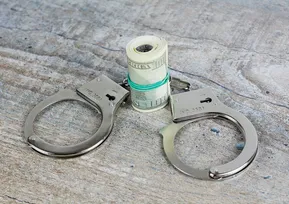
Photo by Kindel Media on Pexels


Leading Hong Kong online insurer

As one of the four purely online insurers licensed by the Hong Kong Insurance Authority, OneDegree is at the forefront of the authority’s push to integrate technology into the insurance sector to enhance services and reduce costs. The company is not permitted to hire agents, and all sales must be conducted online or through mobile apps.

Alvin Kwock Yin-lun, Co-Founder of OneDegree and former JPMorgan banker, expressed his gratitude for the strong support received during this challenging fundraising environment. Kwock attributed the successful round to the company’s robust revenue growth in various insurance segments, including pet, home, fire, medical, and digital assets coverage. He expects OneDegree to achieve profitability next year.


Digital asset insurance importance

Highlighting the importance of digital asset insurance, Kwock pointed out that in 2022, approximately US$3.8 billion worth of digital assets were compromised globally, out of a total global cryptocurrency market capitalization of US$1 trillion. He estimated that the market for digital asset insurance premiums would surpass US$1 billion annually in the coming years.

To capitalize on this growing demand, OneDegree has been focusing on providing insurance coverage to virtual asset trading platforms and operators. The company introduced its cryptocurrency insurance by offering a HK$100 million cover to Hong Kong Digital Asset Exchange in November 2021.

Kwock emphasized that the recent regulatory regime introduced by the Securities and Futures Commission (SFC) on June 1 will further drive the demand for digital asset insurance. He believes OneDegree is well-positioned to offer comprehensive coverage for the risks faced by digital asset operators, as the company possesses the necessary expertise and experience.

Looking ahead, OneDegree plans to expand its presence across Asia and offer innovative products such as InsurTech and cybersecurity software-as-a-service solutions.

OneDegree’s expanding presence in Asian markets relative to digital assets is to be welcomed. The digital assets space has had its fair share of collapses that may have been prevented with the involvement of a digital asset insurance specialist, and failing that, the application of such a product would naturally prevent losses suffered by market participants.

More to Read
View All
Policy & Regulation·

Apr 10, 2023

Korea’s Internet Agency Encourages More Blockchain Tech Adoption to Overcome Crypto Winter

Korea’s Internet Agency Encourages More Blockchain Tech Adoption to Overcome Crypto WinterVirtual asset and blockchain technology needs to be more broadly adopted to overcome crypto winter, an official from the Korea Internet and Security Agency (KISA) said at the 2023 Blockchain Meetup Conference on Wednesday.©Pexels/Helena LopesUser-friendly apps and regulatory supportPark Sang-hwan, the leader of the blockchain technology promotion group at KISA, encouraged the blockchain industry to develop user-friendly applications to give positive impressions, adding that blockchain-based apps should be faster and efficient to meet users’ expectations.He also said the blockchain industry needs regulatory support, explaining that regulatory issues can hinder the growth of the industry’s growth.KISA’s support for blockchain industryAccording to Park, the quasi-government internet agency introduced a business quality control system to offer advice on legal, technological, and business issues to companies, as well as to provide them with business problem-solving support. KISA will continue driving the development of key blockchain technologies, create new business plans for Web 3.0, and devise a mid- to long-term roadmap for research and development, he said.Blockchain projects in KoreaDuring his speech at the conference, Park presented several KISA-led public sector projects that will unfold this year, as reported by the Korean economics newspaper Hankyung. They include blockchain-based online voting systems, the establishment of digitally formed national licenses, and the verification of personal identification.Endeavors in the private sector were also revealed, including NFT-based concert tickets, oil waste disposal systems, and identification using soulbound tokens.

news
Policy & Regulation·

Nov 11, 2025

Japan to tighten crypto lending rules as regulator backs bank stablecoin pilot

Japan’s Financial Services Agency (FSA) is moving to close gaps in crypto regulation and support a new bank-led stablecoin pilot, as markets watch for a potential Bank of Japan rate hike. Tougher oversight of crypto lending and IEOsAccording to a CoinPost report, at the fifth meeting of its Digital Asset Working Group held last week, the FSA discussed introducing new requirements to bring crypto lending clearly within the regulatory framework. While firms managing or staking crypto must register as exchanges, some operators have avoided registration by structuring services as borrowing schemes, which are not legally treated as asset management.Photo by Possessed Photography on UnsplashThe FSA flagged that users face both credit and volatility risks, yet operators are not required to segregate customer assets or use cold wallets. Some services offer returns around 10% or tie up funds for several years, with weak risk management and exposure to re-lending defaults and staking slashing. Under the new policy direction, operators will need stronger risk management for re-lending and staking, tighter custody controls, and clearer risk disclosures and advertising. Institutional-only borrowing not offered to the public will remain exempt. Some members questioned whether the new requirements would be practical to implement for off-chain operators, noting that staking is fundamentally on-chain. The group also examined initial exchange offerings (IEOs) lacking financial audits, particularly those aimed at retail investors. Members discussed limits similar to equity crowdfunding: investments over 500,000 yen ($3,000) capped at 5% of annual income or net assets, up to 2 million yen ($13,000). Most past domestic IEOs were under 500,000 yen ($3,200). Some warned such caps could be bypassed through secondary trading, where tokens are immediately tradable. Major banks pilot stablecoinAlongside stricter rules, the FSA will support a stablecoin pilot led by MUFG Bank, Sumitomo Mitsui Banking Corporation, and Mizuho Bank. CoinDesk Japan noted the project, the first under the Payment Innovation Project, will include three additional participants. Mitsubishi Corporation will oversee operations, while Progmat and Mitsubishi UFJ Trust and Banking will handle issuance and custody. The pilot, launching this month with implementation targeted within the year, will test whether a joint stablecoin by major banks can navigate regulatory and operational challenges. Rate hike speculation mountsJapan’s calibrated digital asset push comes as speculation grows over a possible Bank of Japan (BOJ) rate hike next month. Minutes from the BOJ’s October meeting, cited by South Korean outlet Edaily, show one board member saying most conditions for a hike have been met and that financial conditions would stay easy even after an increase. The BOJ kept its rate at 0.5% at that meeting. A rate hike was described as likely if firms are seen committing to wage increases ahead of next spring’s labor talks and if no major global shocks emerge. Markets, however, remain cautious, citing uncertainty over U.S. tariff effects and whether newly elected Prime Minister Sanae Takaichi will endorse such a hawkish stance. 

news
Policy & Regulation·

May 04, 2023

KakaoBank to Conduct Routine Due Diligence on Crypto Exchange Coinone

KakaoBank to Conduct Routine Due Diligence on Crypto Exchange CoinoneKakaoBank, one of South Korea’s Internet-only banks, is set to conduct a routine due diligence examination on cryptocurrency exchange Coinone from May 8 to 9, according to crypto media Digital Asset.Photo by Markus Winkler on UnsplashThe mobile bank told Digital Asset that the forthcoming due diligence is unrelated to either the alleged illicit token listings involving former Coinone employees or the exchange’s sole relisting of the WEMIX token in February, which had been delisted from major Korean crypto exchanges due to questionable information about the token’s circulating supply.In Korea, crypto trading platforms supporting Korean won trading are legally obligated to obtain real-name bank accounts from a bank. Last August, KakaoBank signed a one-year contract with Coinone to provide such accounts to the exchange, and the bank will need to decide whether it will extend the contract before August this year.A Coinone official said that the exchange has not undergone any routine due diligence checks from KakaoBank since the contract was signed last year.The upcoming examination is expected to address concerns stemming from rumors that KakaoBank might reconsider its contract with Coinone in light of the bribery scandal that involved two former Coinone personnel and two brokers.

news
Loading