Top

India’s Upcoming G20 Summit Bullish for Crypto

Policy & Regulation·April 10, 2023, 2:29 AM

The upcoming G20 summit in Delhi, India, will mark the first-ever G20 summit hosted in South Asia. The G20 comprises 19 countries and the European Union. While the summit is focused on discussing critical issues related to the global economy, it will also include discussions on cryptocurrencies.

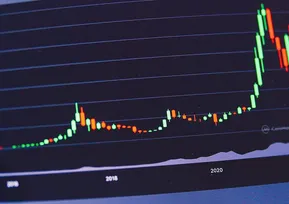
©Pexels/Studio Art Smile


Crypto policy precursor to mass adoption

Regulations and policy frameworks around crypto will be a significant topic of conversation at the summit, alongside discussions on international financial stability. India’s Finance Minister, Nirmala Sitharaman, confirmed that G20 nations are working towards creating an effective Standard Operating Procedure (SOP) for regulating crypto during the summit.

India has been taking a systematic approach to regulate the evolving crypto space, as evidenced by the nation’s evolving stance on cryptocurrencies and the recently launched central bank digital currency (CBDC) pilot. With this in mind, the G20 summit in Delhi is expected to provide a platform for countries to discuss and collaborate on effective crypto regulations and policy frameworks.

According to Gracy Chen, Managing Director of the Singapore-based Bitget cryptocurrency exchange, more work on policy relative to crypto in India is bullish for the development of the sector within the South Asian country. “India’s consistent growth in adapting to cryptocurrencies and forming newer policies around it has made it a hub for tech investments. With more development and a policy framework, we can expect higher mass adoption. The G20 summit will be bullish for crypto’s growth in India,” Chen told Indian weekly English-language news magazine, India Today.

During the 2022 Budget discussions, the government of India proposed some significant changes to the taxation of cryptocurrencies. As a premium investment product, cryptocurrencies are known for their high volatility, and the government believed that they should be subject to a heavier tax burden. Specifically, they introduced a 30% tax on capital gains earned through the sale of digital assets, as well as a 1% tax on Tax Deducted at Source (TDS) for all crypto transactions.

The tax on capital gains applies to all digital assets, and the government intends to track historical records to ensure compliance. Additionally, the 1% TDS is applied to every single transaction, regardless of its size or frequency. These changes were seen by some as a trial framework, and many in the crypto space hoped for greater leniency from the government in the future. However, it remains to be seen whether the government will revise these tax policies in the coming years.


CBDC pilot projects

Furthermore, the Reserve Bank of India (RBI) has recently launched two CBDC pilots to test the feasibility of digital currencies in India. The first pilot is a wholesale CBDC, which is being conducted in collaboration with nine banks.

The second pilot is a retail CBDC, launched in December, which is being tested in four major cities across India — Mumbai, New Delhi, Bengaluru, and Bhubaneswar. The goal of these pilots is to evaluate the potential of digital currencies in facilitating secure and efficient transactions, as well as to study the possible impact on the traditional banking system.

By exploring both wholesale and retail CBDCs, the RBI is taking a comprehensive approach to CBDC development, which may inform future decisions regarding the adoption of digital currencies in India.

Chen maintains that “discussions around cryptocurrency policy frameworks accelerate the possibilities of mass adoption in the region.” “With over 750 million internet users, India holds the potential to not just pilot but establish real-life crypto and blockchain use cases for the masses,” she added.

More to Read
View All
Web3 & Enterprise·

Jan 17, 2024

Klaytn Foundation and Finschia Foundation to jointly launch largest blockchain network in Asia

The Klaytn Foundation and Finschia Foundation have jointly submitted a governance proposal to launch a new mainnet created by merging their respective blockchain ecosystems. The proposals have been submitted for open discussion, with voting scheduled for Jan. 26 to Feb. 2, according to an official announcement on Wednesday (KST).Photo by Shubham's Web3 on UnsplashThe main objective of this initiative is to create Asia’s largest Web3 ecosystem by combining key features of both blockchains. To do so, the two foundations plan to share their technologies, services and business networks and fortify connections between their partners like their mother companies Kakao and LINE, who have contributed to their development and expansion. “We are excited to be taking the first step toward unlocking the enormous synergy of merging the public blockchains started by Kakao and LINE, which are both leading IT companies in Asia,” the two foundations said. “We will give our best to make this merge an opportunity to innovate and lead the Asian blockchain industry in both technology and adoption.” An unprecedented mainnet ecosystemThe merger will bring together Klaytn and Finschia’s networks in different Asian countries, like Klaytn’s leverage in South Korea, Singapore and Vietnam, and Finschia’s service network in Japan, Taiwan, Thailand and Abu Dhabi. Once the combined ecosystem is launched, it will offer over 420 decentralized apps (dApps) and services, 45 governance partners and some 450 Web3 resources, becoming a mammoth Web3 network capable of swaying the trajectory of the Asian market. In addition, the blockchain will be connected with both Kakao and LINE messengers – two well-known messenger apps in Asia – opening up access to a vast continental user base of over 250 million people. The integration is also expected to catalyze the creation of new Web3 infrastructure in Asia, boosting scalability and liquidity. Future business plansThe joint foundation is specifically set to undertake projects in areas like RWA tokenization, GameFi, DeFi verticals, messenger-based Web3 services and digital commerce through partnerships with Japanese, South Korean and Southeast Asian firms. By leveraging its access to Kakaotalk and LINE users, the new public blockchain has the potential to be a springboard for IT and entertainment enterprises in Asia. Improved tokenomicsWhat may especially interest shareholders and users alike is a new native token that will be issued on the merged network, replacing the foundations’ respective tokens KLAY and FNSA. Holders of KLAY and FNSA will be able to swap their tokens for the new one. The proposed tokenomics system for the new token emphasizes sustainable value creation. This includes a lower base inflation rate and a 3-layer burning model created to encourage deflation as activity on the network increases. 24% of newly issued tokens will also be burned immediately as a trustworthy Zero Reserve Tokenomics measure. This will all be supported via an ecosystem fund and infrastructure fund that are constantly replenished via block rewards, rather than relying on reserves.Enhanced governance and interoperabilityKlaytn and Finschia also plan to bring together their experiences in practicing good governance to build a  permissionless node validation system to put the spotlight on users and the community, promoting transparency, trust and openness. To support the seamless migration and interoperability of existing dApps and services on Klaytn and Finschia, the merged chain will support the smart contract platforms EVM and CosmWasm. Ethereum and Cosmos builders will thus be able to gain access to the network. The foundations are set to host an upcoming event called Klaytn Community Town Hall on Friday to introduce the proposal and facilitate open dialogue and feedback.

news
Markets·

May 06, 2025

3 UAE-based firms sign $3B tokenized real estate deal

MultiBank Group, a global financial derivatives company headquartered in Dubai, has partnered with two other United Arab Emirates (UAE)-based firms, real estate giant MAG and tokenized real-world asset (RWA)-focused blockchain infrastructure provider Mavryk, in a $3 billion tokenized real estate deal.Photo by Tierra Mallorca on UnsplashWhile a large proportion of MAG's business activities center around the Dubai real estate market, MAG Group is a multinational conglomerate with a portfolio that includes commercial and residential developments and high-end luxury real estate projects.  According to a press release published on May 1, this $3 billion deal implicates MAG’s luxury developments, such as The Ritz-Carlton Residences in Dubai and other properties located within the Keturah Resort and Keturah Reserve in the UAE’s most populous city. These properties will be tokenized and hosted on the blockchain through MultiBank.io’s regulated tokenized RWA marketplace. Mavryk will provide the necessary infrastructure, with the tokenized assets running on its blockchain network. The deal provides another indication of the growing role of tokenization, with it being the largest tokenized RWA deal to have been put together to date. The Mavryk Network testnet was launched in February, with Mavryk Network developer Mavryk Dynamics securing $5 million in funding to establish a tokenized RWA network economy. In this instance, Mavryk will provide support in terms of on-chain asset issuance and DeFi integrations. Not just a real estate dealTalal Moafaq Al Gaddah, senior executive vice chairman of MAG, said that the project “marks a milestone in broadening access to high-value developments and unlocking liquidity via blockchain.” Al Gaddah also commented on the MBG token, stating:“$MBG token provides ecosystem utility, including trading discounts, early access to properties, and a deflationary buyback-and-burn model.” MBG is a MultiBank utility token which features deflationary tokenomics. It will be used to enable staking and lower trading fees. The token is scheduled to be launched on June 2. MultiBank.io Founder and CEO Zak Taher highlighted the importance of the token launch alongside this tokenized real estate deal. He stated:“This isn’t just a real estate deal — it is a flagship use case for the $MBG token. By enabling seamless access to $3B in tokenized property, MultiBank becomes the bridge between regulated finance and next-generation investment infrastructure.” Dual utilityAl Gaddah referred to the duality of the tokenized real estate offering:“Tokenized assets issued by MultiBank will have dual utility. Within the MultiBank Group, they can be used as collateral for derivatives, creating a seamless bridge between traditional finance and tokenized assets.” RWA tokenization has been gaining momentum within the UAE recently. It emerged last month that the Dubai Land Department (DLD), a government agency responsible for the registration of real estate in Dubai, had signed an agreement with local regulator the Virtual Assets Regulatory Authority (VARA) to integrate tokenized real estate within existing systems.  Around the same timeframe, blockchain technology firm Serenity signed a partnership with Dubai’s MTA Real Estate to develop a tokenized real estate platform. Last year RWA-focused layer-1 blockchain project MANTRA Chain announced that it would tokenize $500 million in real estate assets in Dubai.

news
Web3 & Enterprise·

Jul 11, 2023

LINE NEXT and Sega Join Hands to Develop Web3 Games with NFTs

LINE NEXT and Sega Join Hands to Develop Web3 Games with NFTsLINE NEXT, the NFT business arm of Tokyo-based messaging app developer Line Corporation, has announced the signing of a memorandum of understanding (MOU) with Japanese game company Sega. This partnership will see LINE NEXT acquiring intellectual property (IP) licenses of Sega’s video game franchises for the purpose of jointly developing Web3 games.Renowned for its iconic Sonic the Hedgehog franchise, Sega boasts studios in Japan and abroad. The Japanese game publisher produces games of various genres on different platforms, including arcade machines, desktop computers, and mobile phones. Sega has gained recognition for creating generational games for international users through innovative ideas and outstanding game development skills.Photo by Shubham’s Web3 on UnsplashWeb3 game popularizationThrough this collaboration, LINE NEXT will introduce Sega-licensed games on its NFT-based gaming platform, GAME DOSI, with the aim of popularizing Web3 games. GAME DOSI will provide functionalities such as NFT creation, easy payment, and marketing. While the specific lineup of games and their details will be revealed at a later date, LINE NEXT CEO Ko Young-su expressed his belief that this MOU with Sega will bring new elements of joy to global gamers, emphasizing that the NFT company is dedicated to delivering readily enjoyable Web3 content not only to Sega fans but to everyone through GAME DOSI.Launched in May, GAME DOSI focuses on user-oriented games with the slogan “Gamer First, Web3 Next.” The platform has recently unveiled several new games, including Sweet Monster Guardians (a village defense game); Vestria the Last Order, also known as V.L.O, (a roguelite role-playing game); and KEROZ (a hack and slash game). Additionally, GAME DOSI is actively involved in Project GD, an initiative aimed at developing a diverse range of games based on its own intellectual properties.LINE NEXT’s NFT endeavorsIn its efforts to attract NFT enthusiasts, LINE NEXT has undertaken various projects. Last month, it introduced DOSI Land, a program that rewards users with the FINSCHIA token (FNSA). FNSA is currently listed on crypto exchanges Bithumb, Bittrex, Huobi, and Gate.io, according to crypto market data website CoinMarketCap.Sega’s blockchain hesitancyMeanwhile, it was reported earlier that Sega has been rethinking its involvement in blockchain gaming. Shuji Utsumi, the Co-Chief Operating Officer of Sega, recently stated in an interview with Bloomberg that the company intends to protect the value of its content by withholding from participating in third-party blockchain gaming projects. Utsumi expressed his belief in the importance of the fun element in games, while he described “play-to-earn” (P2E) blockchain games as “boring.” P2E games refer to those that enable players to earn tokens as rewards for completing specific tasks or winning battles against other players.

news
Loading