Top

Korean banks to bolster AML measures for cryptocurrency exchanges

Policy & Regulation·February 05, 2024, 3:59 AM

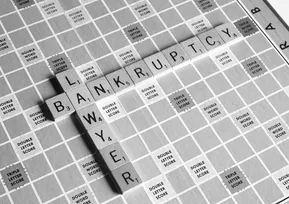
South Korean banks will soon have to be prepared with adequate anti-money laundering (AML) measures when issuing real-name bank accounts to cryptocurrency exchanges, according to a report by local media outlet News1.


This requirement is part of the proposed amendment to the enforcement decree of the Financial Transaction Reports Act, with the Korean Financial Services Commission (FSC) issuing a legislative notice about it today. The FSC will be gathering feedback until March 4, prior to the implementation.

https://asset.coinness.com/en/news/997d6ef84dcd556ed30886a8714515a6.webp
Photo by Tuan P. on Unsplash

Adequate staff and physical facilities

The new amendment requires banks supporting virtual asset service providers (VASPs) to employ adequate staff and establish and uphold physical infrastructure to combat money laundering and terrorist financing. Through this revised legislation, the FSC aims for banks to be equipped with the necessary resources to manage risks linked to the provision of real-name bank accounts to VASPs.


With the issuance of real-name bank accounts, banks will face ongoing cautionary duties. The FSC plans to offer clearer guidelines to help banks decide whether to continue providing such accounts to VASPs.


In its 2024 agenda, the FSC stated its plans to evaluate VASPs' readiness for their responsibilities ahead of the Virtual Asset User Protection Act, set to be implemented in July. Additionally, the regulatory body will develop infrastructure to improve its monitoring of the cryptocurrency market.


Intelligence platform focused on financial security

Moreover, the FSC plans to create a specialized intelligence platform focused on financial security. This platform is aimed at enabling proactive responses to cyberattacks and supporting financial institutions in the agile management of risks associated with emerging technologies.



More to Read
View All
Web3 & Enterprise·

Jul 20, 2023

WEMIX Listed on Crypto Exchange CoinDCX, Strengthening Presence in India

WEMIX Listed on Crypto Exchange CoinDCX, Strengthening Presence in IndiaWEMIX, the utility coin of blockchain game platform WEMIX Play, has now been listed on India-based cryptocurrency exchange CoinDCX, according to a press release. WEMIX Play is operated by South Korean gaming company Wemade.Photo by Naveed Ahmed on UnsplashWEMIX/USDT & WEMIX/INREstablished in 2018, CoinDCX earned unicorn status two years ago, becoming the first Indian crypto exchange to accomplish this feat. With a current valuation of approximately $2.5 billion, CoinDCX offers trading support for over 80 cryptocurrencies and provides decentralized financial (DeFi) services to a customer base of 15 million global users. CoinDCX users can trade WEMIX against USDT and INR, where USDT stands for a stablecoin issued by crypto giant Tether and INR for Indian Rupee.WEMIX made its debut on the Indian market in February through its listing on Bitbns, another cryptocurrency exchange. The token’s addition to another trading platform in India indicates the growing presence of the WEMIX ecosystem in the region.India’s Web3 landscapeIndia is a prominent market for non-fungible tokens (NFTs) and blockchain technology. As of April, investments in the Indian Web3 ecosystem had reached $1.3 billion. The country also boasts the world’s third-largest talent pool for Web3 development. Currently, more than 450 Indian startups are making their mark on the global stage, demonstrating expertise in DeFi services, gaming, NFTs, and metaverses.Looking ahead, WEMIX aims to further expand its reach by pursuing listings on additional crypto exchanges. This strategy will enable gamers worldwide to trade the WEMIX token with their respective fiat currencies.

news
Policy & Regulation·

Sep 09, 2025

South Korea to mandate disclosure of crypto funds in home purchases

South Korean authorities will require homebuyers to disclose funds originating from cryptocurrency sales, a move aimed at increasing transparency in the nation's tight real estate market. The new rule is part of a wider government effort to address housing affordability, which is particularly pronounced in Seoul, and to integrate digital assets into its regulatory framework. The change, announced on Sept. 7 as part of new housing supply measures, will alter the mandatory funding plan submitted during property transactions. Proceeds from digital assets will be listed as a distinct category, similar to funds from stocks or bonds. Officials are also expanding loan disclosure requirements to include business loans and overseas borrowing, closing potential financing loopholes.Photo by Traxer on UnsplashImpact of asset volatility on property valuesThe policy follows growing evidence that volatility in assets like cryptocurrency can spill over into the property market. A 2024 study cited by Maeil Business Newspaper highlighted that both the COVID-era stock rally and Bitcoin's 2023 price surge had a discernible impact on housing values. According to Yu Jung-suk, a professor at Dankook University, apartments in Seoul's affluent Gangnam district are particularly sensitive to fluctuations in Bitcoin and the KOSDAQ index. He noted that high-profile property acquisitions by young crypto investors, even if few in number, can significantly sway market sentiment. Professor Yu suggested that regulators may need more comprehensive tools to manage the risks connecting different asset classes. The government's new measures also seek to cool the capital's housing market, where prices have continued to rise despite a slowdown in growth. In contrast, prices in areas outside Seoul have been declining since 2022. To address the supply-demand imbalance, officials plan to begin construction of 1.35 million new homes in the Seoul metropolitan area between 2026 and 2030. Stablecoin regulation and CBDC trials advanceBeyond real estate, officials are developing a formal regulatory structure for stablecoins. The Presidential Commission on Policy Planning is reportedly considering a model where a consortium of banks and fintech firms would be granted rights to issue a won-pegged stablecoin. Supervision for this new system would fall to a proposed Financial Stability Council, a body intended to serve as a central coordinator for financial policy, comprising the finance ministry, the Bank of Korea, and other regulators. The initiative aims to combine the stability of the traditional banking sector with the innovation of non-bank financial companies. The evolving regulatory environment is attracting attention from global industry leaders. Executives from Tether, the issuer of the USDT stablecoin, met with Shinhan Financial Group CEO Jin Ok-dong in Seoul on Sept. 8. While Tether representatives stated they were monitoring the regulatory climate, they confirmed no specific business plans were discussed. Separately, the Bank of Korea is moving forward with digital currency experiments. In partnership with government agencies and six major commercial banks, the central bank will launch a pilot program to test the use of a digital currency for distributing state subsidies and vouchers. 

news
Policy & Regulation·

May 24, 2023

Chinese Fentanyl Producers Taking Payment in Crypto

Chinese Fentanyl Producers Taking Payment in CryptoA report produced by blockchain analytics and crypto compliance solutions firm Elliptic has found that most Chinese suppliers of fentanyl precursors are accepting payments for the illicit material in cryptocurrency.In a blog post published on its website on Tuesday, Elliptic claimed that 90 percent of the 90 China-based firms, from which its researchers received offers of fentanyl precursors, accepted cryptocurrency as a form of payment. The majority of fentanyl which is trafficked into the United States is manufactured using imported fentanyl precursors like the material that the Elliptic researchers were offered.Seventeen of the suppliers even offered to provide fentanyl itself. Others still offered to supply synthetic opioids, equally or more potent than fentanyl, which are currently legal to both produce and supply within China.Photo by Hal Gatewood on UnsplashTracking blockchain transactionsIn tracing back transactions relative to these illicit suppliers, the Elliptic researchers’ analysis demonstrated that the digital asset wallets used by the rogue suppliers have received thousands of payments. The research team has estimated the net worth of those transactions to total $27 million.It appears that a move towards crypto payments is trending with this group of suppliers as there has been a 450% increase year-on-year when it comes to payments for fentanyl precursor using crypto.The study highlighted activity related to Dutch national Alex Peijnenburg. An alleged fentanyl supplier, Peijnenburg, made an $85,000 payment in crypto to one of the ninety fentanyl precursor suppliers identified by Elliptic researchers. In November of last year, the Dutchman was sanctioned by US authorities relative to his activities.Global trade and distributionThe report stated: “During our correspondence, the suppliers showed no concerns about how the chemical would be used, with some explaining that it was their best-selling product and could be used to produce fentanyl.”It went on to state that “others pointedly mentioned that they had sold it to customers in Mexico.” Mexico is a significant location in the global drugs trade, given the activity of drug cartels within the country. One supplier offered an insight to researchers as to the preferences of their nefarious Mexican clients, stating: “They always use USDT or Bitcoin to pay. It is no problem.”While it looks like these nefarious Chinese companies are able to trade into and out of crypto assets, that should be a difficulty for them as China banned the offering of crypto trading services going back a number of years already. Furthermore, foreign digital asset exchanges are prohibited from servicing the needs of Chinese clients where crypto is concerned.Elliptic’s research team uncovered that the majority of the illicit drugs trade suppliers have been using workarounds in order to gain access to overseas digital asset exchanges. The suppliers have used intermediaries in order to convert crypto into Chinese yuan.The report concludes that this part of the international fentanyl trade can be dealt with and “disrupted by the services that act as gateways into and out of crypto assets.” On arriving at that conclusion, Elliptic has acted by notifying the digital asset exchanges that these suppliers are using. “[We] have flagged hundreds of crypto addresses in our tools as being linked to this activity,” the report states.Crypto had infamously been associated with illicit activity on the dark web in its earliest years. It has moved well beyond that although due to its decentralized nature, it’s difficult, if not impossible, to control who utilizes decentralized digital currency.

news
Loading